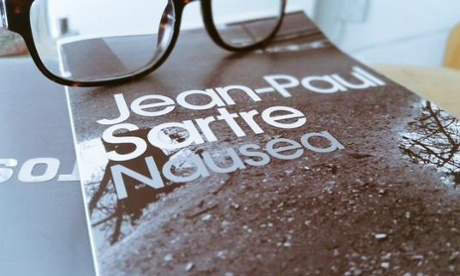
Welcome to this week’s blog, and apologies for the delay. Here’s a roundup of your comments and photos from last week, including a memoir that approaches alcoholism in a surprisingly fresh way, a great current Chilean writer and a mounting pile of summer reading choices.
fingerlakeswanderer recommended Sarah Hepola’s Blackout:
I teach creative nonfiction, and reading memoirs is part of my class preparation as I teach new books each semester so that my students stay current in what is out there. I didn’t expect to like Blackout. It’s a memoir of getting sober, and I have read a number of memoirs about alcoholism in the past. But I was surprised by just how good this book was.
[...] What sets this apart is Hepola’s facility with words. I have banned my students from writing about their drinking exploits because they’re just so damn boring, but I never felt that with Hepola because the prose surprised me. Her use of metaphor, her use of imagery, her ability to describe emotions, all pulled me in and allowed me to feel tenderness toward her, instead of the usual impatience one feels when listening to a drunk once again make excuses. I liked this book so much that I will most likely teach it next semester.
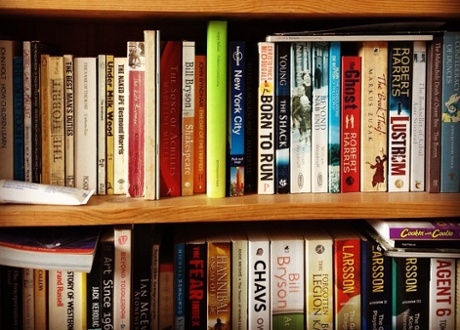
flavadaveflynn finished Ways of Going Home by Chilean writer Alejandro Zambra (Translator: Megan McDowell):
This short, taut novel excavates the ghosts of Chile’s military past - the disappearances, the repression and the paranoia – to examine how the power and deceptions of memory shape our understanding of the past. Revered writers and critics, such as James Wood and Junot Díaz, have been heaping praise on Zambra with good reason. I will be certainly be tracking down more of his work.
MsCarey is reading Northanger Abbey twice over for a reading group:
First, the original by Jane Austen which was a razor-witted, delectably-written delight. Secondly, the 2014 version produced by Val McDermid under some sort of scheme called The Austen Project whereby contemporary authors reimagine the original novels. I’m a third of the way through McDermid’s attempt and it’s not bad as such; I’d describe it as serviceable. Which in this particular context, of course, means it’s rubbish. Unutterable hubris on the part of these modern authors, I would say. They deserve to look as shoddy as they inevitably will do. (This is wild speculation and prejudice on my part. I have no intention of reading the rest.)
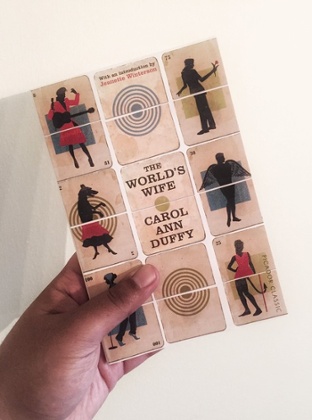
SharonE6 read David Nicholls’s Us:
I found Douglas, the narrator, very endearing in the first half but really disliked him in the second half. His memories of his emotionally abusive relationship with his young son were very disturbing. I thought Nicholls had deliberately set the book up in two halves to manipulate the reader – making us believe Douglas was a sweet guy, then showing him to be something quite different but there’s no real judgement of his behaviour. I think we’re still expected to like him and feel sorry for him at the end of the book. A very weak second half.
Interesting links about books and reading
-
No Longer Getting Lost at the Strand: on the transformation of the design of the beloved Strand in Manhattan to adapt to the times – including replacing shelves with tables, which contain half as many books but sell twice as many. A change that inevitably makes it more difficult to get lost. In the New Yorker.
-
The Handmaid’s Tale (starts at minute 22:30): The BBC programme Woman’s Hour did a “very interesting piece” on Margaret Atwood’s classic, “as it’s the 30th anniversary of its publication,” said tyorkshiretealass. “It raised quite a few points I hadn’t thought about myself, such as the use of handmaids and the parallels with rich Western couples today using surrogates from developing countries. And I agree with the ‘be vigilant and don’t take things for granted’ message.”
- Azar Nafisi: “Over the years I have often thought of Alice as my ideal reader” The author of Reading Lolita in Tehran on the permanent delights of reading Alice in Wonderland, writing in Salon.
-
What’s the Point of Handwriting? “Maybe the limitations of the body carry some hidden benefit: that in marking out ideas at a pace slower than typing, there is some link between neural and muscle memory.” A piece in Hazlit.
If you would like to share a photo of the book you are reading, or film your own book review, please do. Click the blue button on this page to share your video or image. I’ll include some of your posts in next week’s blog.
And, as always, if you have any suggestions for topics you’d like to see us covering beyond TLS, do let us know.