A recent Guardian article about the popularity of detox diets confirmed what I had suspected all along: there isn’t much you can eat or drink to purge yourself of other things you have consumed and feel guilty about. The human body knows how to get rid of toxins – that’s what the liver and kidneys are for – but our mind is more reluctant. We feel sinful about eating, or overeating, and believe we can somehow fix this by eating something else. Well, that just isn’t the case.
Personally, I tend not to feel guilty about food. If I overeat, I just eat less the next day or week. And why should I experience guilt? Eating and sharing food is a life-affirming, sensual activity. In an ideal world, we’d all be consuming everything with a spotless conscience.
Realistically, however, most of us will feel a certain imbalance after indulging in stuffings and puddings, nibbles and various tipples over the last few weeks. To redress the balance, even just a bit, today’s recipes feature seafood, coconut and lemongrass, lime and ginger, lemon and chilli – just the things to evoke serious food cravings even after the recent big scoff. Without thinking for a second that these dishes will in any way turn back the clock to pre-gluttony 23 December, they are sure to make you feel better.
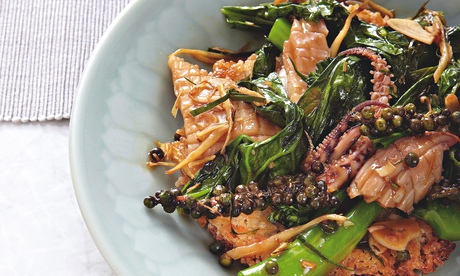
Baby squid with rice cakes and green peppercorns
The flavour of fresh peppercorns explodes with every mouthful, but the heat is mild; it wows the palate without overpowering it. Sarah Joseph, who assists in my test kitchen, remembered this from her travels in Cambodia, which is where the idea for this dish comes from. Fresh peppercorns are available year-round in specialist Asian food shops, but if you can’t find any, use two tablespoons of dried green peppercorns instead. Serves four.
200g sticky rice, rinsed well
200ml coconut milk
1 tsp salt
105ml sunflower oil
300g kai-lan (aka Chinese broccoli)
6 fresh kaffir lime leaves, shredded thin
2 lemongrass stalks, finely chopped
4cm piece ginger, peeled and cut into julienne strips
3 garlic cloves, peeled and thinly sliced
10-15 stems fresh green peppercorns, depending on size (you need about 100g, or 2 tbsp dried green peppercorns)
700g cleaned baby squid (or larger squid tubes cut into six flat pieces, scored on the outside and dried with a clean cloth)
60ml oyster sauce
3 tbsp light soy sauce
1½ tbsp lime juice
10g coriander leaves, roughly chopped
Put the rice and coconut milk in a medium saucepan with 80ml water and half a teaspoon of salt. Bring to a boil, turn the heat to low, cover and simmer for 20 minutes, until the liquid has evaporated and the rice is cooked. Swirl the pan a few times while the rice is cooking, to stop it sticking to the bottom of the pan. Remove from the heat, take off the lid, fluff up with a fork and set aside to cool for 10 minutes. Once cool, divide the rice into four, shape into four round patties, then flatten to 1cm-thick, 12cm-diameter discs.
Put a large nonstick frying pan on a medium-high heat and add four tablespoons of oil. Once hot, cook the patties for eight to 10 minutes, turning them once halfway through, until golden-brown and crisp on both sides. Set aside in a warm spot.
Put a large saute pan on a high heat. Toss the kai-lan in a bowl with a tablespoon of oil, add to the hot pan and cook, turning once, for two minutes, until nicely charred on both sides, then lift out of the pan and set aside. Wipe clean the pan, turn the heat to medium-high and add the remaining oil and the lime leaves, lemongrass, ginger, garlic and peppercorns. Fry for two minutes, stirring often, until the garlic is golden, then raise the heat to high, add the squid and stir-fry for three minutes. Return the kai-lan to the pan, add the oyster sauce, soy sauce and three tablespoons of water, and cook, stirring, for a minute more. Remove from the heat and stir in the lime juice and coriander.
Put one rice cake on each plate, top with the squid, kai-lan and peppercorns, and serve immediately.
Marinated halibut with coriander and lemon
This makes a great starter with a few french beans and some good crusty bread. Serves six.
50g plain flour
Salt and white pepper
900g skinless and boneless halibut fillet, cut into 1-2cm-thick, 5cm chunks
3 tbsp olive oil
15g coriander leaves, roughly chopped
2 tsp coriander seeds, lightly toasted
2 tsp lemon juice
For the marinade
2 medium lemons
50g preserved lemon skin, finely diced (from about 2 medium preserved lemons, flesh removed and discarded)
1 large red chilli, deseeded and finely diced
1 clove garlic, peeled and crushed
½ small onion, peeled and finely diced
75ml olive oil
¼ tsp cider vinegar
To make the marinade, use a small sharp knife to cut the top and bottom off the lemons. Cut down the side of each lemon, following its natural curve, to remove the skin and pith. Holding the lemon over a small bowl to catch any juice, cut in between the membranes to remove the individual segments. Roughly chop the lemon segments, then add to the bowl with all the juice on the chopping board; squeeze out any remaining juice from the lemon carcasses. Add the remaining marinade ingredients and a quarter-teaspoon of salt. Mix and set aside.
In a small bowl, mix the flour with a teaspoon of salt and half a teaspoon of white pepper. Dust the pieces of fish in this, until covered on all sides, and set aside.
Put a large frying pan on a high heat, add a tablespoon of oil and, once hot, add a third of the fish. Fry for two to three minutes, turning once halfway through – the fish should start to flake apart when gently pressed – then transfer to a plate lined with kitchen paper and repeat with the remaining fish, adding a tablespoon of oil with each batch. Once all the fish is cooked and cool, transfer to a shallow dish and spoon over the marinade; it should completely immerse the fish. Cover with clingfilm and refrigerate for at least an hour, and preferably overnight.
To serve, take the fish out of the fridge about half an hour or so beforehand, so it can come up almost to room temperature. Transfer the fish and its marinade to a platter, piling it up slightly and layering with the coriander leaf and seeds. Drizzle more lemon juice on top and serve.
Coconut and lime-crusted haddock
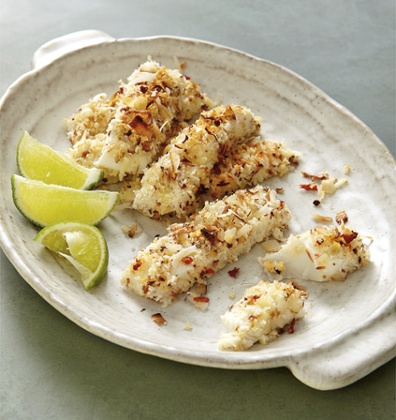
The fish in this simple dish requires very little cooking, because it’s already semi-cured by the lime. Some of the delectable coconut crust will come off in the cooking, so make sure you don’t lose it: just spoon it from the tray and over the fish when you come to serve. Thanks to Jamie Kirkaldy, free-diver and fisherman extraordinaire. Serves four.
500g skinless and boneless haddock, cut into 10-12 3cm x 10cm pieces
2 tbsp lime juice
60ml coconut cream
Salt
200g fresh coconut flesh (1 medium coconut, cracked open, flesh removed and roughly grated)
20g panko breadcrumbs
1 tsp chilli flakes
60g unsalted butter, melted
1 lime, in wedges, to serve
In a bowl, mix the fish with the lime juice, coconut cream and a quarter-teaspoon of salt, then marinate in the fridge for an hour. Scrape off and discard as much of the cream as you can, then set aside the fish.
Put a large frying pan on a medium-high heat and, once hot, add the grated coconut. Dry-fry for eight to 10 minutes, stirring from time to time, until nicely golden-brown. Remove from the heat, set aside to cool, then transfer to a shallow bowl and mix with the panko, chilli flakes and half a teaspoon of salt.
Set the grill to high. Taking one piece at a time, toss the fish first in melted butter and then the coconut mix, until coated all over, then transfer to a wire rack on a large baking tray. Once all the fish is coated, put the tray about 15cm from the heat source and grill for three to four minutes, until cooked through and golden-brown; if the fish isn’t cooked by the time the coating is nicely browned, turn off the grill and leave the tray in the oven for a couple of minutes, so it finishes cooking in the residual heat. Serve at once with a wedge of lime.
• Yotam Ottolenghi is chef/patron of Ottolenghi and Nopi in London.
Follow Yotam on Twitter.