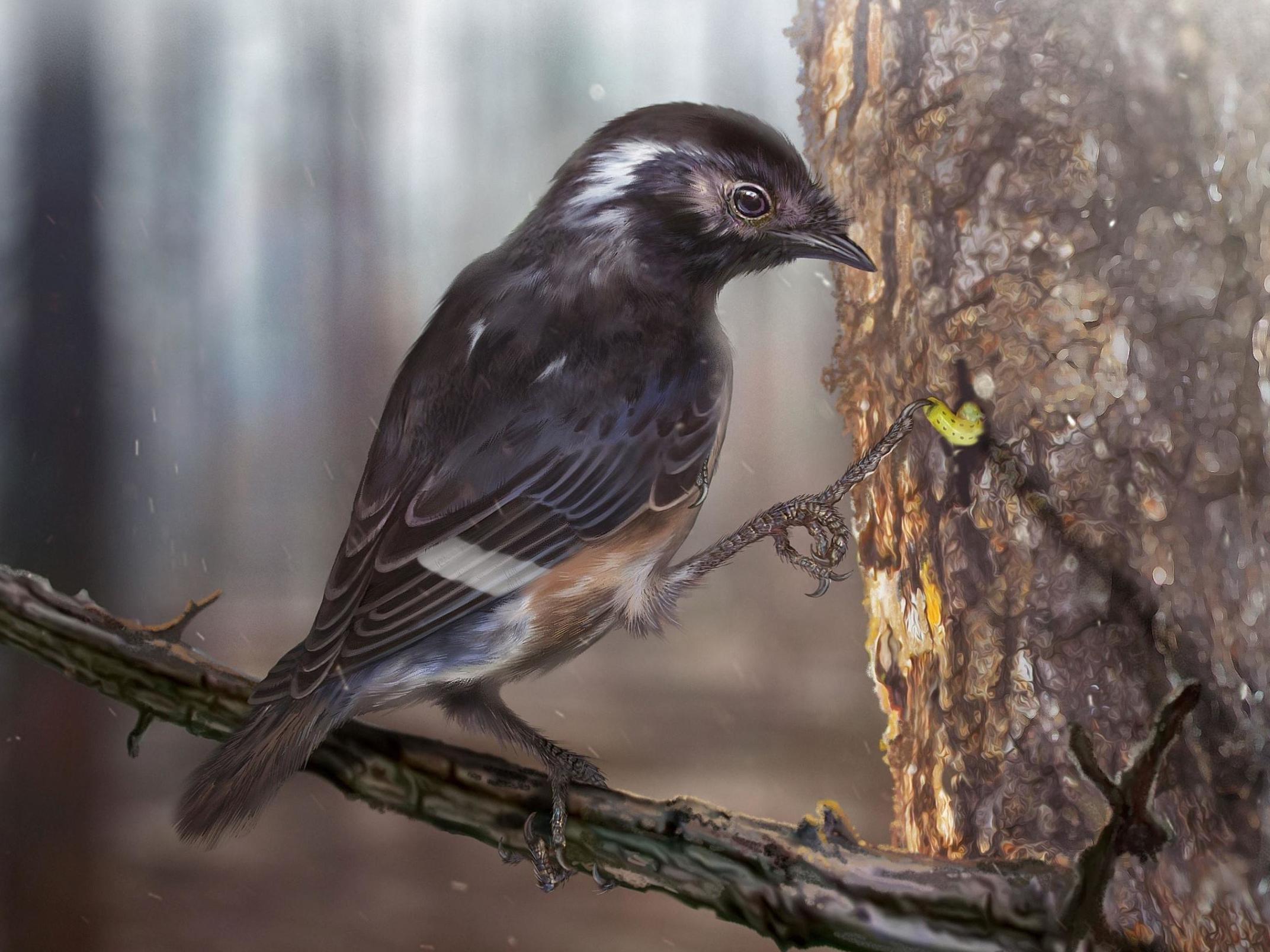
An ancient bird with a ‘hyper-elongated’ toe longer than its leg has been found fossilised in amber.
The little 99-million-year-old bird probably used its third toe to hook out grubs and insects from tree trunks in what in now Myanmar.
This is the first time such an adaptation has been discovered in birds, either extinct or living, according to the study published in Current Biology.
First author Lida Xing, from the China University of Geosciences in Beijing, said: “It shows that ancient birds were way more diverse than we thought. They had evolved many different features to adapt to their environments.”
Scientists believe the bird – which was smaller than a sparrow – spent most of its time in trees.
Co-author Jingmai O’Connor, from the Chinese Academy of Sciences, said: “Elongated toes are something you commonly see in arboreal animals because they need to be able to grip these branches and wrap their toes around them. But this extreme difference in toe lengths, as far as we know, has never been seen before.”
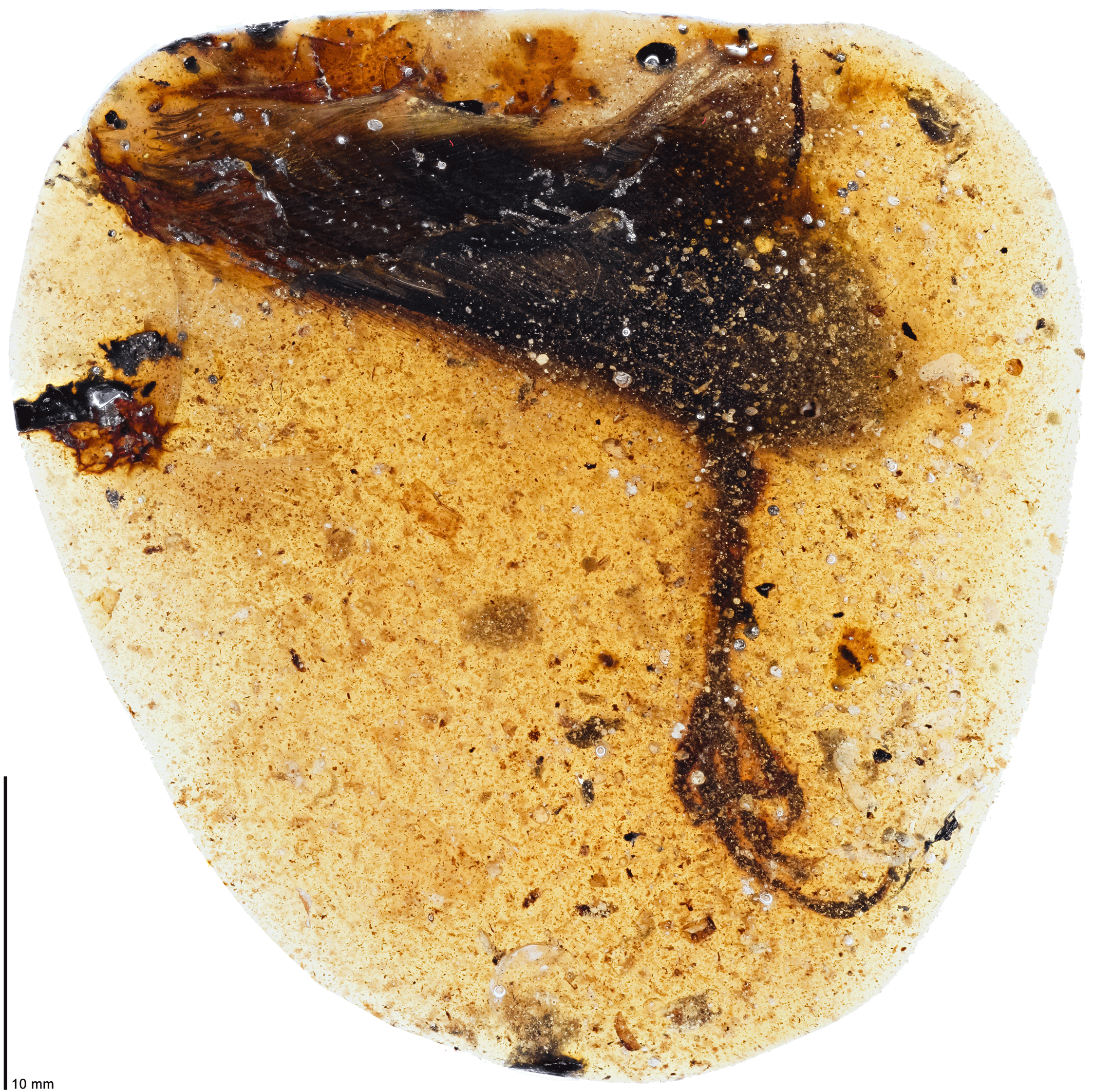
During the Mesozoic era, the Hukawng Valley, where the specimen was found, would have been full of trees which produced a gooey resin that oozed out of tree bark.
Lots of plants and small animals such as geckos and spiders got trapped in the resin and become fossilised with the amber after millions of years. In this same valley, scientists have discovered many extinct animals, including the oldest known bee and a feathered dinosaur tail.
Researchers got the amber from a local amber trader who had no idea what animal the strange foot belonged to. Scientists scanned the fossil with micro-CT and created a 3D reconstruction of the foot.
They found the bird’s third toe was 0.8 millimetres long which was 41 per cent longer than the second toe – and 20 per cent longer than the bone in its lower leg.
The team compared the ratios with those of 20 other extinct birds from the same era and 62 living birds.
The only living animal with such disproportionately long digits is the aye-aye lemur, which uses its long middle finders to fish larvae and insects out of tree trunks for food.
For this reason, they believe this bird’s long toe probably had a similar function.
Dr O’Connor said: “This is the best guess we have. There is no bird with a similar morphology that could be considered a modern analogue for this fossil bird. A lot of ancient birds were probably doing completely different things than living birds.
“This fossil exposes a different ecological niche that these early birds were experimenting as they evolved.”
Researchers named the bird Elektorornis chenguangi which means “amber bird”. It belongs to a group of extinct birds called Enantiornithes which were the most abundant bird type at the time.
Enantiornithines became extinct along with dinosaurs during the Cretaceous-Paleogene extinction event about 66 million years ago, and have no living descendants.
The scientists now hope to extract proteins and pigments from the features on the surface of the amber. This could help them better understand the bird’s adaption to the environment and whether it was camouflage.