There is a new teenager in the family, as our third daughter has just turned 13. On cue, she has become monosyllabic and self-absorbed. She frets about spots and the condition of her hair. Always a well-behaved, pleasant and generally cooperative child, she has started to protest against the strictures placed on her.
I cannot say I particularly welcome this development, but I am familiar with it, as I have two daughters who have already departed their teenage years. Frankly, on those occasions, it wasn’t as bad as everyone said it was going to be – or, at least, it didn’t represent a sudden change in their behaviour of either of them. My firstborn kicked against, and questioned authority from an early age, while her younger sister (my second daughter) sailed through adolescence with barely a tantrum or sulk.
So far, this latest entry into pubescence (I still have one to go) is perfectly manageable and, of course, healthy. Children have to assert their own identity against that of their parents at some point, and this is liable to take the form of rebellion.
Whatever kind of teenager she turns out to be, I am sure she won’t be as tiresome or as difficult as I was. I was rude, hostile and contemptuous of my parents and their friends. I was taking psychedelic drugs at the age of 15, and spent a large part of my middle adolescent years getting drunk while hanging around on street corners.
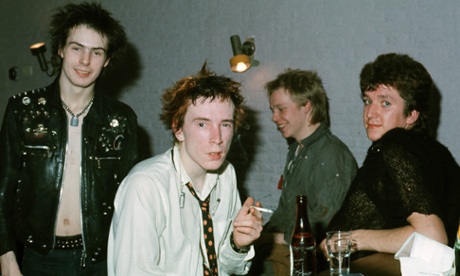
I was very unhappy and tremendously bored. Also, the era I grew up in – the 60s and 70s – idealised rebellion against the staidness of the previous generation. The culture is definitely now less inclined in that direction. I had the Sex Pistols, the Clash and the Stranglers as role models. My daughters have Taylor Swift, Jessie J and YouTubers.
Children are less restless, given all the entertainments available in a connected world. They are also, on the whole, wealthier and more conformist as a group (the youth cults I grew up with have almost entirely disappeared). Furthermore, they are more scared of failing at their studies because the employment market is so terrifying. So there is a sense in which teenagers have been partially tamed. I have a slightly skewed view as my children are all girls, and it is traditionally presumed that boys are more given to risky behaviour during this period. But some of the statistics bear out this generalised “taming tendency”. For instance, binge-drinking among teens has dropped dramatically, decreasing by a third in the past 10 years.
Extreme antisocial behaviour, once the trademark of the anguished teen, is less common, at least among those classes that have enough money to cushion the painful process of growing up. Doubtless where boredom, poverty and disillusion are more pronounced, antisocial behaviour is more widespread. Thus gang culture and provincial-town-centre piss-ups persist. However, the high-water mark of the juvenile delinquent appears to have passed.
Things are better for my kids than they were for me, which is to say, better for parents too. Children have to break away from their families, but they no longer have to smash windows and get stoned to do so. Apart from anything else, they know when they’re on to a good thing. Cchildren increasingly cannot afford to leave home when they come of age nowadays, and are stuck with their parents far longer than I was (I left home at 19). So keeping some kind of decent relations is much more necessary than it used to be. Being fed, clothed and housed in our era of insecurity must give any would-be rebel pause for thought, if only in the service of the supreme principle of adolescent life – self-interest.
• Tim Lott’s new novel, The Last Summer of the Water Strider, is published by Scribner