The business rates system is broken, unfit for purpose and has to be scrapped in its entirety, a group of business leaders told the Liberal Democrat conference this week.
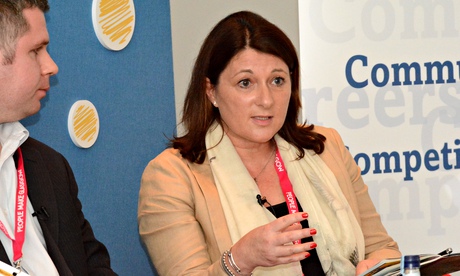
Representatives from some of Britain’s biggest manufacturing firms, leading retailers and business organisations joined forces at a Guardian-hosted fringe meeting to condemn the current system.
Mike Cherry, national policy chair for the Federation of Small Businesses, began the attack on business rates, which are paid by businesses all over the country based on the rateable value of the properties they own. “We have a system which is no longer fit for purpose,” he said. “It needs total reform.”
Cherry said there had been changes to the Scottish system which had helped small businesses – including a small business bonus scheme introduced by the Scottish Government – but these only touched the very edge of the problem. “It is subjective and it is based purely on property. It takes no ability of a business’ ability to pay,” he said. “In our view it is holding back growth and it is stymying further employment.”
Andy Pickford, property director for Tata Steel, explained how the UK’s business rate system made the country uncompetitive compared to foreign rivals. Tata pays between £11m and £13m in business rates for its Port Talbot factory and £14m to £18m for its premises in Scunthorpe every year, he told the audience. Yet in the Netherlands the company pays an annual rates bill of no more than €2.5m for a similar sized plant. “For anybody looking at the business, it is pretty difficult thing to argue against when you put these against one another. That differential has become more and more obvious, and obvious to the management,” he said.
Julian Lyon, real estate manager for General Motors in the UK, agreed that the UK rates system acted as an uncompetitive force. He said: “From a global and a European perspective, it is about competitiveness. We pay about eight to 10 times what we pay in Germany.” He described the system as difficult to manage. “The business rates are a fixed cost that keep going up,” he said.
Meanwhile Mike Spicer, director of research at the British Chamber of Commerce, said his organisation had thrown its weight behind a complete reform of the current system. Business rates represented the only tax system which the government set a fiscal target first and then collected money to meet that target, he said. Spicer contended that the tax should be devised first and the money collected later – however much, or little, was due.
Danielle Wilder, commercial director of UK cosmetics retailer Crabtree & Evelyn, said many retailers found the system so tough they had trouble making even a slight profit. Business rates were so high in many parts of the country that they had forced many retailers out of business and now only the biggest chains were left on the high street, she claimed.
Wilder said the Crabtree & Evelyn store in Kingston, south London, paid out 23% of its turnover on rates alone. “It makes retailing in this country in key towns and cities really difficult to become profitable,” she added. The impact is that many retailers are being forced to operate purely online, leaving gaps in the high street which can only be filled by large national or multinational chains.
One delegate at the fringe session pointed out that the Liberal Democrats were in favour of scrapping the business rates system and replacing it with a land value tax. He said that could solve many of the problems with the current system, making it simpler, easier to collect and fairer. There was cautious support among the panel of speakers for that solution, but they warned that, unless it was handled properly, it could prove to be as complex as business rates. Wilder summed up the consensus when she said: “Simplicity. Simplifying the process is a must.”
This conference fringe debate was designed and produced by the Guardian to a brief agreed by partners BRC, Tata and General Motors. All content is editorially independent.
Read more from the Guardian Big Ideas at the 2014 party conferences.