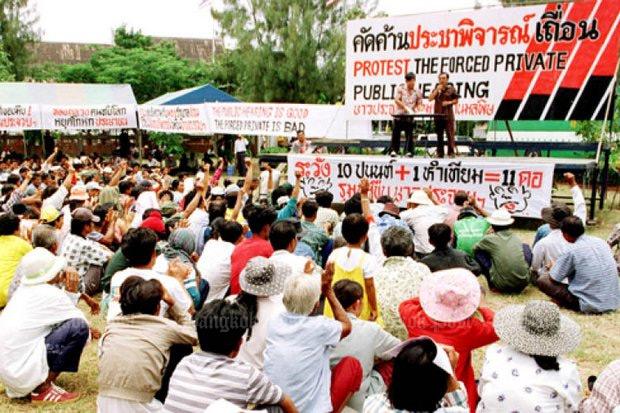
The national Power Development Plan (PDP) for 2019-2027 has been opened for hearings -- and is about to be concluded -- this month. Yet, questions remain about the plan's content, particularly the proposed massive cuts to the energy conservation goal, and the hearing procedures.
Under the proposed PDP, the country's conservation plan will be cut by more than half of the 2015 goal, or 4,000 megawatts that is equivalent to 7.4% of the 2037 peak load. The 2015 PDP set the conservation goal at 9,645MW, or 16.3% of the peak load predicted for 2036.
The proposed cuts have been reduced to a point that they will compromise the target set in the government's Energy Efficiency Plan (EEP) goal for 2015-2036. Worse, if the PDP goes ahead, the initial target for 2027 that is set at a very low level means there will be no conservation programmes in the state plan during 2019-2027.
It's well known that investment in energy conservation through an energy efficiency (EE) edict can ensure the lowest energy production costs, in addition to improving the country's environment.
This is why all countries around the world choose to invest in conservation through EE before considering options for power plants they may need. In accordance with the 2015 PDP, Thai authorities are obliged to increase the conservation amount every year in order to meet the target, which means the country can scrap 12 new power plants with accumulated capacity of 10,000MW.
In addition, the new PDP states vaguely that it will consider only "conservation measures with quality and price-competitiveness", which means prices will not exceed grid parity or electricity costs from production lines.
The statement is not just unrealistic, but it also contradicts the fact that the EE scheme guarantees lower costs in power development -- and for that it is a noteworthy option.
Such a huge reduction in the conservation plan raises questions about what to do with the energy conservation fund, established in 1992, that involves several billion baht.
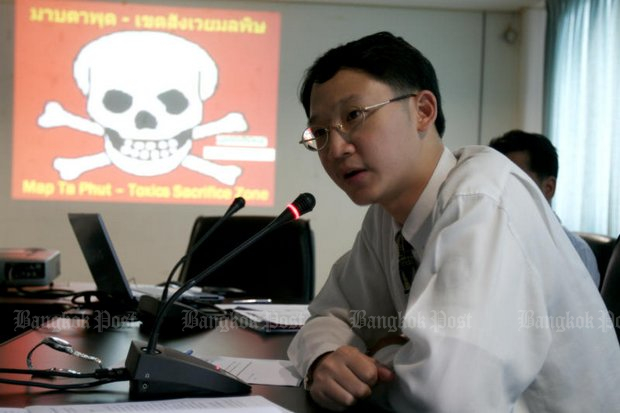
Apart from the dubious proposal of cutting back the conservation effort, the hearing procedures seem to suggest the energy policy planners pay little if any attention to accountability and transparency as there are complaints about the short notice given for hearing dates, which took place in Bangkok on Dec 17 after the regional hearings. I found the notice on the Office of Energy Policy and Planning website on Dec 15, while a number of stakeholders learned about it on Friday, Dec 14. It should be noted the authorities, with ill intentions or not, gave the participants little time to access the PDP draft. I could print the draft on Sunday, Dec 16, hours before the event on Dec 17 which took place at the government administration centre.
If policy planners wanted stakeholders to know enough about the draft so we could offer a constructive contribution, they would not have prepared it this way. There is no valid excuse to block critics from the information, given that all the charts are similar to those present in the regional events.
Or is this just a tactic to make the hearings a token process so the flawed PDP draft can be adopted? Not to mention some complications resulting from technical changes. Previously the energy policy planners would make five master plans at the same time -- the Alternative Energy, Energy Efficiency, Natural Gas, Oil, and Power Development plans -- so that all the plans will be in accordance with each other.
But this year, only the PDP are being planned. It's necessary that the energy efficiency target be revised. At least, the government should aim for 10,000MW by 2037, with clear steps and goals to be achieved from 2019 to 2037.
There is no reason to abandon the energy efficiency effort. Some advanced countries and territories such as South Korea and Hong Kong take pride in their high energy efficiency economies.
If we are to follow them, we should adopt an ambitious goal, 30% of the projected demand or 17,800MW by 2037. Too ambitious?
No, I would say. It's a goal we can achieve if we have the political will.