In the eyes of Michigan’s government, professors Tom and Tod McMillen-Oakley are father to their daughter Anna, but only Tod is Eli’s father. And neither is their 2008 marriage in California recognized by the state where they live, love and work.
The couple has been together for nearly 20 years and their families are so intertwined that their parents vacation together without them. But if something happens to Tod, Tom has no control over what happens to their son because Michigan will not allow the recognition of same-sex marriage in the state. As far as Eli and the state are concerned, he has only one father.
“Unicorns and rainbows aren’t going to show up suddenly when this [same-sex marriage] happens, but it’s certainly going to make life a little more set and we’re not going to have this what if, what if, what if, happening,” Tom McMillen-Oakley told the Guardian.
On Tuesday, the US supreme court heard oral arguments in a consolidated case challenging four states’ same-sex marriage bans, including Michigan’s, which passed by popular vote in 2004. Same-sex marriage campaigners are hoping, and constitutional law professors are expecting, that a favorable ruling from the justices could be the final step for securing marriage rights for gay and lesbian Americans – including those who, at one time or another, had them.
Due to earlier actions by the supreme court, marriage bans have fallen in nearly every state that had one before June 2013. Only 13 states still ban such marriages.
Tom McMillen-Oakley, the author of the blog and book Jesus Has Two Daddies, married Tod in California in 2008, on the seventh anniversary of their earlier commitment ceremony. Shortly after, thanks to a voter-supported state ballot initiative, California made same-sex marriage illegal again. Both Tom and Tod are considered parents to their daughter Anna because of a brief period when one judge in the state allowed second parent adoption. Eli was not so lucky.
“I’m getting tired of waiting,” Tom said. “It’s time to allow us to reap the full benefits of marriage. It’s time for us to be recognized as a family, not just this marginalized group of people, which we are.”
‘For many people, marriage equality is the last stop’

Activists B Cole and her wife Aisha were also married in California, during the less than month-long window in 2004 when San Francisco mayor Gavin Newsom allowed such marriages in the city. She said the atmosphere was magical that day, and remembers that one of the couples that married had brought their luggage, traveling straight to City Hall from the plane.
“We were swept up in it because it felt like the ushering in of a wave of new opportunity for LGBTQ people,” Cole said. “What we realized in the last decade, essentially, is that, for many people, marriage equality is the last stop on the train.”
The nearly 4,000 same-sex marriages in San Francisco were invalidated the following year. As California residents, the couple can now legally marry thanks to last year’s supreme court decision striking down the state’s ban, but they are holding off until it is legal across the US and until there is equal opportunity and equity for all LGBTQ people of color.
Members of this group are more likely to live in poverty, according to a report released last week by a coalition of thinktanks including the LGBT Movement Advancement Project. Anti-LGBT laws disproportionately affect that community, in part because they are more likely to be raising children than white LGBT people – meaning they are more susceptible to laws that limit familial rights.
“Unless we’re willing to look at the factors and barriers that impact those who are the furthest from resources in our community, then we’re not going to be able to enjoy the fruits of our labor,” she said.
Cole is the executive director of the Brown Boi Project, which incorporates gender and sexual orientation justice with racial justice to improve the community’s rights beyond marriage. And with that right expected to be granted federally, Cole and other activists are bracing for same-sex marriage opponents to push against specific parts of the LGBT community. “They are moving to the intersection of gender and race and we have to be ready as a movement to defend all of our community ... I’m excited about that,” Cole said.
For some couples, the right to marriage would remove a frustrating level of bureaucracy that serves as a constant reminder that the way they love is not recognized by the state that they live in.
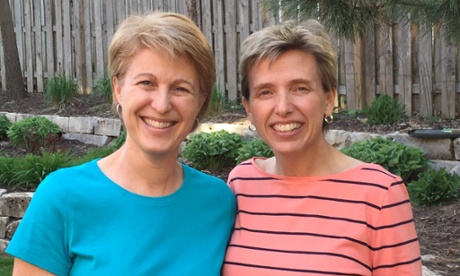
Sue Stroesser and her wife, Mary, have been together for 30 years and moved to Iowa in 2009 to become one of the first same-sex couples to be married in the US, when that state became the fourth the legalize same-sex marriage.
Now they live on the other side of the Missouri River in Nebraska, where same-sex marriage is not legal or recognized, but is home to both them and their families.
“I am these people. These are my people who live here – that make decisions and work in places,” Stroesser said. “These are my people. I am from here.”
Stroesser, who has an Iowa driver’s license, tried to get a Nebraska license last year, ahead of the 2014 election, but the Department of Motor Vehicles denied her application. She changed her name after marrying in Iowa, but the state will not recognize her Iowa marriage license, and therefore her new surname.
To obtain the documents, she will have to change her name in the state, even though it is accepted on her passport, mail and taxes.
“It’s paradoxical and it’s unsettling,” she said. “On the one hand there is the affirmation from the state, and on the other side we don’t recognize you.”