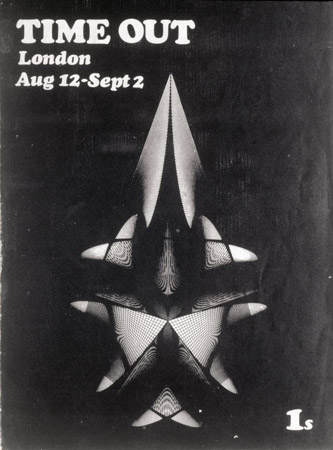
August 1968: Keele University student Tony Elliott launches Time Out with £70 an aunt gives him for his 21st birthday. Now aged 61, he is chairman of a multimillion-pound global publishing operationPhotograph: Time OutAugust 1968: The first issue - a double-sided A2 sheet - has a print run of 5,000 copies and is priced at one shilling. Listings include Jethro Tull gigs at the Marquee and the Middle Earth club's Magical Mystery Tour at the Roundhouse. The 'Marches/Meet the fuzz' section claims 'Nothing much on this month' - ironic in a year of political and social unrestPhotograph: Time OutJuly 1971: By the early 1970s, Time Out has become an A4 glossy weekly, having spent a spell as an A5 fortnightly. The 'glowing neon' logo - designed by Pearce Marchbank - was intended to be temporary, but lasted more than three decadesPhotograph: Time Out
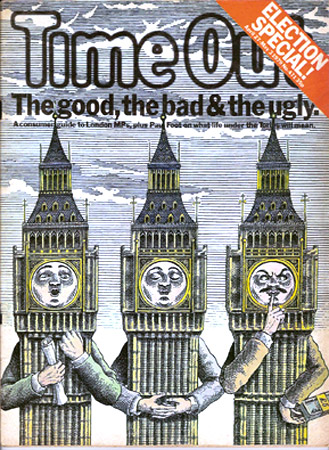
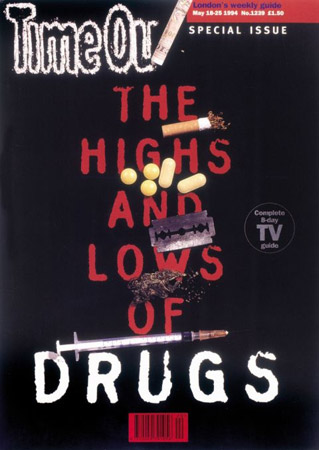
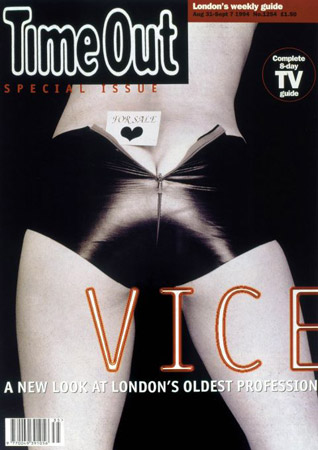
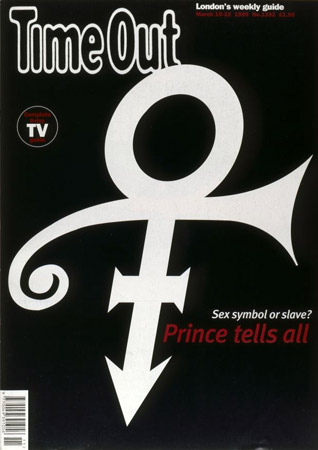
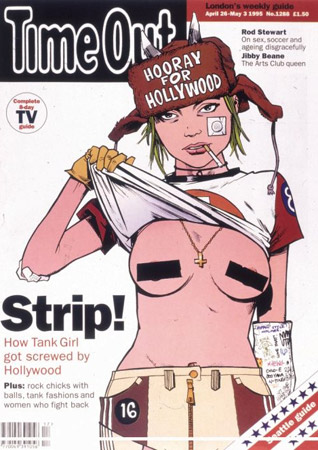
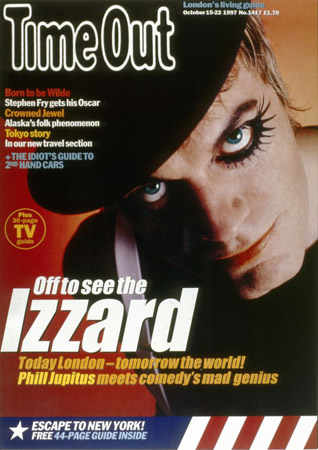
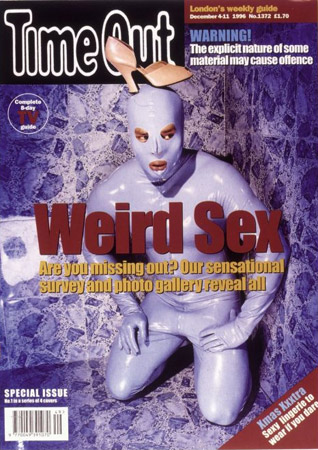
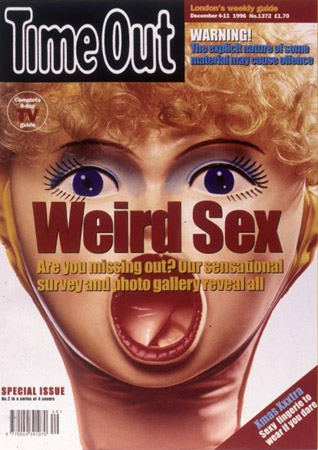
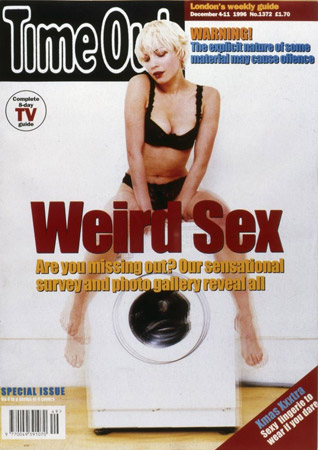
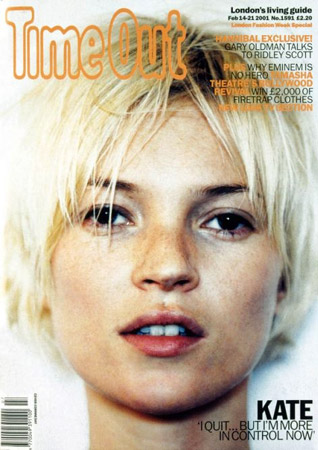
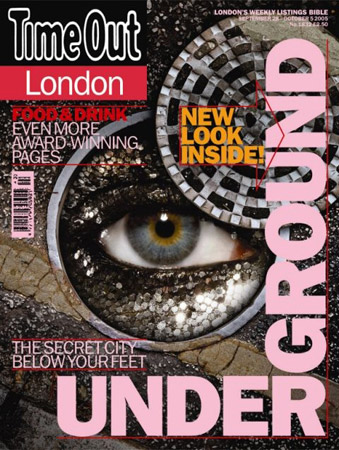
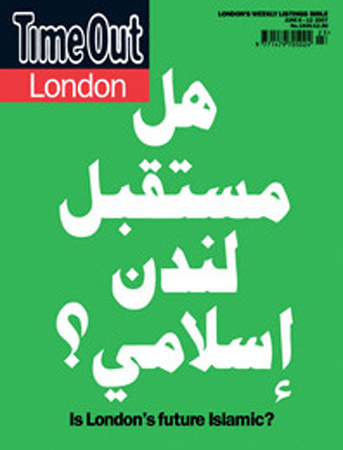
October 1973: With Marchbank as art director from 1970 to 1983, the magazine developed a striking visual style for its covers, here using colour and typography to great effectPhotograph: Time OutApril/May 1979: While Time Out's news pages became famous for their radical political stance, its illustrated covers also made a mark. This 1979 cover by Peter Brook - now the political cartoonist on the Times - highlights the implications of the looming general electionPhotograph: Time OutJune 1979: Time Out marks 10 years since the Stonewall riots launched the gay liberation movement. The graphic image of the pink triangle highlights the magazine's role in charting social changePhotograph: Time OutJune 1982: Pop star Toyah Willcox fronts a cover feature on 'Pop's new mini moguls'. Thankfully a flexi-disc of her music is not includedPhotograph: Time OutNovember/December 1985: By the mid-1980s, Time Out is already celebrating London's punk and mod heritage. The cover also trails a piece by Julie Burchill, one of the many writers championed by the magazinePhotograph: Time OutMay 1994: For an issue focusing on drugs, journalists keep a diary under the influence and the SellOut section compiles a consumer chart. The cover was shot as one image - 'the only time I've managed to claim drugs on expenses', remembers the then art director, Jeremy LesliePhotograph: Time OutAugust/September 1994: From drugs to sex: a Helmut Newton-style cover trails a special issue on the vice industry. Such covers boosted sales of the issue by 20% or morePhotograph: Time OutMarch 1995: The magazine secures an exclusive interview with The Artist Formerly Known as Prince. Journalist Peter Paphides is not allowed to use a tape recorder or notebook, so has to transcribe the Purple One's comments from memory. The magazine is also denied a photoshoot of the star, so a symbol is used instead Photograph: Time OutApril/May 1995: Jamie Hewlett - later famous for his collaboration with Blur's Damon Albarn as Gorillaz - spills the beans on how his Tank Girl movie 'got screwed by Hollywood'. In a nod to the magazine's growing international focus, the corner flash trails a guide to Seattle; the title launched a New York edition in the same yearPhotograph: Time OutOctober 1997: Eddie Izzard is given a Clockwork Orange-style edge in a striking cover shot by photographer Perou. Fellow comedian Phill Jupitus - now a Never Mind the Buzzcocks regular - does the interviewPhotograph: Time OutDecember 1996: Returning to a sales staple, the magazine focuses on 'Weird Sex'. Four alternate covers are picked by art director Kirk Teasdale from more than 100 images contributed free by artists and photographersPhotograph: Time OutDecember 1996: The second of the 'Weird Sex' covers, which anticipates the similar-looking cover of Irvine Welsh's Porno by some seven years. The attention-grabbing image no doubt helped inflate salesPhotograph: Time OutDecember 1996: Another image offers a slightly 'cleaner' take on the 'Weird Sex' themePhotograph: Time OutFebruary 2001: The face of Kate Moss dominates the London Fashion Week specialPhotograph: Time OutFebruary 2003: A Valentine's Day cover with a twist highlights the protests against the Iraq war. The word 'London' has been added to the masthead to differentiate the UK title from the growing number of editions in cities worldwidePhotograph: Time OutSeptember 2005: The magazine marks a relaunch under new editor Gordon Thomson, aiming to 'engage with Londoners in a new way'Photograph: Time OutApril 2007: The magazine addresses a tough issue with a typically brave and hard-hitting treatmentPhotograph: Time Out
Sign up to read this article
Read news from 100's of titles, curated specifically for you.