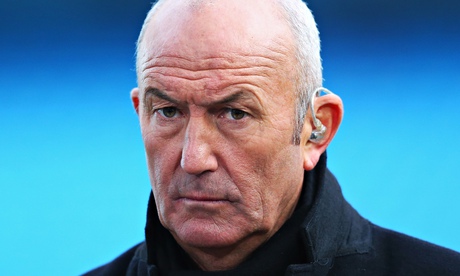
The writing had been on the wall long before the first frustrated murmurings of “Warnock out” were issued from those in the Holmesdale end. The Boxing Day grumblings quickly hardened when the team’s most potent attacker was substituted for a full-back with Crystal Palace trailing by three to dip beneath the cut-off. If there was a certain logic to that replacement, with damage limitation and a desire to save Yannick Bolasie’s legs for Sunday’s game at Loftus Road in mind, then there was sense, too, in wielding the axe now. Neil Warnock’s return to Selhurst Park had always felt an unconvincing fit. Now that uncomfortable arrangement has ended in a rapid divorce.
The club finds themselves in familiar territory. Outside the bubble of those who have an affinity with Palace, the team’s toils this term had slipped under the radar, the focus drawn instead to those flashes of extravagant skill mustered by Bolasie or Wilfried Zaha, or to the industry of the bearded duo in midfield as Liverpool were sunk in south London. The raucous atmosphere on that occasion, coupled with clips of game-play viewed in isolation from highlights packages, had suggested all the qualities prevalent through Tony Pulis’s startling spell in charge last term had been retained. The reality was the 3-1 success over the Merseysiders – Dwight Gayle’s poaching, Bolasie’s humiliation of Martin Skrtel and that thumped free-kick from Mile Jedinak – had been the blip.
That is the only win this team have managed in 12 league matches and the qualities that had set Pulis’s side apart have long been on the wane. The defence has rarely felt more prone, and there are only two more obliging in the top flight. The forward line, for all the erratic brilliance on the flanks, has been blunt. The only surprise has been that it has taken this long for the relegation zone to swallow them up, an indignity finally achieved with the latest limp display against Southampton on Boxing Day.
A year ago Palace sat a point better off and just above the condemned but were on an upward trajectory, a climb that would eventually carry them – via key additions in the midwinter window – into mid-table. This time around the trend has been hauling them in the opposite direction, and even results against fellow strugglers have been shoddy, with one victory achieved against the current bottom eight. Three wins in 16 league games was a poor return for Warnock, but more alarming still was the fact there was no evidence of improvement. This squad is better than last term’s, and yet everything apparently now depended upon further improvements in January.
Faith that the 66-year-old would extract better from a strengthened playing staff had drained. He had arguably been placed in an impossible position – or rather manoeuvred himself into one given his eagerness to persuade the co-owners to turn to him back in August – in following Pulis, the manager of the year. The latter’s decision to leave on the eve of the new season had provoked its own chaos. Palace were already playing catch-up from the start. But the least the hierarchy would have expected was a maintenance of the basics from last year’s upturn: defensive solidity; bite on the break; conviction in the collective. Instead, the organisation has rarely been evident. Steve Parish, the public face of the board, had made an unexpected appearance at training over Christmas to observe the preparations being put in by Warnock, Ronnie Jepson and Kevin Blackwell for the Southampton fixture. It is safe to assume he was unimpressed with what he witnessed in Beckenham.
Maybe now even he might concede this had always been the wrong appointment, even in the shocked aftermath of Pulis’s sudden departure. Warnock had felt like a safe pair of hands, an experienced manager who knew Palace, had a point to prove and was enthusiastic at the prospect of an unlikely return to the dugout. He had apparently been eager to welcome Zaha back from Manchester United, willing to loan Glenn Murray to Reading, and even tolerant when others might have suggested takeover talks involving the American Josh Harris might be a distraction. Yet the tactics have felt rather staid, the fit just wrong, and not all the players were convinced. The regular complaints about decisions going against his team – many justified – started to grate even with those who were essentially sympathetic.
Parish’s instinct would have been to give Warnock the game at QPR, his former club, before making a decision, but the manager probably sealed his own fate with his observations on Friday night. “I thought [Palace] had a lot of luck last year,” he had said. “I don’t see us having much luck this year.”
He had a point: there were times last term when Palace pilfered wins on the break. But they also boasted resilience, ruthlessness and a spirit that gave them a chance. The bulk of the players who ended up 11th in May remain and would hardly have been impressed at the notion that inspiring the third highest placing in the club’s history had been down largely to good fortune.
Just as damaging was the resignation setting in among the support. There was a hush around Selhurst Park at times on Friday, almost an acceptance of the worst. That in itself was damning given so much about CPFC 2010’s ownership has been about spirit and pride. This was only heading in one direction and, beyond the QPR and Aston Villa fixtures, the prospect of a rudderless side losing the FA Cup third-round tie at non-league Dover next month was unthinkable.
Parish will hope a new man will be in charge by then. The hierarchy apparently do have a plan, which is being implemented. While there is no prospect of Pulis returning there are other options, of a kind: Tim Sherwood had been interviewed in August only to lose heart once Malky Mackay emerged as the favourite to take the reins; Chris Hughton has top-flight managerial experience, albeit tainted by Norwich’s demotion last May. Bridges have been rebuilt with Dougie Freedman and, while reappointing a man sacked by Bolton a few months ago might be surprising, he retains an affinity with many of the playing staff at the club. Might Tony Popovic, who worked under Freedman and has recently excelled at Western Sydney Wanderers – albeit not this term – be persuaded to return to London? It is a measure of how awkward the arrangement with Warnock felt that all those potential appointments would appear progressive.
Whoever takes over, the immediate prospects are ominous. Jedinak, one of the division’s more effective midfielders, and Bolasie depart for international duty with the Asia Cup and Africa Cup of Nations effectively ruling them out next month. The transfers the hierarchy had hoped to secure early may also now need rethinking, or at least the approval of the new manager. And will players be willing to join a team without a talisman?
Palace had undertaken painstaking due diligence back in August and, undermined by the controversy around Mackay and unconvinced by Steve Clarke, ended up turning to someone they knew. This time they must make a leap of faith, and they must make it swiftly. Time is running out.