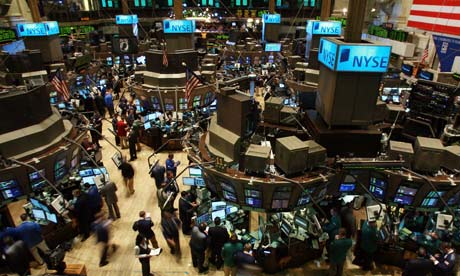
The UK stock market is in crisis. Over the last decade the FTSE 100 index of shares, which represents over three-quarters of the total value of the London Stock Exchange, has flatlined. The picture is the same in the US where the Dow Jones industrial average has been hovering at the same level for over 10 years. Commentators are calling this the "lost decade".
But not everyone has lost out during this period. If you were fortunate enough to be part of the 4% of the UK workforce connected to the financial industry, then you would have enjoyed a wage far in excess of the national average and shared in a bonus pot of over £11bn annually.
Neither would you have lost out if you were lucky enough to be running any of the top companies in the FTSE. During the lost decade the average annual bonus of directors of FTSE 100 companies increased 187% and director's salaries 64%.
Of course, there have been losers. In this case, it's the investors. Historically, most of the investors in the stock market were wealthy individuals but recently there has been a major shift towards institutional investors, including pension funds, insurance companies and banks. This change has injected enormous sums of new capital into the stock market but it has also had the effect of making the majority of the public vested players, often without their knowledge.
So the majority of those who have lost out are average earners whose pensions and savings have been invested on the stock market with little return. This situation has been made worse with the recent collapse in the global economy. The subsequent bail out of banks and insurance companies by the government has meant that the public have suffered the double blow of seeing their taxes used to rescue the very companies that have been wasting their money.
This has resulted in huge amounts of frustration and anger. Over 1,000 people have already been arrested during protests on Wall St in New York, and there are signs that this is the beginning of a global protest movement against the stock market and how it operates.
But one major positive may yet emerge from this crisis: a unique opportunity to reinvent the stock exchange. Currently, there is no meaningful restriction on what type of business can be listed and offer its shares for sale on the London Stock Exchange, other than some basic financial requirements. Neither do the traders have any concern for the welfare of the companies whose shares they are trading. A culture has evolved where maximum returns are sought in the shortest timeframes possible, irrespective of whether this is against the long-term interest of the companies involved.
A new social stock exchange could radically change this, and only companies with a clearly defined social purpose would be allowed to list. The idea has existed for several years and Muhammad Yunus, perhaps the world's best known social entrepreneur, has been one of the leading voices calling for its formation.
There are plans to create a global social stock exchange based in London by 2013, an initiative backed by the Rockefeller Foundation. The Social Stock Exchange, as it would be called, would be regulated by the UK's Financial Services Authority and will insist that any participating enterprise is subjected to a social audit before being accepted. The exchange will hope to target long-term, patient investors who are attracted by a combination of the steady returns and demonstrable social impact.
If a social stock exchange is to be successful it will need to develop its own infrastructure to facilitate trading. Rating agencies and reporting formats will need to be established that can measure and communicate social impact as well as financial performance. Legal issues will need to be addressed to ensure that companies are not bound to maximise profits and shareholder returns to the detriment of their social mission. Remuneration packages for the directors of the companies who are listed on the new exchange and the brokers, traders and fund managers responsible for dealing in the shares, will also need to be examined to ensure they are linked to creating real value.
Despite many obvious challenges, a social stock exchange represents an important first step in understanding how economies can promote and fund enterprises that deliver long-term financial and social returns. To progress, the new exchange has to attract the right companies and the right investors. There is also a need to educate the public so they better understand where and how their money is being currently invested and offer them the choice to reinvest it in a social stock exchange.
The global financial crisis has had many negative effects but it has also provided a golden opportunity for social enterprises to move into the centre of the financial system and reboot it from within. If successful, a social stock exchange which benefits investors and society could define a new model for the stock market, and challenge the value proposition of the traditional stock exchanges.
Dermot Egan is founding director of the Hub, and you can follow him on Twitter @dermotegan
This content is brought to you by Guardian Professional. To join the social enterprise network, click here