Home
For You
The Morning Edition
Saved Articles
0
Reading History
Publishers
My Topics
My Account
My Membership
Recommend inkl
About inkl
FAQs
Logout
Sources
Pricing
Download
Sign In
Sign Up
Lead Stories
Good News
Our Picks
Business
Analysis
World
Politics
Climate
Entertainment
Sport
Technology
Science
Get all your news in one place.
100’s of premium titles.
One app.
Start reading
Get all your news in one place.
100’s of premium titles. One news app.
Start reading
The Guardian - UK
Business
Words: James Brabazon
Tim Hetherington in Libya: witness to war – in pictures
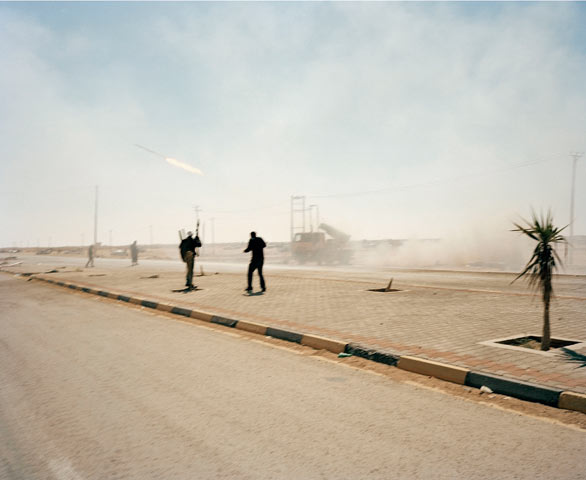
Imagine for a moment that the man who took these photographs in Libya is not dead. Try, if you can, to forget that these are the last pictures that Tim Hetherington made: the mortar bomb is still in the air over Misrata; the shrapnel still in its casing; Hetherington’s heart still pumping blood that has not been spilled. →
Photograph: ©Tim Hetherington/Magnum
Hetherington made these pictures to be seen; and they should be seen because they are visceral, immersive and transformative – not because they are souvenirs. →
Photograph: ©Tim Hetherington / Magnum
Yet although this is a portfolio of work created by an artist perfectly in control of his medium, and not a memento mori, Hetherington’s death does inform this work in one crucial aspect: it is unfinished. Though he took these pictures to be looked at, he would not have edited them in this way, nor published or captioned them in this manner. →
Photograph: ©Tim Hetherington/Magnum
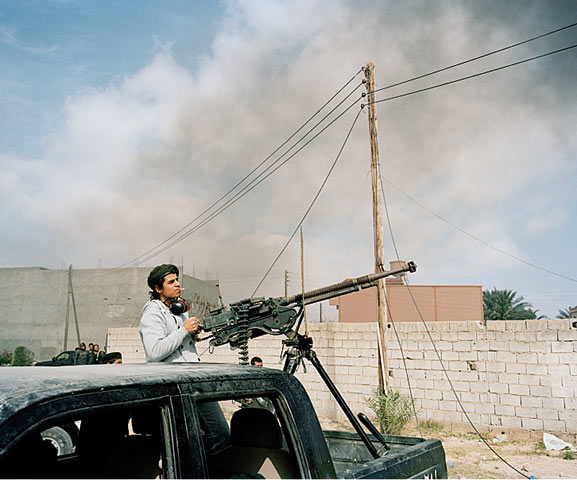
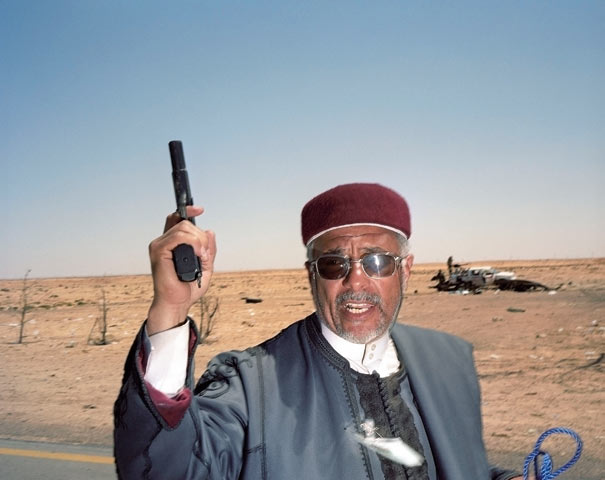
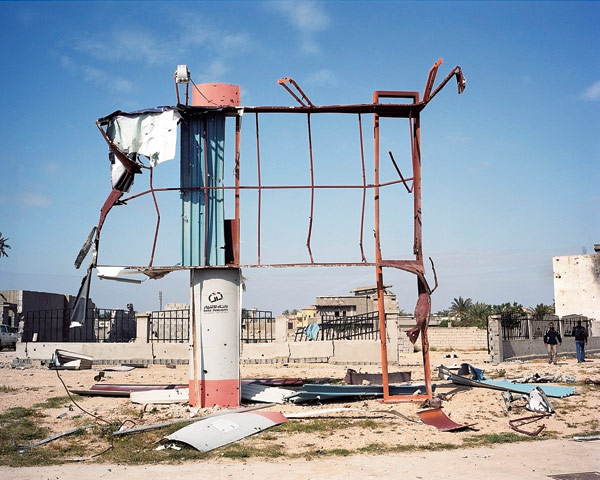
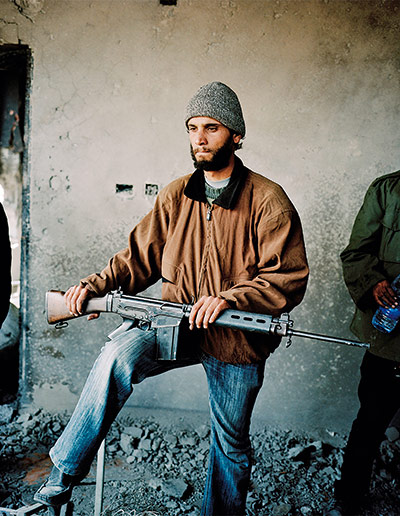
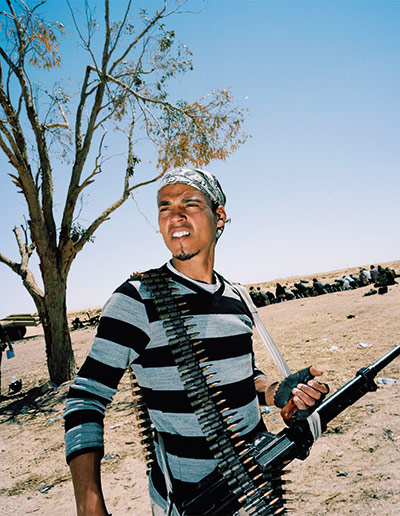
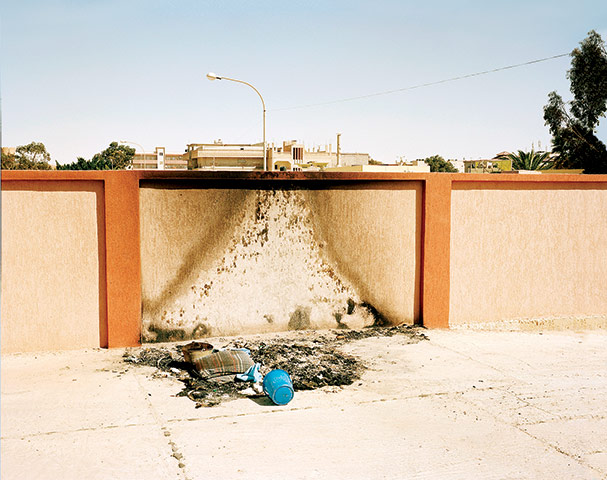
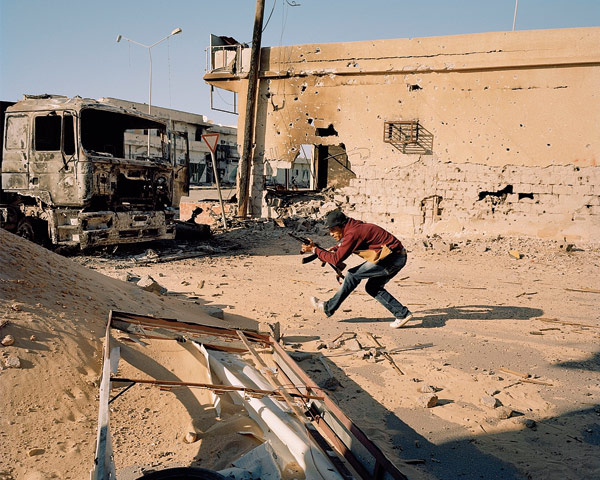
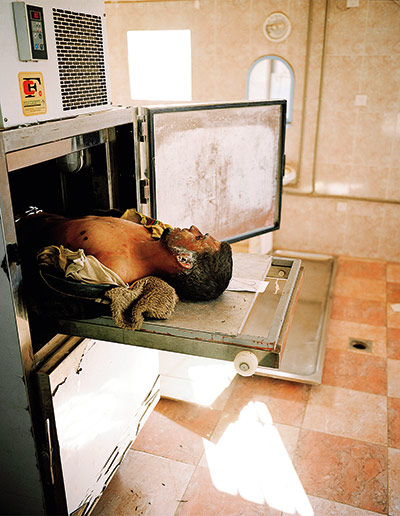
In Libya, Hetherington was still exploring the ideas and imagery of young men at war. The bright, flash-lit portraits of fighters are part of his evolving attempt to understand how and what the rebels thought of themselves – but it is hard for us to make sense of these images in the way that Hetherington would have. What he left behind are his trademark signposts to the visual landscape of war – blast-twisted buildings, bloated corpses, the dash for cover – but what we cannot, ever, see is the ultimate horizon beyond these frames that Hetherington saw, and was working towards. →
Photograph: ©Tim Hetherington/Magnum
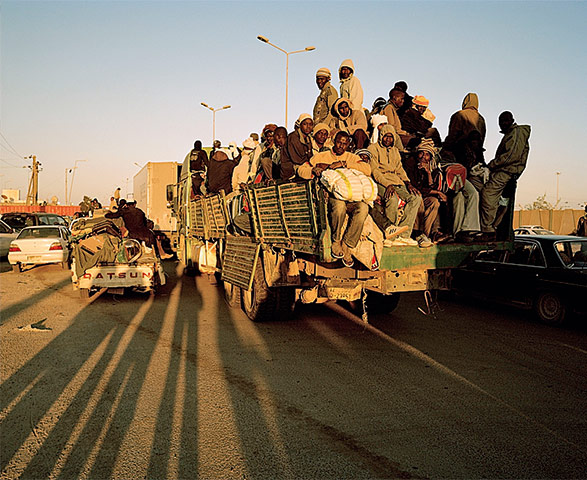
This project began with the young rebel soldiers he met in Liberia, and continued with the US soldiers he filmed and photographed in Afghanistan’s deadly Korengal Valley. Hetherington was rapt by these young men and in turn by their own attraction to war, but as close as he got to the fighting and the fighters, he never became one of them, nor wanted to. The images published here illustrate his role as a privileged, self-conscious observer: the long shadows of the men with cameras in the Misratan sun; and the self-portrait, with camera. But his eye does not quite meet his, our, eye – as if he is not yet ready to look into the lens himself. As well as observing young men at war, Hetherington is trying to observe himself. It is this honesty, this personal unease perhaps, that helps make his work unique. →
Photograph: ©Tim Hetherington/Magnum
Men with guns; men with cameras: Hetherington understood the brutality of war and, critically, its fascination. These pictures reveal by turns its bravery, beauty, bravado, boredom, banality. There is no sentimentality for the conflict, the country or the young men’s roles as rebel, victim or aggressor. Hetherington’s comprehension of the condition of war was profound, and in losing him we understand less about war and what motivates young men to wage it. →
Photograph: ©Tim Hetherington/Magnum
Along with a handful of photographers of his generation, Hetherington grasped the nature of war so well because he respected it. He was a cautious, careful professional – assessing risks and making informed judgments about his security and the safety of those around him. →
Photograph: ©Tim Hetherington/Magnum
But what Hetherington developed uniquely was his own understanding of what it meant to be a witness, and how to interpret his role as spectator. It’s telling that he chose to shoot these photographs on colour negative film with a large, medium format camera. There are only 10 frames on each paper-backed roll of film – technology that has not changed since the 30s. Shooting like this slows you down. Each picture is a conscious decision. For a moment the war stops, and is constructed as a single, formal frame. →
Photograph: ©Tim Hetherington/Magnum
He shot in Libya in the same way as when we worked together in Monrovia in 2003 – taking photographs of the Liberian rebels in combat with government soldiers. Once, trapped in a car during an ambush that had already killed several people around us, Hetherington handed me a roll of shot film while he silently loaded another. As high-velocity rifle rounds tore up the vehicles on either side of us, he calmly took pictures of the attackers through the window, one careful frame at a time. →
Photograph: ©Tim Hetherington/Magnum
Making pictures like that was the essence of Hetherington: in Libya he placed himself at the centre of the world’s biggest news story, and chose to shoot photographs in such a way that they had no immediate news value. By separating himself from the more reactive work of his colleagues, he freed himself, and us, so that we might not only look, but see.
Photograph: ©Tim Hetherington/Magnum
Sign up to read this article
Read news from 100’s of titles, curated specifically for you.
Email is required
Email is invalid
Email is already registered.
Please
sign in
instead.
Start reading
Already a member?
Sign in here
Top stories on inkl right now
2 tugboat crew members killed in 'confined space incident' on barge, Coast Guard says
Two crew members of a tugboat were killed and two others were injured in what the Coast Guard described as a “confined space incident” aboard a barge last weekend in southeast Alaska
The Independent UK
New York high school student released after 10 months in ICE facility
The detention of Dylan Lopez Contreras, 20, of Venezuela, a freshman in the Bronx, sparked national outrage
The Guardian - US
Kash Patel admits under oath FBI is buying location data on Americans
Admission came during questioning at Senate intelligence committee worldwide threats hearing
The Guardian - US
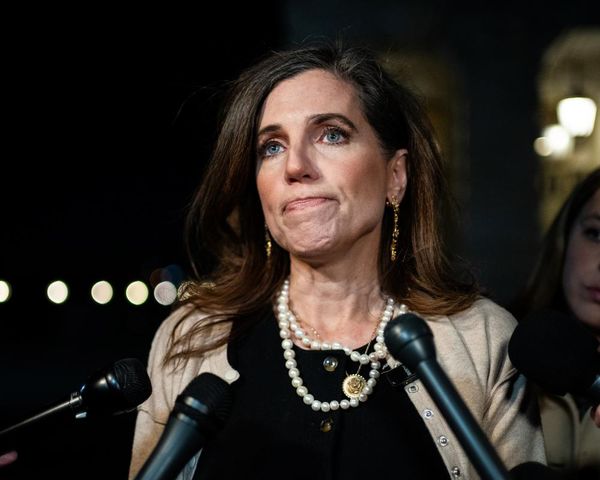
Nancy Mace draws White House ire over independent Middle East rescue efforts
Exclusive: Republican congresswoman started negotiations with Saudi Arabia without informing the White House
The Guardian - US
One subscription that gives you access to news from hundreds of sites
Email is required
Email is invalid
Email is already registered.
Please
sign in
instead.
Start reading
Already a member?
Sign in here
Nancy Guthrie Update: Law Enforcement Continues to Process Forensic Evidence
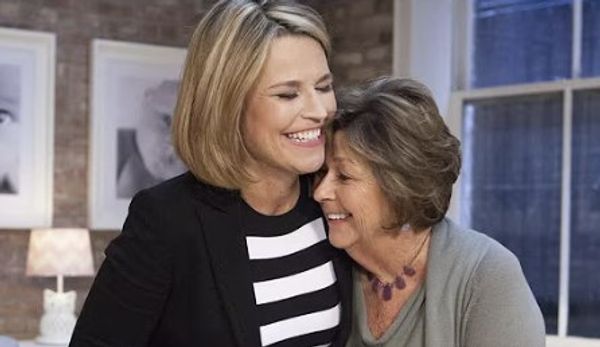
TUCSON, Ariz. — Nancy Guthrie, the 84-year-old mother of NBC News anchor Savannah Guthrie, remains missing more than six weeks after authorities say she was taken against her will from her home in the Catalina Foothills outside Tucson in the early morning hours of Feb. 1, 2026.
International Business Times
FBI says suspicious package found at Florida Air Force base contained 'possible energetic materials'
The FBI says a suspicious package found at MacDill Air Force Base contains possible energetic materials, and the investigation is ongoing
The Independent UK
Related Stories
Top stories on inkl right now
2 tugboat crew members killed in 'confined space incident' on barge, Coast Guard says
Two crew members of a tugboat were killed and two others were injured in what the Coast Guard described as a “confined space incident” aboard a barge last weekend in southeast Alaska
The Independent UK
New York high school student released after 10 months in ICE facility
The detention of Dylan Lopez Contreras, 20, of Venezuela, a freshman in the Bronx, sparked national outrage
The Guardian - US
Kash Patel admits under oath FBI is buying location data on Americans
Admission came during questioning at Senate intelligence committee worldwide threats hearing
The Guardian - US
Nancy Mace draws White House ire over independent Middle East rescue efforts
Exclusive: Republican congresswoman started negotiations with Saudi Arabia without informing the White House
The Guardian - US
One subscription that gives you access to news from hundreds of sites
Email is required
Email is invalid
Email is already registered.
Please
sign in
instead.
Start reading
Already a member?
Sign in here
Nancy Guthrie Update: Law Enforcement Continues to Process Forensic Evidence
TUCSON, Ariz. — Nancy Guthrie, the 84-year-old mother of NBC News anchor Savannah Guthrie, remains missing more than six weeks after authorities say she was taken against her will from her home in the Catalina Foothills outside Tucson in the early morning hours of Feb. 1, 2026.
International Business Times
FBI says suspicious package found at Florida Air Force base contained 'possible energetic materials'
The FBI says a suspicious package found at MacDill Air Force Base contains possible energetic materials, and the investigation is ongoing
The Independent UK
Our Picks
The Price is Right models detail alleged sexual harassment they faced on set of Bob Barker’s game show
New docuseries, ‘Dirty Rotten Scandals,’ pulls back the curtain on the classic game show and its late host, Barker
The Independent UK
Star Wars Fans Think They Figured Out The Mandalorian And Grogu’s Hidden Villain (And I’m Not Mad At It)
Who's the big bad wolf here?
Cinemablend
“We played a song or two, and I said, ‘Hey, you guys want to jam on some Isley Brothers?’ Nobody laughed”: Les Claypool looks back on his disastrous Metallica audition
Following the death of the sorely missed Cliff Burton, James Hetfield and co. auditioned the bassist of the then-emerging band Primus
Guitar World
The Hulk may be hiding in plain sight in one of the Spider-Man: Brand New Day teasers
Marvel fans think one of Spider-Man: Brand New Day's teasers includes the Hulk, but we just can't see him
Total Film
MCU Stars Are Spoiler Experts At This Point, But I’m Still Amused By Chris Pratt Evading Avengers: Doomsday Questions
Star-Lord isn't spilling the beans.
Cinemablend
Val Kilmer set to be be resurrected with AI for new film
As Deep As the Grave, the true story of 1920s archeologists, will bring late actor back with support from his estate
The Guardian - US
Fourteen days free
Download the app
One app. One membership.
100+ trusted global sources.
By continuing to use this site, you agree to our use of cookies. View our
Privacy Policy
.
Accept