My reading life began with a love of comics. But my comic of choice was 2000AD, and therefore my favourite characters were all of the English variety: Rogue Trooper; Judge Dread; Strontium Dog. The American heroes of DC and Marvel belonged to a whole different world.
Even so, I had a very clear image of Batman in my mind. He was the Caped Crusader I had seen fighting crime on Saturday morning TV. This Batman, played by Adam West, wore blue tights and a bright yellow utility belt. The words “zap” and “pow” were spelled out on screen whenever he and Robin got into a fistfight.
It sounds ridiculous. And it was. Nevertheless, when I was young this was Batman. And as far as I was concerned, it always would be.

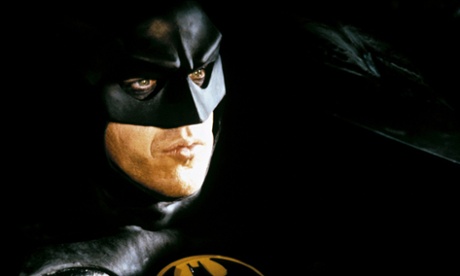
But then something unthinkable happened. In 1989, director Tim Burton made a movie adaptation of Batman. And the Caped Crusader was transformed. Gone was the colourful costume, in favour of something black and menacing. Gone was the upstanding, intensely moral Bruce Wayne, replaced by a man who looked a little unhinged, if not outright dangerous.
My initial reaction was to be appalled. You couldn’t just change a character that way, could you? I knew who Batman was – and this was not him! But soon the indignation passed, to be replaced with wonder. This was incredible – that you could take apart a well-loved hero, and rebuild him from scratch. I watched the Tim Burton over and over. Certainly, I had enjoyed the “zap”, “pow” serial Batman, but here was something far more exciting. Here was Gotham as a seedy, night-time underworld. Here was Batman as an avenging demon.
All of which (I came to realise much later) exerted a lasting influence on my imagination. Ever since I’ve been fascinated by the way long-lived characters can morph over time. King Arthur, for instance, truly is the hero with a thousand faces. Over the centuries he has been a Christian champion, battling the devil; or a resistance fighter, driving away the Vikings. He has been a romantic hero – the very epitome of chivalry. Or he has been a vain and violent villain. It seems to me the very best popular characters have this ability to shift shapes, yet remain somehow themselves.
Therefore, it should come as no real surprise that I ended up reinventing a hero myself. My first novel, Shadow of the Wolf, takes the story of Robin Hood and gives it a supernatural twist. My Sherwood Forest is stranger and more menacing than it has ever been depicted before; my Robin is more damaged and haunted; my Marian is more desperate and deadly.
I think most people will already have their own image of Robin Hood. For some he will be the loveable rogue of the Howard Pyle stories. For others he will be the Prince of Thieves of Hollywood. Some may even think of him via Disney’s cartoon fox.
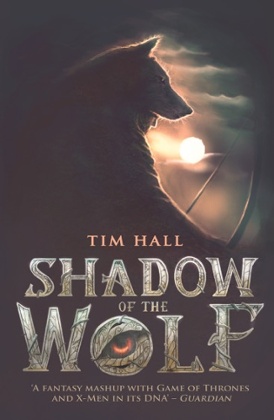
However you think of him, you will most likely be in for a shock if you read Shadow of the Wolf. You may even experience that combination of indignation and wonder that Tim Burton’s Batman stirred in me. I certainly hope you do. I couldn’t ask for a better reaction than that.
• Tim Hall’s Shadow of the Wolf is out now in paperback, published by David Fickling Books. You can read the first chapter here.