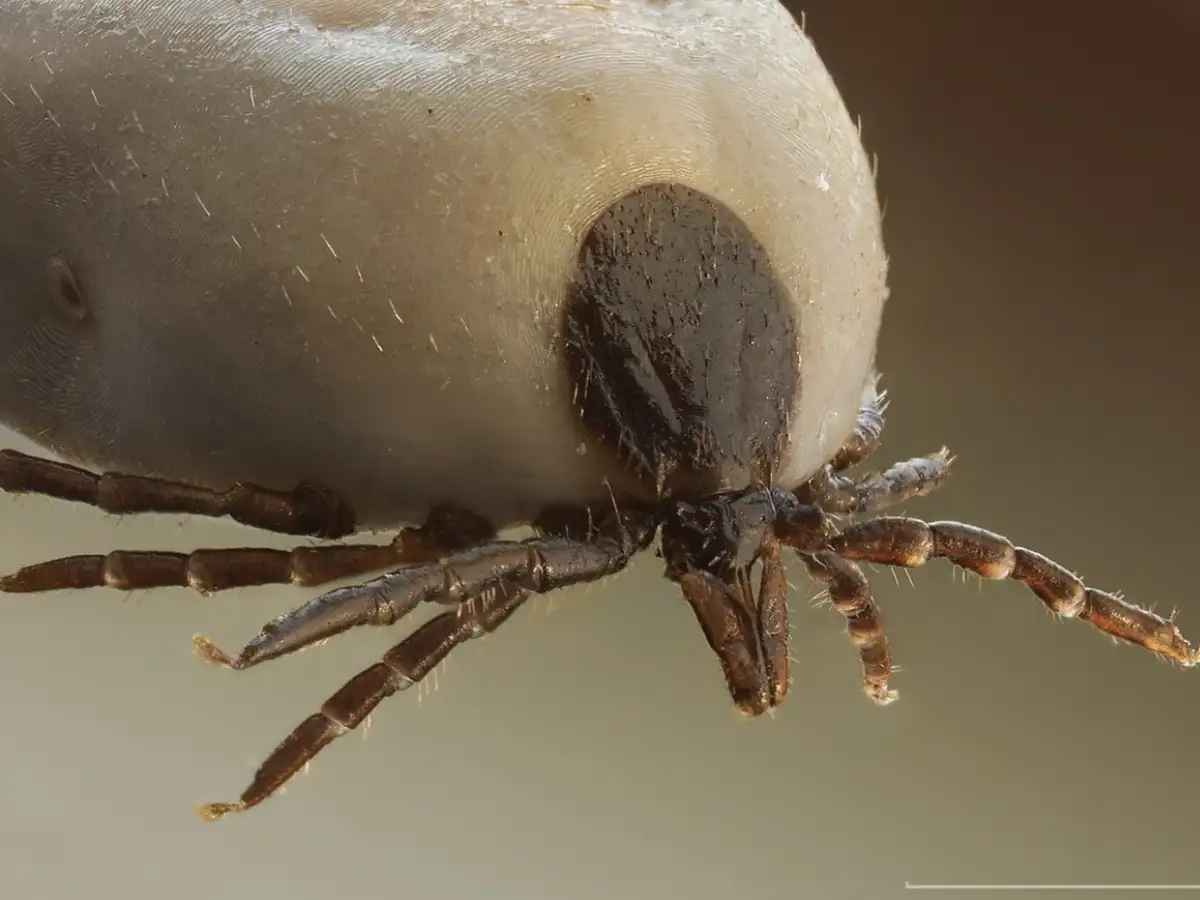
Most Americans believe ticks pose a threat only in thickly wooded areas or along overgrown paths meant for hiking. However, according to the CDC, it is the everyday characteristics of one’s backyards that can form an ideal environment for ticks. Moisture-retaining leaves, shaded spots, litter, vegetation around borders, and even wooden logs for landscaping can all provide suitable conditions for the development of the small creatures.
According to studies on tick biology, the real danger lies within so-called “edge habitats” where lawns, trees, fences, and shrubs meet. Being cooler and moister than regular grass, such habitats ensure a tick’s survival even in close proximity to human dwellings. The silver lining of the above-mentioned statement is that most of the threats can be easily controlled.
Leaf litter is more than yard waste
While a pile of leaves might appear harmless, studies indicate that they could function as a protective habitat for ticks. In particular, the CDC emphasizes the importance of clearing leaf litter, since immature ticks are vulnerable to drying and require humid conditions for survival.
According to an article in PubMed Central, blacklegged ticks are mostly exophilic, preferring humid microhabitats formed by shrubbery and leaf litter. More recent studies conducted in urban parks have shown that increased depth of leaf litter and humidity were correlated with greater tick abundance, while exposure to sunlight reduced tick populations.
This implies that the dangerous areas in one's yard are not necessarily the grassy regions themselves, but rather the shaded edges with accumulated leaves and moisture.
Brushy borders quietly create ideal tick habitat
From various ecological field studies in PubMed, ticks aggregate around shrubs and under tree branches, where there is a presence of leaf litter. It keeps the temperature lower and provides a shield against sunlight. This helps them survive for long periods before finding their next host to attach to.
From another study on habitat in PubMed Central, vegetation structure played an important role rather than a general category like forest or open land. What this meant in practicality is that even a thin patch of overgrown vegetation alongside a fence could provide a good habitat for ticks.
For homeowners, the point to consider here is quite simple. Lawns can be perfectly safe, while other edge spaces are risky.
Shade and trapped moisture work in ticks’ favor
Ticks require microclimates, which are defined as localized environments with constant temperatures and humidity levels. The research published in PubMed Central discusses how thick shade, low air circulation, and wet surfaces aid in sustaining the life of ticks.
This is the reason why maintenance activities such as mowing frequently, pruning thick foliage, and thinning dense edges have importance that goes beyond aesthetics, since the aforementioned processes help in decreasing the humidity levels and obstruction of sunlight that ticks require for survival.
It is also mentioned in the guidelines provided by the CDC that barriers using gravel or mulch could be installed to eliminate damp transition zones. This could be achieved by locating patios and play areas at some distance from woodlands.
Wood piles and clutter can attract both ticks and hosts
Stacked firewood, outdated furniture, unused yard tools, and other forms of trash might not necessarily appear to be directly related to the prevention of ticks, yet the CDC identifies them as some of the major risks.
According to the organization, wood needs to be stored in an organized manner in a dry place since a cluttered and damp environment may serve as a haven for rodents that act as the primary hosts for immature ticks, providing the conditions that favor their survival.
Preventing ticks involves more than simply eliminating them; instead, it entails altering their environment and the environment of the creatures that carry them.
Deer access can increase tick populations
Deer are considered an essential host for adult ticks; hence, the Centers for Disease Control and Prevention advise against deer accessing residential property.
Scientific research conducted in PubMed concluded that forest plots where deer were found had more ticks than forest plots without deer. The number of nymph ticks was reduced by 66% within two years of excluding deer.
The second study found in PubMed concluded that variations in deer mobility directly influenced tick density. Deer access in residential areas may promote greater tick densities.
The highest-risk area is often the yard edge
Among the key things that have been ignored in protecting oneself against ticks is the fact that the middle part of the lawn is safer than the edges of the yard.
According to the CDC, homeowners should ensure that the patios, playground equipment, and other recreational facilities do not lie near the wooded edges since the areas where ticks flourish are more influenced by small environmental factors such as moisture and shaded areas than by any wildness.
Consequently, the presence of a shaded fence line will be a much bigger issue than the rest of the yard combined.
Prevention works best when the habitat changes
The science of preventing ticks reveals one consistent fact about ticks. The creation of a tick-free yard relies on environmental management rather than chemical management.
Removal of leaf litter, elimination of brush, regular mowing, proper storage of firewood, reducing clutter, and limiting deer entry all minimize conditions that allow ticks to thrive within proximity to people. As per the CDC, such actions are called residential control measures due to their direct impact on the environment preferred by ticks.
The real threat, however, lies in the fact that most of these characteristics appear perfectly harmless in the ordinary suburbs of America. Together, however, they can create ideal conditions for ticks. Happily, these same characteristics are relatively easy to change.