
More drone footage shows the extent of the damage on the still smouldering site of the blasts.
We are going to wrap up this blog for now. Thanks for reading.
Updated
The US State department has offered its condolences.
Our thoughts & prayers are with the victims and families of explosion in Tianjin & first responders who are working to help those injured.
— EAP Bureau (@USAsiaPacific) August 13, 2015
Summary
Here’s what we know so far.
- At least 50 people have been killed and 701 injured after two explosions at a warehouse containing large quantities of dangerous chemicals in the port city of Tianjin. Of those wounded 71 are said to be suffering severe injuries.
- Fires were still smouldering almost 22 hours after the blasts while chemical experts assess the hazardous materials on site. The cause of the blasts is still not known. The warehouse is reported to have contained large quantities of the highly toxic chemical sodium cyanide. A team of 217 military toxic waste specialists have arrived in Tianjin.
- The explosions were so massive they could be seen from space, according to satellite photos released by the Japan meteorological agency. The force of the blast also prompted alarm at China’s National Earthquake Network.
- Thousands of people have been left homeless, with 6,000 people expected to spend the night in emergency shelters. Witnesses described residents near the site fleeing their homes – some dressed only in their underwear.
- The blasts occurred shortly before midnight local time (4pm GMT, 2am AEST). A shipment of so-far unidentified “dangerous goods” in a warehouse went up in flames, causing explosions so strong that they shook homes on the other side of the city and sent flaming debris arching over nearby high-rise buildings.
- Xi Jinping, the Chinese president, “urged all-out efforts to save the injured and minimize casualties”. Li Keqiang, the prime minister, gave orders for authorities “to intensify search and rescue”..
- The owners of the factory at the centre of the blasts – named as Tianjin Dongjiang Port Rui Hai International Logistics Co. Ltd – have been detained. The firm had flouted packaging standards two years ago according to inspection records.
- Authorities earlier said they had lost contact with a further 36 firefighters tackling the huge blazes. It is not clear if this includes the 12 who are confirmed to have died. Over 1,000 firefighters and 143 fire trucks were dispatched to the scene.
- Guardian reporter Fergus Ryan, who is in Tianjin, says smoke continues to billow across the city. He also reported a further small explosion and fires still ablaze, with damage to buildings and cars as far as 3km from the scene.
- Greenpeace has warned that chemicals involved in the blaze could pose an ongoing threat to Tianjin residents. Beijing has played down fears that a toxic fumes are heading for the Chinese capital.
New dash cam footage from a vehicle has emerged purporting to show the moment the explosions occurred. It shows people running for the cover of a security hut moments before the second blast lights up the street causing trees and lampposts to sway and setting debris flying.
The fire is now mostly under control but smoulder patches remain and local officials further efforts to put out flames have been suspended while chemical experts assess the hazardous materials on site, AP reports.

The owners of warehouse where the explosions occurred were found to have flouted packaging standards during a safety inspection two years ago, Reuters reports citing a safety bureau.
Of 4,325 containers owned by Tianjin Dongjiang Port Ruihai International Logistics that were checked, five failed the inspection because packaging was sub-standard, the Tianjin Maritime Safety Administration said.
A warehouse belonging to Ruihai Logistics has been identified by the official Xinhua news agency as the site of the explosions.
The administration examined thousands of containers owned by Ruihai Logistics, which describes itself as a government-approved firm specialising in handling “dangerous goods”, and four other companies, according to a report posted on the administration’s website in January last year.
The report said it had inspected more than 14,000 containers in total and found that 29 from the five firms had failed the packaging checks, with the main problem being inappropriate “danger” labelling.
The inspection report did not provide further details about what was wrong with the packaging.
The state-backed China Daily newspaper said Ruihai Logistics was a private company and that its manager had been detained by police.
An official with Tianjin police declined to comment and referred Reuters to the Binhai New District government.
According to a report by government environmental inspectors in 2014, the facility was designed to store several dangerous chemicals including sodium cyanide, classified as “extremely harmful”, as well as chemicals including explosives sodium nitrate and potassium nitrate.
Phone numbers listed on the firm’s website were disconnected on Thursday and an email to the company went unanswered. Xinhua said 1,000 firefighters and more than 140 fire engines had struggled to contain the blaze at the warehouse.
“The volatility of the goods means the fire is especially unpredictable and dangerous to approach,” it said.
Here are images of the port area before and after the blasts.


Almost 21 hours after the blasts some of the fires are still smouldering, according to an update from the state news agency. Xinhua added that the cause of the blast is still not known.
Causes of #Tianjin blasts remain unknown, as fire hasn’t been completely put out: authorities pic.twitter.com/jV2Fv4wjwi
— China Xinhua News (@XHNews) August 13, 2015

Tom Phillips highlights an alarming report in the Beijing News which claims that the warehouse at the centre of the blasts was storing at least 700 tonnes of the poison sodium cyanide.
According to Center for Disease Control and Prevention this is a “highly toxic chemical asphyxiant” and exposure to it can be “rapidly fatal”.
It has whole-body (systemic) effects, particularly affecting those organ systems most sensitive to low oxygen levels: the central nervous system (brain), the cardiovascular system (heart and blood vessels), and the pulmonary system (lungs). Sodium cyanide is used commercially for fumigation, electroplating, extracting gold and silver from ores, and chemical manufacturing. Hydrogen cyanide gas released by sodium cyanide has a distinctive bitter almond odor (others describe a musty “old sneakers smell”).
The CDC guidance on how the emergency workers should respond to a leak of the chemical helps explain why Beijing sent a 217-strong team of “Nuclear, Biological and Chemical specialist to the scene (see earlier).
Responders should use a NIOSH-certified Chemical, Biological, Radiological, Nuclear (CBRN) Self Contained Breathing Apparatus (SCBA) with a Level A protective suit when entering an area with an unknown contaminant or when entering an area where the concentration of the contaminant is unknown. Level A protection should be used until monitoring results confirm the contaminant and the concentration of the contaminant.

CNN has retracted a claim that its correspondent was ordered to stop reporting outside a hospital in Tianjin by the authorities.
Correction: CNN Correspondent interrupted in a live report by upset friends and relatives of victims killed and injured in the China blasts.
— CNN (@CNN) August 13, 2015
A live broadcast of the incident showed reporter Will Ripley being forced to stop recording. A first CNN suggested Ripley was forced to stop broadcasting by officials before clarifying that it was friends and relatives of the victims that urged him to halt recording.
China’s state news agency Xinhua criticised CNN for “inaccurate” and insensitive reporting.
In an opinion piece it said:
It is understandable that the next of kin of the victims, who tended not to believe the fact of losing their beloved ones, became emotional when seeing reporters covering the tragedy.
However, how could the anchor easily conclude that it was Chinese “security and officials” who stopped Repley from reporting? How could he easily misinterpret the blocking of reporting as a usual case in China? The reason is inseparable from CNN’s deep-rooted prejudice against China.
It needs to point out that this is not the first time that CNN has made prejudiced reporting on China. From the March 14 Tibet riots in 2008 to the Kunming terror attacks in March 2014, the CNN has had an array of records of inaccurately reporting these incidents.
The blasts prompted alarm at China’s National Earthquake Network, the BBC reports.
#Tianjin's enormous blasts "alarmed" China's National Earthquake Network http://t.co/5xK1Rdv6CT pic.twitter.com/0fIkVeJeg7
— BBC News (World) (@BBCWorld) August 13, 2015
Death toll rises to 50
As of 6pm on Thursday authorities say 50 deaths have been confirmed from yesterday’s blasts, writes Tom Phillips.
More than 700 people have been admitted to hospital with injuries and 71 of those people have “severe” injuries.
The revised figures were quoted by Tianjin Daily, a local newspaper.
The figures were later confirmed by the official Xinhua agency.
Latest: Death toll rises to 50 in #Tianjin blast, 71 remain in critical condition pic.twitter.com/9vaDamLMQL
— China Xinhua News (@XHNews) August 13, 2015
Updated
A team of more than 200 military toxic waste specialists have arrived in Tianjin to start tackling the clear up, according to Xinhua.
217-strong Nuclear, Biological and Chemical Specialist team arrives in #Tianjin blast spot, to detect, cleanse toxics pic.twitter.com/D32TzxCt8f
— China Xinhua News (@XHNews) August 13, 2015
Tom Philips has more on the operation.
Blasts visible from space
The Tianjin blasts were visible from space according to images released by the Japan Meteorological Agency. They show a growing white dot over Tianjin in the centre of the photographs.

Updated
Beijing has played down reports that toxic pollutants are blowing towards the Chinese capital from the scene of the blast, according to state run China Daily.
Samples collected at 5:30 am on Thursday showed that the concentration of toluene, widely used as an industrial feedstock and as a solvent, has reached 3.7 milligrams per cubic meter in the air, higher than the national standard of 2.4 milligrams per cubic meter, the report said.
Besides, the concentration of volatile organic compounds and major air pollutants, were 5.7 milligrams per cubic meter, also exceeding the Tianjin municipal standards (2.0 milligrams per cubic meter).
But other major air pollutants under regular supervision like sulfur dioxide, carbon oxide, and PM2.5 and PM10 particulate matter did not see a rise in concentrations as of 11 am).
In neighbouring Beijing 150 km away, local authorities denied the rumors that the blast influenced air quality in the capital.
The capital is currently seeing wind from the southwest and west, and Tianjin is located in the southeastern direction so the pollutants from the blast will go to the Bohai sea, thus having no influence on the capital, the Beijing Environmental Protection Bureau said.
Besides, the monitoring stations located in the southeastern region, in the direction of Tianjin have not detected any abnormal situation in the air quality or sudden rise of air pollutants on Thursday morning after the blast.
All the major air pollutants indexes are at normal levels, according to the official statement released on the bureau’s official microblog account.
The state run news agency Xinhua said rescuers reported high levels of toxins 500m from the blast.
Rescuers detected high levels of SO2, CO, NOx pollutants about 500m away from deadly chemical blast spot in #Tianjin pic.twitter.com/Ezg1me38Aw
— China Xinhua News (@XHNews) August 13, 2015

Updated
The massive force of the shockwave from the blast hurled Hua Hongwei a few metres, and then pinned him to the ground, he told Reuters.
The factory worker in his 20s, speaking from a hospital bed, recounts how he was lucky to survive the series of explosions that rocked his dormitory, situated about 1 km from the industrial area.
A few moments earlier, he had stepped out onto his balcony to check the scene after the first blast. He then returned inside just as the massive second explosion sent a fireball over the city - a seismic event so big it was seen by satellites in space.
“I didn’t understand what was happening,” Hua said, recounting how he flew through the room and then was crushed to the floor.
The worker from the car plant stumbled out of the building where a friend found him and gave him some water. He was put in a taxi to the hospital.
Hua, his head bandaged, was one of dozens of victims being treated at Tianjin’s TEDA Hospital, about a 15-minute drive from the blast site.
Thousands left homeless
Thousands of people have been left homeless by the blasts officials have revealed, writes Tom Phillips.
Zhang Yong, an official in Binhai - the area where the explosions happened - said the Communist party was mobilising all possible resources in response to the disaster.
Speaking at a press conference in Tianjin, he said 3,000 people had been put up in government-run shelters after being forced from their homes on Wednesday.
“Tonight there will be 6,000 people in those shelters,” he said. Ten schools have opened their doors to the homeless, Zhang added.

Armed troops and elite military units trained to handle nuclear, biological and chemical disasters are being dispatched to the scene, writes Tom Phillips in Beijing.
At least 44 deaths and 521 injuries have so far been confirmed after a fire at warehouse containing “dangerous chemicals” sparked a series of blasts on Wednesday night.
By Thursday afternoon at least 1,000 firefighters were attempting to bring the flames under control around the main disaster zone, a portside industrial estate where the blasts took place the night before.
Around 10,000 medical staff were working at 10 different hospitals to treat survivors, Zhang Yong, a local Communist party official, told a press conference. “We will bring things back on track as soon as possible,” he said.
Four vehicles carrying 214 soldiers trained to deal with nuclear, biological and chemical catastrophes were also dispatched to Tianjin, which is around 160km from Beijing, according to state broadcaster CCTV.
During a visit to the scene China’s Public Security Minister Guo Shengkun said “every possible measure would be taken to prevent further loss of life or injury”.
“Deep lessons must be learned,” Guo said, stressing the “absolute necessity” to prevent secondary accidents.
Official Chinese reports have blamed the blasts – so powerful they threw vehicles into the air and brought factory roofs crashing down – on hazardous chemicals stored in a warehouse owned by a company called Ruihai International Logistics.
In a statement Greenpeace warned: “We are concerned that certain chemicals will continue to pose a risk to the residents of Tianjin.”
It added: “According to the Tianjin Tanggu Environmental Monitoring Station, hazardous chemicals stored by the company concerned include sodium cyanide (NaCN), toluene diisocyanate (TDI) and calcium carbide (CaC2), all of which pose direct threats to human health on contact. NaCN in particular is highly toxic. Ca(C2) and TDI react violently with water and reactive chemicals, with risk of explosion. This will present a challenge for firefighting and, with rain forecast for tomorrow, is a major hazard.”
Cheng Qian, Greenpeace’s toxics assistant campaign manager in Beijing, said: “It is now critical that relevant authorities monitor the situation closely and release further information on what caused the blast and what chemicals are being released into the air. This will have an impact on measures to fight fires, to protect the residents of Tianjin, and on minimizing the potential health and environmental hazards of the blast.”
In an editorial, the Global Times, a Beijing-controlled tabloid, urged authorities to be transparent about the situation on the ground in Tianjin.
“The Tianjin government must take critical feedback and ensure it can release accurate and timely information. The idea that they wanted to tone down the reporting and even cover it up must be eliminated,” it said.
However, China’s stability-obsessed leaders often attempt to stifle potentially critical media coverage during disasters. As the rescue operation ramped up on Thursday there were reports of foreign journalists being harassed and obstructed by Chinese officials.
An online national database of company ownership appeared to have been disabled on Thursday afternoon making it impossible to identify the owners of the logistics firm where the explosions took place.
A notice posted on the official website of the Tianjin Market and Quality Supervision Administration said: “Due to the blast accident, the Tianjin company credibility information system has been temporarily disabled.”
The Global Times recognised there had been public criticism of what some had described as a sluggish government response to the explosions. “For example, Tianjin TV was still broadcasting Korean soap operas ten hours after the incident,” it said.
However, the newspaper defended the authorities’ overall response. “Such chaos is unavoidable at the beginning of a sudden crisis.
Updated
Our colleague Luna Lin in Beijing has been talking to a woman who lives very close to the blast site and gave her name as Ms Huo. She gives this vivid account of the panic following last night’s disaster as survivors rushed from their homes dressed only in their underwear.
I was about to go to bed and then suddenly I heard a big noise outside. All the windows were shattered and I saw a huge bright fireball flying towards the building opposite ours.
The whole building was shaking and we didn’t know what it was. The shockwave quickly pushed me to the floor and my husband came and helped me up. We wanted to walk toward the master bedroom but the second explosion happened. So we rushed outside. We live on the 20th floor and the fire exits and the emergency staircase were full of people.
As we were rushing down stairs in the darkness, we heard some people banging their doors – they were locked inside and their doors were damaged so they couldn’t get out.
When we finally reached to the ground floor, many people were already there. Many of them came down in a rush and didn’t have time to put on more clothes. Some were in their underwear. The car windows were all shattered and the roofs of the cars were damaged.
We got in our car and drove to a nearby hospital. On the road, we picked up a women with her young child who was covered in blood and a man who was also injured.
There were many cars on the road and people got stuck on their way to hospital.”“When we reached the nearby hospital, we were told it’s full and had to go to a second hospital.
I feel very lucky to still be alive. This is the first time I have felt so close to death. I never thought that something so horrible could happen in real life - and to me. I used to think that this kind of thing only happened in the movies.”

Updated
A Guardian reader in Tianjin says he witnessed the blast. Writing on the comments section of this blog under the name BooTheDog he describes seeing a “massive glow in the sky” and likened the sound of the blast to “someone trying really hard to force my door open”.
The disaster has prompted has prompted an impressive response from volunteers offering help to those injured. Scores of people have registered to give blood, while others offered lifts to the injured or handed out bottled water.


China’s official news agency report that 12 of those injured are in a critical condition, citing an official in Tianjin.
149 injured in #Tianjin deadly blasts transferred to larger hospitals, 12 in critical conditions: city official pic.twitter.com/7kxULgdT0w
— China Xinhua News (@XHNews) August 13, 2015
It also reported that 21 people were missing.
Latest: Over 21 are missing in Tianjin massive blasts pic.twitter.com/g7JSGWd3FB
— China Xinhua News (@XHNews) August 13, 2015

Russia’s president Vladimir Putin has sent a message of condolence to China’s president Xi Jinping, the Kremlin has announced.
In a statement it said: “The Russian leader expressed his sympathy and support to the families and friends of the victims, wishing a speedy recovery to those injured.”
The prime minister of Lithuania Algirdas Butkevičius also expressed sympathy.
I’m deeply shocked and grieved by the loss of lives in #Tianjin. Heartfelt condolences to the relatives of the victims.
— Algirdas Butkevičius (@AButkevicius) August 13, 2015
Updated
Security video from a company in Tianjin shows the moment the windows of a building were blown in by the force of one of the explosions at the plant.
Aerial photography shows damage to thousands of cars near the blast site.


Updated
Dozens of residents near the blast site spent a night sleeping outside or in emergency shelters after being evacuated from their homes.


Updated
The Guardian’s Fergus Ryan has reached a primary school that has been been turned into field hospital. The building is being guarded by uniformed police and soldiers.
He sends this image of volunteer workers outside the school.

Chinese officials are expected to give a press conference shortly about the aftermath of the blasts. The official Xinhua news agency has published a photograph of a makeshift command centre in the Binhai New Area of Tianjin.

The prime minister of Singapore, Lee Hsien Loong, was one of the first world leaders to express sympathy for the families of the victims.
My thoughts are with families affected by e blasts in #Tianjin. @MFAsg has contacted most Singaporeans there & they are ok. - LHL
— Lee Hsien Loong (@leehsienloong) August 13, 2015
Summary
We are expecting a press conference from authorities in Tianjin in around half an hour, at which we would hope to hear further information on the rescue efforts and those affected.
In the meantime, here is what we know about the blasts that rocked the port city on Wednesday night, and their aftermath:
-
At least 44 people have been killed, including 12 firefighters. Some 520 people are injured, including 66 in critical condition in hospital.
- Authorities earlier said they had lost contact with a further 36 firefighters tackling the huge blazes. It is not clear if this includes the 12 who are confirmed to have died. Over 1,000 firefighters and 143 fire trucks were dispatched to the scene.
- Efforts to extinguish the fires have been suspended due to safety fears over possibly dangerous and/or toxic materials in the warehouses. Authorities have not said when they will resume.
- Guardian reporter Fergus Ryan, who is in Tianjin, says smoke continues to billow across the city; he also reported a further small explosion and fires still ablaze, with damage to buildings and cars as far as 3km from the scene.

- The blasts occurred shortly before midnight local time (4pm GMT, 2am AEST), when a shipment of so-far unidentified “dangerous goods” in a warehouse went up in flames, causing explosions so strong that they shook homes on the other side of the city and sent flaming debris arching over nearby high-rise buildings.
- President Xi Jinping and premier Li Keqiang “have urged all-out efforts to save the injured and minimise casualties in the Tianjin blast”, state media says. A specialist army team is on its way from Beijing.
-
State media also reports that the owners of the factory at the centre of the blasts – named as Tianjin Dongjiang Port Rui Hai International Logistics Co. Ltd – have been detained.
- Tianjin, the port gateway to Beijing, is a major base for petrochemicals, refining and other industries.
- Factories in the port city have been told not to open until they have been checked for safety.
- Greenpeace has warned that chemicals involved in the blaze could pose an ongoing threat to Tianjin residents.
I am now handing over the live blog to my colleague Matthew Weaver, who will continue to bring you the latest updates, including that press conference.
Thanks for reading and for your comments.
My colleague Fergus Ryan, at the scene of the blasts in Tianjin, sends this video showing smoke still rising and the damaged landscape:
Environmental campaign group Greenpeace has expressed concern about the after-effects of the blasts, given the nature of Tianjin’s petrochemical industries. It says it is:
concerned certain chemicals will continue to pose a risk to the residents of Tianjin …
The hazardous chemicals stored by company include sodium cyanide (NaCN), toluene diisocyanate (TDI) and calcium carbide (CaC2).
All of these chemicals “pose direct threats to human health”, says Greenpeace, and some “react violently with water and reactive chemicals with a risk of explosion”.
The People’s Daily newspaper reports that 214 soldiers from a “national nuclear biochemical emergency rescue team” are on their way from Beijing to Tianjin to assist in the rescue efforts.
Fergus Ryan is now very close to the site of the blasts, across a highway from the warehouses at the centre of the explosions, from where he sends these images:


Drone footage recorded by a member of the public and originally published by Chinese news site The Paper, shows the aftermath of the huge explosions in Tianjin, as parts of the city now resemble a warzone:
It is now more than 15 hours since the blasts and fires are still burning at the site.
The Tianjin local government now says the blaze is mostly under control, but further efforts to extinguish the fires have been suspended on orders of the central government so that a team of chemical experts can assess hazardous materials on site, any dangers to rescuers and the environment, and how best to proceed.

My colleague Fergus Ryan is in Tianjin and has reached the site of the explosions, where at least four fires are still burning.
He has just heard a small explosion from the site, and reports plumes of white and yellow smoke billowing out of the blast site, a helicopter overhead and the sound of sirens.
Debris is scattered, including this barrel, which appears to have “ blasted its way across highway”, he reports:
Summary
As fires still rage after two huge blasts rocked the Chinese port city of Tianjin late on Wednesday night, here is what we know:
- At least 44 people have been killed, including 12 firefighters. Some 520 people are injured, including 66 in critical condition in hospital.
- Authorities earlier said they had lost contact with a further 36 firefighters tackling the huge blazes. It is not clear if this includes the 12 who are confirmed to have died. Over 1,000 firefighters and 143 fire trucks were dispatched to the scene.
- Efforts to extinguish the fires have been suspended due to safety fears over possibly dangerous and/or toxic materials in the warehouses. Authorities have not said when they will resume.

- The blasts occurred around midnight local time (4pm GMT, 2am AEST), when a shipment of so-far unidentified “dangerous goods” in a warehouse went up in flames, causing explosions so strong that they shook homes on the other side of the city and sent flaming debris arching over nearby high-rise buildings.
- President Xi Jinping and premier Li Keqiang “have urged all-out efforts to save the injured and minimise casualties in the Tianjin blast”, state media says.
-
State media also reports that the owners of the factory at the centre of the blasts – named as Tianjin Dongjiang Port Rui Hai International Logistics Co. Ltd – have been detained.
- Tianjin, the port gateway to Beijing, is a major base for petrochemicals, refining and other industries.
- Factories in the port city have been told not to open until they have been checked for safety.
Although the blasts took place in the industrial area of Tianjin, with residential areas further from the site (although even at a distance of around 3km many experienced damage from the explosions), some people did live much closer.
Dormitories for port workers, many of them from rural regions of China, were built close to the industrial area and most of them are reportedly destroyed. Residents of these dormitories have lost everything, according to reports, and some were seriously injured.
At this point, death and injury figures are still hard to verify.

Updated
In Tianjin, Fergus Ryan reports scenes of destruction as he approaches the site of the blast.

This is still some distance – around 3km – from the site of the explosions, which were in the industrial area of the port city, where fires are still burning.
Updated
Summary
Fergus Ryan in Tianjin and Tom Phillips in Beijing have filed this latest dispatch:
Dozens of people are feared dead and fires are still raging after a warehouse filled with “dangerous chemicals” exploded in the Chinese city of Tianjin, sending a mushroom cloud into the air.
Tianjin, a port city of around 14 million residents, was rocked by a series of devastating explosions at around 11.30pm on Wednesday night (4pm GMT, 1.30am AEST), according to eyewitnesses and state media reports.
So far 44 deaths have been confirmed, including at least 12 firefighters, with more than 520 people injured, although those numbers are expected to rise.
“It was like the catastrophic scene in Hollywood movies,” one witness was quoted as saying by Xinhua, China’s official news agency.
Chen Bingzhi, who lives about 4km from the explosion site, told the Guardian: “It felt like a earthquake. The whole building was shaking. I live on the fifth floor and all the windows are broken.”
Firefighters described hellish scenes near the disaster site. “It’s all black and smog, I can’t see anything inside,” one told Xinhua.
The blasts – so violent they sent vehicles and debris flying into the air and rattled homes for miles around – were caused by a shipment of “dangerous chemicals”, state media reported.
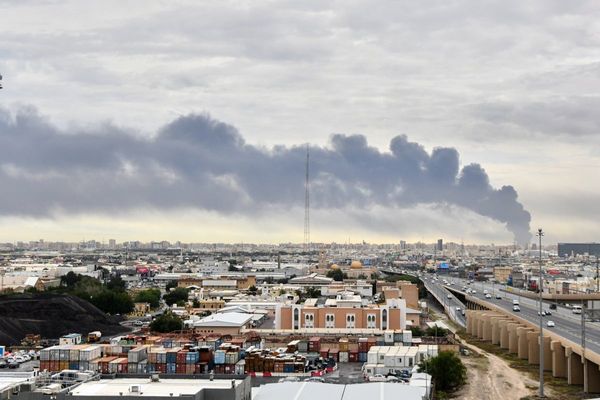
As dawn broke over Tianjin, which is a major base for China’s petrochemical and shipping industries, the extent of the destruction became clear.
Drone footage showed fires raging inside the disaster zone and giant plumes of black smoke bellowing into the air.
You can read their full report here:
Death toll rises to 44
Chinese state media say 44 people are now confirmed dead in Tianjin, a sharp rise from the 17 previously reported.
The 44 dead includes 12 firefighters. Some 520 people are injured, including 66 in critical condition.
Updated
My colleague Fergus Ryan sends this dispatch from the scene in Tianjin:
Black smoke was still visible from Teda hospital, where it is emanating from the blast site just a few blocks away.
Scores of volunteers were on hand outside the hospital with deliveries of stacks of bottled water.
Inside the hospital, some distraught victims and their families seemed to be giving some interviews with local media.
One volunteer instructed this reporter not to take photos. A police officer instructed me to leave the hospital and go to a nearby news centre.
Army tents were set up outside the hospital but they did not seem yet to be in use.
Locals, especially taxi drivers, are offering free lifts to those affected and injured.
Walking from the hospital closer to the blast site, people wait outside their apartment buildings with packed bags.

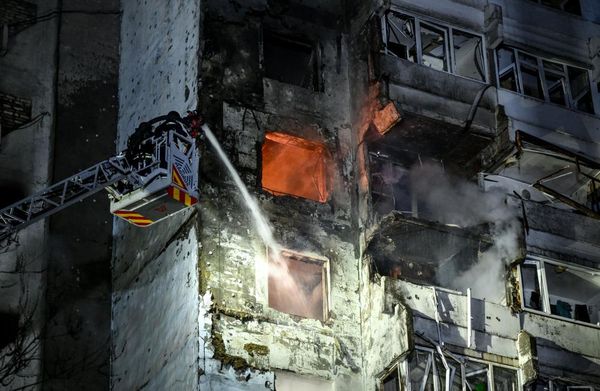
Reports and pictures from Tianjin show scenes of devastation. Windows and doors have been blown out of high-rise apartments and office buildings destroyed. A fireball appears to have swept through a parking lot of 1,000 new Renault cars, with the paint burned off and the cars left charred.
My colleague Fergus Ryan is in Tianjin and approaching the site of the blasts. He reports that buildings some distance from the explosions have suffered damage, with many windows blown out and glass scattered widely:

Chinese state media has been talking to eyewitnesses who were in Tianjin at the time of the disaster, the Guardian’s Beijing correspondent Tom Phillips reports:
One man, named only as Chi, told Xinhua: “Everything in my home was ruined in the blast. It is so horrible. The pants and shoes you see me wearing now were picked up on my way to the hospital.”
Hu Xiaoliang, a 32-year-old truck driver, said he had been napping under his vehicle at the time of the explosions. The force of the blast “catapulted” him away from beneath the truck, he said.
Firefighters described hellish scenes near the disaster site. “It’s all black and smog, I can’t see anything inside,” one told Xinhua.
Summary
Twelve hours after two huge blasts rocked the Chinese port city of Tianjin, here is what we know:
- Latest casualty figures put the death toll at at least 17, with 32 critically injured and a further 283 people in hospital.
- Nine firefighters are confirmed to have died, although it is not clear whether they are counted among the 17. Authorities say they have lost contact with a further 36 firefighters tackling the huge blazes.
- Efforts to extinguish the fires have been suspended due to safety fears over possibly dangerous and/or toxic materials in the warehouses. It is not clear when they will resume.
- The blasts occurred around midnight local time (4pm GMT, 2am AEST), when a shipment of so-far unidentified “dangerous goods” in a warehouse went up in flames, causing explosions so strong that they shook homes on the other side of the city and sent flaming debris arching over nearby high-rise buildings.

- President Xi Jinping and premier Li Keqiang “have urged all-out efforts to save the injured and minimise casualties in the Tianjin blast”, state media says.
-
State media also reports that the owners of the factory at the centre of the blasts – named as Tianjin Dongjiang Port Rui Hai International Logistics Co. Ltd – have been detained.
- Tianjin, the port gateway to Beijing, is a major base for petrochemicals, refining and other industries.
- Factories in the port city have been told not to open until they have been checked for safety.

Updated
Updated casualty figures
State media reports that there are now:
- at least 17 people killed (it is not clear whether this figure includes the nine firefighters who are known to have died; a further 36 are missing);
- 32 people critically injured;
- plus 283 other people being treated in hospital.
Amber Ziye Wang reports that firefighting efforts have been suspended in part because of fears that the warehouses could contain cyanide products, which are highly toxic.
My colleague Fergus Ryan is at Tianjin Teda hospital, where many of those injured in the blasts have been taken.
A number of tents have been set up outside the hospital building to treat the injured, reported to be at least 400 people:


Firefighting suspended amid safety fears
Efforts to contain the fires in Tianjin have been suspended due to uncertainty over the contents of warehouses and other areas that are ablaze, reports via BBC News and Reuters say.
The Binhai New District government in Tianjin city made the announcement on its official Weibo account, saying firefighting efforts have been suspended due to lack of clarity about the contents and amount of the “dangerous goods” in the warehouse.
We have already heard that nine firefighters have died and 36 are missing in the wake of the two blasts. Around 100 fire trucks are on the scene.

Updated
Associated Press reports that authorities on the scene are exercising strict controls over reporters and onlookers:
As is customary during disasters, Chinese authorities are trying to keep a tight control over information.
Police are keeping journalists and bystanders away with a cordon as many as a few kilometres from the site.
On China’s popular microblogging platform Weibo, some users complain that their posts about the blasts have been deleted, and the number of searchable posts on the disaster fluctuated, in a sign that authorities are manipulating or placing limits on the number of posts.
Local reports from close to the hospital suggested that reporters had been told by authorities there not to take photographs and to delete any images they had taken.
Chinese state-controlled news agency Xinhua has provided some more information on what it describes as “the logistic company that owns the warehouses”:
According to the company’s official website, Tianjin Dongjiang Port Rui Hai International Logistics Co. Ltd. was founded in 2011 and is a storage and distribution center of containers of dangerous goods at the Tianjin port.
The company’s business includes the storage, transfer, distribution and customs declaration of dangerous chemicals. Freight volume through the company stands at one million tonnes each year, with annual revenues exceeding 30 million yuan (US$4.7m).
The center includes two warehouses for dangerous goods. One is located next to an office building.
Executives of the company have been controlled.
The meaning of “controlled” is not clear. It is likely to mean “detained”.
Updated
The UK foreign secretary Philip Hammond, who is currently in Beijing on a two-day visit to China, has put out this statement on the Tianjin explosions. He visited the port city earlier on Wednesday:
I express my deep condolences for the tragic loss of life and the hundreds injured in the Tianjin explosions.
I was in this vibrant city, meeting local workers at the Airbus factory, just hours before the explosions happened and pay tribute to Tianjin emergency workers who have been fighting fires and treating casualties.
I have conveyed Britain’s condolences to senior Chinese ministers and our Embassy in Beijing is in touch with relevant national and local authorities.
There are no reports so far of any British injured but consular staff are working urgently to establish whether any have been caught up in this terrible incident.

Fergus Ryan in Tianjin reports that factories in the port city have been told not to open until they have been checked for safety:
According to Mihir Bajoria, who is CEO of Monocon International, which has a factory in the affected area (Tianjin Monocon Refractories), all factories in Tianjin have been given orders to not start production till safety checks are carried out.
“Lots of people were injured in their houses simply by the glass shattering,” Bajoria said.
A number of Tianjin residents have described the blasts as akin to an earthquake and the blast was indeed registered by the US Geological Survey, which noted two small seismological actions followed by one big one at a seismometer station 160km (100 miles) away in Beijing.
USGS geophysicist John Bellini said it was rare to detect seismological activity from non-earthquake events:
Blasts that are not mine-related are rare to record, just because they don’t get transferred into the ground very well.
An indication of how difficult it is for local people in Tianjin to get up-to-date information on what’s happening in their city (and the difficulty for reporters in finding and communicating that information) – my colleague Fergus Ryan says local Tianjin TV is reportedly ready to transmit live coverage of the disaster, but is still awaiting official approval to do so.
In the meantime:
Animation currently on #Tianjin TV after the explosion (via Wechat) pic.twitter.com/28TilnH4Ot
— Beibei Bao (@AngelaBaoBeiBei) August 13, 2015
Nine firefighters killed – local reports
Local media now says nine firefighters have died; 36 remain missing.
The extraordinary video and images emerging of the moment of the blasts demonstrate the force and reach of the explosions:
Video: #Explosions rock China's #Tianjin, 17 killed,over 400 wounded. Cause unclear pic.twitter.com/9vIFVpEQTw
— China Xinhua News (@XHNews) August 13, 2015
We have rounded up some of the most striking social media testimony from people in Tianjin here:
Updated
The BBC reports that around 100 fire trucks remain on the scene, as firefighters battle to bring blazes under control.
We know that authorities have lost contact with 36 of the firefighters and six have died.
Though we still do not know – and it might be some time before we do have more information on this – the precise cause of the blasts, authorities have confirmed that “explosives” were being handled at the warehouse.
My colleague Fergus Ryan is on the way to Tianjin. With hundreds of people injured in the blasts, he says, many residents of the city have offered to donate blood:
People lining up to donate blood on Nanjing Rd Tianjin. (Via Weibo) pic.twitter.com/by3iC8Yh01
— Fergus Ryan (@fryan) August 13, 2015
Reuters reports that authorities say they have lost contact with 36 firefighters at the scene of the two massive explosions, citing the Beijing News and Tianjin fire officials.
So far, 17 people are confirmed dead, including six firefighters, and at least 400 injured.
Fresh images from Tianjin in daylight are coming in, showing some of the scale of the devastation from the overnight blasts.
Fires are still burning in the port city, having not yet been brought under control. Six firefighters have already been confirmed dead, with others reportedly unaccounted for:


The Chinese state-controlled news agency Xinhua reports that president Xi Jinping and premier Li Keqiang “have urged all-out efforts to save the injured and minimise casualties in the Tianjin blast”.
It says Xi has “ordered local authorities in Tianjin to spare no effort to treat the injured, search for the missing and contain the fire”.
A group led by public security minister Guo Shengkun will direct rescue operation and emergency response.
Xinhua reports:
Xi noted that the cause of the fire must be found out, family members of the victims should be taken good care of while public order should be maintained. Xi added search and rescue missions must be carried out in an appropriate way to guarantee the safety of the rescuers.
Xi also urged governments at all levels to draw a lesson from the accident, insist on the paramount interests of the people, carry out safety checks, enhance their management of dangerous chemicals, ensure production safety and protect the people’s lives and property.
Premier Li urged authorities to intensify search and rescue. He required that the injured should be treated properly to minimize death from injuries.
Li also vowed thorough investigation in the accident and ensure open and transparent information disclosure to the public.
China’s record on industrial disasters is poor: last year a blast in a factory killed around 70 people; in 2013, 119 people died in another factory explosion.
Surprisingly – given the scale of the devastation – officials are insisting that the port of Tianjin is operating as normal, Reuters reports:
The northeastern Chinese port of Tianjin is operating as normal after two massive explosions ripped through an industrial area nearby overnight, a port official said on Thursday.
“[The port is] operating as normal. We have not been affected,” said an executive, who identified himself as the duty officer at Tianjin Port (Group) and gave his surname as Wei.
Tianjin is one of the world’s busiest container ports.
We will look into this.
Six firefighters confirmed dead
My colleague Fergus Ryan sends this en route to Tianjin: six firefighters attending the scene of the blasts are now known to have been killed.
Tianjin rescue operation ongoing, 6 firefighters confirmed dead, many ppl still missing. 天津爆炸至少6名消防员遇难 中国新闻网 http://t.co/AzXIiHiVop
— Fergus Ryan (@fryan) August 13, 2015
Updated
Officials say at least 17 dead
The latest death toll, according to government officials and state media, stands at 17 – although that number is expected to rise.
It is 9.15am in Tianjin – the explosions took place around midnight – and with part of the city reduced to rubble, the search and rescue effort is still in its early stages.
Reports say that several hundred people are being treated in hospitals for their injuries, with 32 so far confirmed to be in a serious condition. This number, too, can be expected to change as we receive more information.

Updated
My colleague Fergus Ryan is travelling to Tianjin, the site of the explosions.
Some media reports describe the scene as like the end of the world. 【天津危化品爆炸 300米外上千辆汽车被烧仅剩框架】http://t.co/mKVUyoEZDA pic.twitter.com/FIZhtRDNAu
— Fergus Ryan (@fryan) August 13, 2015
There are reports of car tyres melted into the ground by the heat of the blasts, scorched buildings and areas reduced to rubble.
This map shows the location of the blast, in the Binhai area of Tianjin, on the cusp of Bohai bay.
Tianjin is China’s fourth largest city by population, which the BBC puts at around 15 million. It is around 113km (70 miles) from Beijing.
The blasts are believed to have originated from a special warehouse in the industrial port, designated for storing dangerous materials.
We don’t yet know what these materials were, although Tianjin is a major base for petrochemicals, refining and other industrials.
The industrial area of Tianjin is crammed with warehouses and containers, although there are residential buildings just a few hundred metres away – and the blasts were felt much further away still, rocking homes across the city.
As my colleague Emma Graham-Harrison reports:
The biggest blasts, which took place within 30 seconds, were so strong that they registered at a nearby earthquake monitoring centre.
The first blast was equal in strength to the detonation of three tons of TNT, while the second was the equivalent of 21 tons of the explosive, said the China Earthquake Networks Centre.
Opening summary
A series of devastating blasts in the city of Tianjin in northern China – the gateway port to Beijing – has sent a fireball hundreds of metres into the air.
Latest reports say hundreds of people have been injured and at least 17 killed, although that total is expected to rise.
A shipment of “dangerous goods” in a warehouse went up in flames shortly before midnight local time (1600 GMT, 2am AEST), state media reported, causing explosions so strong that they shook homes on the other side of the city and sent flaming debris arching over nearby high-rise buildings.
As China wakes up to news of the blasts, this live blog will have the latest updates as more information comes through.
My colleague Fergus Ryan is on his way to Tianjin and you can follow updates from him @fryan.
I will also post key updates @Claire_Phipps.
Catch up with our latest report here:












I was at a friends house at about 11pm - sitting outside. Saw a massive glow in the sky but no sound of an explosion. I left to go home shortly afterwards and had been in my own apartment for about 10 minutes (so roughly 11:30ish) it sounded as if someone was trying really hard to force my door open, it was rattling in the frame. I went to see who it was but there was no-one there. Just after going back in I heard the huge bang and ran outside to see the fireball and massive cloud of smoke. Just awful......