

Effective electrophysiology allows scientists to study the many different states of the human body. Through this method, they can spot the difference between a healthy body and a body riddled with diseases. In efforts to improve this detection, researchers at the Carnegie Mellon University relied on fuzzy graphene on a nanowire format for photothermal detection and simulation of cells.
In other words, the team was able to activate remote optical detection and communication with neural cells without ever having to rely on modification. This is a fairly economic way of communicating with neural cells since graphene is readily available in the market. It's also biocompatible. Win-win.
Why is this significant? —
In their paper, authors of the study noted that "nanowire (NW)-templated 3D fuzzy graphene (NT-3DFG) nanostructures enable remote, nongenetic photothermal stimulation [emphasis ours] with laser energies as low as subhundred nanojoules without generating cellular stress."
"NT-3DFG serves as a powerful toolset for studies of cell signaling within and between in vitro 3D models (human-based organoids and spheroids) and can enable therapeutic interventions," the paper states.
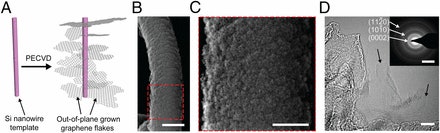
If done right, photothermal efficiency has the ability to help medical experts observe how cells interact with each other and even suggest new therapeutic interventions for those in need. For a while now, these kinds of experiments ran the risk of cellular stress and had to be limited in number and nature. But through Carnie Mellon's research, it looks like photothermal stimulation interventions could be made more versatile and applied to cases involving muscle tissue and organ issues.
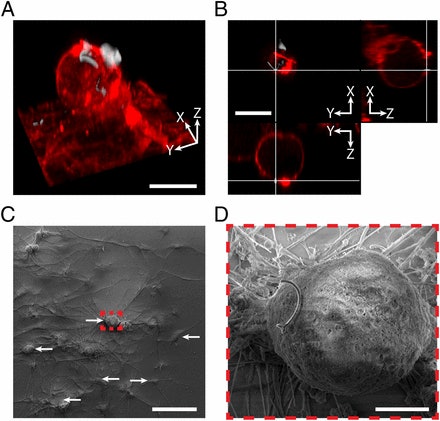
So far, researchers sound optimistic about the use of this technology and how far they can go to help everyday people. Tzahi Cohen-Karni, who is an associate professor in the university's biomedical engineering and material engineering department, said in a statement, "The developed technology will allow us to interact with either engineered tissues or with nerve or muscle tissue in vivo."
"This will allow us to control," Cohen-Karni added, "and affect tissue functionality using light remotely with high precision and low needed energies."









.jpg?w=600)



