On 12 October Boris Johnson announced further lockdown restrictions and the introduction of a new “local Covid alert level” or three-tier system in England that will see different “very high, high or medium” gradings given to local areas, with corresponding restrictions.
Some of these restrictions will include the re-closure of hospitality venues and stopping households mixing both indoors and outdoors. This will not apply to everyone, only to people living in certain geographic areas.
It follows a stark warning from Stephen Powis, NHS England medical director, and deputy chief medical officer, Jonathan Van-Tam, on Monday that the number of people hospitalised with coronavirus is now higher than it was when the government introduced lockdown in March.
This change in direction follows months of easing measures, including encouraging people to return to work and Eat Out To Help Out in bars and restaurants across England.
Now, as temperatures drop, children are back at school and students at university, it is clear further measures are needed to avoid the NHS becoming overwhelmed with Covid-19 patients: Nightingale hospitals in Manchester, Sunderland and Harrogate have been told to get ready.
So as cases grow, and local alerts come to the forefront as a way of managing the pandemic in the coming months - what does it mean for households?
What are the coronavirus alert levels going to be?
Although the 23 March lockdown saw a nationwide effort to curb the virus, with everyone adhering to exactly the same rules, since the easing of that first nationwide measure, there has been a far more devolved and localised approach from centralised government.
Mr Johnson said on Monday, that he did not believe another nationwide lockdown was the “right thing to do”. Instead the government has relied on “local lockdowns”, which have been particularly used in parts of northern England.
The new “local Covid alert level” will further refine this localised approach with places given a grading - these are medium, high and very high. Mr Johnson said it was a standardisation and simplification of the rules.
Medium (or alert level one) is the lowest-risk tier, followed by high (alert level two), then very high (alert level three) as the most serious grading.
What do these levels mean?
Mr Johnson said medium (or alert level one) means continuing to live under the existing national restrictions so that is: rule of six, adhering to social distancing, mask wearing in all mandatory settings, and the 10pm hospitality curfew.
High (alert level two) is the medium-risk tier, which will mean all of the above plus a restriction on household mixing. The rule of six will continue to apply in outside spaces and private gardens.
Greater Manchester is reported to be under tier two or “high” restrictions, according to the BBC.
What does ‘very high’ mean for household mixing?
Very high is the highest-risk category and will apply where transmission rates are “rising most rapidly”, said Mr Johnson. Merseyside is to be placed in this band after discussions between the government and local leaders.
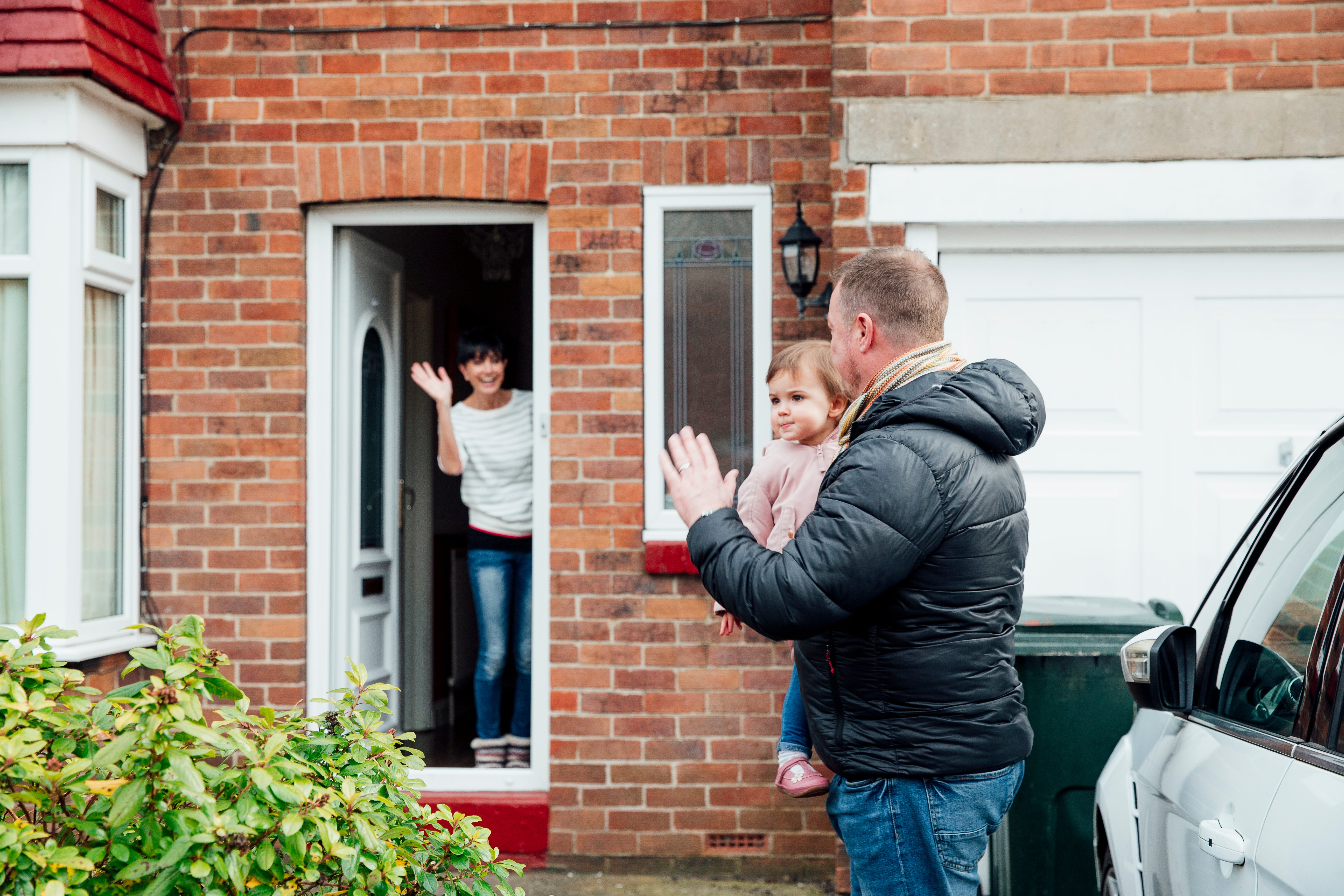
Mr Johnson said for those in the most serious band, very high (level three), they will be unable to meet any other households at all. This means no mixing outdoors or in private gardens, as well as indoors.
These rules will come into place from Wednesday.
For some places in England restrictions on household mixing are already in place in Middlesbrough, Leeds, Bradford, Kirklees, Calderdale and east Lancashire, and elsewhere, because of local lockdowns.
This ban on household mixing more widely in England follows Scotland and Northern Ireland where this restriction is already in place.
In Wales there is currently no nationwide ban on households mixing but there is in local lockdown areas - equal to two thirds of the Welsh population and 22 local authorities, including Cardiff, Swansea, Neath Port Talbot, Torfaen and Vale of Glamorgan.
There had previously been reports by The Times that the government was planning to enforce a ban on socialising and household mixing across London as well. Although no such announcement has come to fruition.