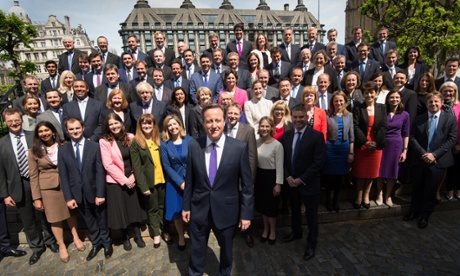
David Cameron’s appointment of Anna Soubry as small business minister so soon after he reclaimed the keys to Downing Street was smart.
Small and medium sized firms employ 15.2 million people and have a combined turnover of £1.6 trillion. Having a post to focus solely on this sector was sorely needed.
With the new position should come a fresh focus from government that goes beyond the bread-and-butter small business policies laid out in the election campaign.
UK productivity stands at nearly 20% below the average for G7 countries. This is holding SMEs back, preventing them from scaling up, and hinders long-term economic growth.
Soubry should make addressing and resolving this issue a founding principle of her mission.
The following are three key areas I would also like to see Soubry address on behalf of SMEs, to show that the Conservatives aren’t just the party of big business, but that they understand what SMEs need and have a clear vision to help them.
- Build a genuine knowledge economy
Sir Richard Lambert, former director general of the CBI, once said that unlike big business, SMEs did not know “where the front door was” when it came to working with universities. Soubry should help them find it, unlock it and then hand them a permanent set of keys.
The UK has four universities in the the global top 10, producing outstanding research and thought leadership. But there is a disconnect between the wealth of knowledge in academia and the application of it in small businesses.
A recent All Party Parliamentary Small Business Group report supported the concept of rewarding universities who successfully developed practical applications for their research and passed this on to small businesses.
Aggressively upping the financial backing of programmes that facilitated the transfer of knowledge from universities to SMEs would be a strong signal from Soubry that the Conservatives are in this for the long-term and not just paying lip service to SMEs.
Turning theory into commercial reality would be a key driver of future growth.
2. Build an understanding of what innovation is
Perfectly good businesses with credible expertise in their field are going under because they do not understand how to use technology to innovate and meet changing customer needs and expectations.
Innovation isn’t all about white coats and science labs. It’s about how a firm takes new technology and new working processes and uses that knowledge to make their own outputs faster, more efficient and cheaper.
The government needs to find ways to ensure SMEs understand how innovation works. Encouraging more organisations in both the private and public sector to formally and informally share best practice with SMEs would be a great starting point.
Raising awareness of and increasing support for mentor schemes (where individuals or firms offer support and practical advice to small businesses) would also help fill in skills and knowledge gaps in the SME community.
A genuine knowledge sharing economy will boost innovation and drive productivity – allowing more startups to scale to the next level, rather than remain static or fall off.
3. Focus on funding productivity not jobs
The new administration will naturally focus on job creation – more people in work supports the government’s message that it knows how to run the economy. But we need a more sophisticated approach than simply boosting employment stats. Creating jobs while continuing the trend of low productivity will not represent progress.
Soubry should direct funding into projects that may not initially boost job numbers, but instead will lay the foundations for future glories.
This means serious investment in building infrastructure to keep the UK connected both physically and digitally. It means finding the money (and political will) to ensure our higher education facilities are preparing students with the skills and mindset needed to succeed in the modern day business world. The government should also dedicate resources to building programmes that develop management and leadership – this will have a direct impact on SME productivity.
These policies may not generate the instant and glowing positive headlines that a quick boost in employment figures will provide, but they will ultimately generate a legacy for Britain to be proud of.
Jane Ollis is the managing director of Rift Accounting
Sign up to become a member of the Guardian Small Business Network here for more advice, insight and best practice direct to your inbox.


.png?w=600)