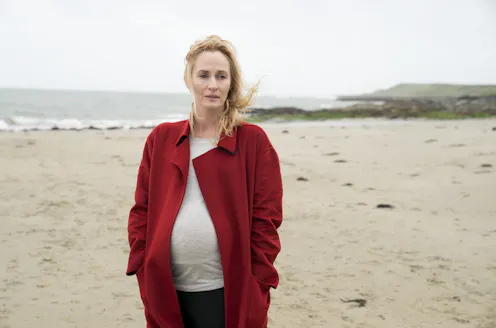
Hannah and her partner have just had a disastrous meeting with the obstetrician. Hannah knows that her pregnancy is not viable and, tortuously, decides that she cannot give birth to a dead baby. The next morning she tells her doctor she wants a termination. He stares at her and says, “well you know that’s not going to happen … not in this hospital”.
This is a scene from Three Families – a two-part BBC series set in 2013, which focuses on Northern Ireland’s restrictive abortion policies. Told through the stories of three women, the show highlights a cold truth running through the history of UK abortion rights: that Northern Irish women have been, and continue to be largely excluded from access.
The 1967 Abortion Act states that an abortion is legal in the UK if authorised by two doctors who are satisfied that the pregnancy would present a greater risk to a woman’s life than a termination; if it would prevent injury to the physical or mental health of the pregnant woman; or if the baby would be born with a severe physical or mental abnormality.
The Act did not extend to Northern Ireland so, for decades, women have travelled to England for abortions. Abortion was decriminalised in Northern Ireland in 2019 and a new legal framework for services took effect in March 2020. While it was a great step for abortion rights in Northern Ireland, the reality is that there continues to be a lack of abortion services, which has forced many women still to travel to other parts of the UK during the COVID pandemic.
So, while Three Families is set before the legalisation of abortion, women in Northern Ireland still face many of the problems featured in the show.
Gatekeeping and restricted access
Abortion Law Reform Association campaigner Diane Munday claimed that to secure legislation in 1967, the campaign for abortion reform had to do deals with with anti-abortion representatives, swapping clauses in and out of the bill. Most important was the clause ensuring that the doctors made the final decision – as Hannah’s did in Three Families.
As a result, Hannah’s agonising choice to terminate was irrelevant because the doctors said so. As we discover later, even before legalisation, Hannah was entitled to a termination on the grounds of her child’s fatal foetal abnormality, but the doctor wouldn’t allow it. In 2021, Hannah wouldn’t have needed any justification under the law, but with the lack of adequate services and the stigma still attached to abortion, she could still struggle. The law is only effective if the services are in place to support it.
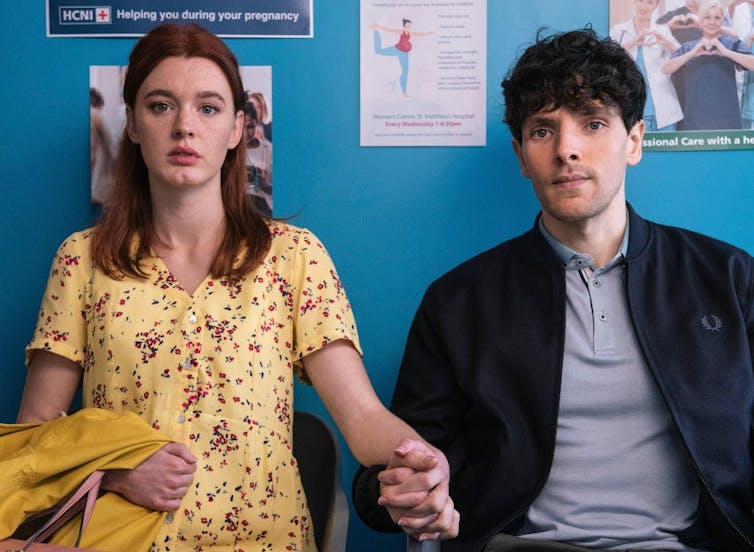
Back in 2013, many women who did want to have an abortion before legalisation had to travel to England, as Three Families’ third protagonist Rosie learns. Pregnant with a baby who will die at birth, she is told by her nurse, “just go to the mainland love. It’s what all the women do, what we’ve always done.”
Getting an abortion outside of Northern Ireland was incredibly expensive, ranging from £300 to £2,000. This doesn’t take into account the added cost of travel and accommodation.
When excerpts from Three Families were played on the Channel 4 show Gogglebox, most were surprised that women boarded flights and ferries to seek healthcare in other parts of the UK, often enduring side-effects on the journey home to avoid the cost of a hotel room.
But not everyone could afford the trip. The third protagonist in the show is Theresa, a mother desperate to save her daughter Orla from an abusive boyfriend and a bleak future. Unable to get the money, Theresa orders the abortion drug Mifepristone online illegally and is arrested weeks later as a result.
Legalisation in theory
Women have always sought to end unwanted pregnancies. The Lancet’s archives reveal the desperate and gruesome deaths of unwillingly pregnant women. Bleeding, anaemia, necrosis, coma and death were all reported as side effects of taking abortifacient herbs like pennyroyal oil or similar, sold to address “obstructed menstruation”. Theresa uses similar logic while explaining her decision to buy the abortion pills for Orla: “No. Abortion is surgery? … these pills, they just … they just bring on your period.” With abortion now decriminalised, Theresa wouldn’t have been arrested, but accessing help may have been just as difficult.
Women-driven, collective support has always existed, exemplified today by charities like Alliance for Choice and the Abortion Support Network. More historically, it was the knowledge passed from woman to woman about the potency of certain herbs and powders. There were also the older women who would travel around the backstreets, clutching bags with instruments intended to produce miscarriage. Like Theresa’s story, based on an actual legal case, demonstrates, these services were the only option for hundreds of Northern Irish women.
While the new laws are a step forward in theory, there are significant problems in practice. There is not an adequate provision of services, with the few that do exist being severely understaffed and underfunded. So many of the barriers the women faced in Three Families are still in existence today. According to Alliance for Choice and the Department for Health, hundreds of women are still forced to travel to England, or go online for help legally securing the pills. Women also have to visit a surgery as it is illegal to take both of the required pills at home, which is a further barrier to access – although this has been temporarily relaxed for shielding patients.
Abortion has existed for centuries, and always will. As Three Families demonstrates, even the most wanted pregnancy doesn’t always go to plan. But also, a simple but important truth is that some women just don’t want to be mothers. Three Families was a remarkable feat of storytelling and we should never forget that each story was a reality for countless like them in Northern Ireland. Legalisation was great step forward but now the government needs to make sure that every woman in Northern Ireland can access safe and secure abortion services, and on that front there is still work to do.

Livi Dee does not work for, consult, own shares in or receive funding from any company or organisation that would benefit from this article, and has disclosed no relevant affiliations beyond their academic appointment.
This article was originally published on The Conversation. Read the original article.