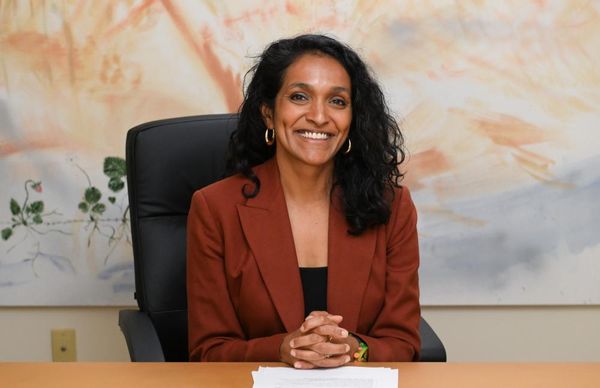
Maria Eagle, the 45-year-old member of parliament for Liverpool Garston, may seem an unlikely mother to 61,000 young people, many of them damaged and vulnerable. Yet, as the parliamentary under secretary of state for children, young people and families, she is the "corporate parent" for children taken into the government's care.
The government, however, is not the best of parents, according to looked-after children. They complain that their experiences of care further disrupt their troubled lives, and point out that while children who grow up with parents are leaving home later - at 24, on average - looked-after children, with no family support, are sent out on their own at 18. Many are sent out as young as 16.
Still in emotional pieces, and mostly without qualifications or any chance of a decent job, a wretchedly high proportion quickly fall into homelessness, and the shocking statistics are that 60% of young offenders, and 27% of adult prisoners, have at some time been in care.
When I asked Jane Price, 16, who had been in care since the age of six, what I should tell the minister most needs improving in the system, she replied bluntly: "All of it."
There is no shortage of adult academics and campaigners who can flesh out that plea. Mike Stein, a professor at York University's social work research and development unit, says: "Four areas are vital. These young people need stability as they grow up, attention to their education, a gradual transition from care to independent life, and proper support after leaving care."
Break that down and it is simply what all other children expect to receive from their parents. Looked-after children have at the core of their lives a terrible, far-reaching loneliness: the absence of parents. The National Leaving Care Advisory Service (NLCAS) is calling for an end to the dramatic moment of leaving care, and asking instead for "throughcare", more akin to a "normal" upbringing.
David Kidney, the Labour MP who chairs the all party group for children and young people, says: "Whatever support these young people get is threadbare compared with the care most children receive from their parents."
Moral obligation
Besides the moral obligation to these children, it can be argued that investment now, in better fostering and personal services to care for their emotional and psychological wellbeing, will save on the costly consequences of broken lives later - of homelessness, social problems and crime. Crime alone costs the country £36bn a year.
When I meet Eagle, eight hushed floors up the glass-walled atrium of the Department for Education and Skills (DfES), two advisers seated inside her office, she encouragingly accepts a degree of responsibility: "We are the parent of these children, most of whom are in care because of abuse and neglect. We ought to aim at parenting that is as good as that for the typical middle-class kid. Too often it still doesn't mean that," she says.
Eagle confirms that the government is examining ways to improve the system, and will publish a green paper "in two to three months". But she will not say what it might propose: "I don't want to set any hares running."
As she begins to talk, however, it becomes apparent that the DfES, which has a strategy unit working on the green paper proposals, is concentrating most on addressing the desperately low educational attainment of looked-after children. Eagle volunteers some facts: most suffer disrupted schooling; 59% are not entered for a single GCSE; just 9.4% attain five A to C grades compared with 54% of the wider population. "Education is a key determinant of life chances," she says. "Since 1997, there has been a slow increase in achievement for looked-after children, which is unprecedented. But it isn't enough."
The 2004 Children's Act, she explains, places an obligation on councils to improve the educational attainment of looked-after children - a glaring gap previously. In addition, there are regulations before parliament to guarantee that looked-after children are admitted to their first choice of school, even if they move during the academic year, as many have to. "If we can get them into the good schools, I am really hopeful that has the potential to make a big impact," says Eagle.
Provision for care leavers is also, she says, "a tremendously important part of the story". The Leaving Care Act 2000, the government's landmark reform, imposed a statutory duty on local authorities to produce "pathway plans" for young people before they leave care, and financial support until they are 18, or 24 if they are in full-time education.
Five years since the act came into force, Eagle's department is reviewing it. "We're in a position to see what impact it has had and whether we need to do more. This is certainly part of the work we're doing," she reveals.
But the minister is already clear that improvement is needed. "The financial support for care leavers varies enormously between local authorities. I'm not convinced pathway plans are always as good or as personalised as they should be, and too many young people, around a quarter, are still leaving care at 16."
Despite her acceptance of the government's role as corporate parent, she betrays a minister's impatience with the councils who work with the young people. "Some local authorities are just doing the basics, not the job we want them to do."
Eagle believes the "Cinderella service" can be improved if outcomes for care leavers are specifically measured, making local authorities more accountable. She is not greatly taken with the argument that spending money now will save costs in the future. With the hint of a sigh, she says: "You can get permission from the Treasury under Invest to Save, arguing that investing in a certain way now will save money down the line, but there are difficulties with it. There is a spending review coming up, and I'm not saying we won't make the arguments."
Eagle, who has no children herself, does not volunteer much about the emotional needs of looked-after children. She does say research shows that abuse and neglect cause long-term damage to people, yet her prognosis rather concentrates on GCSEs and the bureaucratic mechanics of the system.
Stable home
I ask about the Fostering Network's estimate that Britain needs an extra 10,000 foster carers. Eagle is not particularly receptive about the call for fostering to be made more professional if children are to be given a stable home. "There are different views. I don't think we're going to resolve that debate in the green paper."
She talks instead about financial allowances, saying that the government is consulting on setting a national minimum. She wraps up by saying that the government is looking at an "entire range of issues" and is "genuinely looking for ideas".
Her strategy unit has been talking ambitiously, consulting already about how to achieve a "step change" in looked-after children's life chances, and "radically raising their status and importance". A senior DfES official, Mark Burrows, told an NLCAS conference in February that the government is considering moving to a "needs-based" time assessment for young people to leave care; to do so when they are ready, rather than at a set age. That would be a major change, costing real money.
Eagle, however, does not seem to see it, saying only that the current leaving period (16 to 18) should already be applied more flexibly by local authorities. She leaves the impression that the government may ultimately propose small tweaks, rather than the radical change that its own officials appear to accept is required.
Stein insists that "tweaks" will not be good enough. "I've gone grey, over 25 years' research, finding that these young people are lacking the same, basic elements of life. This green paper is a real opportunity for the government to put that right. I hope they take it."
Maxine Wrigley, national coordinator at A National Voice, the campaigning group staffed and governed by people formerly in care, sums up the situation: "This system fails so many young people, and needs dramatic improvement. The government is the parent of these children, and is supposed to be a role model for all parents. Yet its performance is scandalous, shameful."
· Some names have been changed.
What should the government do to improve support for children in and leaving care?
Have your say at SocietyTalk.Guardian.co.uk