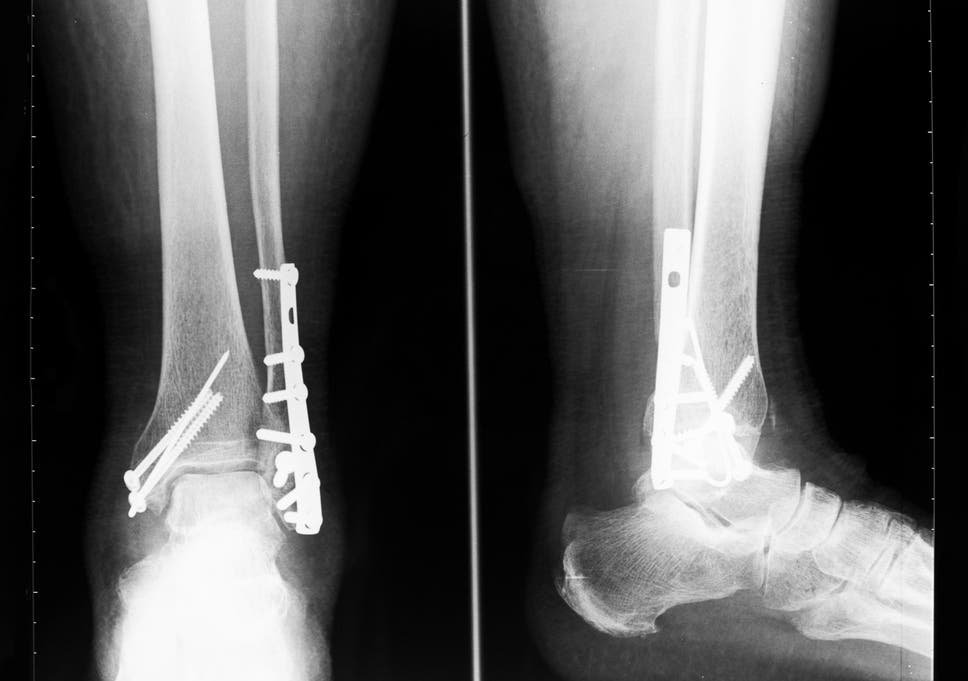
Thousands of NHS patients who had fractures repaired with a metal plate need their X-rays reviewed after a hospital mix-up means some received implants which are liable to buckle.
About 5,500 patients who had plates fitted for limb fractures since February 2018 will now be reviewed, NHS Improvement and the British Orthopaedic Association said.
Checks are neccessary after seven incidents at a single trust where long bone fractures - such as the forearm, upper arm (humerus), shin (tibia), or thigh (femur) - were repaired with the wrong plate.
In one case, a patient fell and the plate buckled, meaning they needed further surgery. In another a patient needed more surgery after their plate failed when they were having post-operative physiotherapy.
NHS Improvement said recent changes in the designs of some reconstruction plates has meant that two plates, reconstruction plates and dynamic compression plates, are now similar in appearance.
Additionally the affected patients had been treated by more than one surgeon, suggesting it could have happened elsewhere, although the risk to patients is low.
"We are asking all hospitals in England who provide orthopaedic surgery to review X-rays for their patients who have had surgery involving plates in the past year," NHS Improvement national director for patient safety Dr Aidan Fowler said.
"Patients should not be alarmed and do not need to take any action themselves.
"The risk of harm is low and their local hospital will contact them if there is a chance that they have been affected."
It is estimated that 30 to 40 patients at each trust in England could have had a plate fitted - which could amount to more than 5,500 patients needing a review, NHS Improvement said.
Dynamic compression plates, which are used for some fractures, are stronger and more rigid than reconstruction plates. The latter are more flexible as they may need to be reshaped for use in more complex surgery.
Fractures can take up to a year to heal but people treated more than a year ago are unlikely to pose further problems.
Additional reporting by PA