Thousands of Central American migrants take free rides home courtesy of U.S. government
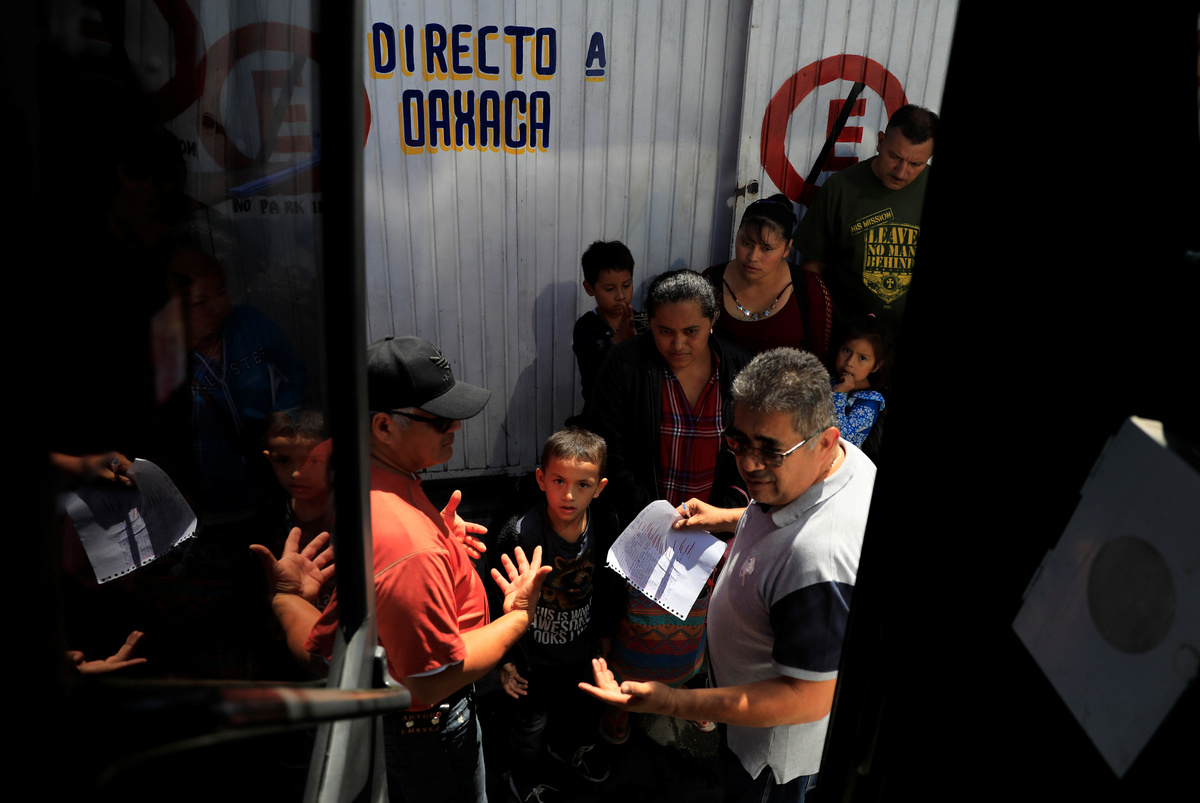
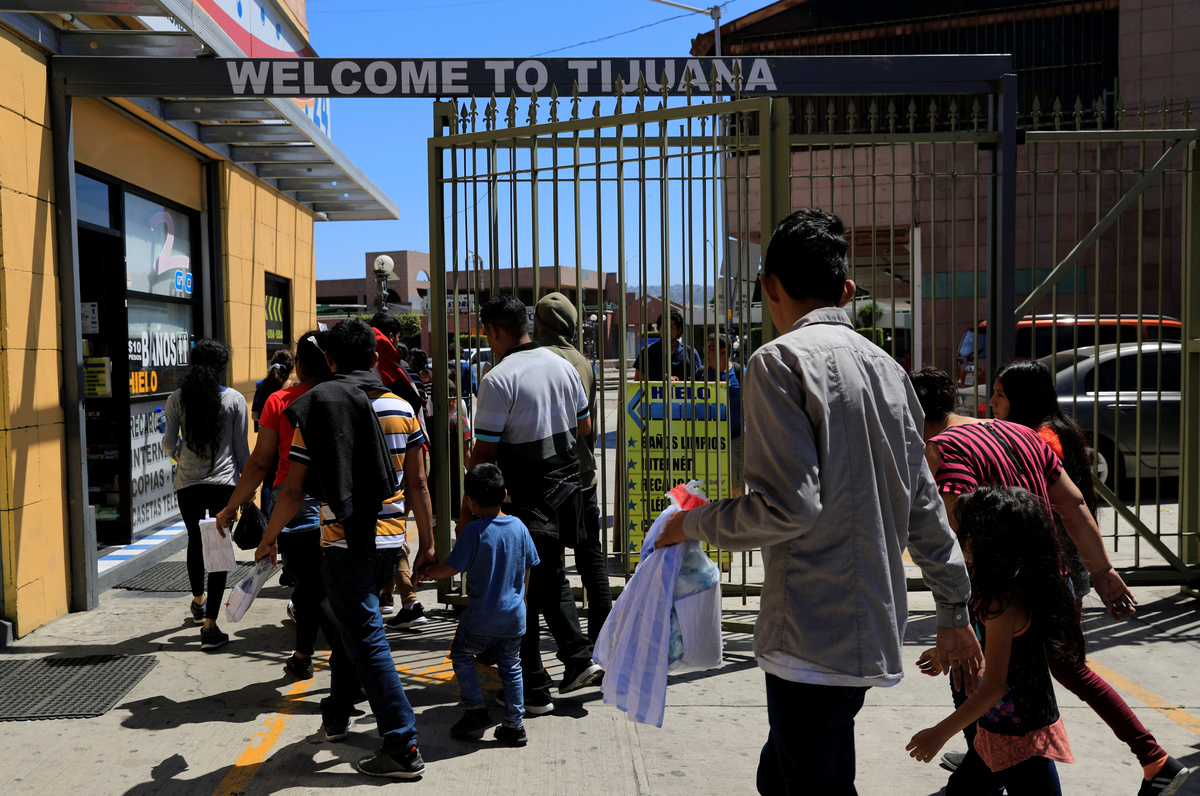
FILE PHOTO: Central American migrants returned from the U.S. to Mexico under the Migrant Protection Protocols (MPP), queue outside a bus to go back to their countries, in Tijuana, Mexico, July 19, 2019. REUTERS/Carlos Jasso
(Reuters) - More than 2,000 Central American migrants seeking to settle in the United States have given up and accepted free rides home under a 10-month-old program funded by the U.S. government and run by a United Nations agency, according to a U.N. official.
The "Assisted Voluntary Return" program has paid for buses or flights for 2,170 migrants who either never reached the United States or were detained after crossing the border and then sent to Mexico to await U.S. immigration hearings, according to Christopher Gascon, an official with the U.N.'s International Organization for Migration (IOM).
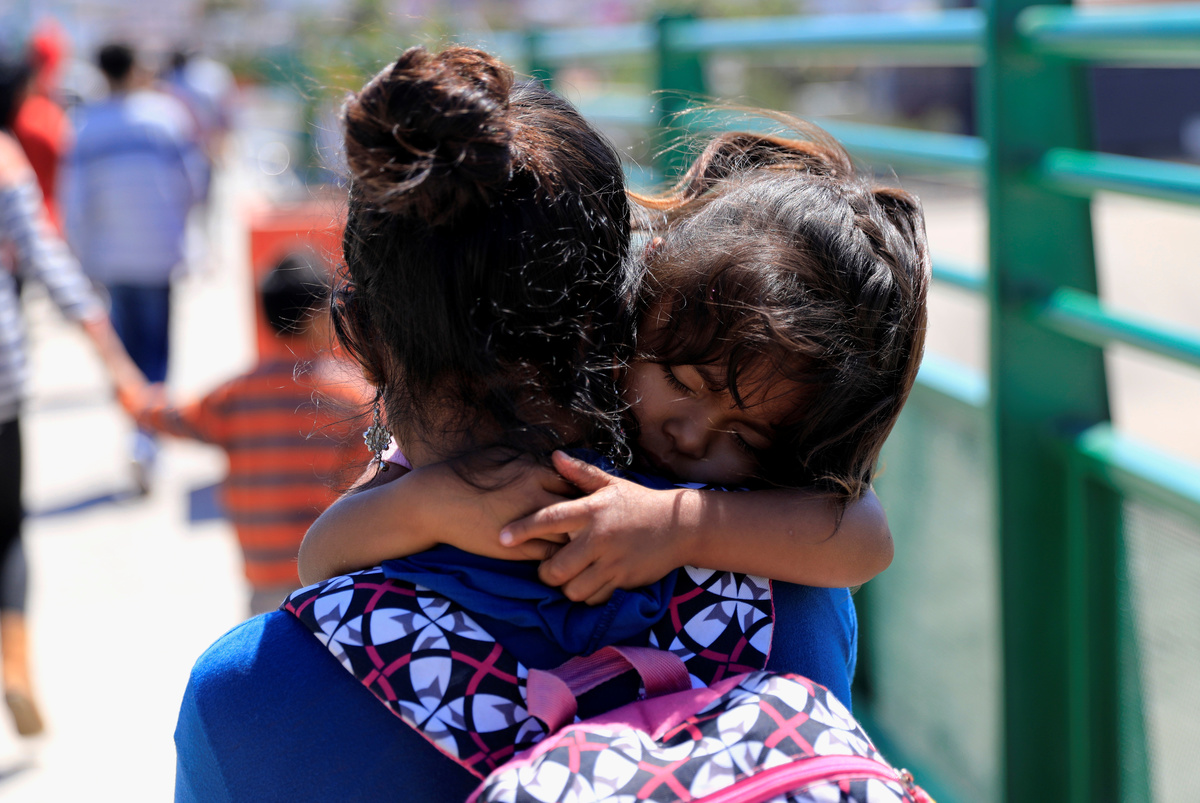
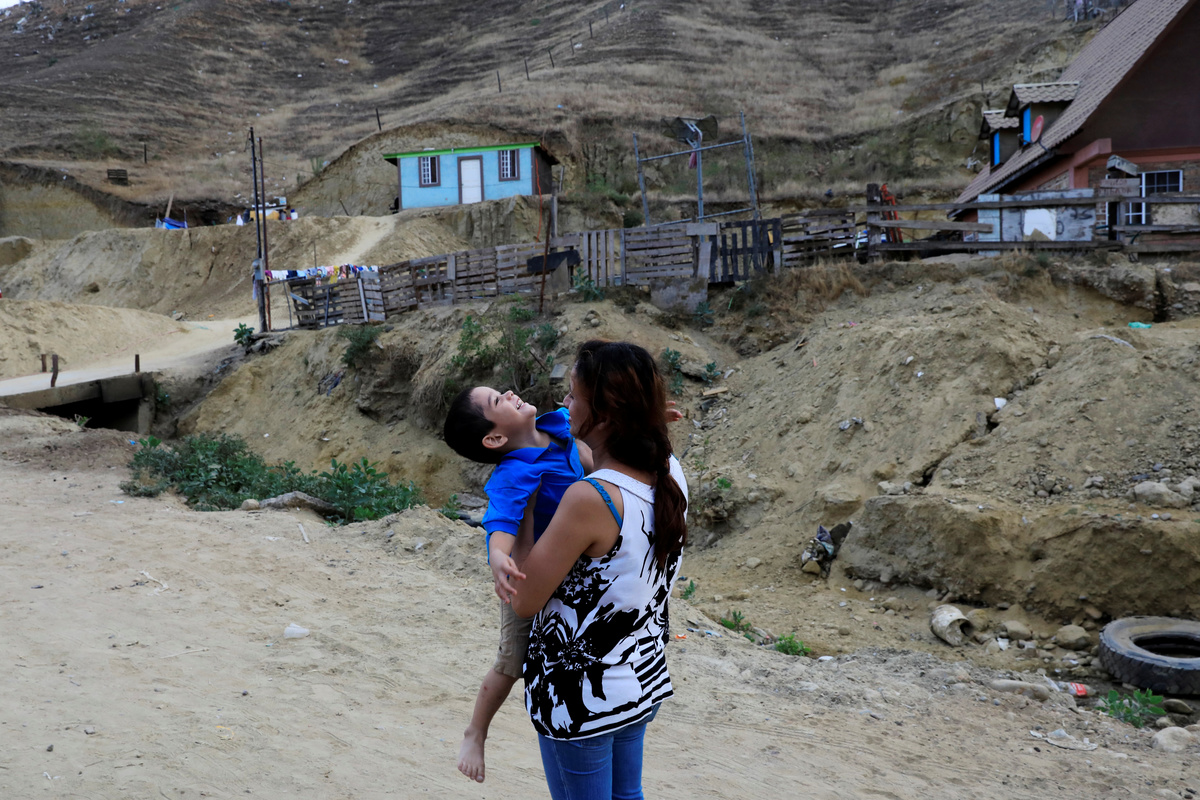
FILE PHOTO: A Central American migrant carries her child just after she was sent to Mexico from the U.S. under the Migrant Protection Protocols (MPP), in Tijuana, Mexico, July 18, 2019. REUTERS/Carlos Jasso
The $1.65 million program, funded by the U.S. State Department, is raising concerns among immigration advocates who say it could violate a principle under international law against returning asylum seekers to countries where they could face persecution.
The returned migrants have not been interviewed by U.S. asylum officers. But Gascon said his agency screens all participants to ensure they are not seeking U.S. asylum and want to go back.
Gascon, head of the IOM's Mexico mission, said the program provides a safer and more humane means of return than the migrants could arrange on their own.
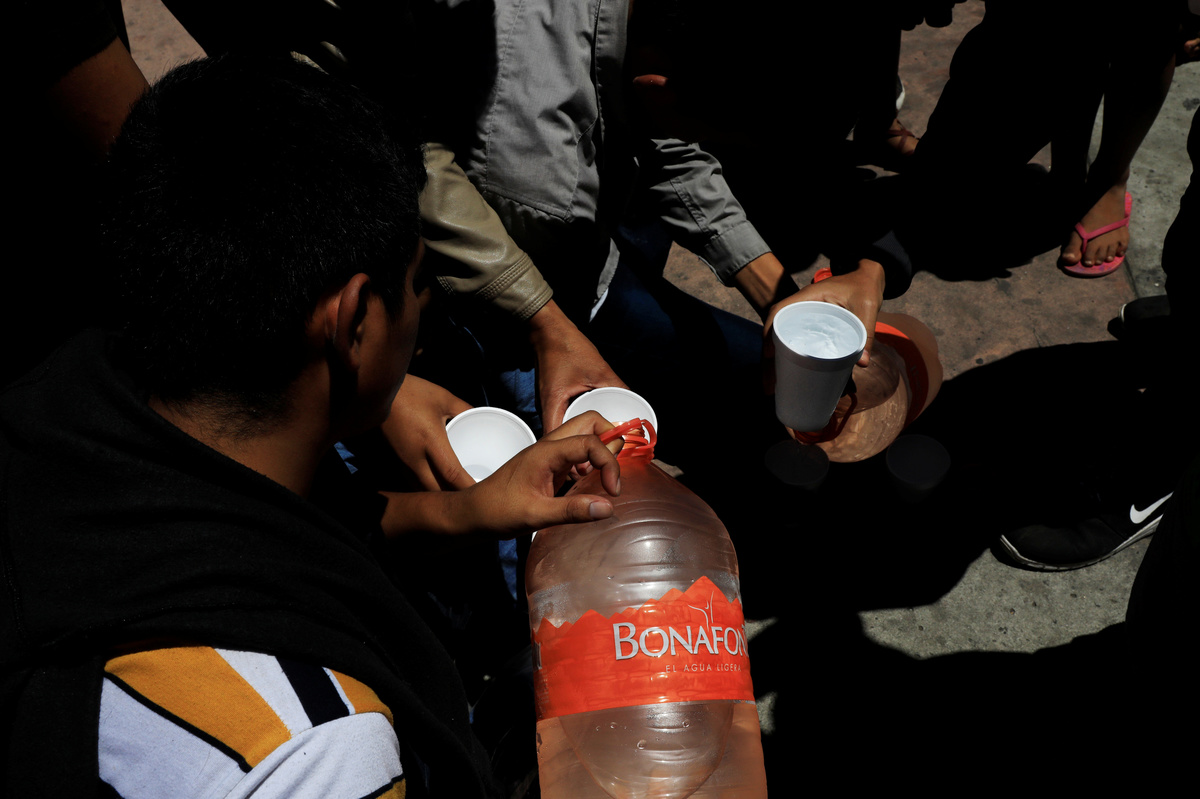
FILE PHOTO: Central American migrants returned from the U.S. to Mexico under the Migrant Protection Protocols (MPP), drink water in Tijuana, Mexico, July 18, 2019. REUTERS/Carlos Jasso
The effort (https://www.humanitarianresponse.info/sites/www.humanitarianresponse.info/files/documents/files/iom_voluntary_return_-_may_10_-_en.pdf), whose scope and controversial aspects have not been previously reported, is the first by the State Department and UN to target Central American migrants in Mexico on such a large scale. The State Department would not comment on the record about its role.
Gascon said the State Department reached out to the IOM last year as caravans of thousands of Central American migrants travelled through Mexico towards the U.S. border.
U.S. President Donald Trump called the caravans an "invasion" and has made stemming immigration a centrepiece of his administration and 2020 re-election campaign.
FILE PHOTO: Migrant from Cuba, Yesenia Argote, waits for a public transport after she was sent with her son by the Customs and Border Protection (CBP) to Mexico from the U.S. under the Migrant Protection Protocols (MPP), in Tijuana, Mexico, July 21, 2019. "I have been separated from my daughter after we crossed into the U.S.," Argote said. "We gave ourselves up to the officials in the U.S. I was waiting for the process and hoping we were going to stay in the U.S. and then everything became very confusing. They sent me to Mexico with just my son. I don't know where my daughter is. I'm going to stay in Mexico and I will go to the court in the U.S. in December." REUTERS/Carlos Jasso
Migrant advocates are particularly concerned about 347 people returned by the IOM who had been stuck in Mexico under a controversial Trump administration policy known as the Migrant Protection Protocols (MPP).
Under that policy, which began Jan. 29, some migrants who make it across the U.S.-Mexico border are given a notice to appear in U.S. immigration court, then are then turned back to Mexico to wait the months it can take for their court cases to be resolved. In the past seven months, more than 30,000 migrants have been sent back under MPP, according to U.S. Customs and Border Protection.
FILE PHOTO: Central American migrants returned from the U.S. to Mexico under the Migrant Protection Protocols (MPP), enter a shopping mall in Tijuana, Mexico, July 18, 2019. REUTERS/Carlos Jasso
(For a graphic on the Migrant Protection Protocols, see https://reut.rs/2MszcsN)
Advocates say that the migrants often face danger and destitution in Mexican border towns, leaving them no good options.
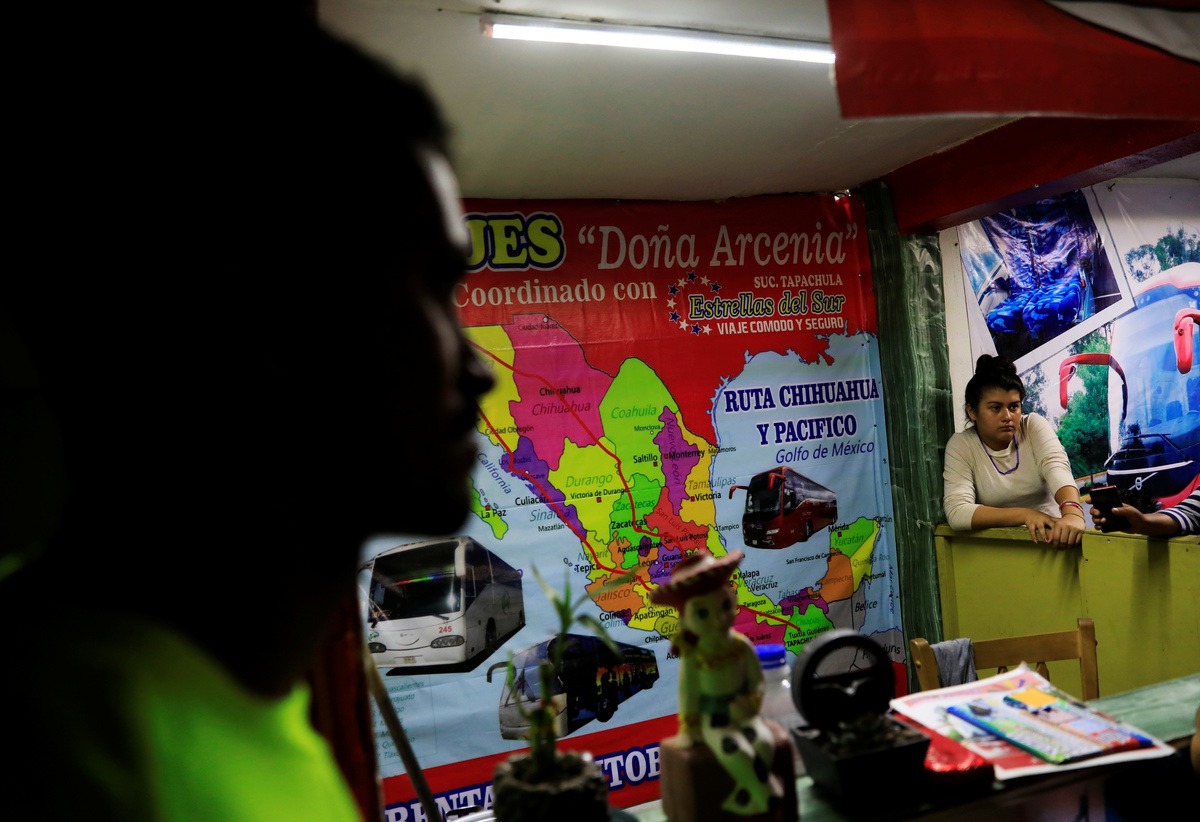
FILE PHOTO: Central American migrants returned from the U.S. to Mexico under the Migrant Protection Protocols (MPP), stand next to a Mexican map to go back to their countries, in Tijuana, Mexico, July 19, 2019. REUTERS/Carlos Jasso
"How can it be a voluntary decision (to return home) given the conditions they face in Mexico? It's a choice between two hells," said Nicolas Palazzo, an attorney with El Paso-based Las Americas Immigrant Advocacy Center.
Besides any danger they might face back home, there is another significant downside to leaving: If migrants do not show up for a U.S. court hearing, they can be ordered deported "in absentia," reducing their odds of ever being granted refuge in the United States.
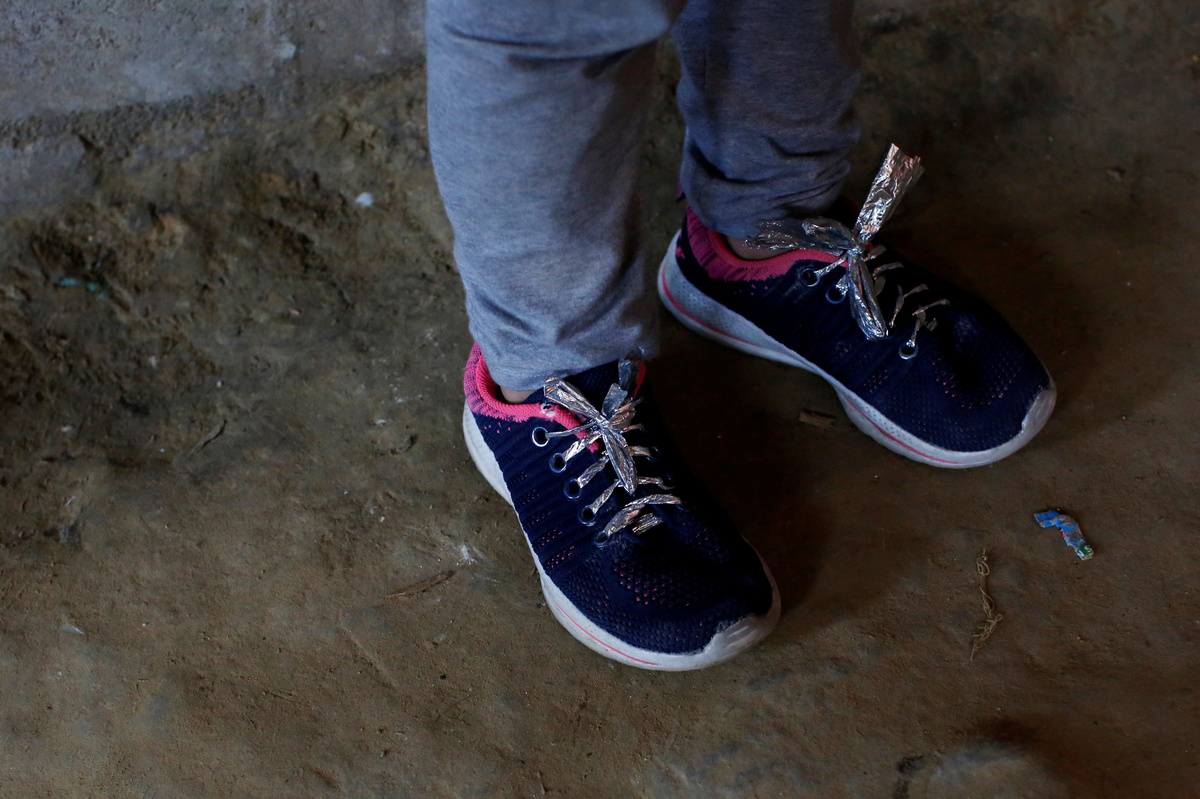
FILE PHOTO: Shoelaces made from a space blanket distributed by the U.S. Customs and Border Protection (CBP), are tied to a shoe of a child migrant in Tijuana, Mexico, July 22, 2019. REUTERS/Carlos Jasso
AFRAID TO GO, AFRAID TO STAY
Denia Carranza, a 24-year-old Honduran returned to Mexico to await a court hearing set for October, decided instead to board a bus back home last week.
She said she and her 7-year-old son had fled her hometown and a good job at a shrimp packing company after gang members threatened to kill her if she did not deal drugs to fellow employees. She had hoped to apply for U.S. asylum.
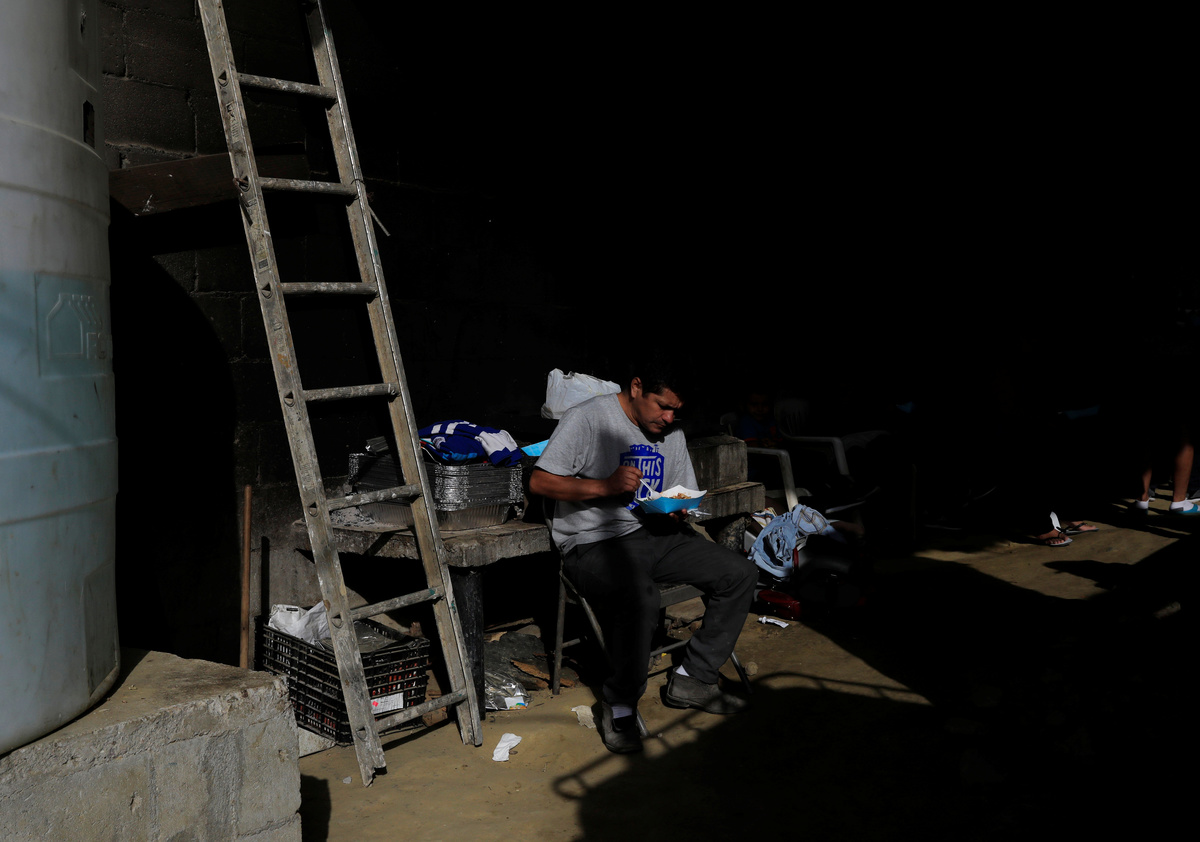
FILE PHOTO: A migrant eats inside a shelter in Tijuana, Mexico, July 19, 2019. REUTERS/Carlos Jasso
But she said she was frightened in Ciudad Juarez - a battleground for drug cartels where the bulk of migrants await their hearings. Also, she had no job and no way to provide for her son.
"I am scared of going back to Honduras. But I am more afraid to stay," she said.
The U.S.-based nonprofit Human Rights First said it had documented more than 100 violent incidents perpetrated against migrants waiting in Mexico for U.S. court hearings this year, including rape, kidnapping, robbery, assault and police extortion.
FILE PHOTO: Migrants pray together inside a shelter in Tijuana, Mexico, July 20, 2019. REUTERS/Carlos Jasso
The IOM documented 247 deaths of migrants near the US-Mexico border this year through Aug. 15.
In a July 30 letter to the IOM's Director General, 30 U.S. and international advocacy organizations said they feared the U.N. organization was returning migrants to countries they had fled "out of desperation, not choice, and where they may not fully understand the consequences of failing to appear whenever summoned by a U.S. immigration court."
There is no way of knowing how many of the migrants who opt to go home with IOM help might have been able to present a successful asylum claim. U.S. courts ultimately deny most such claims brought by Central Americans and the Trump administration has said many are fraudulent.
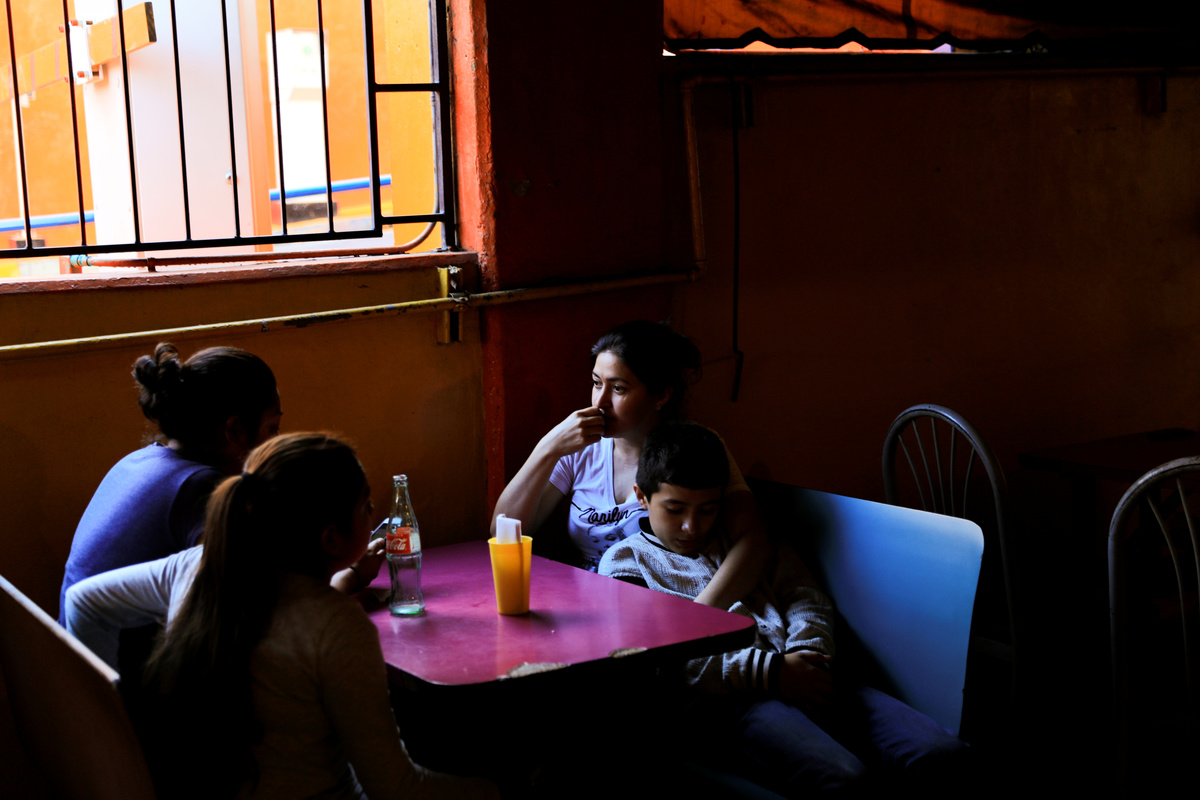
FILE PHOTO: Migrant from Honduras, Patricia Acosta, 36, embraces her son Adalberto Acosta, 13, as they finish eating at a restaurant after they were sent by the Customs and Border Protection (CBP) to Mexico from the U.S. under the Migrant Protection Protocols (MPP), in Tijuana, Mexico, July 21, 2019. Acosta's husband and her youngest daughter managed to stay in the United States. "It was a family dream to cross and stay in the U.S. so my kids could escape violence back in Honduras and get a better education," Acosta said. "Now, I'm separated from the rest of my family and I'm stuck in a country that I don't know anyone... In the cooler (detention center) they treated us very cruelly, we didn't have a place to go to the toilet.. the verbal insults we received from the officers were horrendous." REUTERS/Carlos Jasso
Migrants who are sent to Mexico under MPP may or may not be seeking U.S. asylum, but they generally have no opportunity to initiate such claims before being sent back across the border. The policy cuts out a traditional asylum screening step in which migrants are interviewed to establish whether they have a "credible fear" of returning home.
SEEING 'REALITY'
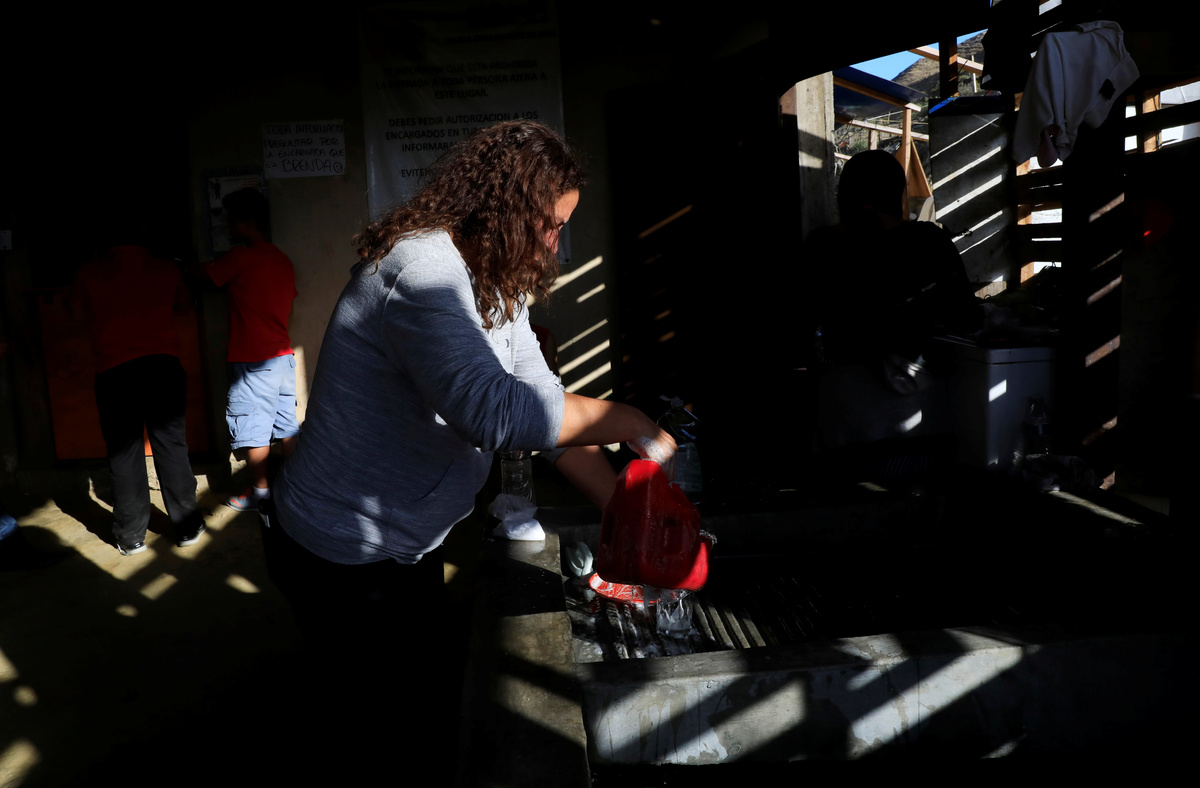
FILE PHOTO: Migrant from Venezuela, Ana Maria Rincon, washes clothes inside a shelter after she and her children were sent by the Customs and Border Protection (CBP) to Mexico from the U.S. under the Migrant Protection Protocols (MPP), in Tijuana, Mexico, July 20, 2019. "I don't have many options, I have to wait for my appointment at the court, I didn't ask for asylum but that was the only option they gave me. I can't return to Venezuela, it's too dangerous," Rincon said. "If I have to wait, I will wait, if I have to stay in Mexico, I will stay. I really want to go to the U.S. as my older son lives there. I want to reunite with him, he is the head of the family." REUTERS/Carlos Jasso
When the U.S. State Department approached IOM last fall, Gascon said, part of the goal was to counter what is saw as misinformation about how easy it was to get into the United States.
IOM set up kiosks at a stadium in Mexico City, which was along the caravan route, and on the U.S.-Mexico border. It also helped spread the word about free rides back in migrant shelters.
"When they saw the reality, some decided to go home," he said of migrants.
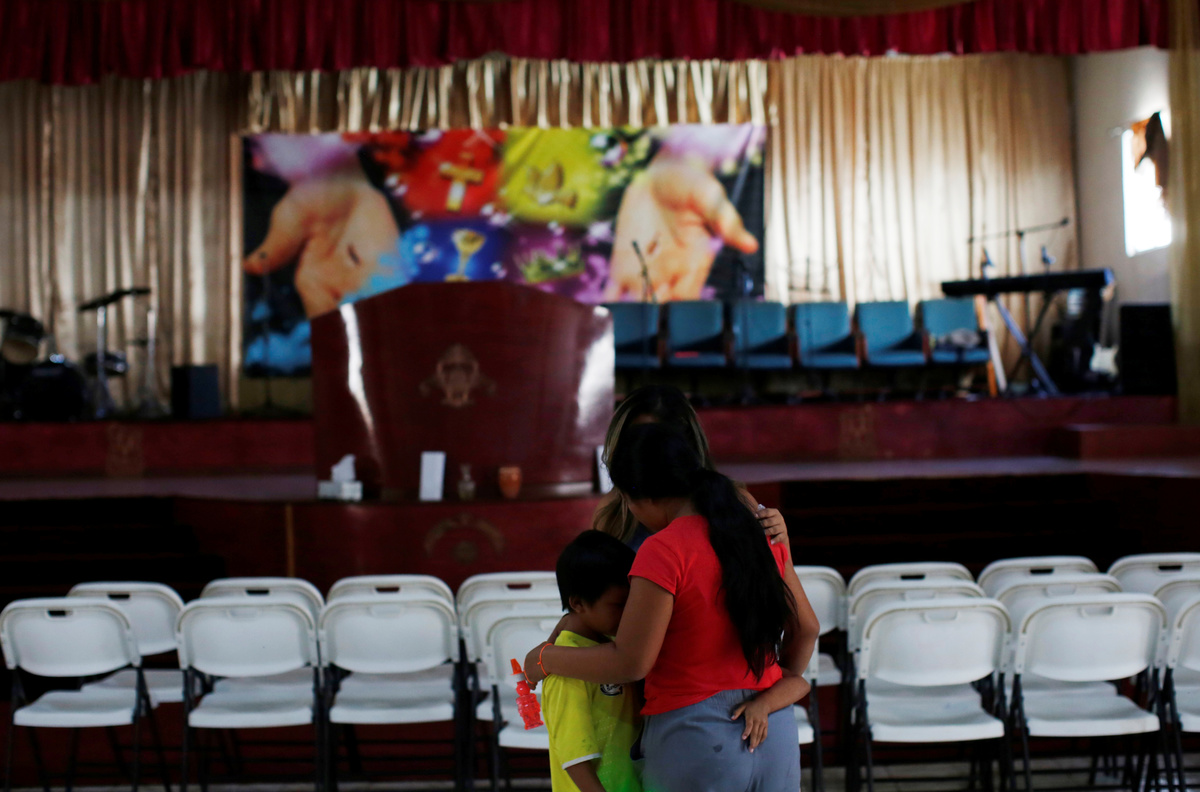
FILE PHOTO: Migrant from Honduras, Dunia Ayala, carries one of her children outside a shelter after she was sent by the Customs and Border Protection (CBP) to Mexico from the U.S. under the Migrant Protection Protocols (MPP), in Tijuana, Mexico, July 21, 2019. "I crossed to the U.S. with my family, we gave ourselves up to the border patrol, then they took us to a place where it was very cold, they took all our belongings, jackets, shoelaces, everything, then started to question us. We feel very intimidated by them. My husband said to them, 'We didn't have the fortune to be born in a country like yours, we just want a better future for our kids.' Anyway they forced us to sign a paper of the MPP. Now, we have an appointment, but after the way they treated us, we are going back to Honduras." REUTERS/Carlos Jasso
Three quarters of the migrants in the voluntary return program went back to Honduras, a fifth to El Salvador and the rest to Guatemala and Nicaragua, according to IOM figures through July 26 of this year. More than half were "family units" and about 100 were unaccompanied minors. Most of the migrants have been sent back from Mexico, and a small fraction from Guatemala.
The IOM screens all migrants who ask to go home, but those awaiting U.S. hearings in Mexico also undergo an orientation program with Grupo Beta, an arm of Mexico's National Migration Institute, to ensure migrants understand their options, Gascon said.
So far, Gascon said, two people awaiting U.S. court hearings in Mexico who wanted a ride back were instead referred to the Mexican government to gauge their eligibility for asylum in Mexico.
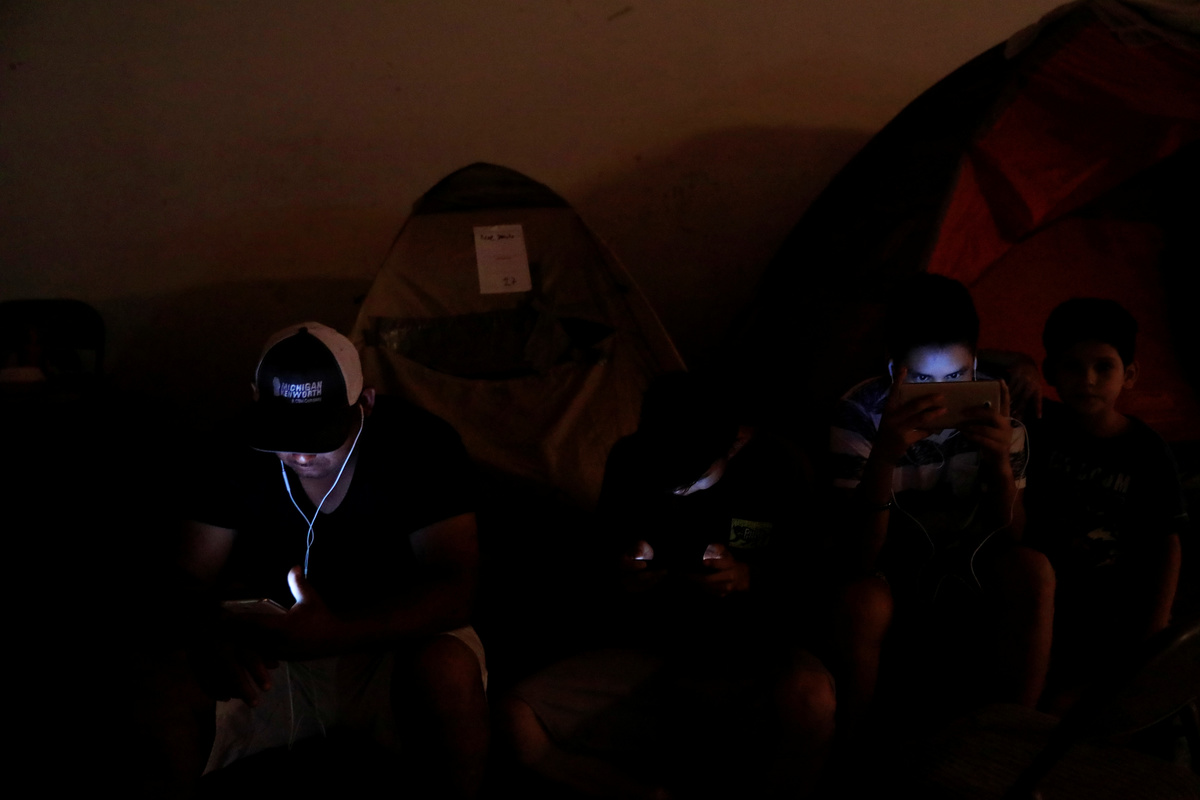
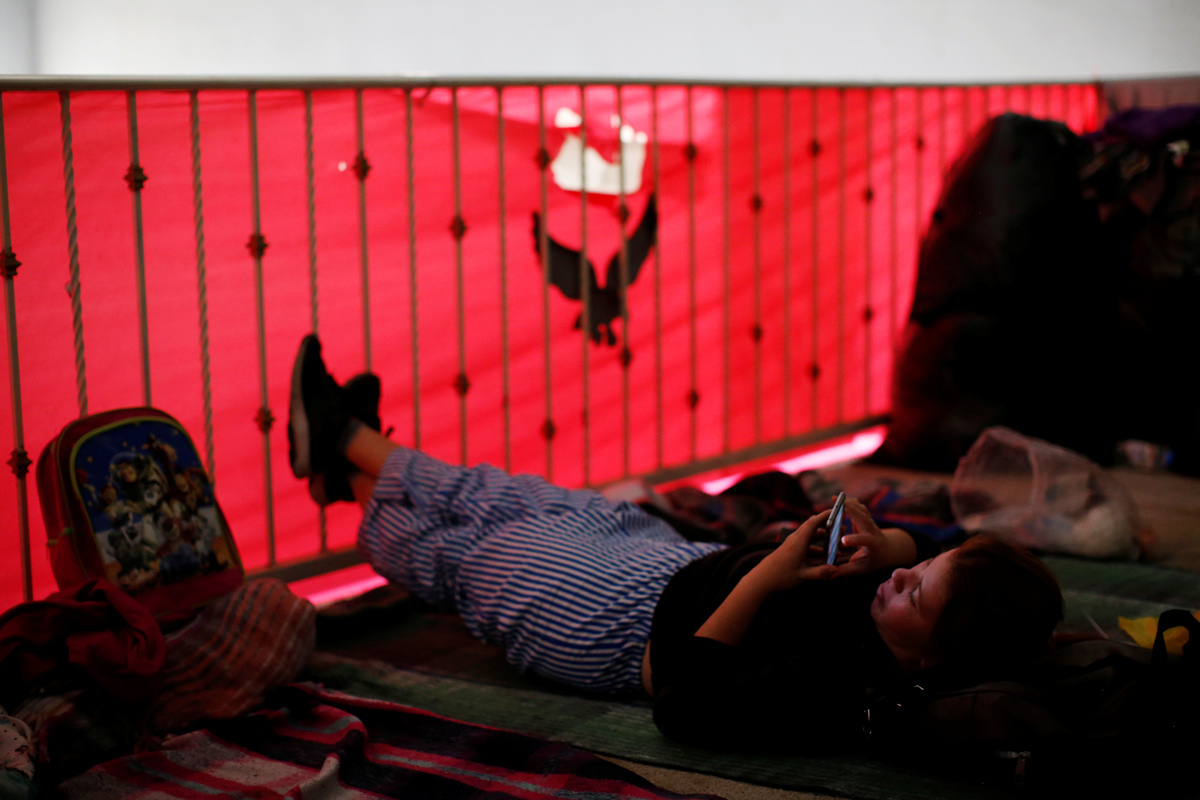
FILE PHOTO: Migrants use their mobile phones inside a shelter in Tijuana, Mexico, July 22, 2019. REUTERS/Carlos Jasso
But advocates said they worried that Grupo Beta is not the best partner for IOM to ensure migrants' safety.
"Many organizations have documented time and again that Mexican migration officials don't refer people to (the national refugee office), they don't register fears of return, and they have even pressured people to withdraw (asylum) claims," said Kennji Kizuka, a researcher at the nonprofit Human Rights First.
Mexican migration officials did not respond to a request for comment.
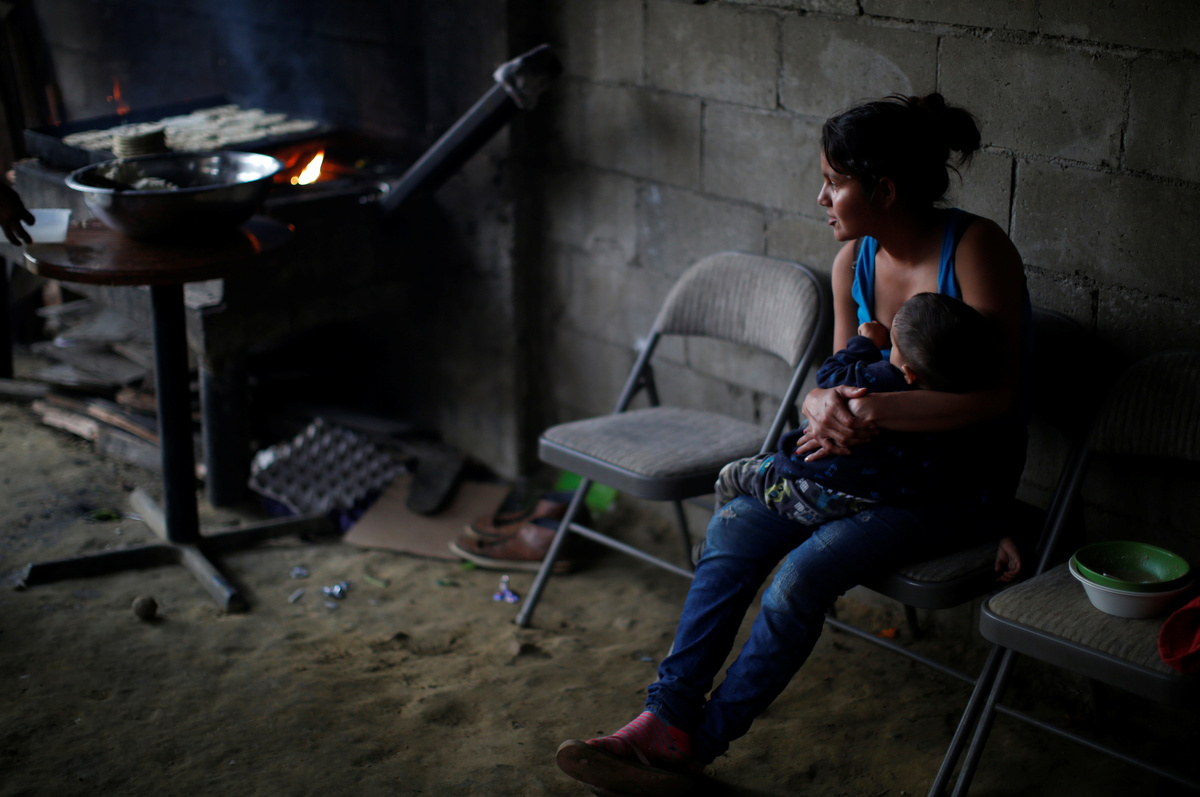
FILE PHOTO: A migrant woman nurses her child inside a shelter in Tijuana, Mexico, July 22, 2019. REUTERS/Carlos Jasso
More than a dozen migrants awaiting U.S. hearings at the Casa de Migrante shelter in Ciudad Juarez told Reuters the weekly south-bound bus rides held some appeal. Though reluctant to give up on their American dreams, many didn't have lawyers and saw little prospect for success.
"All that effort we made to get here from Honduras and now we're going back," said Angel Estrada, who had hoped to get care in the United States for his 9-year-old son, who has hemophilia. "It's really sad."
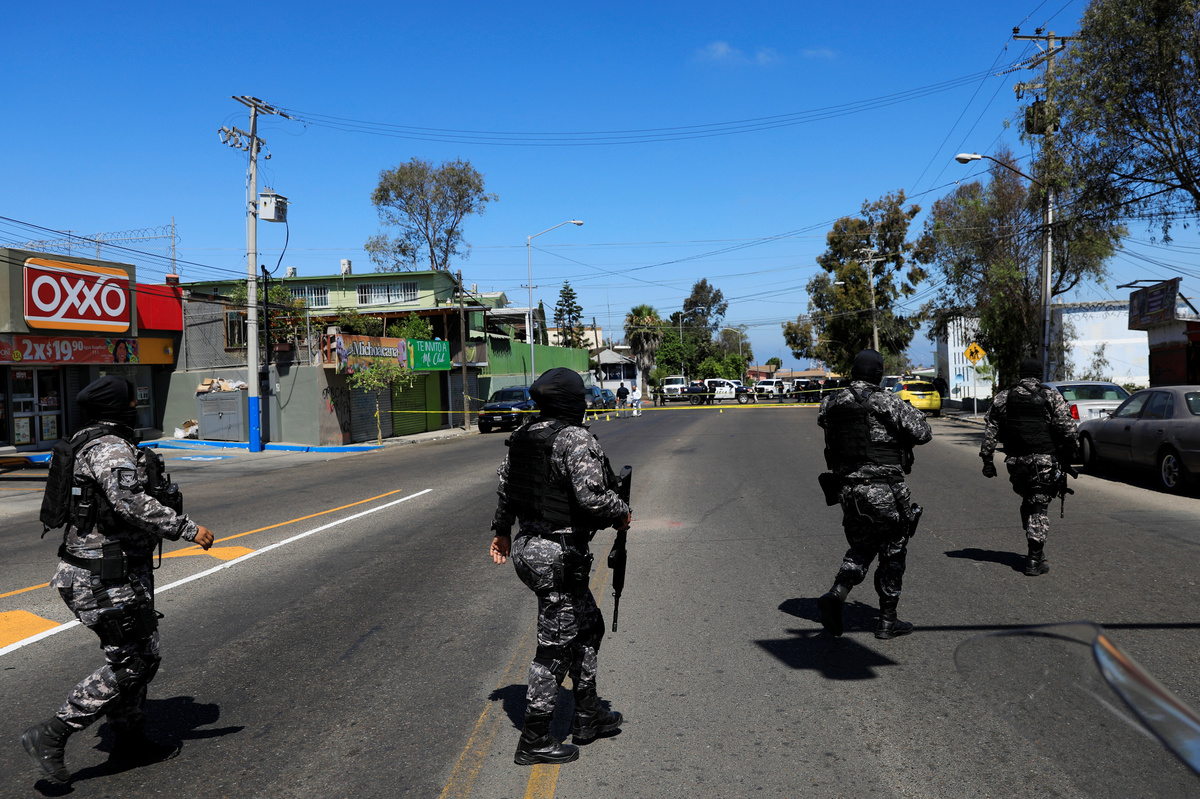
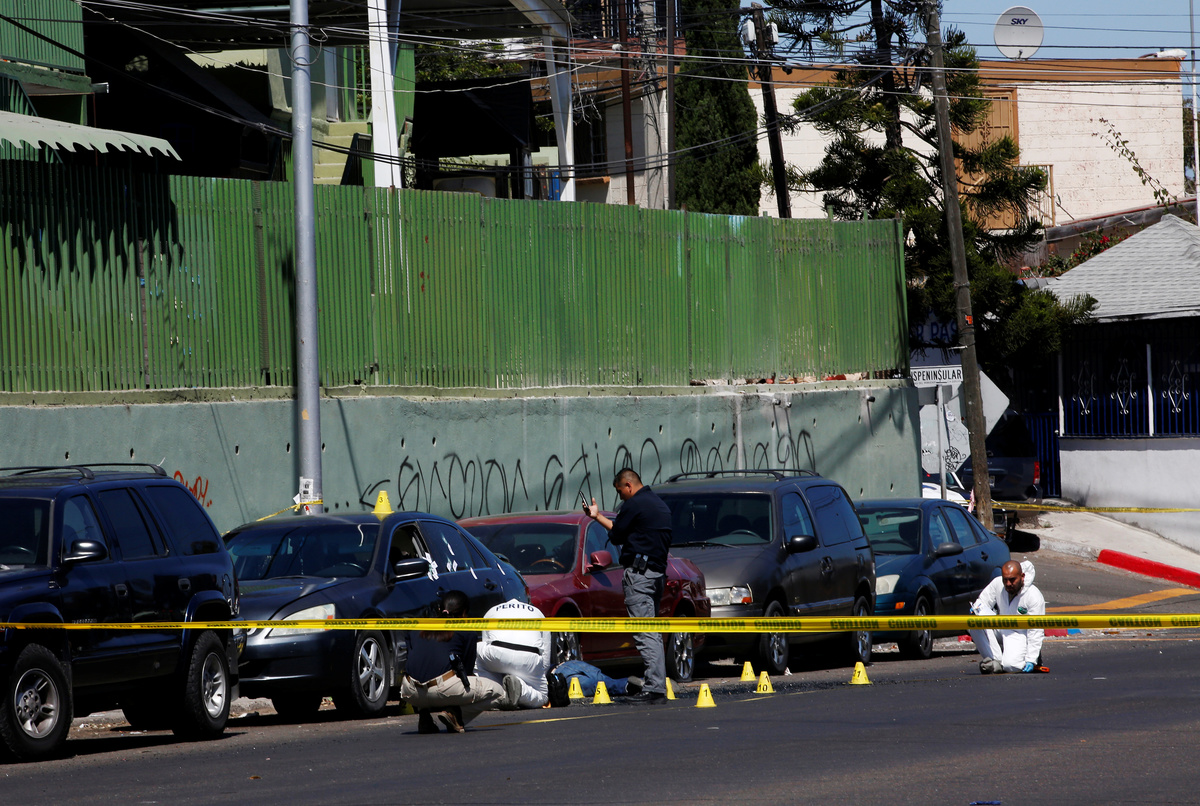
FILE PHOTO: State police arrive at a crime scene in Tijuana, Mexico, July 21, 2019.ÊREUTERS/Carlos Jasso
(Click https://reut.rs/2ZeyOoV to see a photo essay.)
(Reporting by Daniel Trotta in Ciudad Juarez, Kristina Cooke in San Francisco and Mica Rosenberg New York; Additional reporting by Julia Love in Ciudad Juarez, Lizbeth Diaz in Tijuana and Stephanie Nebehay in Geneva; Editing by Julie Marquis and Brian Thevenot)
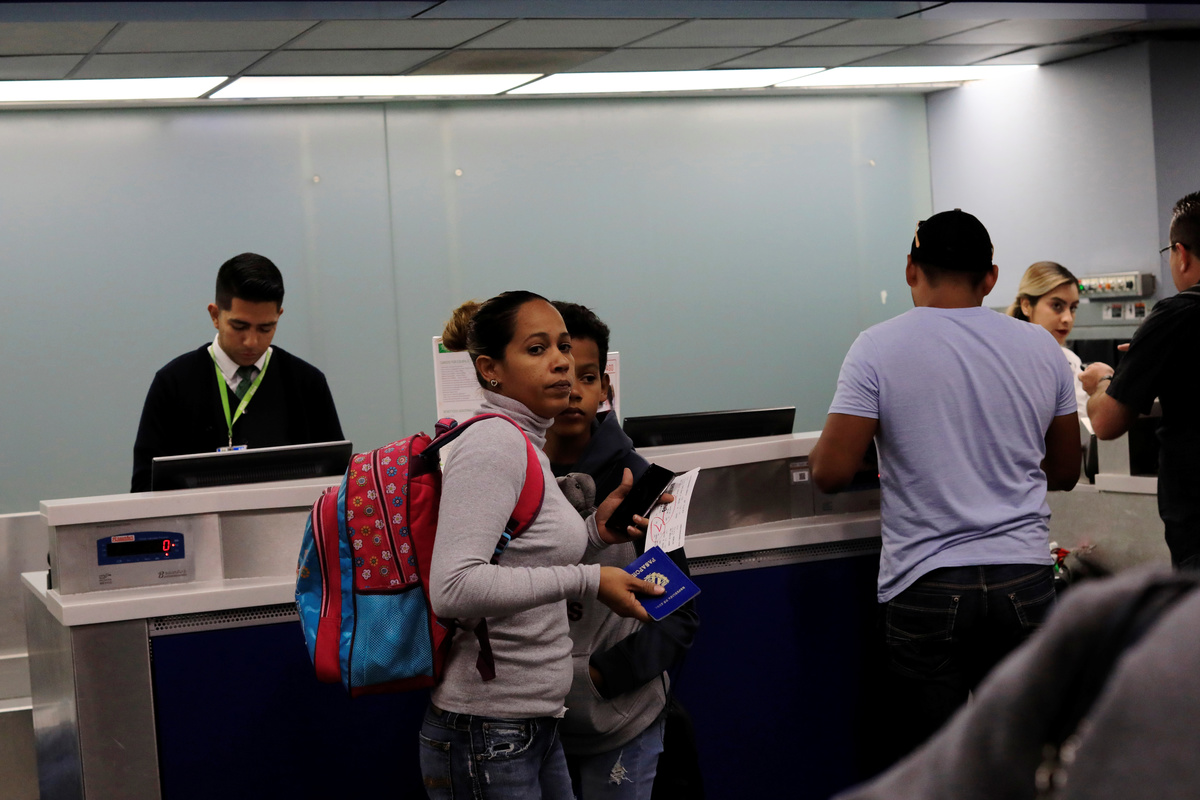
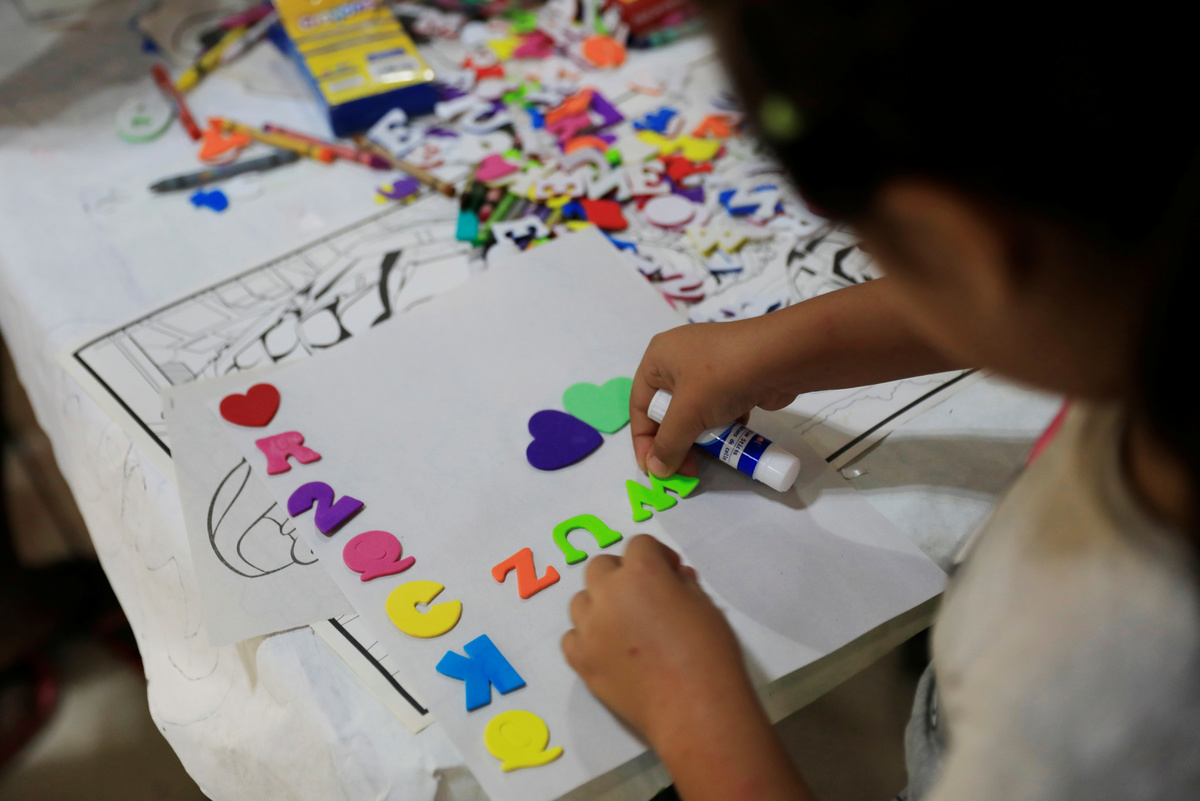
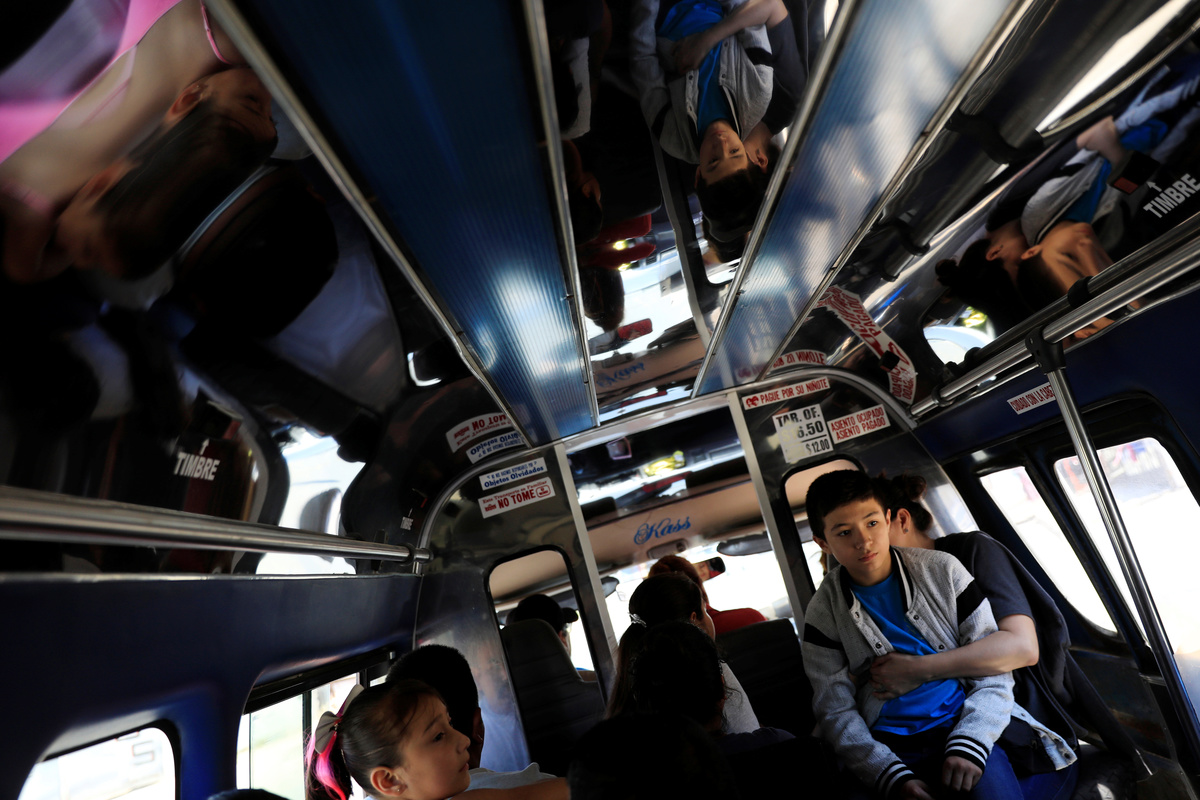
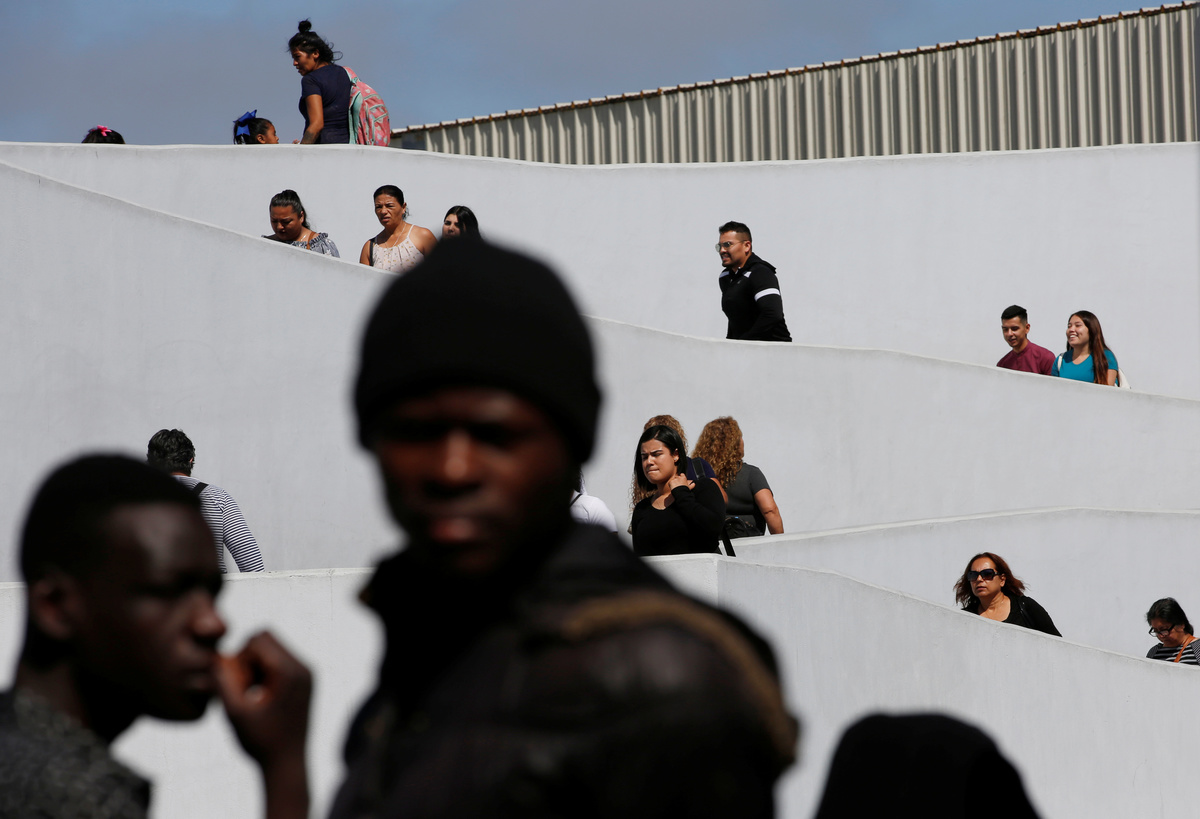
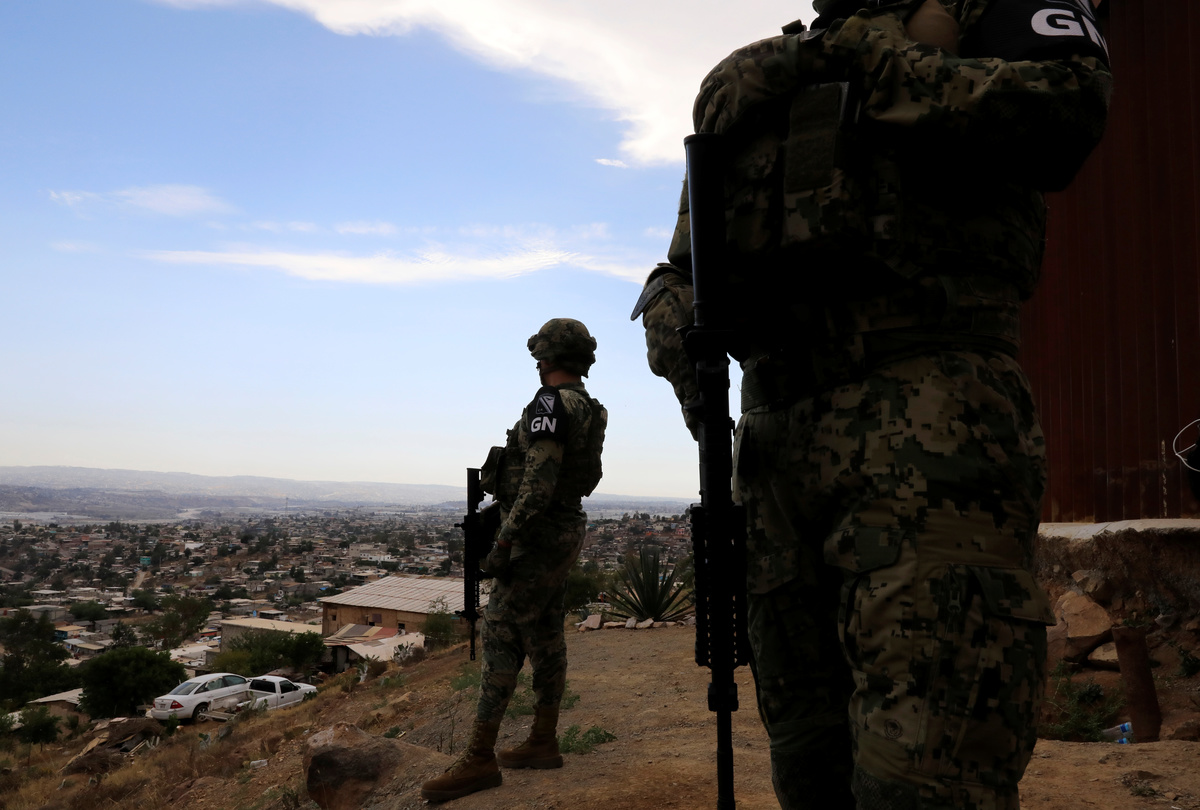
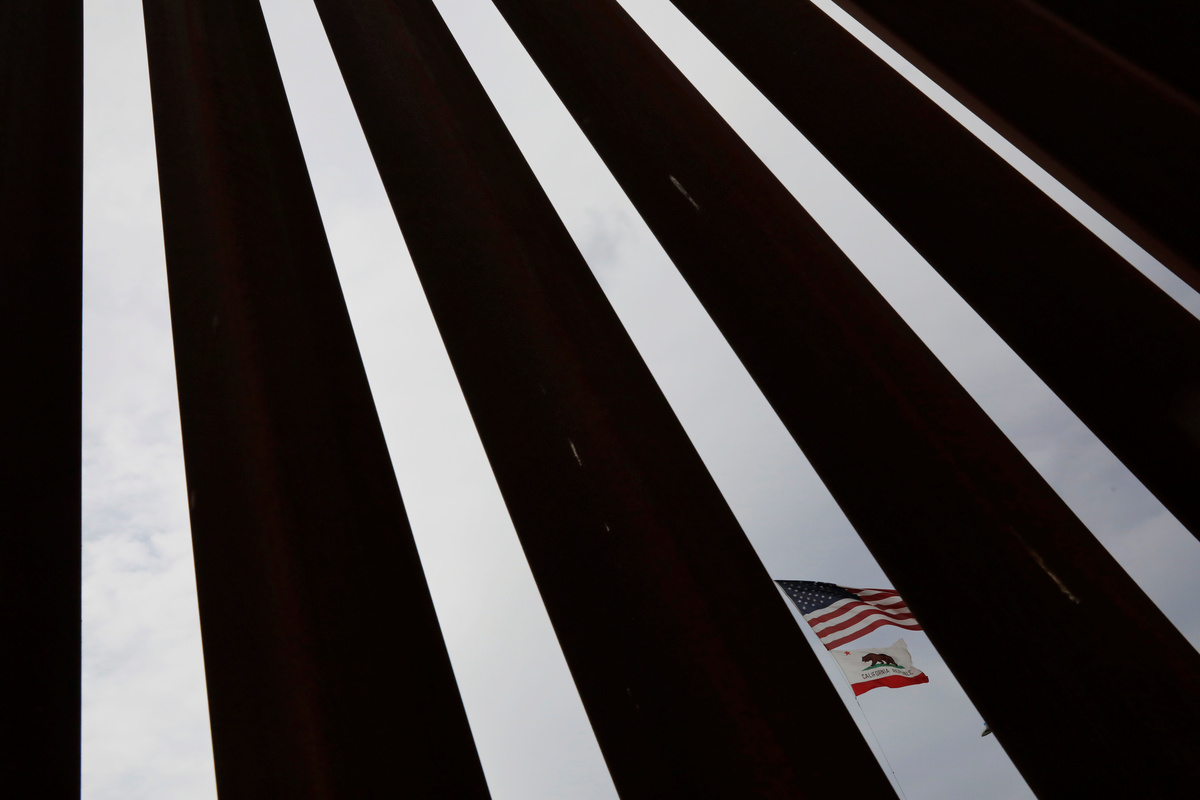
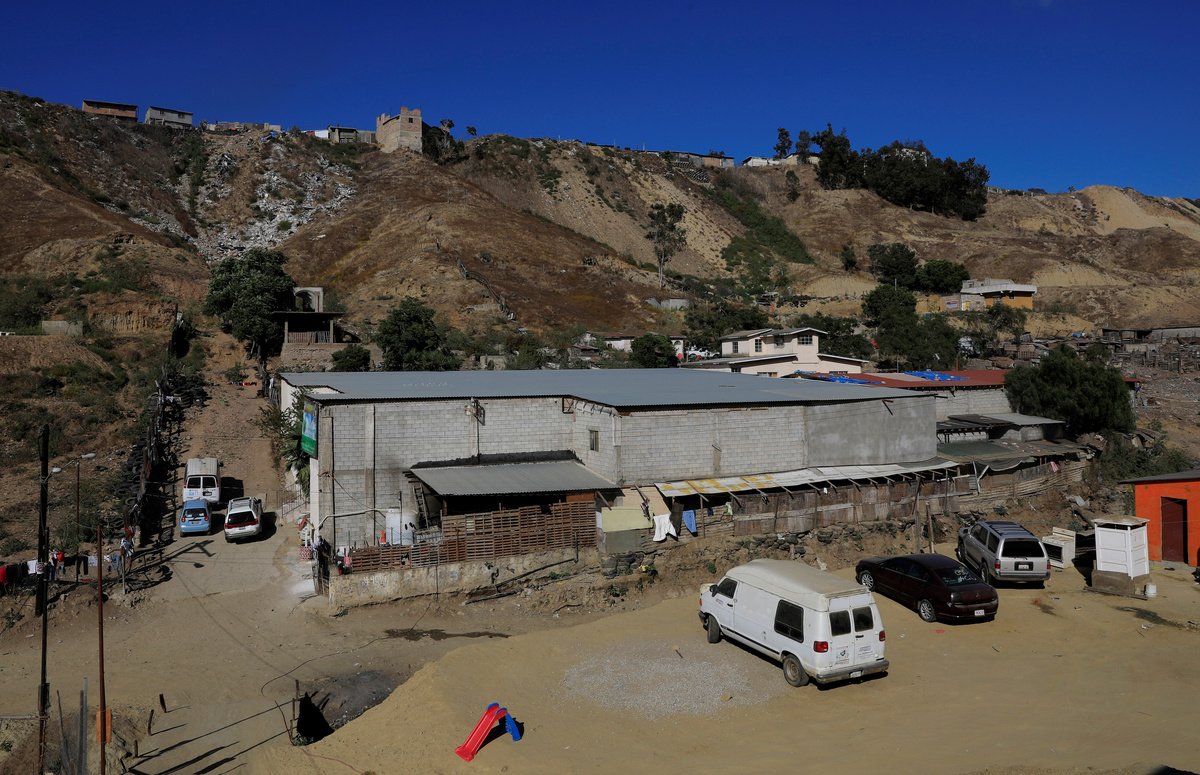
FILE PHOTO: A migrant from Cuba, Yesenia Argote, waits in a queue at the airport to go to Mexico City next to her son Pedro Moya after they were sent by the Customs and Border Protection (CBP) to Mexico from the U.S. under the Migrant Protection Protocols (MPP), in Tijuana, Mexico, July 23, 2019. "I have been separated from my daughter after we crossed into the U.S.," Argote said. "We gave ourselves up to the officials in the U.S. I was waiting for the process and hoping we were going to stay in the U.S. and then everything became very confusing. They sent me to Mexico with just my son. I don't know where my daughter is. I'm going to stay in Mexico and I will go to the court in the U.S. in December." REUTERS/Carlos Jasso FILE PHOTO: Migrant from Honduras, Patricia Acosta, 36, and her son Adalberto Acosta, 13, are seen outside a souvenir shop after they were sent by the Customs and Border Protection (CBP) to Mexico from the U.S. under the Migrant Protection Protocols (MPP), in Tijuana, Mexico, July 21, 2019. Acosta's husband and her youngest daughter managed to stay in the United States. "It was a family dream to cross and stay in the U.S. so my kids could escape violence back in Honduras and get a better education," Acosta said. "Now, I'm separated from the rest of my family and I'm stuck in a country that I don't know anyone... In the cooler (detention center) they treated us very cruelly, we didn't have a place to go to the toilet.. the verbal insults we received from the officers were horrendous." REUTERS/Carlos Jasso FILE PHOTO: A forensics team works at a crime scene in Tijuana, Mexico, July 21, 2019. REUTERS/Carlos Jasso FILE PHOTO: A migrant from Honduras, Cecilia Chirinos, rests inside a shelter after she was sent by the Customs and Border Protection (CBP) to Mexico from the U.S. under the Migrant Protection Protocols (MPP), in Tijuana, Mexico July 21, 2019. "I crossed with my youngest son to meet my husband on the U.S. side. He crossed with my daughter at the same time, he was able to stay and I was sent back to Mexico," Chirinos said. "I don't understand, they sent me and my son to a country that is the same or even more dangerous than Honduras. I don't feel safe here. I'm very sad." REUTERS/Carlos Jasso FILE PHOTO: A migrant child stands inside a shelter in Tijuana, Mexico, July 20, 2019. REUTERS/Carlos Jasso FILE PHOTO: A child migrant arranges letters inside a shelter in Tijuana, Mexico, July 20, 2019. REUTERS/Carlos Jasso FILE PHOTO: Migrant from Honduras, Patricia Acosta, 36, embraces her son Adalberto Acosta, 13, inside a bus, after they were sent by the Customs and Border Protection (CBP) to Mexico from the U.S. under the Migrant Protection Protocols (MPP), in Tijuana, Mexico, July 21, 2019. Acosta's husband and her youngest daughter managed to stay in the United States. "It was a family dream to cross and stay in the U.S. so my kids could escape violence back in Honduras and get a better education," Acosta said. "Now, I'm separated from the rest of my family and I'm stuck in a country that I don't know anyone... In the cooler (detention center) they treated us very cruelly, we didn't have a place to go to the toilet.. the verbal insults we received from the officers were horrendous." REUTERS/Carlos Jasso FILE PHOTO: People cross the border as migrants from different countries wait to apply for asylum in the United States, outside the El Chaparral border in Tijuana, Mexico, July 19, 2019. REUTERS/Carlos Jasso FILE PHOTO: Members of the National Guard patrol next to the border fence between Mexico and U.S. in Tijuana, Mexico, July 23, 2019. REUTERS/Carlos Jasso FILE PHOTO: Migrant from Honduras, Bertha Funez, 30, and her daughter Sherly Saucedo, 10, poses for a photograph inside a shelter after they were sent by the Customs and Border Protection (CBP) to Mexico from the U.S. under the Migrant Protection Protocols (MPP) in Tijuana, Mexico, July 19, 2019. "I feel they lied to us, it wasn't right what they did to us, we asked for lawyers and they obligated us to sign this (MPP) document so they could send us back to Mexico. I didn't ask for asylum. Now, according to them, I asked for asylum. It is a lie, they forced me to sign it. Mexico is not safe for us, I'm very scared. I'm going back to Honduras," Funez said. REUTERS/Carlos Jasso FILE PHOTO: Consuelo Aguilar, 36, and her daughter Andrea, 15, sit inside a shelter after they were sent by the Customs and Border Protection (CBP) to Mexico from the U.S. under the Migrant Protection Protocols (MPP) in Tijuana, Mexico, July 19, 2019. "I feel devastated, I saved so much money, my family lent me money to have a better life in the U.S. and they sent me back to Mexico," Consuelo said. "The court is a lie, they are not going to help us, it's better if I go back to Honduras." REUTERS/Carlos Jasso FILE PHOTO: A migrant woman washes her clothes inside a shelter in Tijuana, Mexico, July 20, 2019. REUTERS/Carlos Jasso FILE PHOTO: Migrant from Honduras, Patricia Acosta, 36, cries after she was sent by the Customs and Border Protection (CBP) to Mexico from the U.S. under the Migrant Protection Protocols (MPP), in Tijuana, Mexico, July 24, 2019. Acosta's husband and her youngest daughter managed to stay in the United States. "It was a family dream to cross and stay in the U.S. so my kids could escape violence back in Honduras and get a better education," Acosta said. "Now, I'm separated from the rest of my family and I'm stuck in a country that I don't know anyone... In the cooler (detention center) they treated us very cruelly, we didn't have a place to go to the toilet.. the verbal insults we received from the officers were horrendous." REUTERS/Carlos Jasso FILE PHOTO: A U.S. flag is seen through the border fence between Mexico and U.S. as seen from Tijuana, Mexico, July 22, 2019. REUTERS/Carlos Jasso FILE PHOTO: A general view of a local shelter is seen in Tijuana, Mexico, July 20, 2019. REUTERS/Carlos Jasso
Sign up to read this article
Read news from 100's of titles, curated specifically for you.