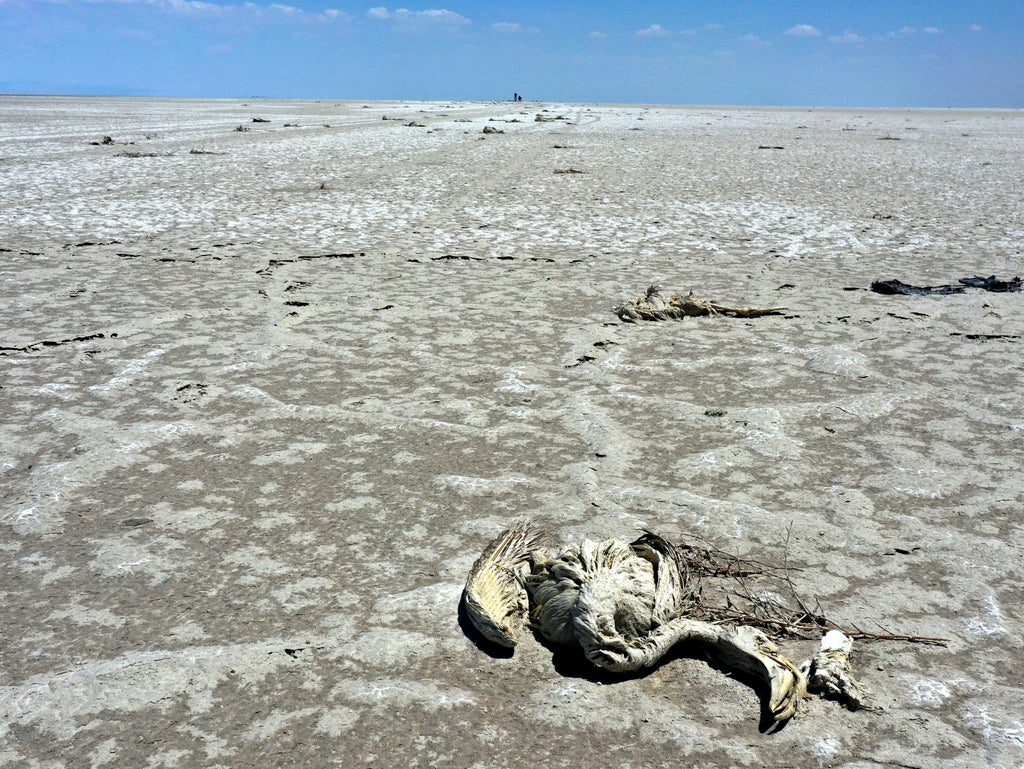
Thousands of baby flamingos have died in Turkey from a drought that environmentalists say is caused by the climate crisis and agricultural irrigation.
Drone footage of a large saline lake in the central province of Konya showed dead chicks partially buried in dried mud.
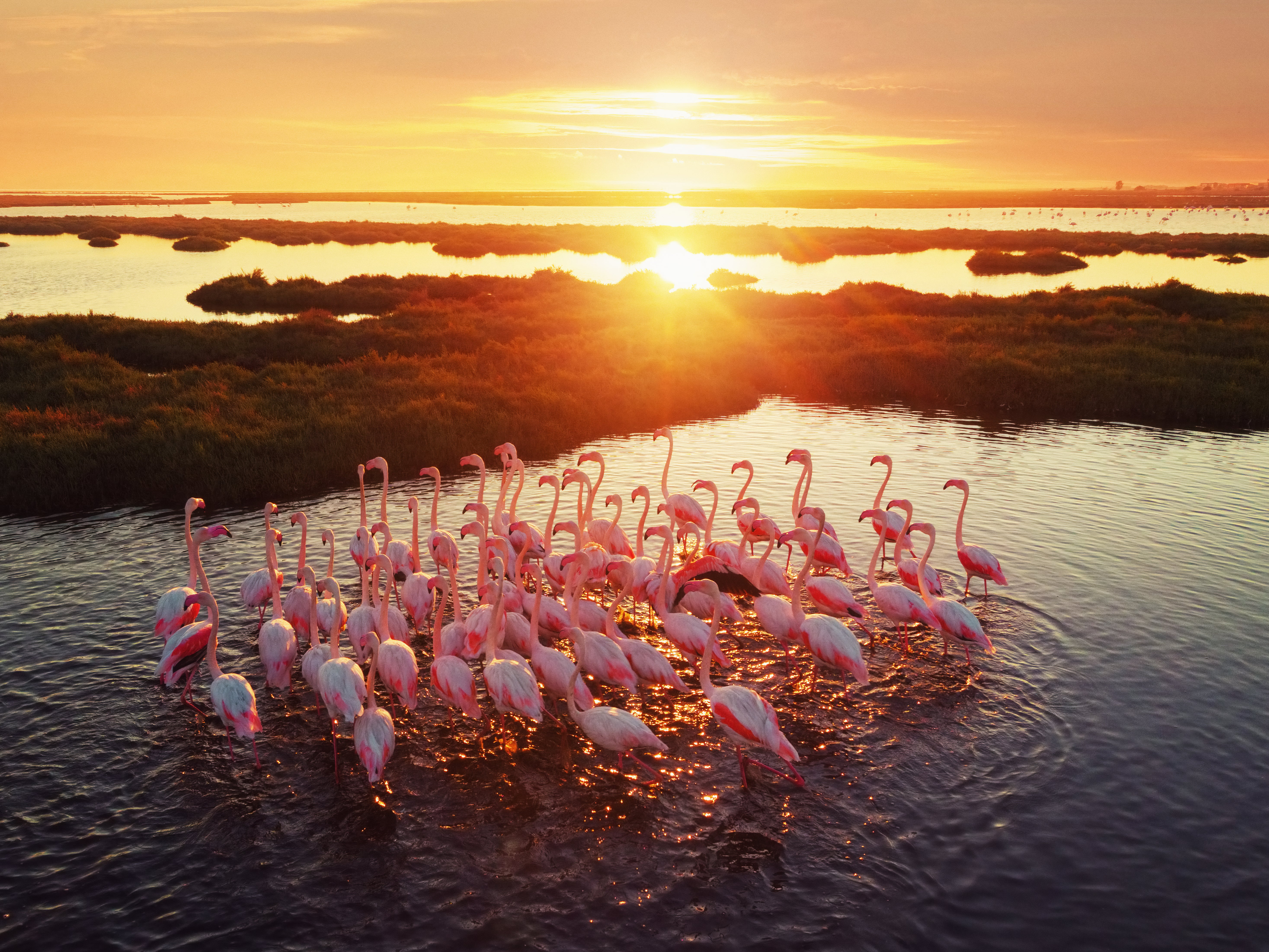
Lake Tuz, where up to 10,000 chicks are born every year, is one of the birds’ largest natural breeding colonies in the world.
Nature lovers blame farming practices along with climate change for the drought, which caused demand for water in the area outstrip supply by nearly 50 per cent last year.
Wildlife photographer Fahri Tunc said water from a canal that normally feeds the lake were being redirected for farming.
“This is the irrigation canal that comes from Konya. It needs to deliver water to Lake Tuz. As you can see, the water is not coming through. It stopped,” he said.
Only 5,000 eggs hatched in the colony this year, Mr Tunc said, and most of the chicks had died for lack of water on the partially dried lake.
“It is a sin we are all committing,” he said.
Lake Tuz is a specially protected area, a designation that aims to protect biological diversity, natural and cultural resources.
Head of Turkish organisation the Nature Association, Dicle Tuba Kilic, said the only way to prevent mass flamingo deaths was to change the agricultural irrigation methods in region.
Last year, the annual water reserve in the basin was 4.5 billion cubic metres, but consumption reached 6.5 billion cubic meters, according to a local environmental foundation.
Turkish agriculture minister Bekir Pakdemirli said around 1,000 birds were thought to have died, but denied that agriculture was to blame.
“With less water and increased concentration ratio in the water, we observed deaths of flaminglets that were unable to fly,” he said.
“I want to stress that there is no direct or indirect connection between this incident and the wells in the area or the agricultural irrigation.”
He said “necessary measures” had been taken, without elaborating.