NEW YORK _ Even as President Barack Obama met with Donald Trump in the White House and called on Americans to accept the results of the election, thousands of Americans were resisting.
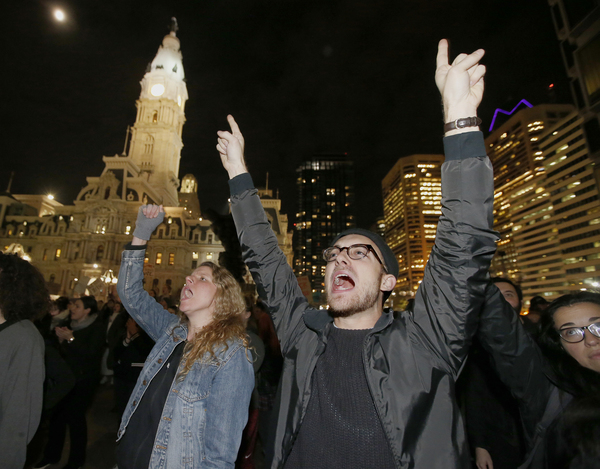
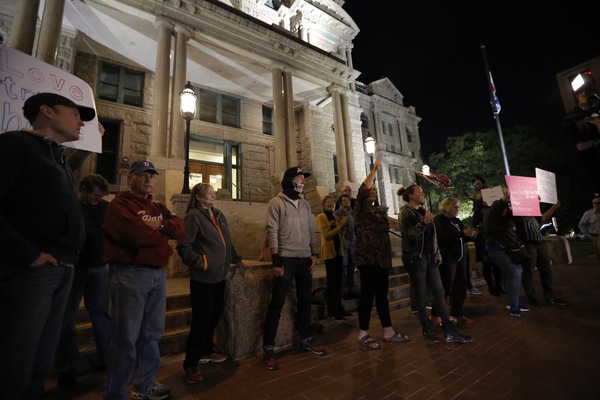
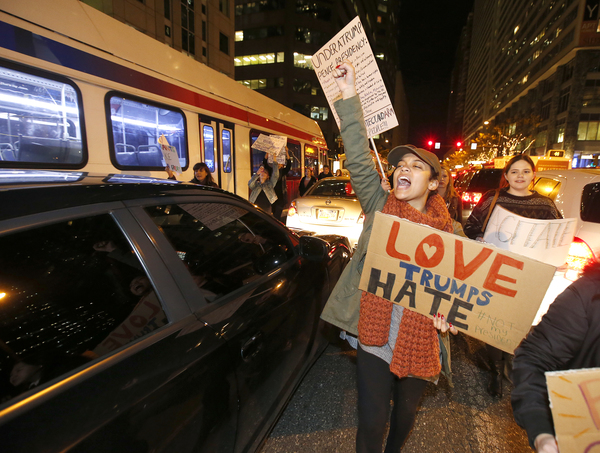
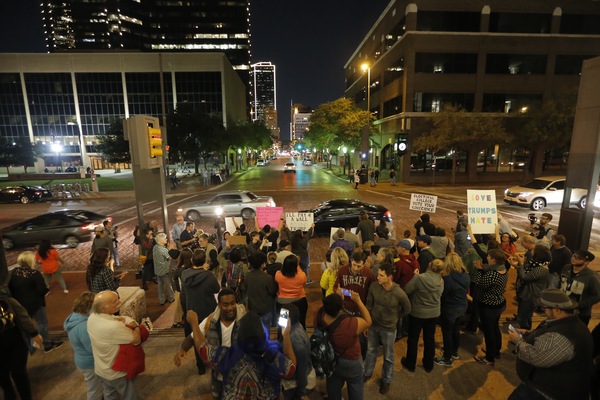
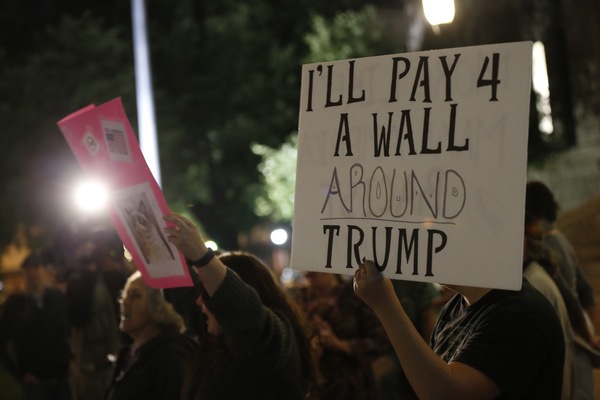
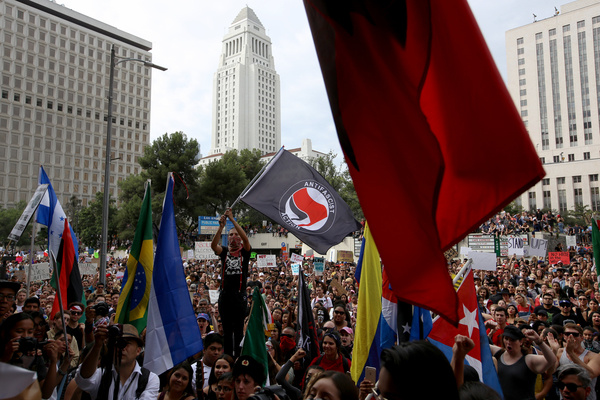
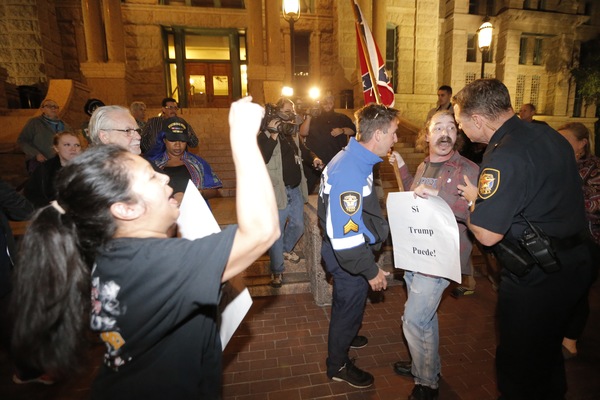
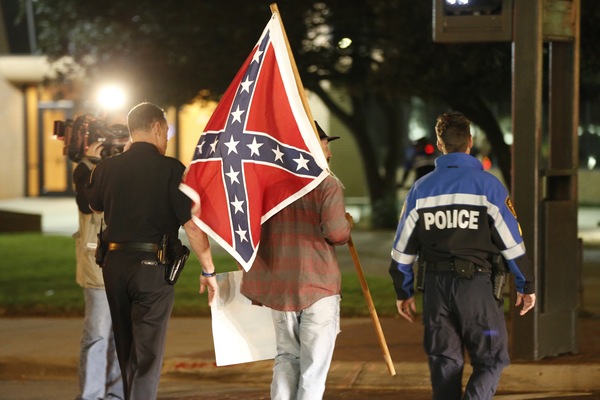
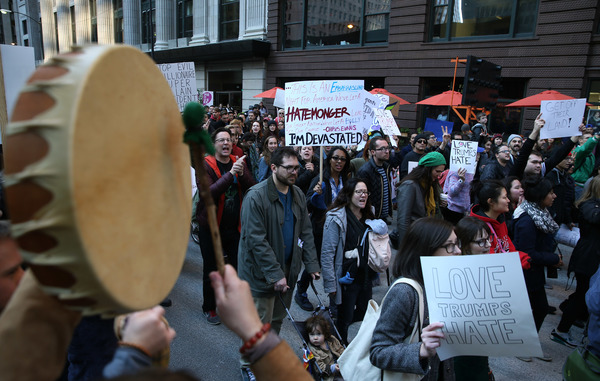
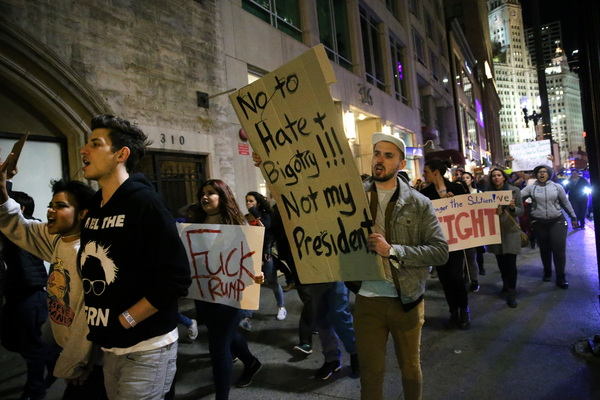
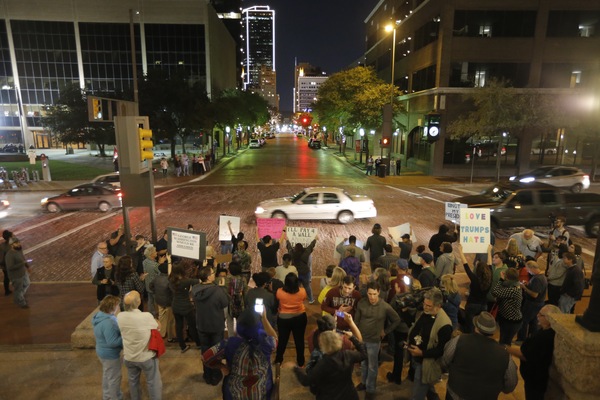
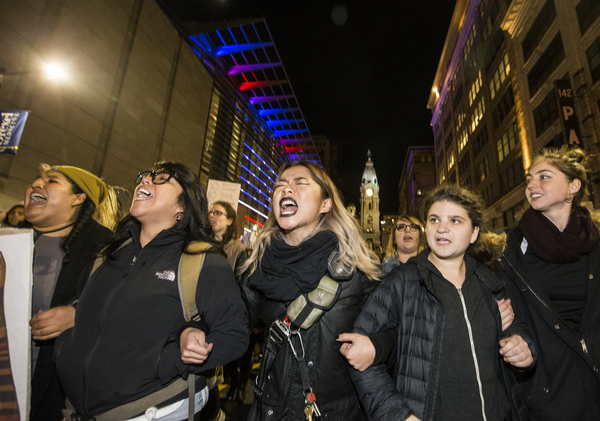
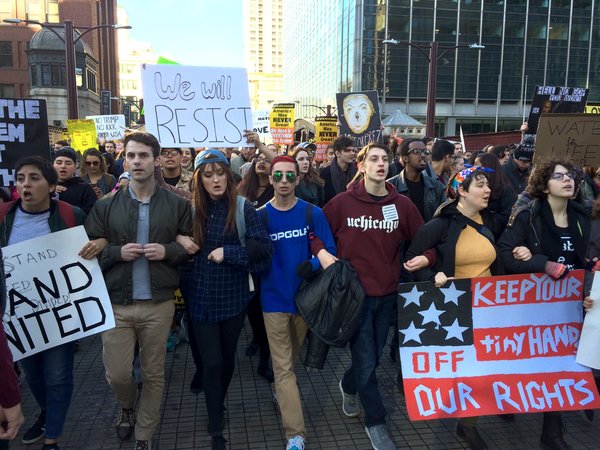
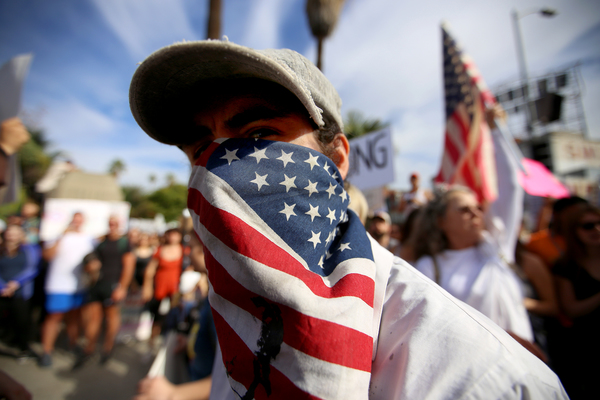
Anti-Trump demonstrations are popping up almost spontaneously in cities around the country and are mostly led by students who say they have been galvanized into action by Trump's unpredicted victory over Hillary Clinton.
"I hate everything about Donald Trump," said student Jaime Reuter, 19, who attends Pace University in Manhattan. "Something has to be done."
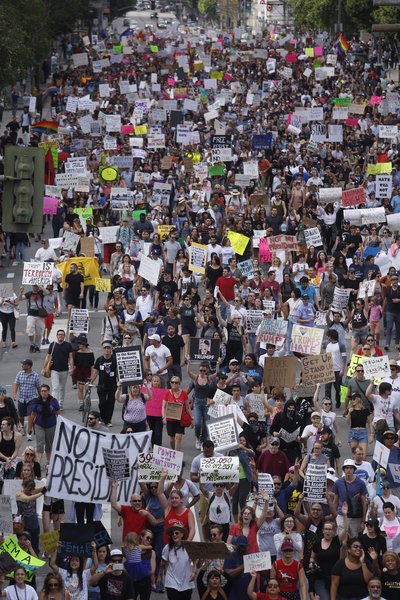
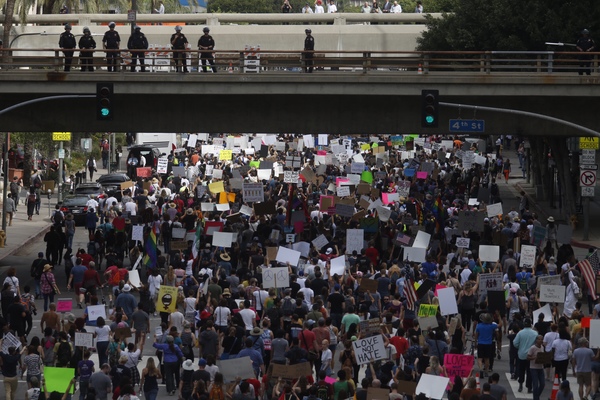
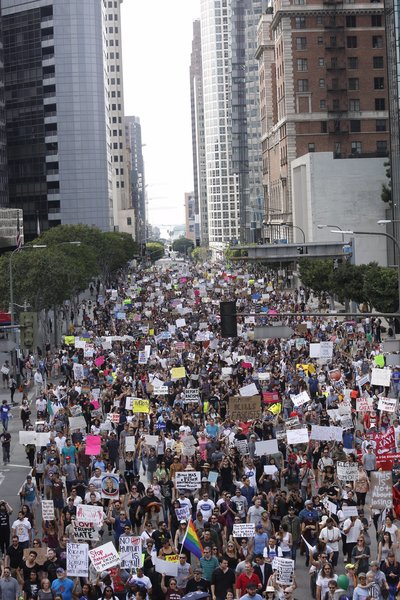
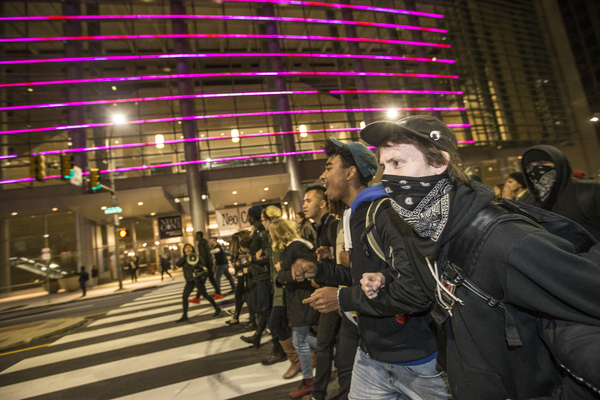
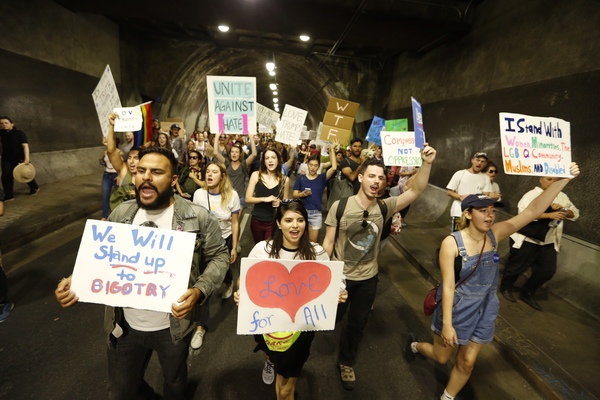
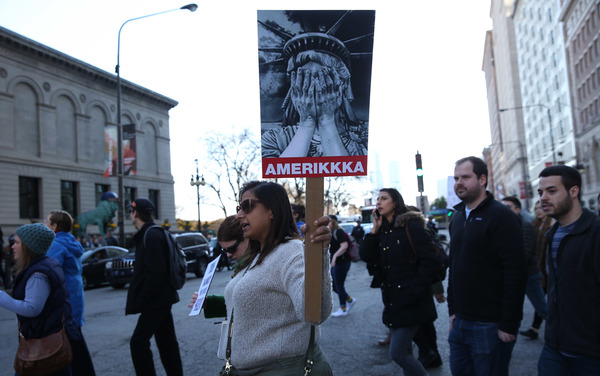
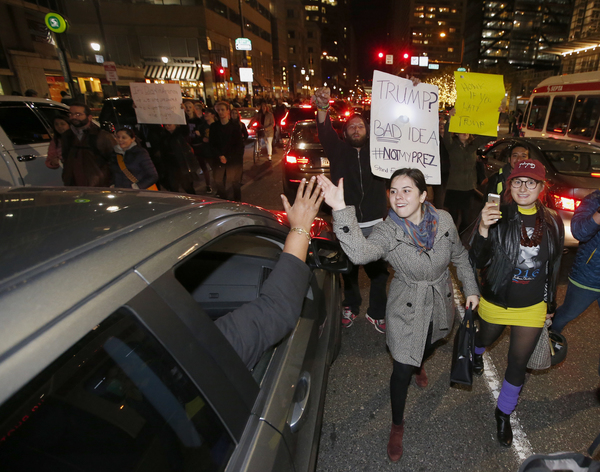
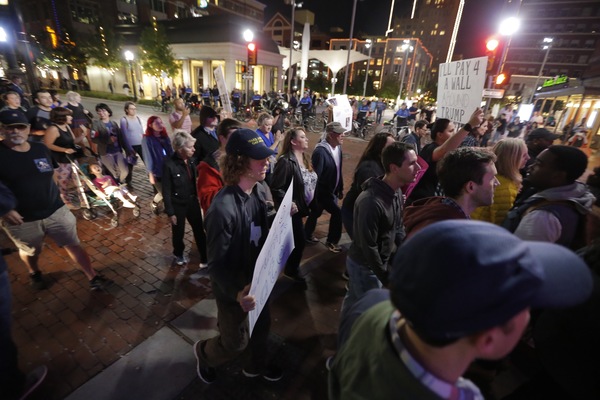
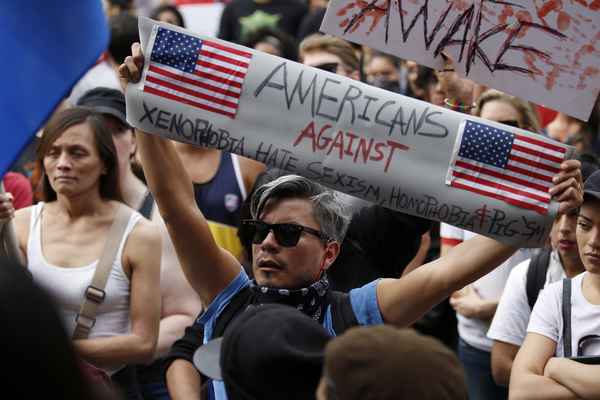
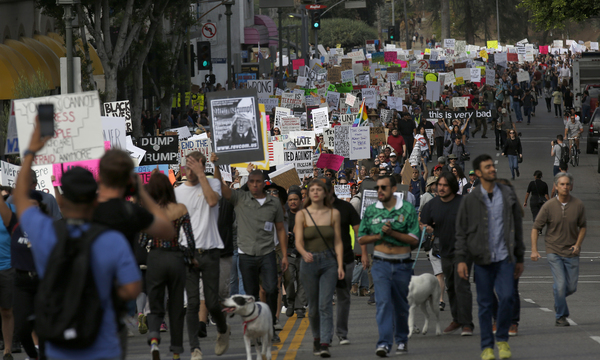
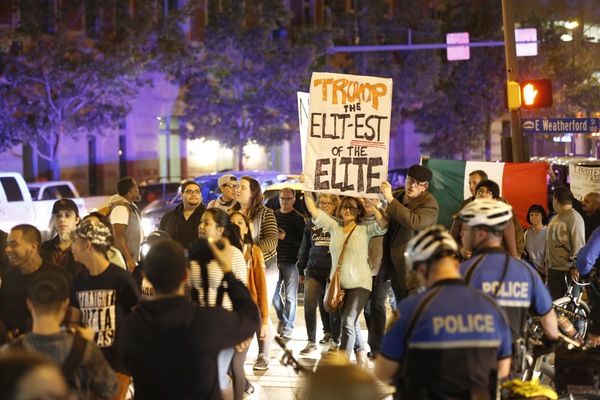
Tens of thousands _ exact numbers are hard to come by _ marched Wednesday night in New York, Los Angeles, Seattle, Boston, Portland, Oakland, Philadelphia and other mostly liberal cities.
Protests continued Thursday night, and although they were not as large as Wednesday's, organizers said they would be saving their energy for the weekend.
Trump addressed the protests for the first time Thursday, and accused the media of inciting them. "Just had a very open and successful presidential election," the president-elect tweeted. "Now professional protesters, incited by the media, are protesting. Very unfair!"
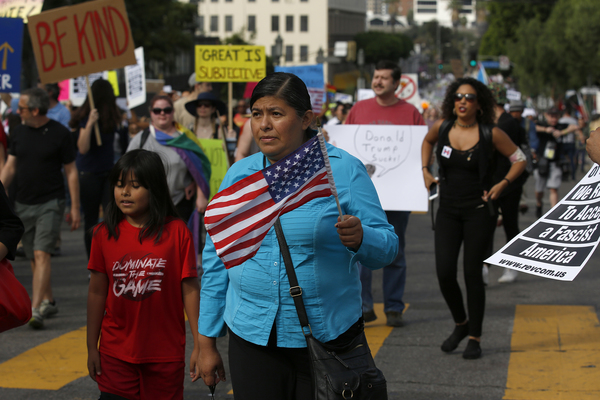
Rudolph W. Giuliani, former New York mayor and adviser to the Trump campaign, also denounced the student movement. "The reality is they are a bunch of spoiled crybabies,'' he said Thursday on Fox News' "Fox & Friends." He added that campuses are getting more conservative. "If you're looking at the real left-wing loonies on the campus, it's the professors, not the students."
So far the protest movement _ only 48 hours old _ appears to lack strategy and coordination. But some activists are focusing on the electoral college, which is scheduled to meet Dec. 19 to formally vote Trump into office. Political scientists say electors have in the past switched their votes, but such occurrences are rare and have not altered the election outcome.
Clinton appears on track to win the popular vote _ as of last count she was 233,000 votes ahead _ the second time in modern history the largest vote-gatherer has failed to get the necessary 270 electoral votes. The last time was 2000 when Al Gore won the popular vote but lost the election to George W. Bush.
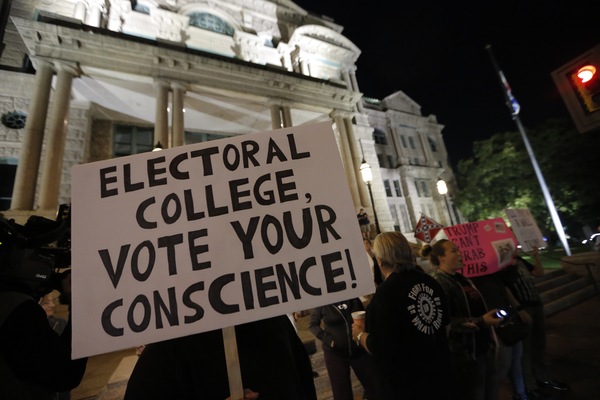
In the past, about 99 percent of electors have voted for the candidate to whom they are pledges, but defections do happen and Democratic activists promise to work on those Republican electors who have expressed anti-Trump sentiments.
A petition on Change.org that started Thursday morning gathered more than 500,000 signatories within a few hours. As of Thursday evening, it had at least 1.67 million supporters.
The potential challenge to the electoral college does not appear to have the support of Clinton, who conceded defeat and, like Obama, has urged the American public to accept Trump. In fact, during the campaign, Clinton blasted Trump's threats not to respect the outcome of the election.
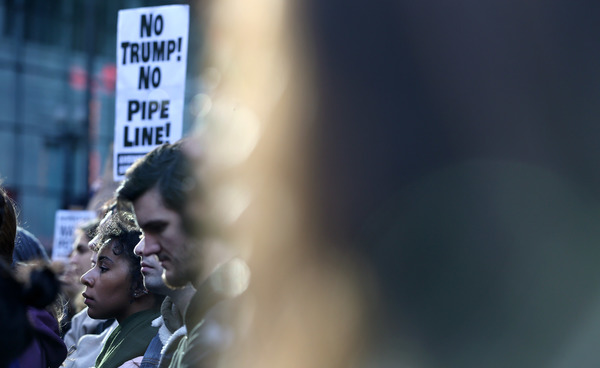
Still, the nascent anti-Trump movement among young people _ some of them too young to vote _ threatens to throw another wrench into a painful and prolonged election process that many people want to have behind them.
"The passive side of this generation needs to step up to the plate and show that we have not surrendered," said Ariana Shirzay, a 20-year-old graphic design student who is organizing protests in New York in coming days. She says that her generation was lured into complacency about America's liberal value.
"We basically grew up with liberal America and transcended into adulthood under Obama," Shirzay said.
At Pratt Institute, Shirzay said, her classmates, who had complacently assumed that Democrat Hillary Clinton would win, watched the election results in tears, the shock comparable to the aftermath of the Sept. 11, 2001, terrorist attacks _ at least for those old enough to remember.
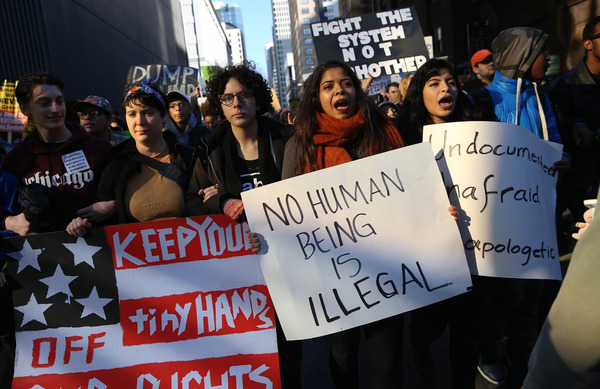
High school students around the country walked out of classes Wednesday and Thursday to show their support for the anti-Trump movement. Most protesters were young.
"It's important to me as a 14-year-old _ seeing people like this, united. (It) makes me feel like I'm not the only one here," said middle schooler Yesena Gomez, who was one of the speakers at a rally in Seattle.
"When I walked into school Wednesday morning, my teachers were crying. Students were sobbing, fearing for their family and themselves and friends. We held each other up. And I think we all felt like we wanted to feel heard because most of us are never heard by the government or the world," said Chloe Li, 15, who goes to a high school with many immigrant children.
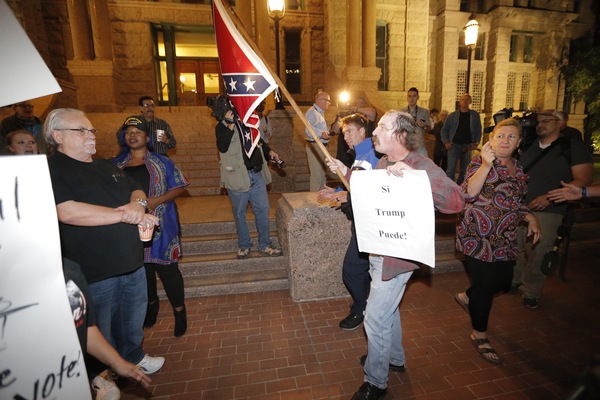
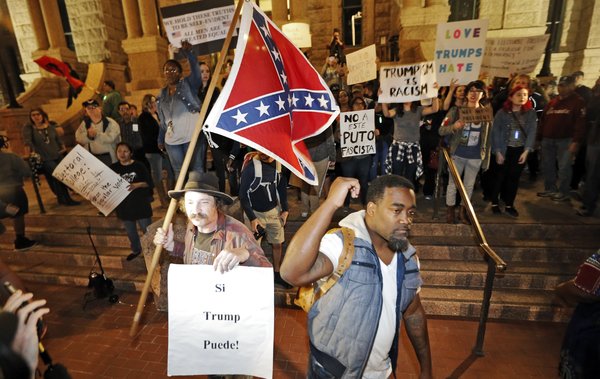
More demonstrations are planned in the coming days, and based on the turnout Wednesday night, they are likely to draw huge crowds and edge into violence.
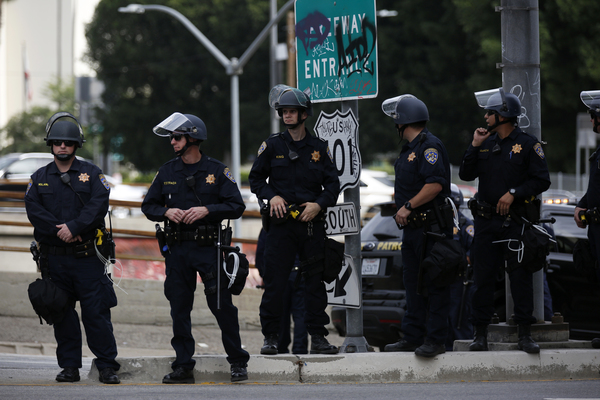
In Oakland, police reported that they extinguished at least 40 fires and that protesters had thrown rocks and Molotov cocktails and vandalized police cars.
"Time to riot,'' read a hand-scrawled poster carried by one woman.
Elsewhere, protesters targeted Trump-branded buildings _ the newly opened hotel in Washington, D.C., near the White House, Trump Tower in Chicago. A Trump effigy was burned in Los Angeles, where protesters also blocked the 101 Freeway and spray-painted graffiti reading "F _ _ Trump" on vehicles and buildings.
"White Supremacy. Misogyny Is Not My America," "No More Small Men With Big Mouths,'' read the slogans _ along with what have become the hashtag of the protest movement, #notourpresident and #notmypresident.
The largest protest appeared to be in front of New York's 58-story Trump Tower, where Trump lives in a penthouse condominium. Two separate marches through Manhattan converged in front of the building, forming a crowd that some reporters estimated at 10,000. The night was illuminated by hundreds of iPhones taking selfies of protesters gesturing with their middle fingers toward the Trump building.
New York City police said Thursday that there were 65 arrests, mostly for disorderly conduct, obstructing governmental administration and resisting arrest.
The protests, which are spreading like wildfire, appear to be less about supporting Clinton than opposing Trump. Many young voters were unenthusiastic about Clinton, failing to lend her campaign the energy they put behind Vermont Sen. Bernie Sanders _ or for those old enough, behind Barack Obama in 2008.
Political scientist Derek Muller, who teaches election law at Pepperdine University in Malibu, Calif., said that in recent months his students had been more mobilized by the California proposition on marijuana legalization than they were by the presidential election.
"There are things that get voters excited and things that don't. For young people, it was marijuana legalization. Barack Obama mobilized young people. Bernie Sanders mobilized young people,'' Muller said. He believes that the protests, while still gathering momentum, will probably fizzle out in a few weeks as Trump's inauguration becomes reality.
"We have seen in the past these amazing nearly spontaneous movements ... that burned brightly for a brief period of time and then just went away,'' Muller said.
"Their chances are basically zero.... You would need a lot of coordinated action to get that many electors to change their mind,'' he said. "It's very hard now, given that Trump has won.''