
What is it?
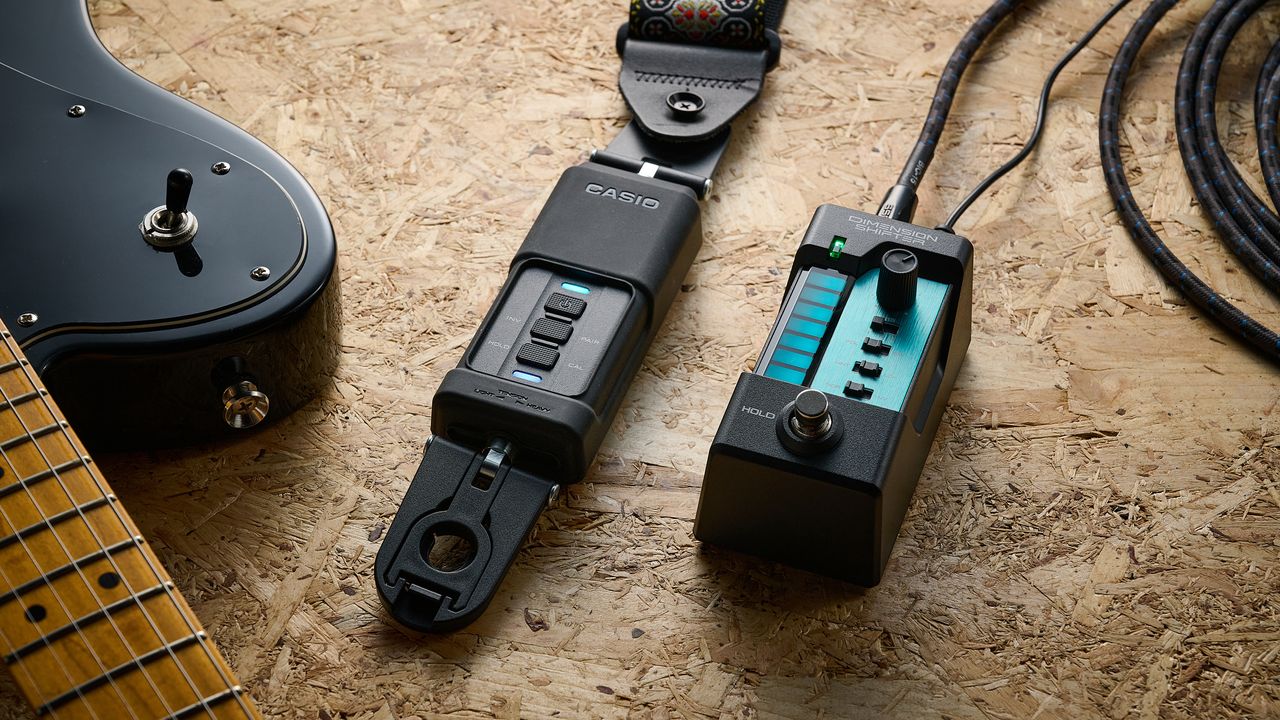
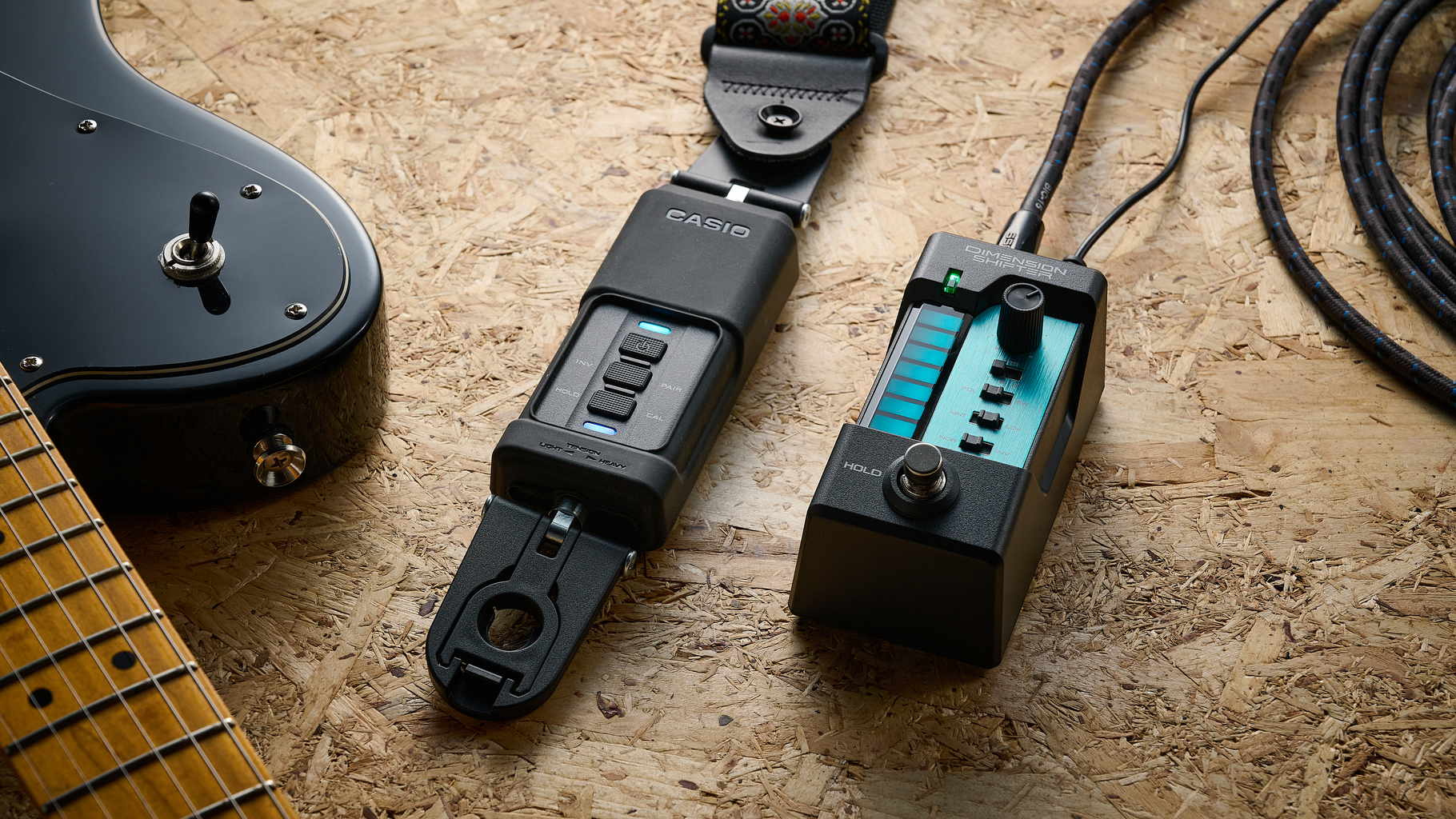
With the quirky-minded Dimension Shifter, Casio wants to unlock a new world of expressive guitar playing. The device, which clips onto a player's strap, allows them to control selected effect parameters with their movements.
In a world of digital tone-sculpting, where gear is often intangibly locked behind LED screens and menus, it's a very traditional, tactile invention, with Yvette Young – drafted in for its promo content – one name onboard with the concept.
Its origins can be traced to 2024, when the design was previewed as the Dimension Tripper. It's undergone some selective streamlining since then, namely, the Receiver's control panel was cut by 50%. But the strap-mounted Transmitter, which harnesses strap tension and spring-return force, as when your foot sweeps an expression pedal or a wah, remains the centerpiece.
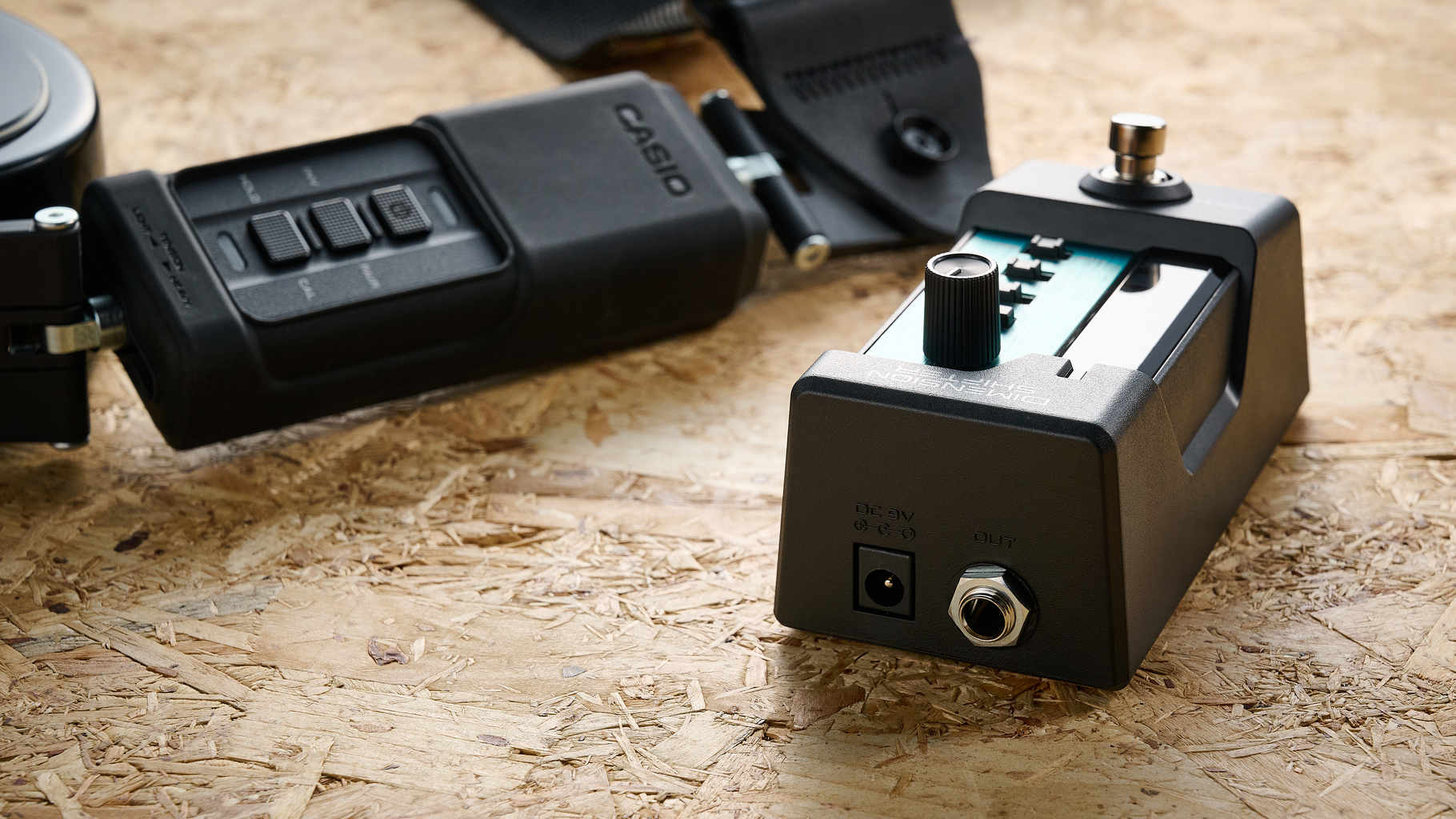
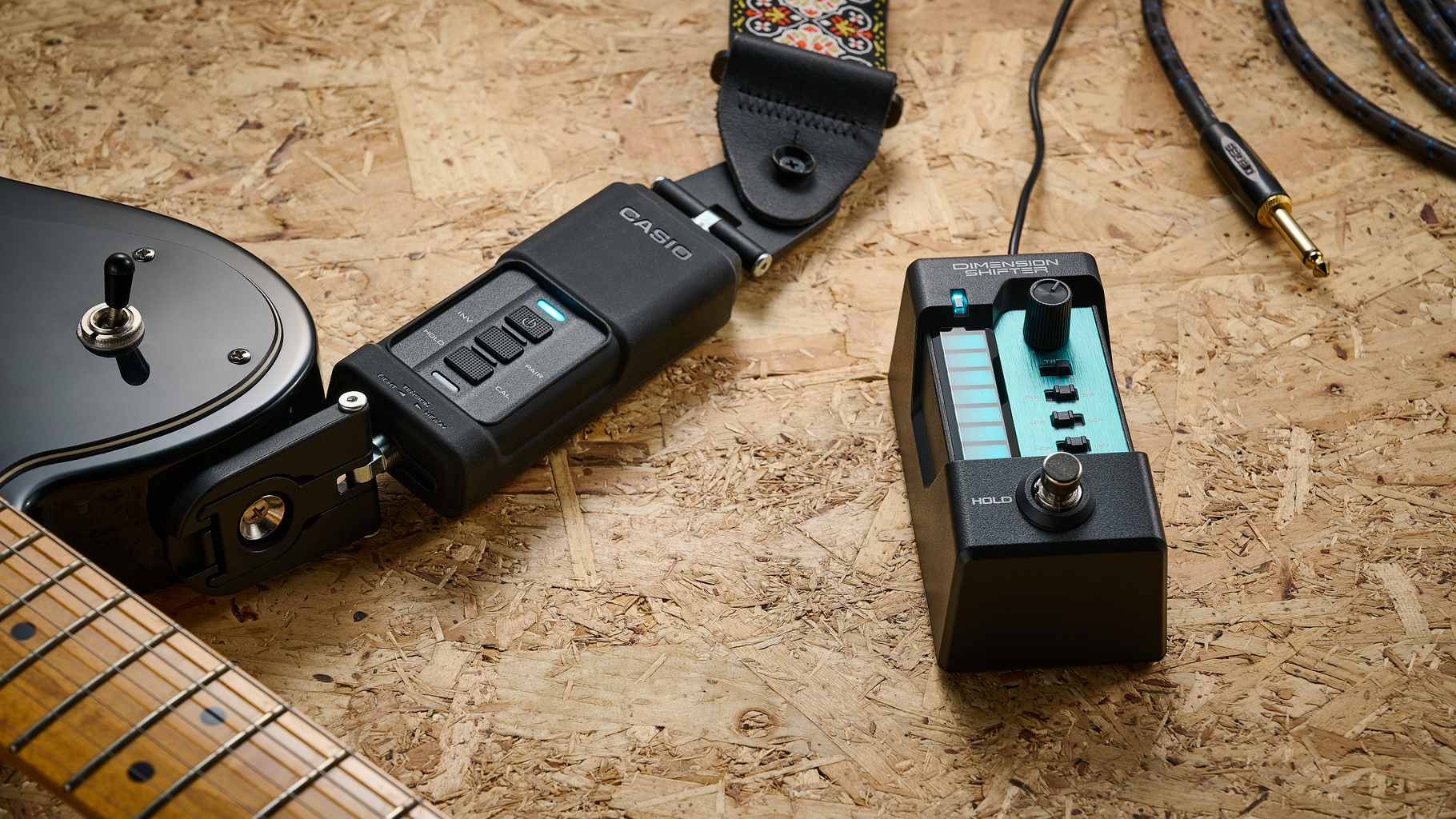
The signal is wirelessly transmitted to the Receiver, which is, in turn, connected to the expression input/output of a pedal or amp modeler, giving players new levels of autonomy over their existing gear. That also means that it shouldn't be limited in its scope; it's a tool for revitalizing one's collection of stompboxes and effects, and maybe getting a little closer to them in the process.
Other possible benefits could include the Dimension Shifter producing whammy-like warbles without the tuning side effects, as well as better use of pedalboard real estate, meaning that hard-to-reach pedals at the back of a board could suddenly be back in favor.
It's certainly one of the most intriguing effect concepts to have unveiled itself to the world at NAMM 2026, but is it a bit of a laugh, or a masterstroke?
Specs
- Price: $299 (approx. £222, €255)
- Type: Strap-mounted expression pedal
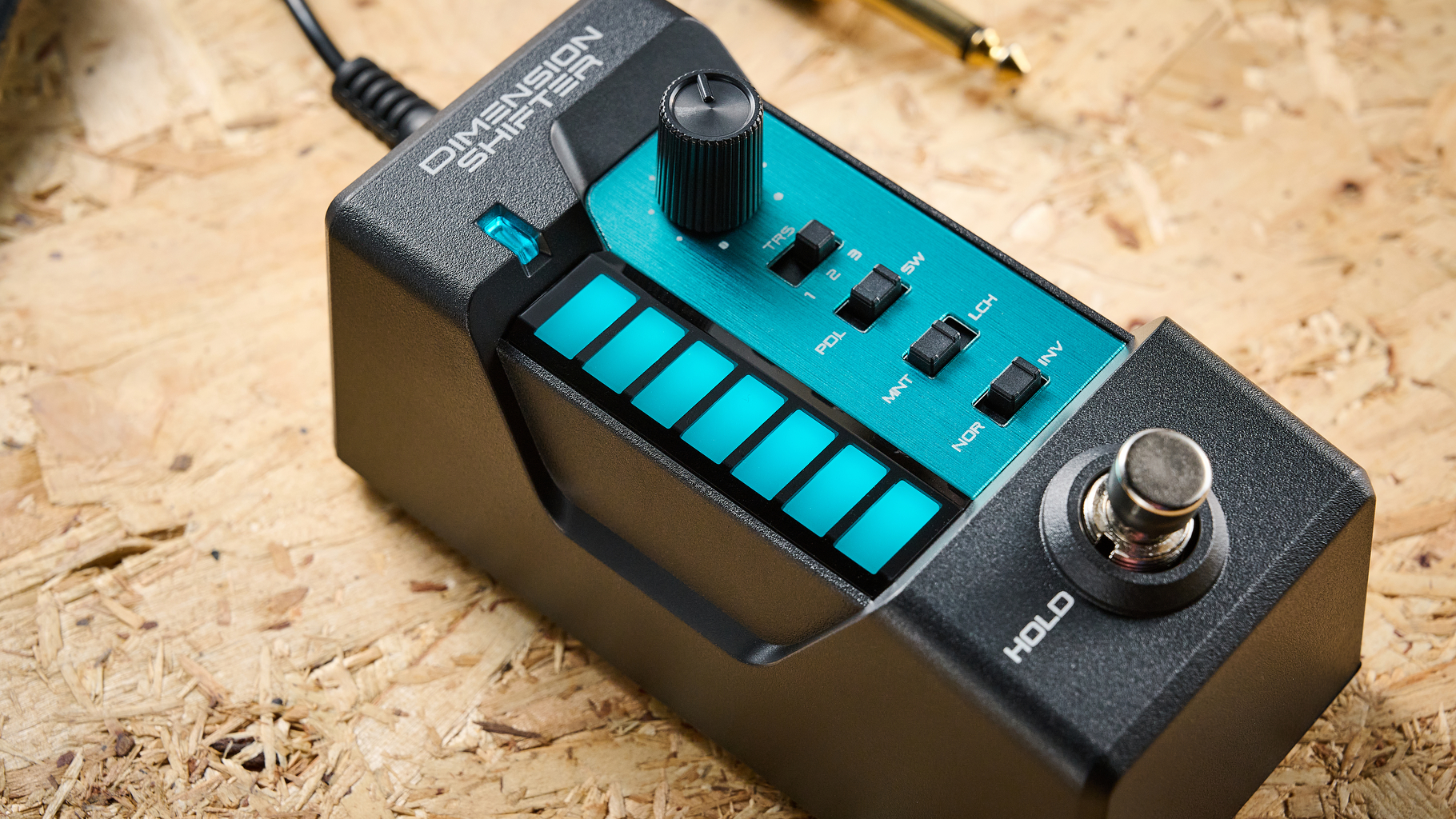
- Controls: Minimum setting knob, Pedal/Switch mode, Momentary/Latch, Polarity
- Features: Wireless strap-mounted expression control of effect parameters
- Connectivity: 5.1 Bluetooth, 1x ¼” TRS cable
- Bypass: True, buffer, both (switchable)
- Power: 2x AA batteries (Transmitter, not provided), 9V AC (Receiver, not provided)
- Dimensions: 50x120x25.5mm (Transmitter), 60x40x115mm (Reciever)
- Weight: 0.150kg (Transmitter), 0.145kg (Receiver)
- Contact: Casio
Build quality
Build quality rating: ★★★☆☆
The Casio Dimension Shifter presents itself fairly well. It’s sleekly designed, with pretty much everything in place because it deserves to be. The tiny four rubber feet on the base of the Receiver are stubborn as hell, helping lock it in place, even if it’s cast casually down onto a stage or bedroom floor. The receiver’s casing is plastic, but it doesn’t scratch easily, and appears to be made of strong stuff, so there are no qualms there.
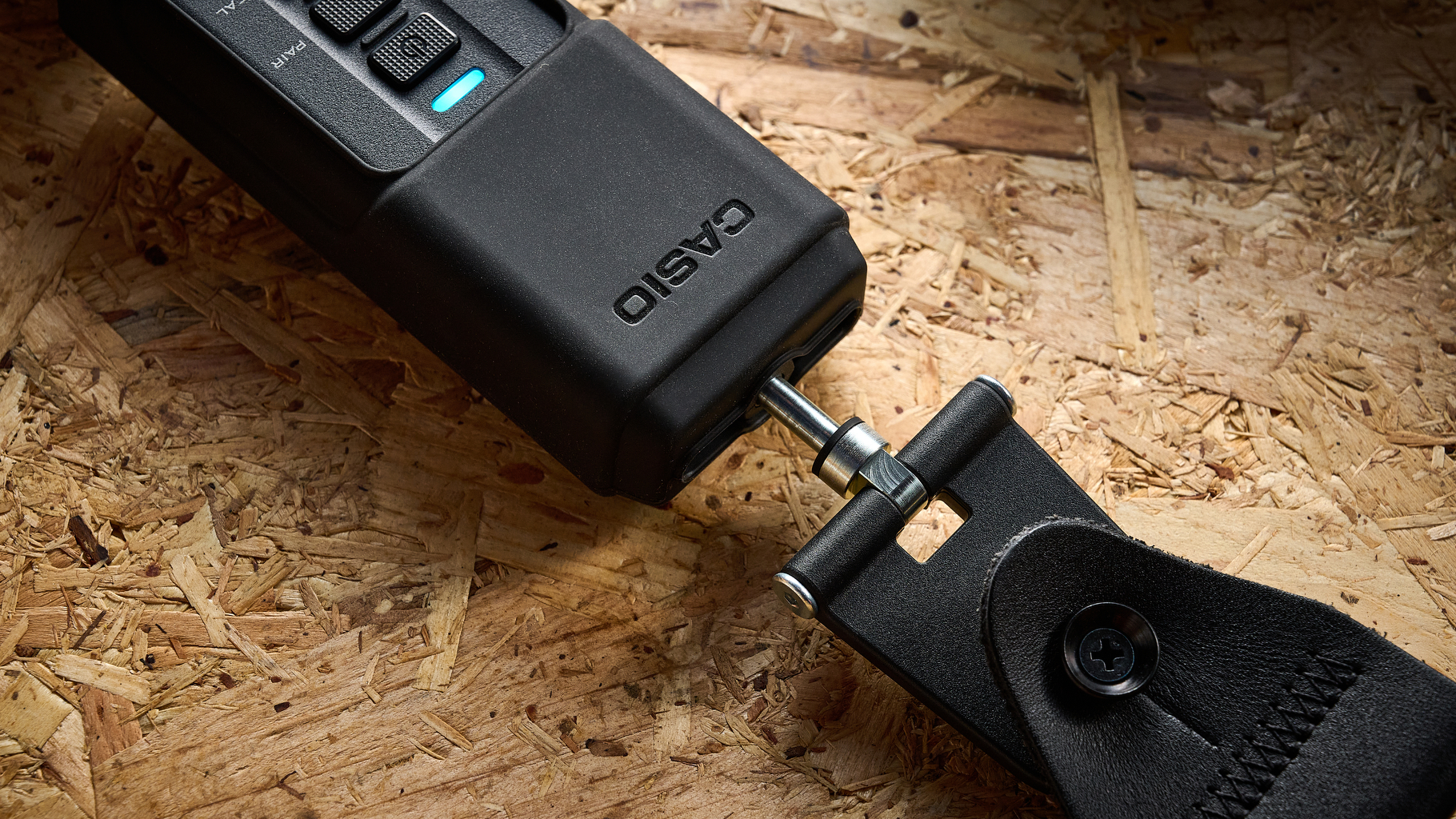
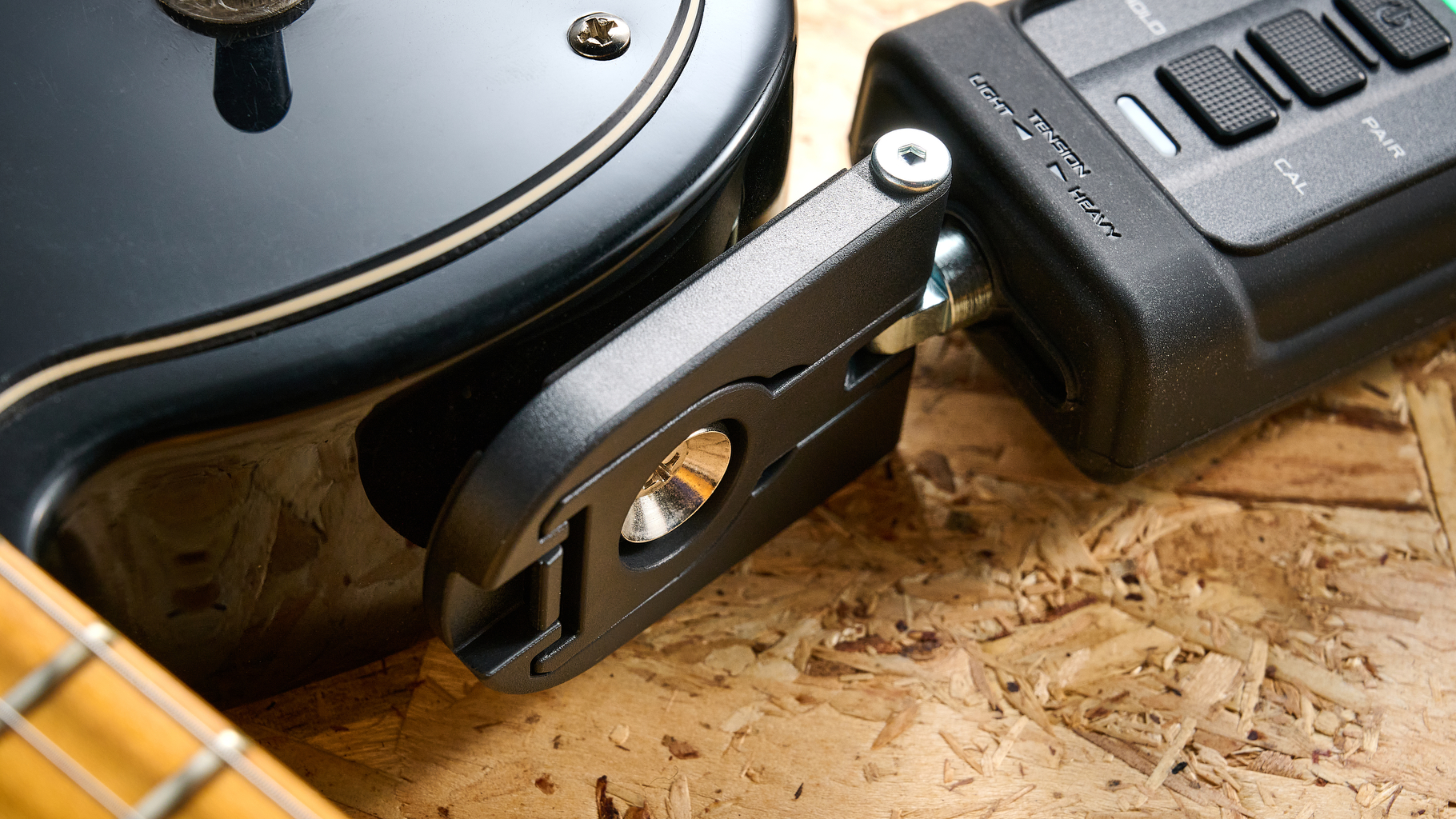
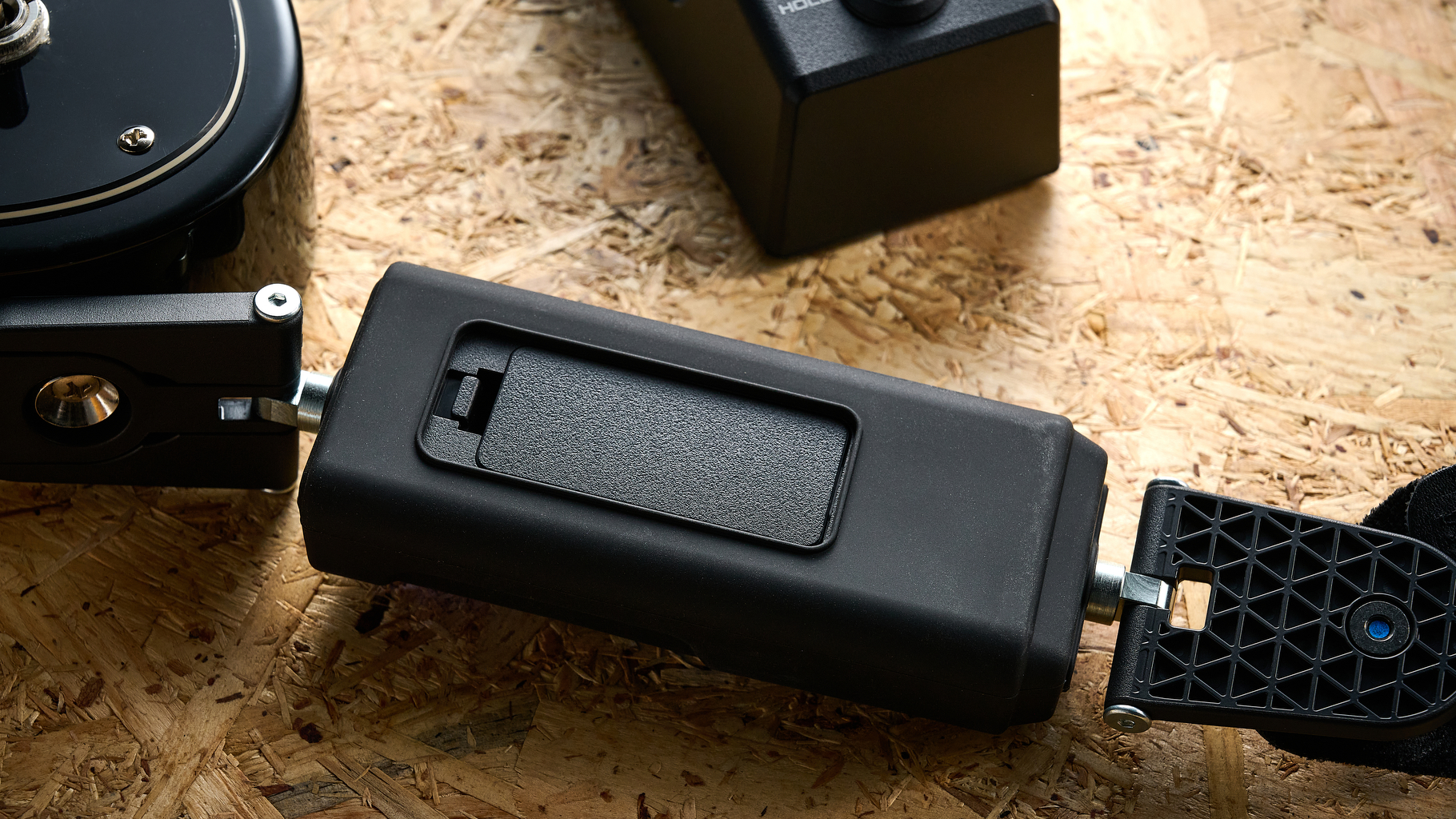
Over to the transmitter, and though it’s easy to attach to my strap/guitar – sitting between the guitar’s strap button and the strap itself – it isn’t a snugly universal fit. It would need to be pre-installed with Dunlop strap locks, for instance. It fits the D’Addario Auto Lock, but quite loosely; the best fit I had was with traditional strap fitments. Its rubber sleeve, meanwhile, is there to protect the guitar’s finish, but it is a magnet for dust and dirt.
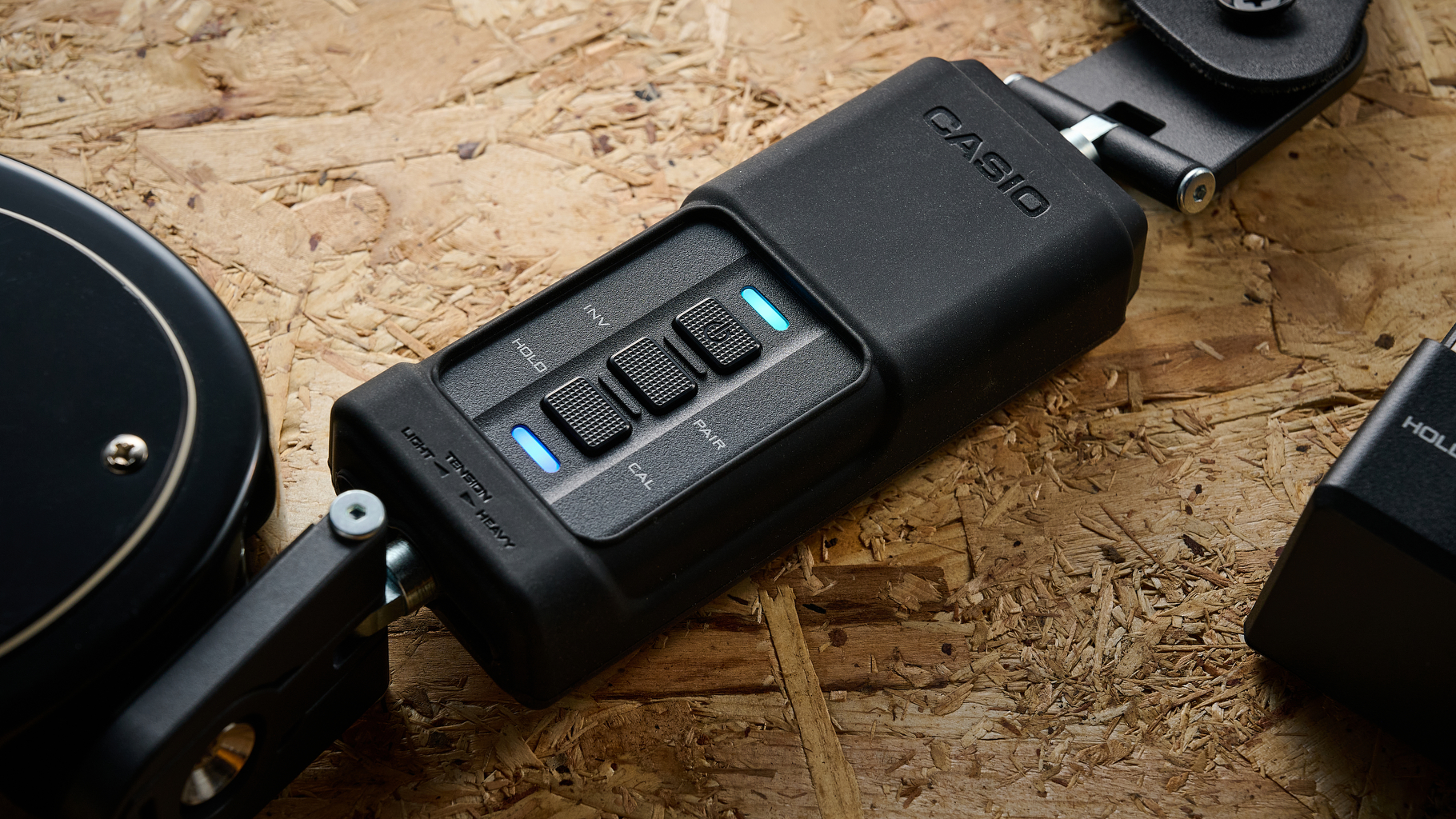
The design means it must be played almost exclusively while standing up. I can operate it while sitting down, but only in a slightly unnatural position, so really, my hand is forced. And it is quite easy to accidentally engage the effect while moving around. To that end, the segmented green lights, which light up to show the intensity of the effect and are paired with a Minimum dial, are massively useful. It’s easy to see if the effect is engaged; I just wish the same could be said for the mini switches on the receiver.
I find that the Transmitter’s swivel feature, which is designed to accommodate different guitars and their strap button placements, often gets tangled
These are for choosing the TRS channel, switching between Momentary/Latch and Pedal/Footswitch, and inverting the movement, where the effect is at maximum with movement, then scaling it back. That gives greater versatility, but these have no lights of any sort, so working on a darkened stage, or any room that isn’t as bright as a dentist's, makes operation a little tricky. It’s definitely an oversight.
I feel it’s better suited for a pedalboard, too. Setting it up without one requires two 9V plugs and a lot of messy cables. Whack it on a board with a power brick, though, and you’ll have a much cleaner setup.
Finally, it can get a little clunky. While messing around and experimenting with different pedals and settings, I find that the Transmitter’s swivel feature, which is designed to accommodate different guitars and their strap button placements, often gets tangled. And the very motion needed to work the Dimension Shifter saw it slip out during use.
Upon closer inspection, a small corner of the strap lock has broken off, and I wasn’t playing with force. The locking mechanism isn’t foolproof. There’s a lot of ‘nearly, but not quite’ going on here.
Usability
Usability rating: ★★★☆☆
The setup isn’t without its troubles, especially since no TRS cable was provided – so make sure you have one in advance. The manual tells you to set up the partner pedal for expression before plugging it in, but it also helps to know the ins and outs of the partner pedal (for example, that it controls the Rate on the Boss PH-3 phaser) to truly make the most of it. Of course, with a bit of trial and error, you can figure that out, but Google was far more efficient for me. Especially when dealing with atypical pedals like the Earthquaker Devices Afterneath.
In terms of the effect of the operation itself, I find that the movement of engaging the pedal doesn’t always feel natural. It takes some control to manipulate the partner pedal with the right amount of movements to get the desired effect, and also to not let that movement impact my playing. At times, I find I either bend notes when I don’t want to, because of the necessary motion, or, more rarely, accidentally bend the note via moving the guitar itself. This can impact tuning stability.
It takes a bit of a Goldilocks approach, finding that ‘just right’ sweet spot with regard to the expressive movements. But this is a very novel approach to expressive playing, so it’s hard to deduct points for that. Just note that there will likely be an adjustment period.
Just note that there will likely be an adjustment period
The most irksome factor here is that its official press release said it was “fully compatible” with DAWs, but, except for the fact I could put the end of my signal change into a recording interface, it isn’t compatible with DAWs. The scripture had me imagining I could control VST plugins with it, which was a really cool concept, but there’s just no way to do that. It’s a similar story for digital amp modelers, too; I couldn’t get it to work with my Quad Cortex, and the manual confirms that it only works with the Kemper Profiler, Line 6 Helix, and Boss GT-1000 as far as modelers go.
I do feel some slight pain in my shoulder after prolonged playing sessions, like I’ve done a workout at the gym
Moreover, the word ‘DAW’ has been removed from its official webpage (unlike the press release). I feel shortchanged.
The Transmitter also has a little bit of weight to it. It’s nothing major, but coupled with the motion that engaging the effect necessitates, I do feel some slight pain in my shoulder after prolonged playing sessions, like I’ve done a workout at the gym, but only on one shoulder.
Overall, the movement takes some getting used to, but for those who want to free up their feet and move across the stage with a bit more freedom, it’s a valid alternative. But certainly not for everyone.
Sounds
Sounds rating: ★★★½
Once I’m rolling, there’s a good chunk of fun to be had. Ramping up the intensity of a phaser (Boss PH-3) or tremolo (Moog MF Trem) for emphasis is really fun, especially when you can slowly bring it in and out, with my movements holding complete dominion over that one effect parameter. It's everything you can do with a traditional expression pedal, just in a new guise.
The Reverse Polarity feature is a well-thought-out addition
The Latch function is also a fine addition, especially for upping the ante on reverb and delay pedals, which can really come up clutch for guitar solos and lead parts. Then I just need to disengage it at the end of the part. The same concept could be applied to something like an octave (I had some great fun hooking it up to an Electro-Harmonix Pitch Fork+), and can essentially use it like a +/1 octaver to fatten up certain riffs before turning it off, or, with some twiddling, doing its best Whammy impression. Essentially, I can turn the effect on/off with my body movements, so I can be far away from my pedalboard at the time – that’s great for freedom of movement when playing live.
Furthermore, the Reverse Polarity feature is a well-thought-out addition, offering another way to manipulate or un-manipulate my chosen effect. Although I haven’t personally found much use for it, the pedal is better suited to it.
Ultimately, it’s usable with any pedal with a jack input/output for an expression pedal; there’s no MIDI functionality, so that rules out things like the DigiTech Whammy DT. Tom Morello denied.
For a pedal like the EHX PitchFork+, which lets me choose whether the expression controls Volume, Frequency, or Glissando, the Dimension Shifter gets far more mileage than one where the singular parameter I can dictate is pre-determined.
That also means the sonic results vary based on the effect it’s plugged into. The EQD Afterneath is rather unmusical in its application here. It’s fun to expressively ramp up the weird, but it isn’t something I’m doing thinking, ‘this is a game changer, and I can use this in X song.’
So really, it’s a piece of gear designed to augment and get new usage out of your pre-existing pedals. Those disillusioned with foot-controlled expression pedals might delight in this, but as fun as it can be at times, I’m struggling to see where it would fit into my rig in the long term.
Verdict
I love the idea, but its scope isn’t as large and as powerful as I’d have hoped – it would be a different story if there was fully-fledged MIDI and DAW-controlling capacity
Personally, this has done little to encourage me to ditch expression pedals in form of this new strap-mounted concept. I love the idea, but its scope isn’t as large and as powerful as I’d have hoped – it would be a different story if there was fully-fledged MIDI and DAW-controlling capacity – and the motion just doesn’t feel all that natural.
It’s left me looking at my pedalboard – and in particular my Ernie Ball expressive delay – and thinking “I prefer doing this with my feet” as it doesn’t impact my playing, and I don’t get shoulder pain from it, either.
However, while it isn’t going to replace an expression pedal in my rig any time soon, it could be a powerful tool when paired with an expression pedal. For instance, I could dictate wah, delay, etc., while the other controls volume – it’s certainly a far better way to perform than operating two pedals at once, but it’s more a compliment to, rather than a usurper of traditional expression pedals for my money.
Guitar World Verdict: The Casio Dimension Shifter is trying to disrupt the market, but for me, it falls on the wrong side of gimmicky fun. I’m sure there’s a score of players out there that can find a more worthwhile role for this in their playing, but it’s not going to threaten traditional expression pedals in the market any time soon. It's fun while it lasts.
Test |
Results |
Score |
|---|---|---|
Build quality |
Pretty rugged despite its plastic housing, but the transmitter can be quite cumbersome and it's fairly heavy. |
★★★☆☆ |
Usability |
There's an obvious learning curve with something with a fresh approach, but some oversights impede on its gigability. Not as versatile as hoped at this price point - especially with no MIDI. |
★★★☆☆ |
Sounds |
It's limited by the partner pedal. At it's best, it's very fun. At it's worst, it's somewhat disappointing. |
★★★½ |
Overall |
A great idea to shake-up expressive playing, but the reality doesn't always match the concept. |
★★★☆☆ |