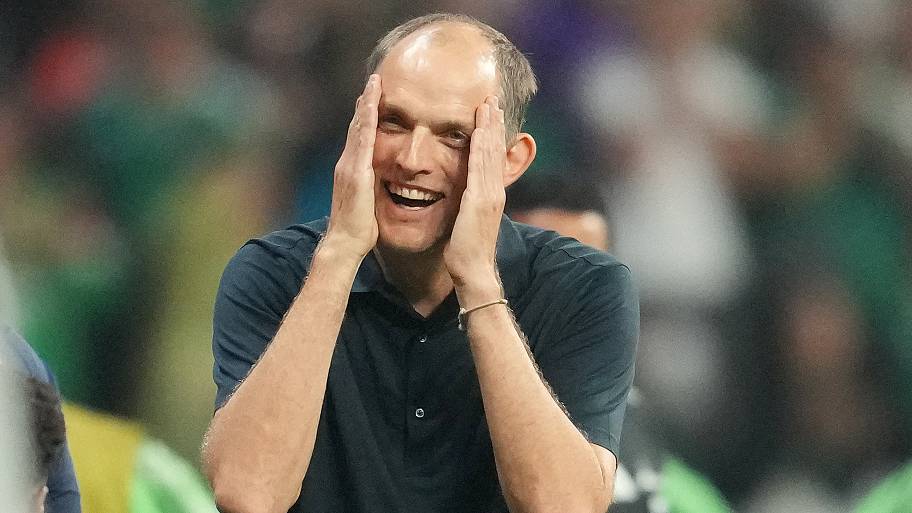
In a world of Pep Guardiola clones and wannabe Jürgen Klopps, Thomas Tuchel has always embodied the mantra of former martial artist and movie star, Bruce Lee.
The late fighter famously lived by the approach of “my style is no style.” Throughout an itinerant career which has taken him from leading Mainz into Europe on a shoestring budget to coaching the biggest egos in the sport at Paris Saint-Germain, Tuchel has been forced to constantly adapt his demands to suit the players at his disposal and the opponents in his way.
Such is the flexibility of this tactical chameleon, Tuchel can rattle through a ream of strategies within the same game—as England discovered during an assault on all the senses against Mexico at the Estadio Azteca on Sunday.
Contain and Control
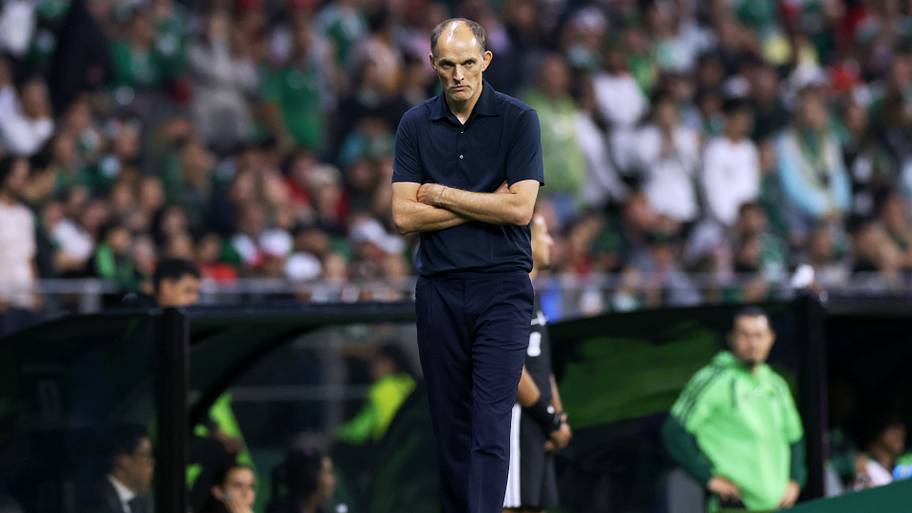
Tuchel warned coming into the round of 16 tie in Mexico City that England would have to adapt to the array of issues staring down at them from this temple of soccer 7,220 feet in the sky. After spending the first 18 months of his tenure relentlessly driving home the message that England must play with Premier League tempo, Premier League aggression and Premier League physicality, Tuchel pleaded for calm heads, especially at the start of the game.
“We need to worship more the moments and understand that sometimes, the door is closed,” the German coach explained pregame. “It doesn’t help if you rush into it. Try the other door! Find another way!”
England dutifully took its time testing the structural integrity of Mexico’s openings to begin Sunday’s contest. Until the cusp of halftime, the visitors played almost the perfect match, calmly cycling the ball around defense and midfield to take the sting out of a boiling Azteca atmosphere before picking its moments to strike. This was far more tiki-taka than anything seen in the modern Premier League, which has long since evolved away from possession for the sake of possession.
Make It a Match of Moments
One for the ages. pic.twitter.com/KASLS6XY24
— Sports Illustrated FC (@SI_FootballClub) July 6, 2026
Unlike so many English journalists who conducted impromptu science experiments to test the effects of altitude by jogging around Mexico City in the buildup to the fixture, Declan Rice did not appear to experience any shortness of breath after a run upfield.
Jordan Pickford collected a pass punted forward from Johan Vásquez, who had grown frustrated by the block of white shirts in his way to goal, and casually rolled it out to Rice. The Arsenal star spotted the open door. Moving into his signature gallop, Rice carried England from the edge of one penalty area to the other, delivering the ball to the feet of Bukayo Saka who drove to the byline and teed up Jude Bellingham’s opener.
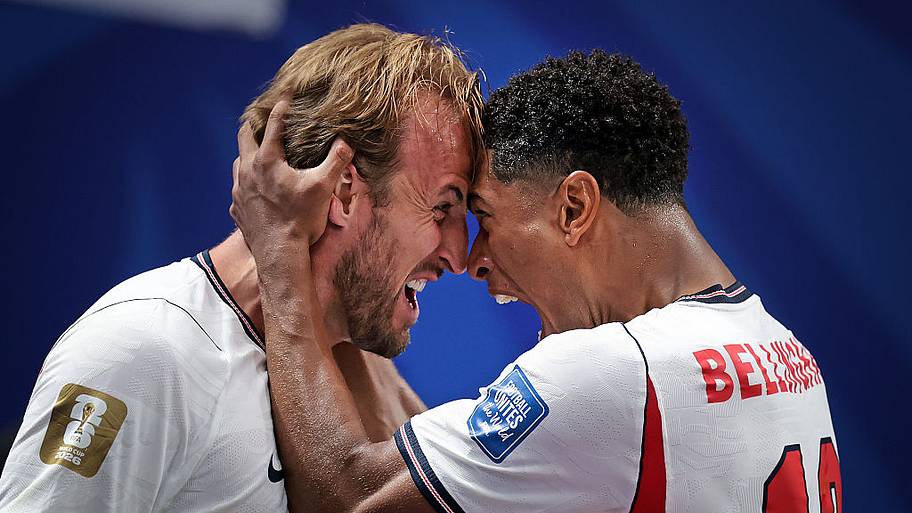
Across those first 42 minutes, England forced Mexico to misplace just 15 of the 212 passes the host collectively attempted. But it only takes one turnover. Elliot Anderson’s perfectly timed jump onto Gilberto Mora caught the talented teenager unaware, forcing the type of press Tuchel had been associated with in the Bundesliga. Bellingham took full advantage of having possession between a set of broken lines, playing a crisp one-two with Harry Kane to score his second of a memorable night.
After going 438 minutes without conceding a single World Cup goal this summer, Raúl Rangel shipped two in 98 seconds as the England spring uncoiled.
Concerns Still Persist
As Tuchel would later admit himself, this was not an entirely faultless performance. England nervily crept through the final five minutes of the first half, continuously giving away cheap free kicks until Julián Quiñones eventually punished it from one set piece.
Mexico could really have added another before the interval as it took desperate interventions from Jordan Pickford and Bellingham to preserve a 2–1 advantage at the break.
England was much improved at the start of the second half, with Nico O’Reilly surging forward in the way Guardiola uses him for Manchester City. The flying fullback fired one ball across the six-yard box before striking the post himself all within five minutes of the restart.
WIN FIFA WORLD CUP 2026™ FINAL TICKETS & OTHER PRIZES

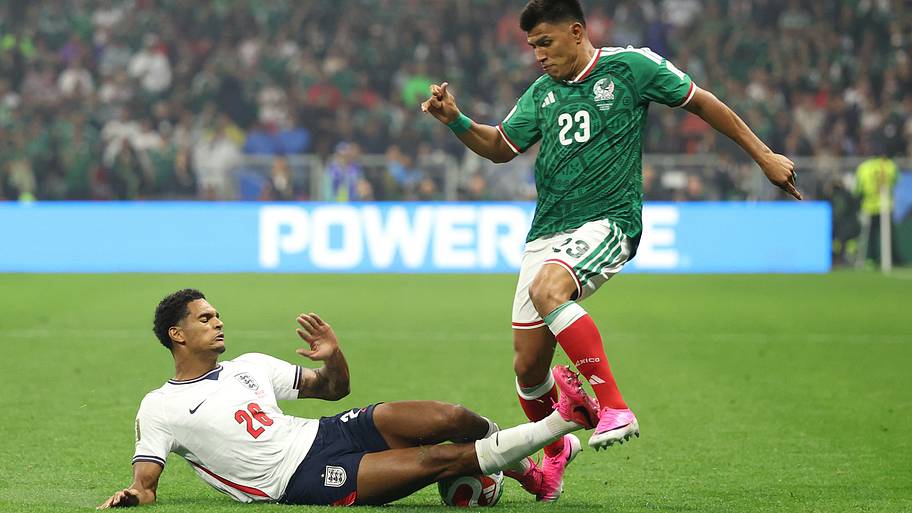
However, the problems of his opposite defender persisted. Jarell Quansah’s red card was the consequence of an unwise lunge, but it was an act of desperation caused by an issue which may have stretched beyond individual ineptitude.
The amount of space which opened up between Quansah and Jesús Gallardo was painfully similar to the chasm that formed between Djed Spence and Brian Cipenga for DR Congo’s first goal in the round of 32. While Spence failed to close down the winger who found the bottom corner, Quansah shut the gap all too forcefully to earn his marching orders.
If the right back getting sucked infield is a systemic problem or simply two players making the same mistake, the buck still stops at Tuchel, who picked the system and this odd assortment of right backs.
Weather the First Storm
Tuchel’s first order to correct for Quansah’s absence was return Rice to his unfavored right back slot. That was just a temporary measure while John Stones tied his laces and found his socks, with the departing Manchester City star slotting next to his clubmate Marc Guéhi as Ezri Konsa shifted to right back (a lineup which could be reprised from the start against Norway, perhaps).
Only three England players touched the ball after Stones’s substitution before Pickford’s long ball was knocked on by Kane for Anthony Gordon to sneak in and win a penalty which even Javier Aguirre couldn’t argue with. All Mexico’s boss had to say to the new Barcelona winger later in the match was: “Gordon, f---!”
After the two-goal cushion had been restored, Tuchel shifted into a 4-3-2, with Gordon haring around, all bouncing curls and blistering pace, to offer an outlet in front of Kane at the sharp end of the pitch. In fact, during the 10-minute passage of play between Kane and Raúl Jiménez’s penalties, England actually recorded more touches of the ball than Mexico despite being a man light. “Worship the ball possession,” Tuchel had urged his players pregame. “It’s basically my job,” he shrugged. He did it well.
Another lapse in concentration—this time a lazy swing of the leg from Kane—was punished and nerves started to jangle once more as Mexico pushed for an equalizer and the Estadio Azteca creaked with anticipation.
Backs Against the Wall
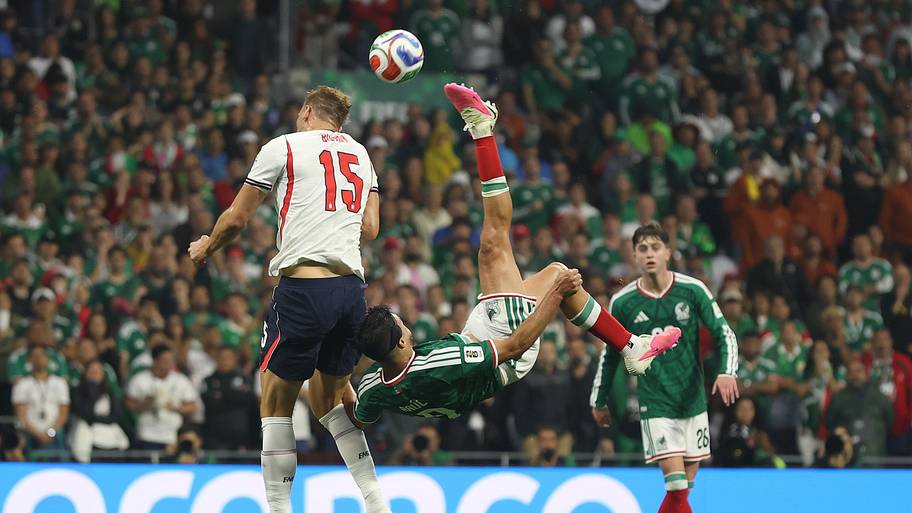
Tuchel shattered the emergency glass labeled “Dan Burn” during the final hydration break. Djed Spence was also brought on for the booked O’Reilly to form a back five as England’s manager played his last card which was taken straight out of José Mourinho’s playbook.
One of the doctrines drawn up by the legendary Portuguese coach during his first stint at Real Madrid read: “Whoever has the ball has fear.” Consequently, that meant: “Whoever does not have it is thereby stronger.”
Having gone into the game demanding possession, Tuchel judged that it was the last thing England would need for a tense conclusion. After watching his own side struggle so pitifully against stubborn low blocks uninterested in attacking during the group stage, the magpie tactician took this approach as his own. Across those final 25 minutes (including stoppage time), England completed just 21 passes. Looking at the entire contest in its entirety, the Three Lions set a new record low for possession in the nation’s World Cup history (33.2%), per Opta.
But it worked.
Faced with the tightened stitching of England’s 5-3-1, Mexico was reduced to slinging aimless crosses into the box. Burn gratefully gobbled each one up. Despite only coming on in the 75th minute, the 6'7" center back ended the game with the joint-most clearances of any player on the pitch (six). For all Mexico’s possession in those chaotic closing stages, the host only forced Pickford into one straightforward save.
“It felt like a full squad performance,” Bellingham reflected. “It felt like we had 26 players. Every time we cleared a ball, when big Dan Burn smashed his head off one and cleared it up the pitch, you could see all the subs on the sideline up, all the staff.”
More to Come
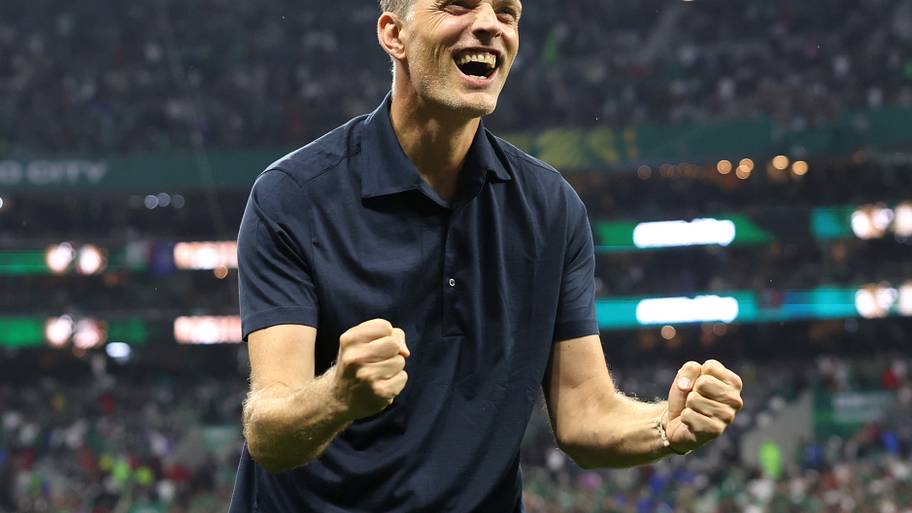
During 106 minutes of unadulterated mayhem, Tuchel used three different formations and 16 players. England went from measured control to full-blooded rearguard action with concentrated bursts of pressure sandwiched in between. There was Guardiola, Klopp, Mourinho and even a bit of Sam Allardyce thrown into a coaching performance befitting Tuchel’s status as England’s supposed savior.
Ever the perfectionist, Tuchel wanted more. “I think we can play much better,” he fretted, visibly drained by a tense build-up and emotionally exhausting occasion. “There’s still a disconnect to what we actually put on the pitch in terms of football performance, ball possession, finding spaces.” But he couldn’t fault the team’s spirit. “There’s no disconnect in committing and doing what is needed to overcome anything that is thrown to this team.”
Tuchel bluntly analyzed that England had “no identity” under Gareth Southgate during his first international camp back in March 2025. In terms of establish style of play, England still doesn’t have any continuity. But that is the Thomas Tuchel identity.