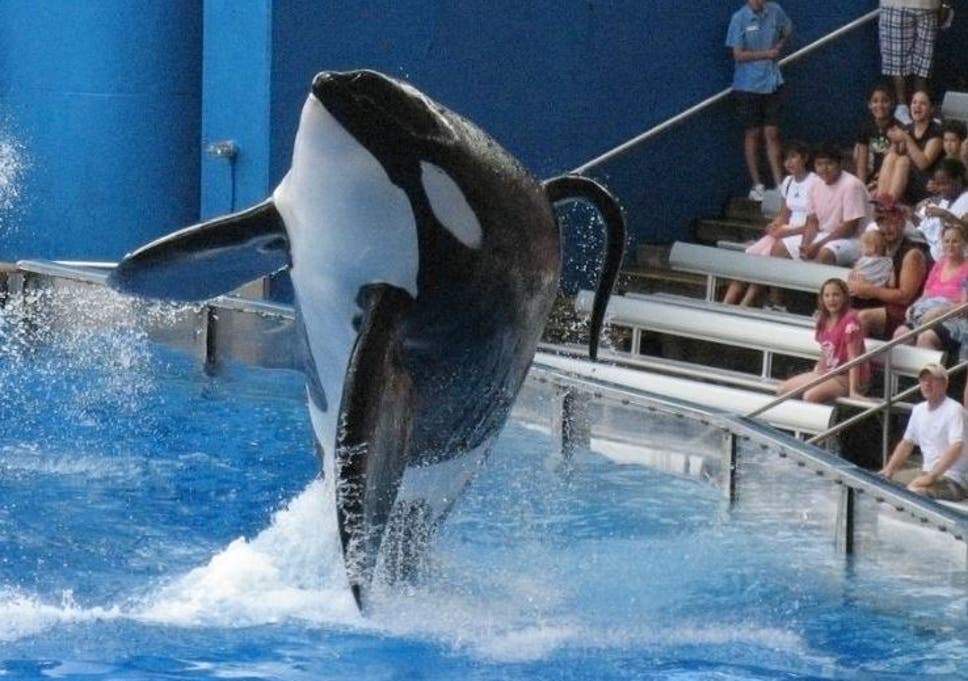
One of Britain’s biggest holiday firms is to stop selling tickets to marine parks that keep killer whales in captivity.
Thomas Cook said it took the decision after more than 90 per cent of its customers said they were concerned about animal welfare.
The company also took into account scientific evidence from specialists about the treatment of the animals, according to chief executive Peter Fankhauser.
It means Thomas Cook will stop selling trips to two attractions – SeaWorld in Florida and Loro Parque in Tenerife – from next summer.
“This was not a decision we took lightly,” said Mr Fankhauser in a blog post.
“We have actively engaged with a range of animal welfare specialists in the last 18 months, and taken account of the scientific evidence they have provided.
“We have also taken feedback from our customers, more than 90 per cent of whom told us that it was important that their holiday company takes animal welfare seriously.
“And when so many of our customers are so clear in their view, I could not allow our business to ignore them. That has led us to the decision we have taken today.”
Thomas Cook had already agreed to stop promoting SeaWorld online, after an outcry when one of its orcas called Kasatka had to be put down.
Twenty-nine other attractions have been removed from its books since it introduced a new animal welfare policy 18 months ago.
SeaWorld and Loro Parque were among the 20 remaining parks which met minimum animal welfare guidelines set by the Association of British Travel Agents (ABTA).
Mr Frankauser said: “We respect and applaud the work that has been done, and we will work with both over the next 12 months to prepare for our exit.
“We will also continue to work ourselves to identify more sustainable alternatives.”
Public concern over the keeping of orcas in captivity increased after the release of the 2013 documentary Blackfish, which suggested that keeping the creatures in captivity caused them to become so stressed that they become a danger to people.
Visitor numbers at SeaWorld subsequently dropped, as did the company’s share price.
In response to the criticism, in 2014 SeaWorld agreed to stop taking new cetaceans from the wild, and later it announced it would end its controversial orca-breeding programme.
PA