The Internet Is Not The Answer, London
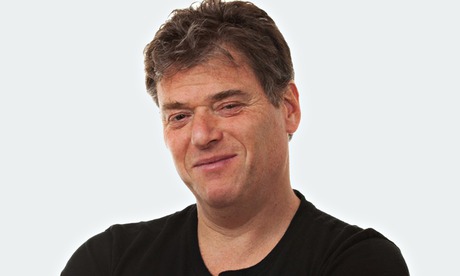
Andrew Keen is a pioneer who’s come to fear his discoveries; an evangelist who wonders if we should burn the church down. He ran Silicon Valley start-ups in the 1990s and is still a major figure in tech circles, but now he’s an antagonist aiming an angry scattergun at all the online beasties your mum warned you about: narcissistic social media users, piffling user-generated content, a wounded music industry. The more serious charge in Keen’s latest book, The Internet Is Not the Answer, is that a few digital robber barons have turned the web into a machine which worsens inequality, with monolithic companies making more money than the analogue businesses they’ve killed off, using fewer employees. Is that a specific failing of the internet, though, or just new technology inevitably being exploited by increasingly powerful corporations? Either way, Keen says he has some kind of solution. Will Self interrogates his belief that the democratic, meritocratic playpen we think we inhabit is an illusion. “Bring a teenager for free,” offers the promotional blurb, drily.
The Tabernacle, W11, Wed
JS
Grayson Perry, Margate
Grayson Perry’s work includes risqué ceramics and tapestries as social critique. It might be said, though, that his greatest creative achievement is his own persona. Despite being typecast in the press as the “transvestite potter”, as a media personality he’s shown incredible range, and a truly refreshing delivery. His erudition is lightly worn and – on his 2014 TV show Who Are You?, and his 2013 Radio 4 Reith Lectures – tempered by the comic timing of a great stand-up. This talk, which accompanies his survey show Provincial Punk (to 13 Sep), promises to turn the spotlight on his artistic development. From his early days, cutting an intriguing figure with a “Shetland woolly jumper view of the world” and rubbing shoulders with movers and shakers such as Cerith Wyn Evans and Michael Clark, to his current position as a unique cultural commentator, it promises a picaresque tale.
Turner Contemporary, Tue
SS
Simon Armitage, Edinburgh
“I have not flinched/ From uncommon holes in the flesh of men/ Or heads oozing with shattered minds”: in his tribute to a first world war nurse – one of seven poems written for BBC documentary The Great War: An Elegy – poet Simon Armitage is unflinching about the horrors of battle. Yet by honing in on real-life, highly personal accounts, he brings a surprising freshness to war poetry’s well-worn path. As well as Edith Appleton, the nurse who tended injured men at Normandy, he resurrects James Bennett, the soldier who tunnelled out of Holzminden prison camp, and visits Helperthorpe, east Yorkshire, one of around 50 “thankful villages” that suffered no military fatalities. Here, Armitage will talk about the making of the film – shown on BBC2 last November – and discuss why Britain’s more recent casualties in Iraq and Afghanistan make commemorating the dead more relevant than ever.
Scottish National Gallery, Thu
CB