Birmingham Post, Birmingham
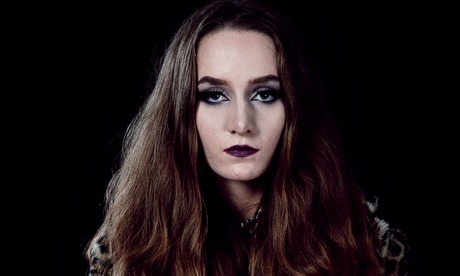
Trevor Appleson’s photographs of young people, shot against a black screen and currently exhibited at the mac (to 5 Jul), provide an apt springboard for this discussion on the legacy of the Birmingham School, the strand of theory that came out of the University of Birmingham’s Centre for Contemporary Cultural Studies in the mid-1960s. In providing a little information but withholding a lot more, Appleson deftly plays with our prejudices. Take the young lady with dyed turquoise hair in one of his photographs: without further background, her hairstyle, grungy clothes and confident demeanour nonetheless communicate a plethora of information from which the viewer can spin a narrative. Crucially, though, that narrative will differ from person to person. Broadly speaking, Stuart Hall, the founder of the Birmingham School, would have termed this encoding/decoding, a model in which it is the viewer who provides context to media, not the producer. Appleson, curator Steven Bode and academic Kieran Connell delve further.
mac, Sat
OB
This New Noise, Cambridge
It often seems that the only nation in the world that doesn’t want a public broadcaster as respected as the BBC is the only nation that has one. With a charter renewal looming and new culture secretary John Whittingdale famously sceptical about the Beeb’s funding model, the future seems fraught for the beleaguered broadcasting corporation. Charlotte Higgins’s This New Noise: The Extraordinary Birth And Troubled Life Of The BBC explores how the institution got to here, how it engendered such a wide variety of feelings among the British public, and measures the level of affection for dear old Auntie today. As the University of Westminster’s professor of media history and official historian of the BBC, Jean Seaton is expertly placed to join the Guardian’s Higgins here to discuss the book, a conversation sure to be far removed from the well-trampled “politically biased stealth tax” rhetoric.
Heffers Bookshop, Tue
MJ
Movie Heaven With Kermode & Mayo, London
Mark Kermode and Simon Mayo, BBC 5 Live’s unhateable taste-makers, kick off a quarterly live interview show by welcoming Sally Hawkins to the velvety BFI stage. She must play fantasy cinema programmer, choosing five films to fit four categories: kids, family, main event and a late-night double bill, all illustrated with clips. In her own acting work, from Happy-Go-Lucky and Made In Dagenham to Blue Jasmine and Paddington, Hawkins excels at becoming the character we root for, the viewer’s head and heart on screen. And, on past form, she is generous when discussing other people’s films, reacting to them with as much awed enthusiasm as any movie fan. She has said in the past that her favourites feature “characters that make you laugh and cry simultaneously”, and when she took part in a similar exercise last year, she went for Labyrinth, Mulholland Drive and Synecdoche, New York.
BFI Southbank, SE1, Tue
JS


.jpg?w=600)