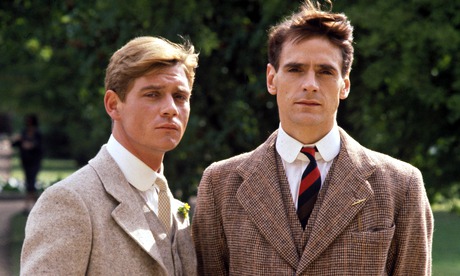
Brideshead Reunited, London
When the popularity of a television programme proves so universal that both the BFI – which once heralded it British TV’s 10th-greatest programme of all time – and perma-grouchy Simpsons bartender Moe Szyslak have declared their unyielding admiration, it’s little wonder that Brideshead is so frequently deemed worthy of being, well, revisited. A welcome opportunity to look back takes place at the Victoria & Albert Museum this week, with Lord and Lady Flyte (better known as actors Diana Quick and Anthony Andrews) joining writer and producer Derek Granger to discuss the 1981 adaptation of Evelyn Waugh’s magnum opus. A truly landmark drama series for ITV, with filming locations including Oxford University’s Hertford College, Venice and the QE2, and a supporting cast that featured Laurence Olivier and John Gielgud, there’s plenty to be discussed with chair Giles Ramsay. Not least the rich dramatic legacy of the series, including the globally renowned Downton Abbey.
Lydia & Manfred Gorvy Lecture Theatre, V&A, SW7, Fri
MG
British Science Festival, Bradford
What originally started as a meet-up for science boffins in 1831 has evolved into this annual festival. These days, the event attracts a far larger crowd due to a varied programme incorporating just about anything within the scientific spectrum, such as making food with hotel appliances, something anarchic chef George Egg will demonstrate (Thu). There are more than 100 performances and talks in all, and they’re free, too, with topics including the latest research into anti-ageing methods (Wed), tackling shellshock with Tetris (Tue), and the science behind solving crime (Thu). Also worth sitting in on are the intriguing discussions about advancements in technology. Driverless cars, for instance, are well on their way (Wed), as is Wi-Fi in lightbulbs (Thu) and silicon chips that imitate human organs (Thu). You no longer need to be a scientist to be in the know.
Various venues, Mon to Thu
DG
National Bat Conference, Coventry
We might glimpse them only fleetingly but bats comprise more than a quarter of Britain’s native mammals, and are first-rate indicators of the state of our ecology. They also make sublime pest controllers, each gobbling up to 3,000 insects a night. For their human admirers, this annual conference offers an array of talks, including Erik Korsten of the Dutch Mammal Society explaining how to locate common pipistrelles’ urban hibernation hideouts (12 Sep), and Bristol University’s Orly Razgour examining the ways in which bats genetically adapt to global environmental change (13 Sep). Participants can flit between a range of interactive workshops spanning everything from echolocation sound analysis to identifying droppings; hang out on a bat-detecting walk and talk across campus; or be a creature of the night at Saturday evening’s dinner and ceilidh, where there’ll be absolutely no renditions of that Meat Loaf song.
University Of Warwick, Fri to 13 Sep
CB






.jpg?w=600)