Pablo Bronstein And The Treasures Of Chatsworth, Nottingham & Bakewell
During the 17th and 18th centuries, well-heeled young things roamed sun-drenched southern climes as a grandiose precursor to today’s Ryanair-fuelled escapades. As two of the Midlands’ cultural establishments use the Grand Tour theme to play off each other to mutual benefit, who better to stage-manage the project than the devotee of present-day neo-baroque flamboyance, Pablo Bronstein? The idea is to mix up art-historical idiosyncrasies and incongruities, so a Rembrandt and Roman marble foot are set amid recent works by the performance artist Rose English and visionary architect Rem Koolhaas, as well as Bronstein’s own graphic dreams of fake ruins and fanciful palaces.
Nottingham Contemporary & Chatsworth House, Bakewell, to 20 Sep
RC
Thomas Hirschhorn, London
Thomas Hirschhorn might be the most hardline political artist ever. His sprawling installations of cardboard, foil and brown tape are somewhere between the ad hoc camps of refugees and a paranoiac’s protective bunker. Typically, they teem with grotesque war porn, hollowed-out shop mannequins and real bullets or broken glass. Hirschhorn doesn’t limit himself to galleries, however: his housing estates projects have seen deprived communities across Europe run their own radio stations, newspapers and art workshops. The efficacy of Hirschhorn’s high-art and direct-action combo can be divisive but, love him or hate him, his battle cry won’t leave you cold.
South London Gallery, SE5, to 13 Sep
SS
For Ever Amber, Newcastle upon Tyne
The Amber Photographic Collective, founded in 1968 “to collect documents of working-class culture”, has amassed some 20,000 photographs, 12,000 transparencies and over 100 films, from which this survey show is selected. At a time when working-class culture has been technologically transformed to the point of effective dissolution, it’s easy to pigeonhole this as perverse nostalgia. We can bring to mind the nitty-gritty – Byker terraces, Tyneside shipyards, the miners’ strike, all captured in moody monochrome – all too well. But it’s easy to forget how empathetically talented photographers such as Graham Smithand Chris Steele-Perkins were and are. Set here against the harsh historical backdrop of August Sander in Germany and Weegee in New York, they reveal societies stuck in uncertainty, but also at times laughing about it.
Laing Art Gallery, to 19 Sep
RC
Patrick Staff, Bristol
Tom of Finland’s drawings of pumped-up chaps are cult classics of radical gay art and, happily, far from subtle. Which is partly why young British artist Patrick Staff’s film installation The Foundation, exploring the LA foundation-turned-commune that was Tom of Finland’s home, is so striking. In place of the traditional documentary chronicling the life and outré work of the Finnish artist, Staff delivers a delicate evocation of the state of insider and outsider within the gay community, through lush, sun-dappled images of the foundation’s rooms and its dark, subterranean spaces. It’s a wonderful study of identity.
Spike Island, Sat to 20 Sep
SS
Joseph Cornell, London
Joseph Cornell is one of 20th-century US art’s most intriguing and contradictory figures. His history reads like a classic outsider artist’s: compulsively creating in the basement of his home in Queens, where he cared for his disabled brother, he made pilgrimages into the city for materials. Like New York’s shop windows, the glass-fronted boxes he fashioned contain everyday objects, but transformed into a fantastical cosmos of personal obsessions. In the Royal Academy’s survey, you’ll encounter everything from Emily Dickinson to Renaissance palaces and princes, birds and yesteryear’s starlets. This apparent recluse was, however, fantastically well connected: his social circle included Edward Hopper, Marcel Duchamp and Tennessee Williams; he took inspiration from surrealism and cubism and had many collectors after his pieces. While his work’s mix of nostalgia and oddball backstory still seduces, what really sets Cornell apart is how heartfelt the work is.
The Royal Academy, W1, Sat to 27 Sep
SS
Jean-Etienne Liotard, Edinburgh
In the 18th century, there were painters who achieved what photography would set out to do: capture the tactile responsiveness of reality and make it ultra-real. Swiss artist Jean-Etienne Liotard’s portraits – so intimate, gentle, loving – reveal posh folk in their vulnerability and Romantics in their vanity. In an age of late-baroque flamboyance, Liotard shows us intimacies that are recognisable from our own private moments. Witness his Princess Louisa Anne from 1754. Her gawkish awkwardness and tenderness are the timeless characteristics of youth. Then you notice the medium: pastel on vellum – coloured dust on stretched skin. It’s so delicate, it’s a wonder it exists at all.
National Gallery Of Scotland, Sat to 13 Sep
RC
Chinese Art From The 1970s To Now, Manchester
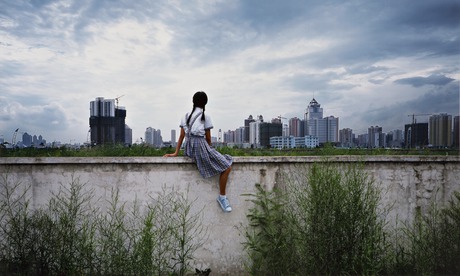
Selected from the collection of Uli Sigg, this exhibition necessarily touches on issues of political control, social censorship and artists’ freedom. Survivors of the Cultural Revolution, the Wuming (No Name) group are rightfully here, as is the subject of Tiananmen Square, and the sculptural installations of self-styled outcast Ai Weiwei. The latter displays thousands of stone age axe heads in an awesome accumulation of cultural endurance, but it’s likely to be the more subtle subversions of Weng Fen’s On The Wall – Shenzhen that steal the show. Featuring adolescents perched on walls gazing off into rapidly shifting cityscapes, the photo-series navigates alienation with a down-to-earth profundity.
The Whitworth Art Gallery, to 20 Sep
RC