The collapse of old regimes and the long shadow of conflict define this week’s front pages. Power fragments in the Soviet Union, from Boris Yeltsin’s electoral upset in Moscow to a tense military standoff on the streets of Lithuania. Elsewhere, the realities of Western intervention dominate the news agenda. Nato escalates air strikes over Kosovo, allied air power backs Libyan rebels, and Iraq descends into chaos after the first Gulf War. Yet, amidst global turmoil, there are also flashes of diplomatic progress. In a scene once thought impossible, former adversaries Ian Paisley and Gerry Adams sit side by side to forge a power-sharing deal, heralding a new era of peace for Northern Ireland.
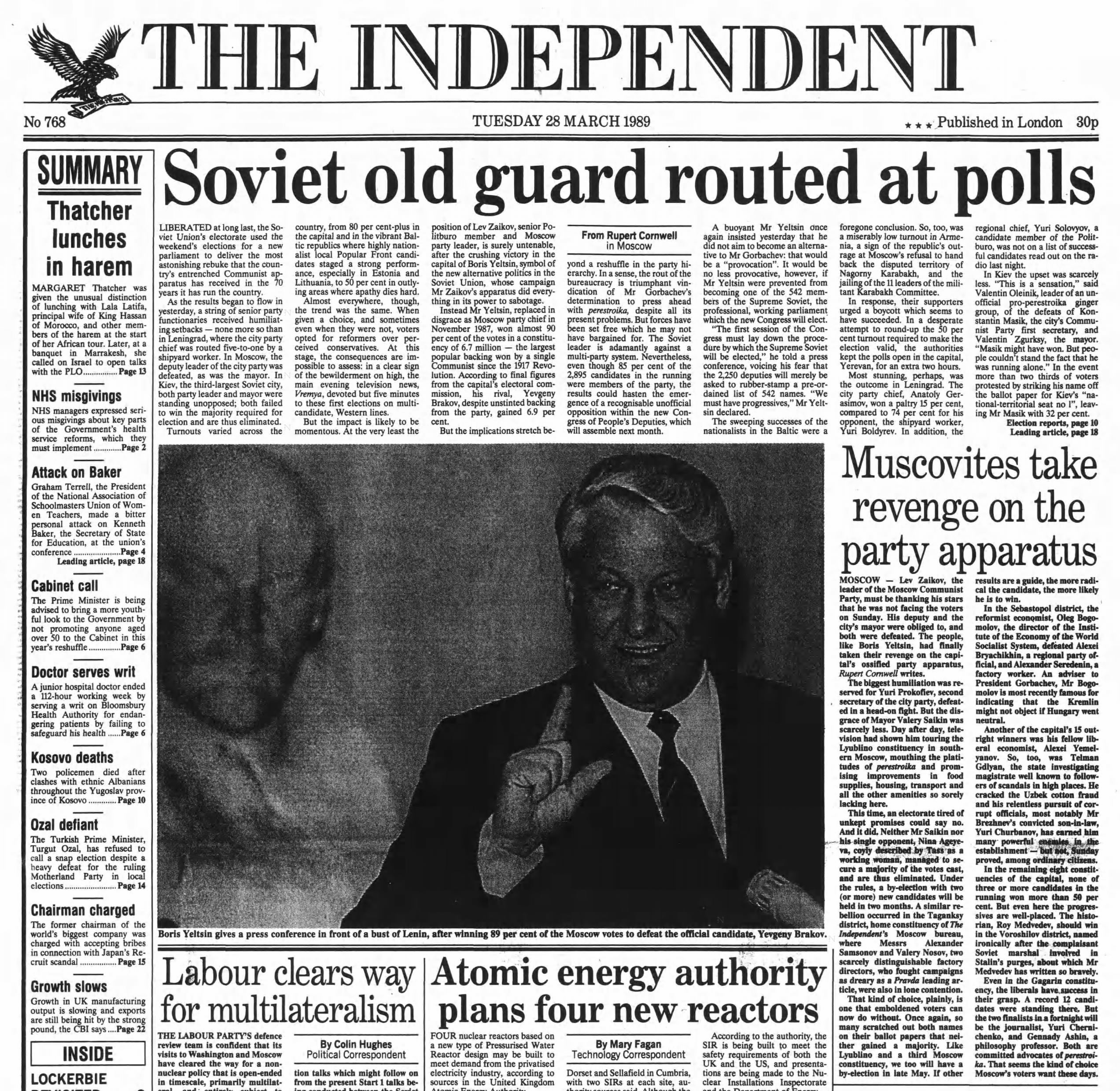
28 March 1989 – Soviet old guard routed at the polls
Soviet voters use new parliamentary elections to deliver a significant defeat to the Communist establishment. While the result vindicates Mikhail Gorbachev’s perestroika reforms, it also empowers new political forces that challenge his opposition to a multi-party system. The front page features Boris Yeltsin, who secures 89 per cent of the Moscow vote and will later become the first president of a post-Soviet Russia.
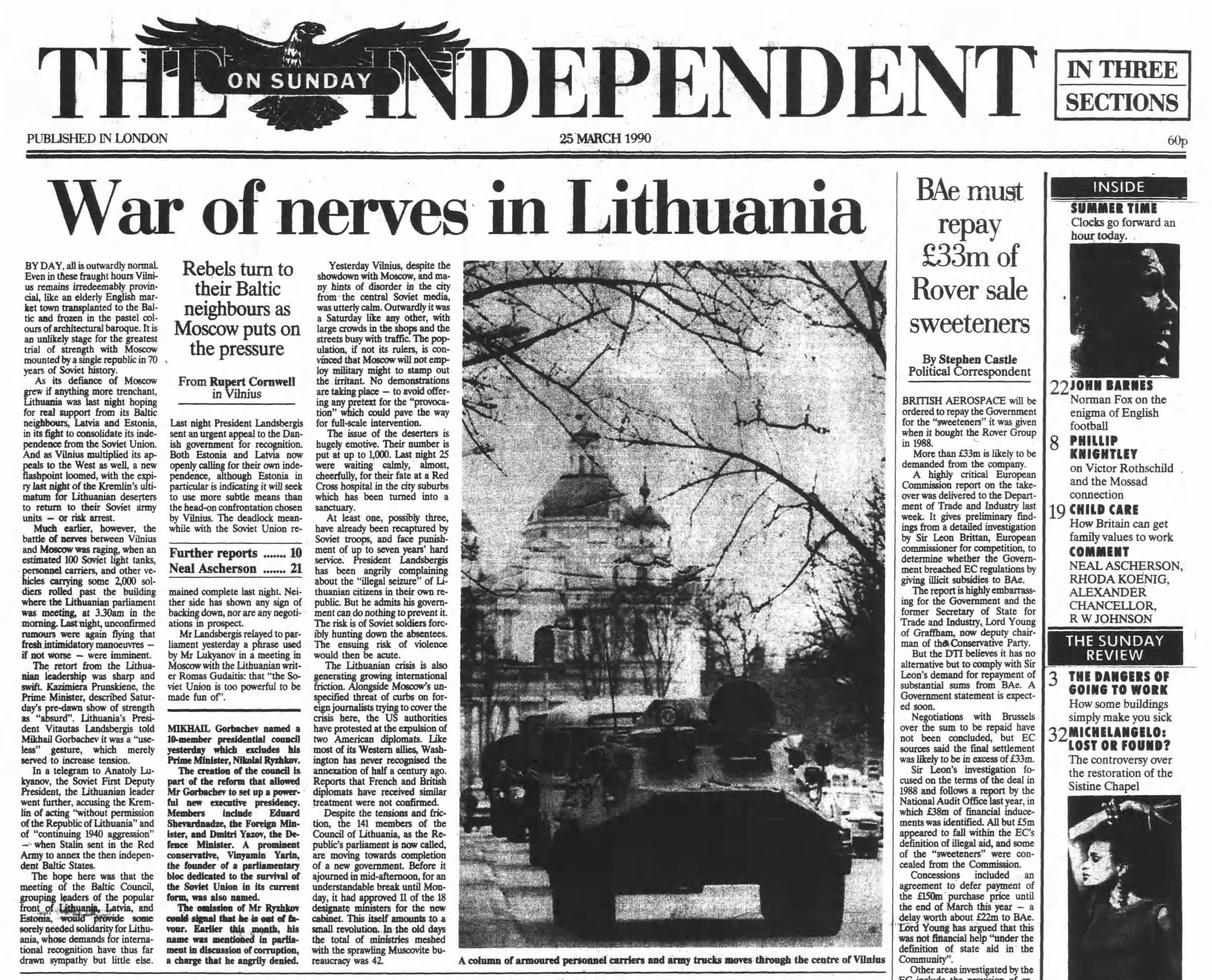
25 March 1990 – War of nerves in Lithuania
Tensions mount between Vilnius and Moscow as Soviet tanks and troops deploy outside the Lithuanian parliament. The breakaway republic appeals to the West and neighbouring Baltic states for solidarity, actively defying a Kremlin ultimatum demanding the return of army deserters. This military standoff accelerates the fracturing of the Soviet Union, culminating in full international recognition of Lithuanian independence the following year.
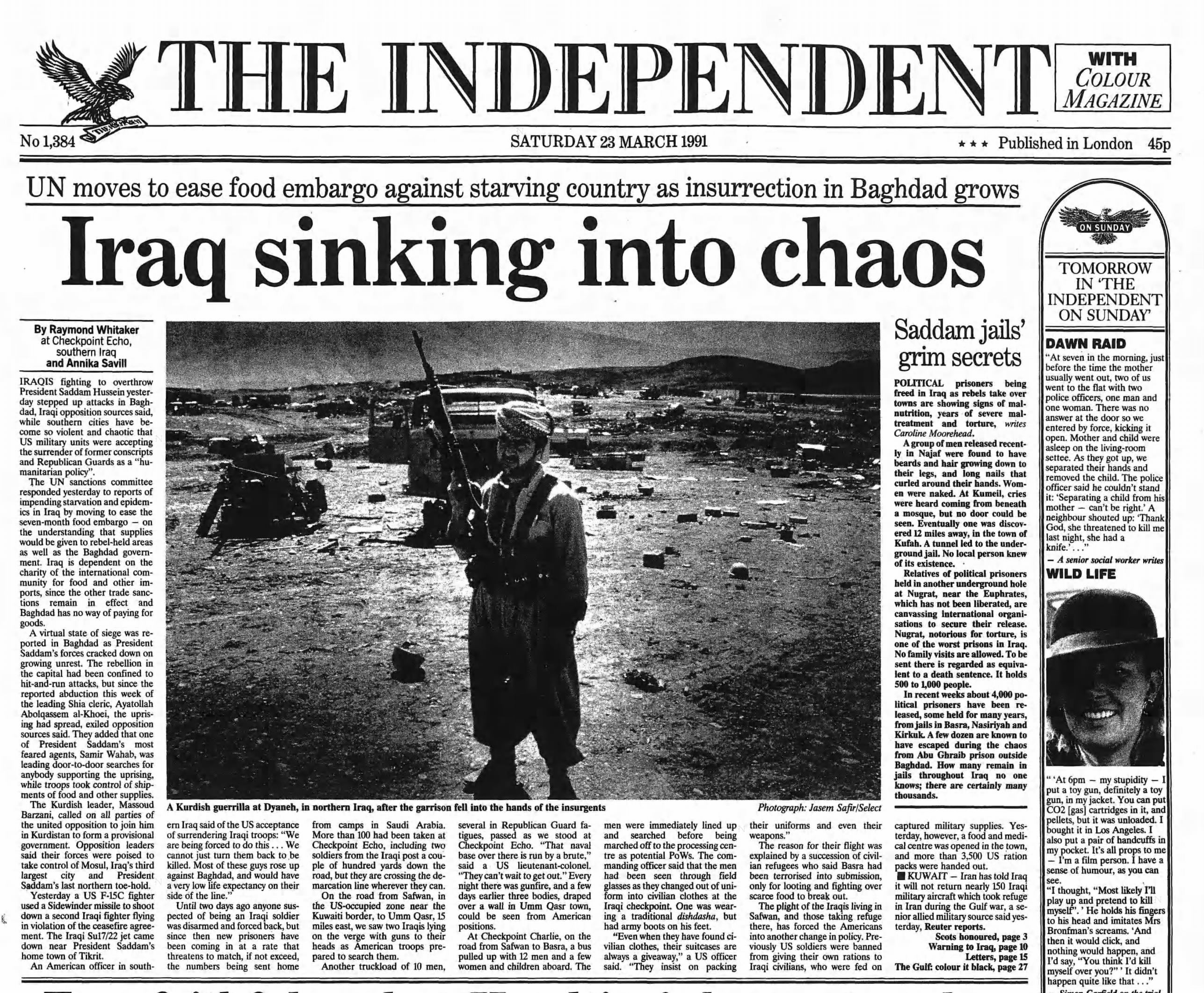
23 March 1991 – Iraq sinks into post-war chaos
The United Nations moves to ease a seven-month food embargo against Iraq as warnings of impending starvation and widespread epidemics mount. Insurrections against Saddam Hussein intensify in Baghdad and across the south, prompting international demands that relief supplies reach rebel-held territories. Despite the scale of these post-Gulf War uprisings, the Iraqi regime maintains its grip on power for another decade.
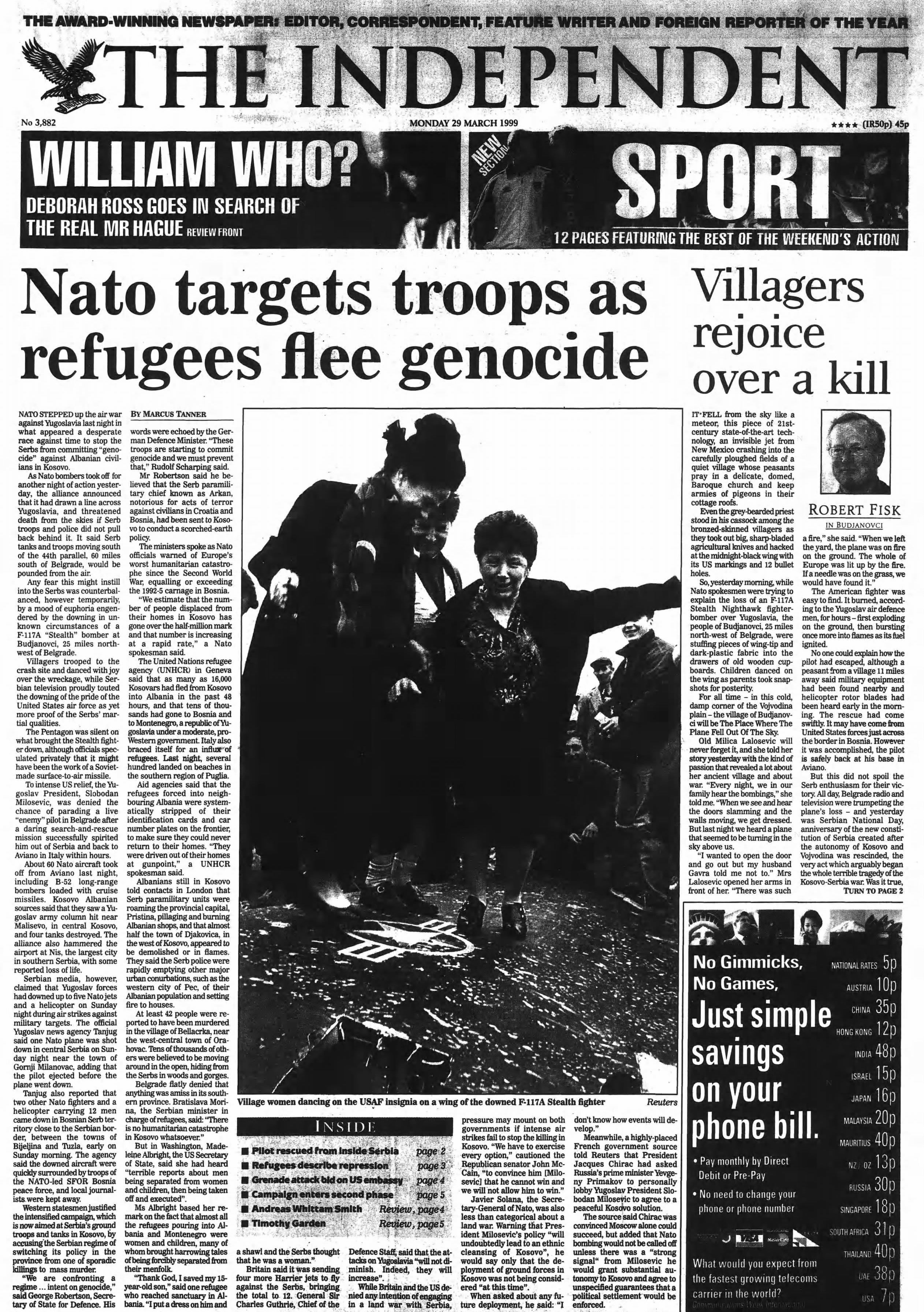
29 March 1999 – Nato escalates air war over Kosovo
Nato intensifies its air campaign against Yugoslavia in an effort to prevent Serbian forces from committing atrocities against Albanian civilians in Kosovo. The military alliance draws a strict line at the 44th parallel, warning that any Serb tanks or troops moving south of the boundary will face immediate aerial bombardment. The 78-day intervention ultimately forces Slobodan Milosevic to withdraw his military from the region, paving the way for a UN administration and international peacekeepers.
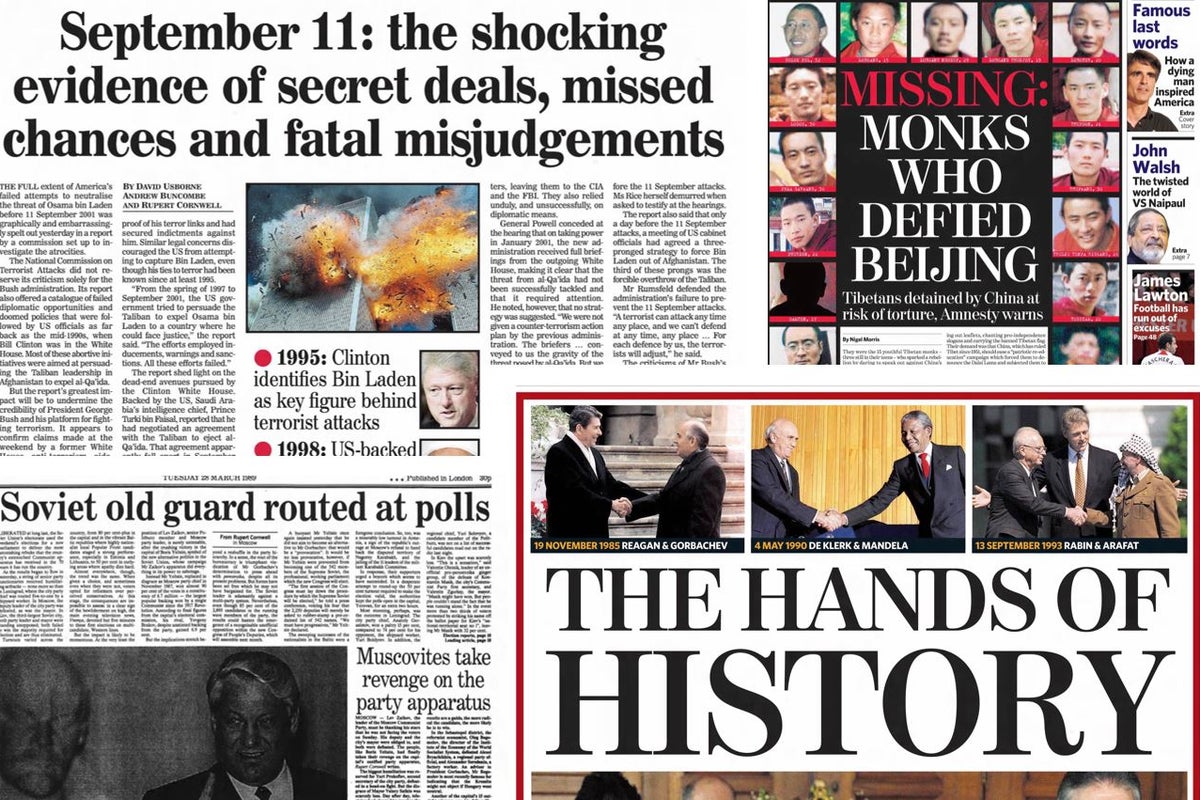
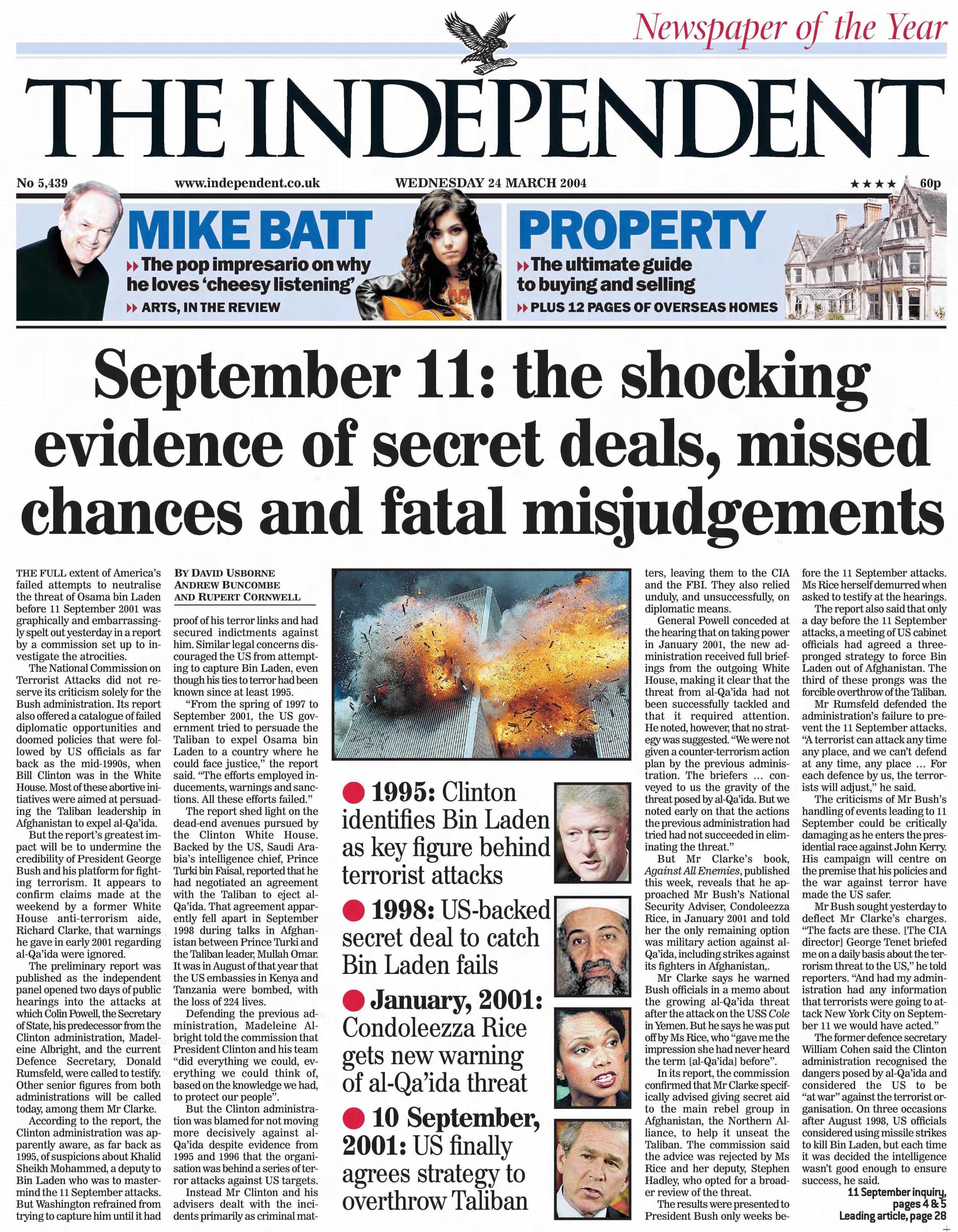
24 March 2004 – 9/11 failures exposed
A National Commission report details a decade of American intelligence failures and missed opportunities to apprehend Osama bin Laden. The investigation reveals a catalogue of misjudgements, noting that the US only agreed on a strategy to overthrow the Taliban the day before the 11 September attacks. These highly critical findings ultimately force a sweeping overhaul of the US security apparatus and the creation of the Director of National Intelligence.
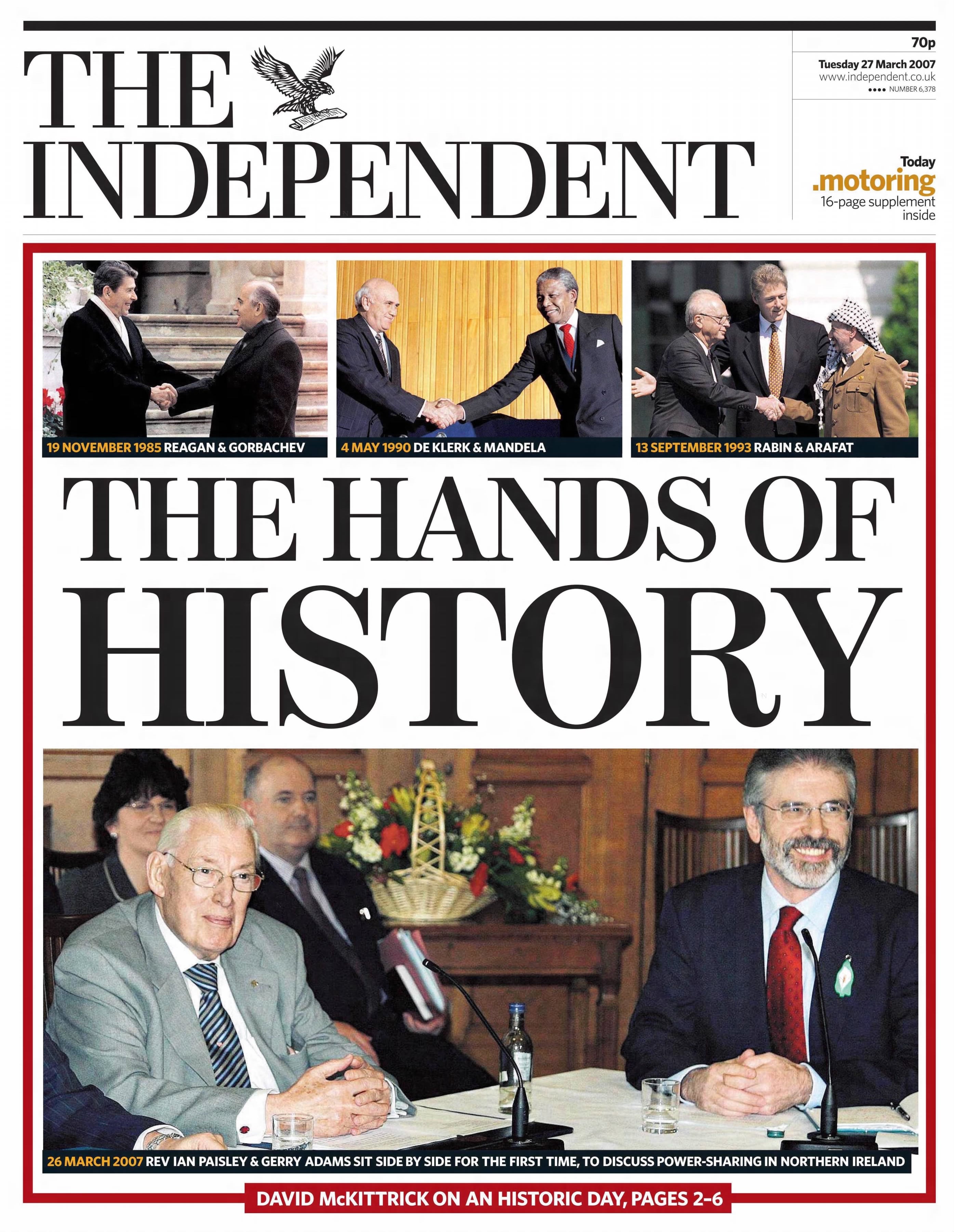
27 March 2007 – Paisley and Adams discuss power-sharing deal
In an unprecedented step for the Northern Ireland peace process, sworn adversaries Rev Ian Paisley and Gerry Adams sit side by side for the first time to agree a power-sharing executive. The Independent places the event in the context of other major diplomatic milestones, likening the breakthrough to the historic handshakes of Reagan and Gorbachev, De Klerk and Mandela, and Rabin and Arafat. The agreement paves the way for a devolved unity government at Stormont, drawing a close to decades of bitter sectarian conflict.
25 March 2008 – Concerns raised over missing Tibetan monks
Amnesty warns that 15 young Tibetan monks face a severe risk of torture after being detained by Chinese security forces. The monks, some still in their teens, disappeared shortly after holding a demonstration against Beijing's rule in the region. Their defiance helps ignite the largest Tibetan uprising in decades, drawing intense international scrutiny ahead of the 2008 Olympic Games.

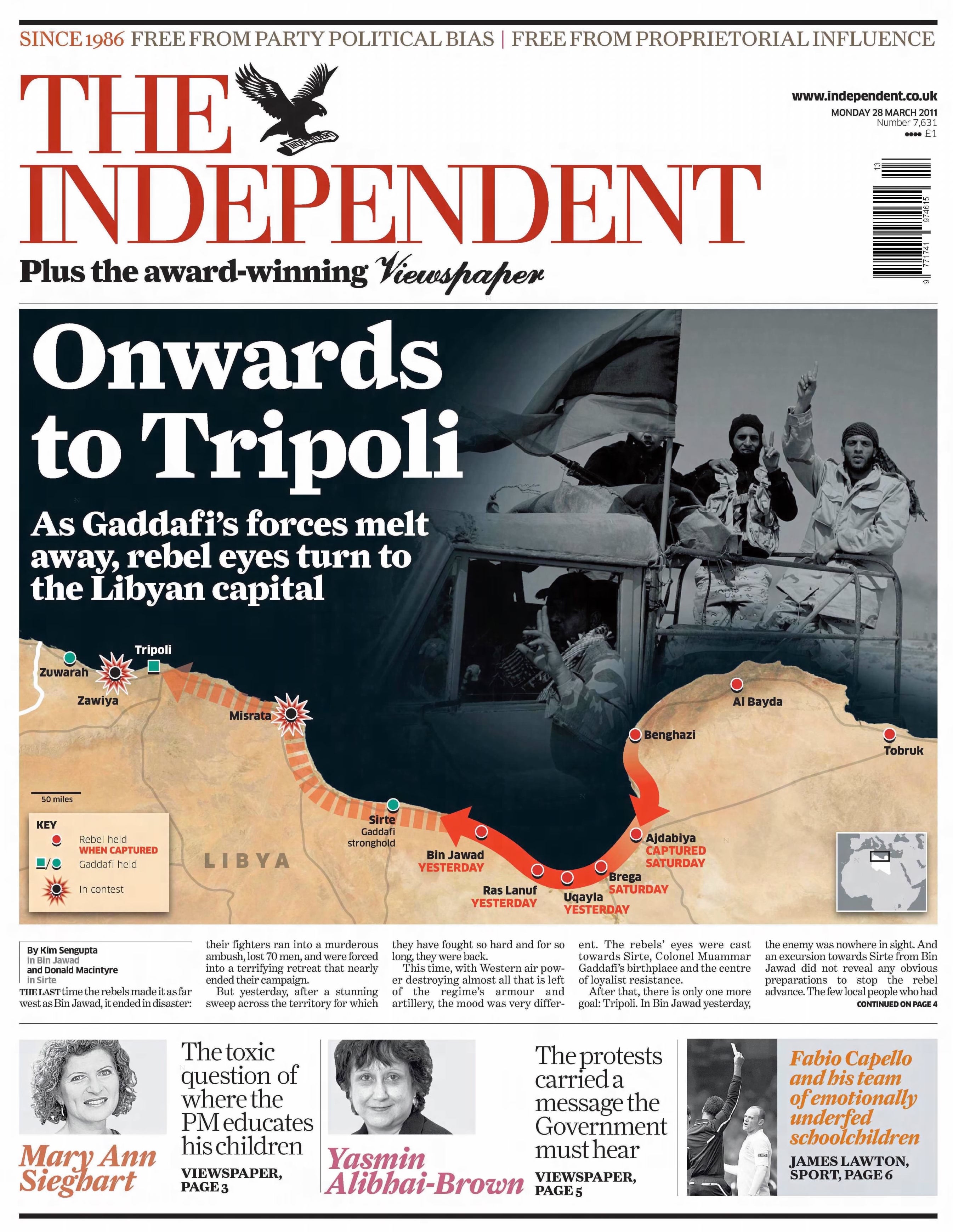
28 March 2011 – Libyan rebels advance towards Tripoli
Backed by Western air power, Libyan rebels push towards Tripoli as Muammar Gaddafi’s frontline forces begin to collapse. Opposition fighters quickly set their sights on the dictator's birthplace of Sirte after international strikes decimate the regime's remaining artillery. Although the capital eventually falls to the uprising, the ousted leader remains alive and in hiding until he is captured and killed seven months later.