This week, we revisit the dramatic reshaping of Europe – the internal purges of the post-Soviet era, the slashing of global nuclear stockpiles, and the anxious but peaceful ‘Velvet Divorce’ of Czechoslovakia. Meanwhile, closer to home, the front pages document staggering breaches of public trust, revisiting the dawn-raid arrests of Robert Maxwell's sons over missing pension funds and the notorious, heavily censored release of MPs' expenses. All this and more is charted across the front pages of The Independent.
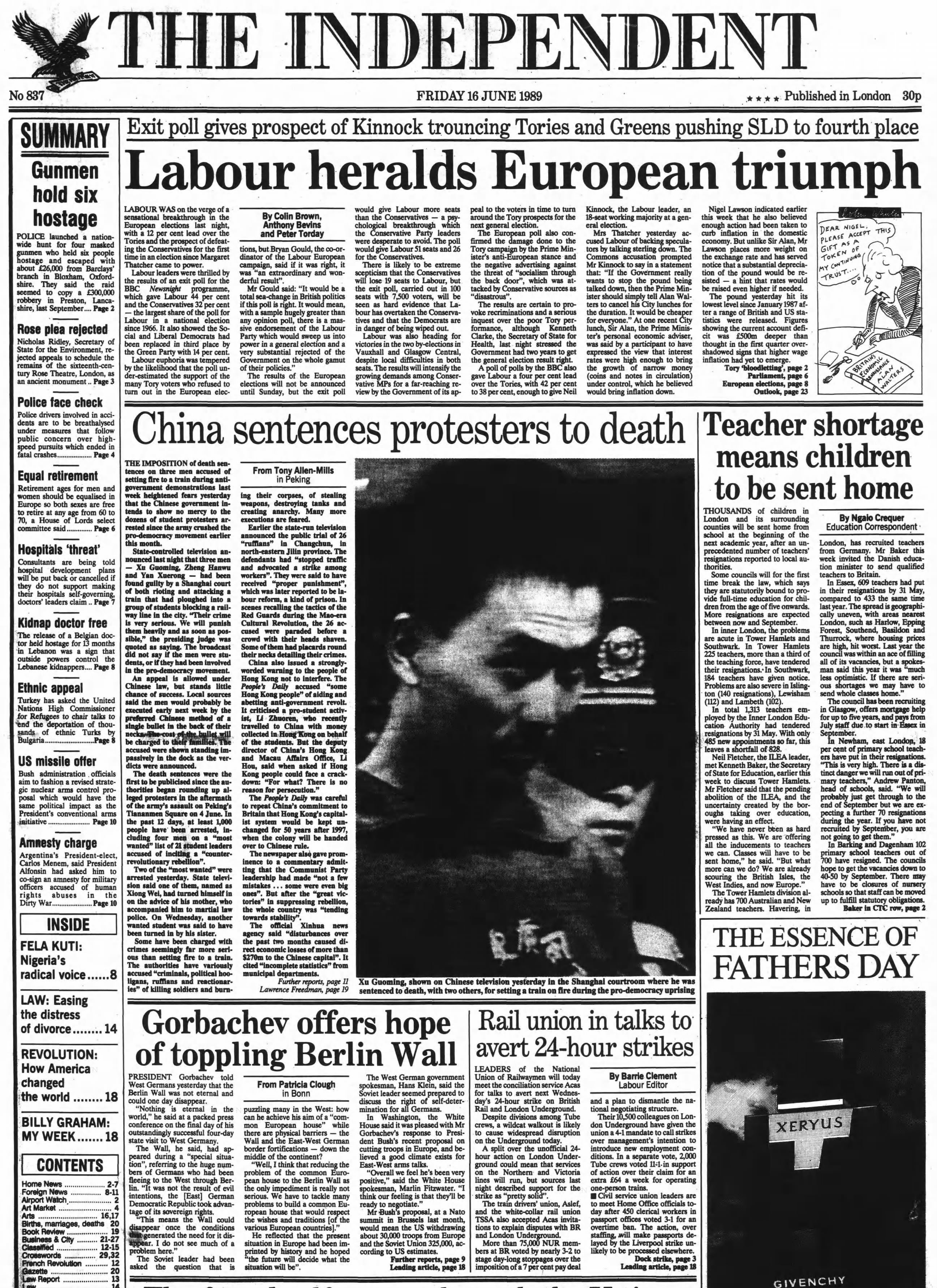
16 June 1989 – China sentences protesters to death as Gorbachev hints Wall could fall
Following the military crackdown in Tiananmen Square, the Chinese government hands down death sentences to three men accused of arson during anti-government demonstrations. The harsh penalties heighten fears for the safety of pro-democracy students. Also on the front page, Soviet leader Mikhail Gorbachev tells a West German press conference that the Berlin Wall is "not eternal," quietly foreshadowing the dramatic changes that would sweep Europe later that year.
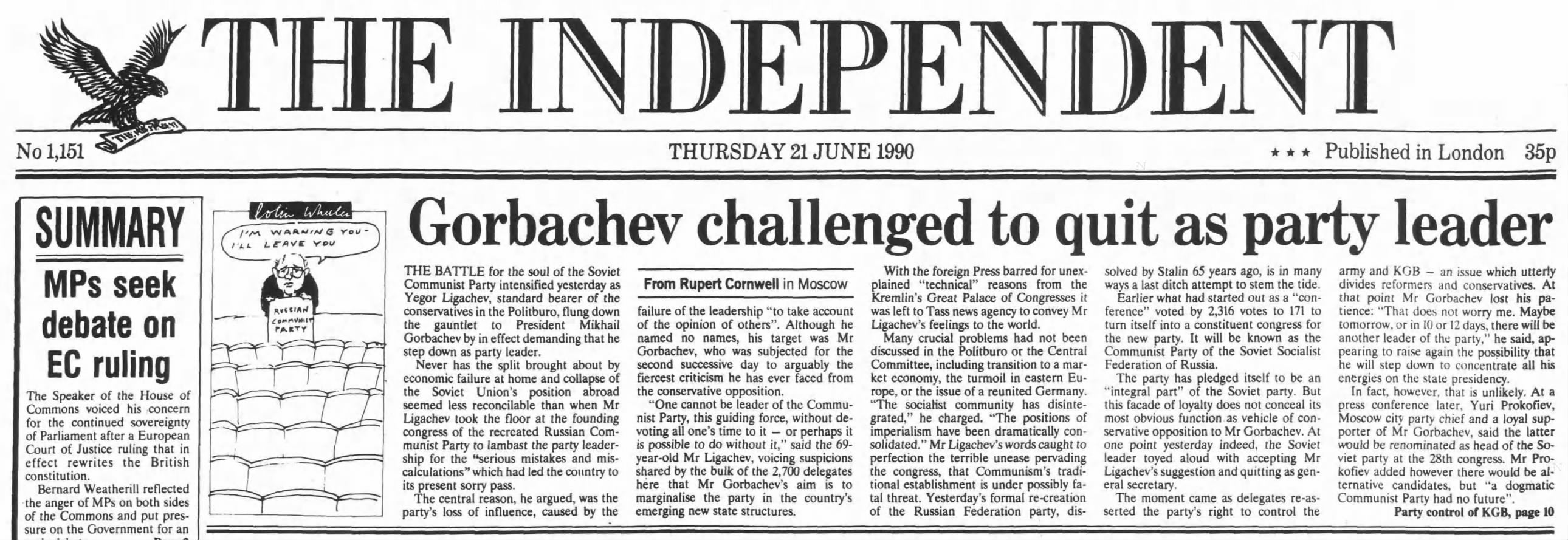
21 June 1990 – Gorbachev challenged to step down as party leader
The internal struggle over the future of the Soviet Communist Party intensifies as conservative hardliner Yegor Ligachev effectively demands that Mikhail Gorbachev resign as party leader. The extraordinary public challenge from within the Politburo highlights the growing resistance to Gorbachev's political reforms and exposes deep ideological fractures within the Soviet establishment.
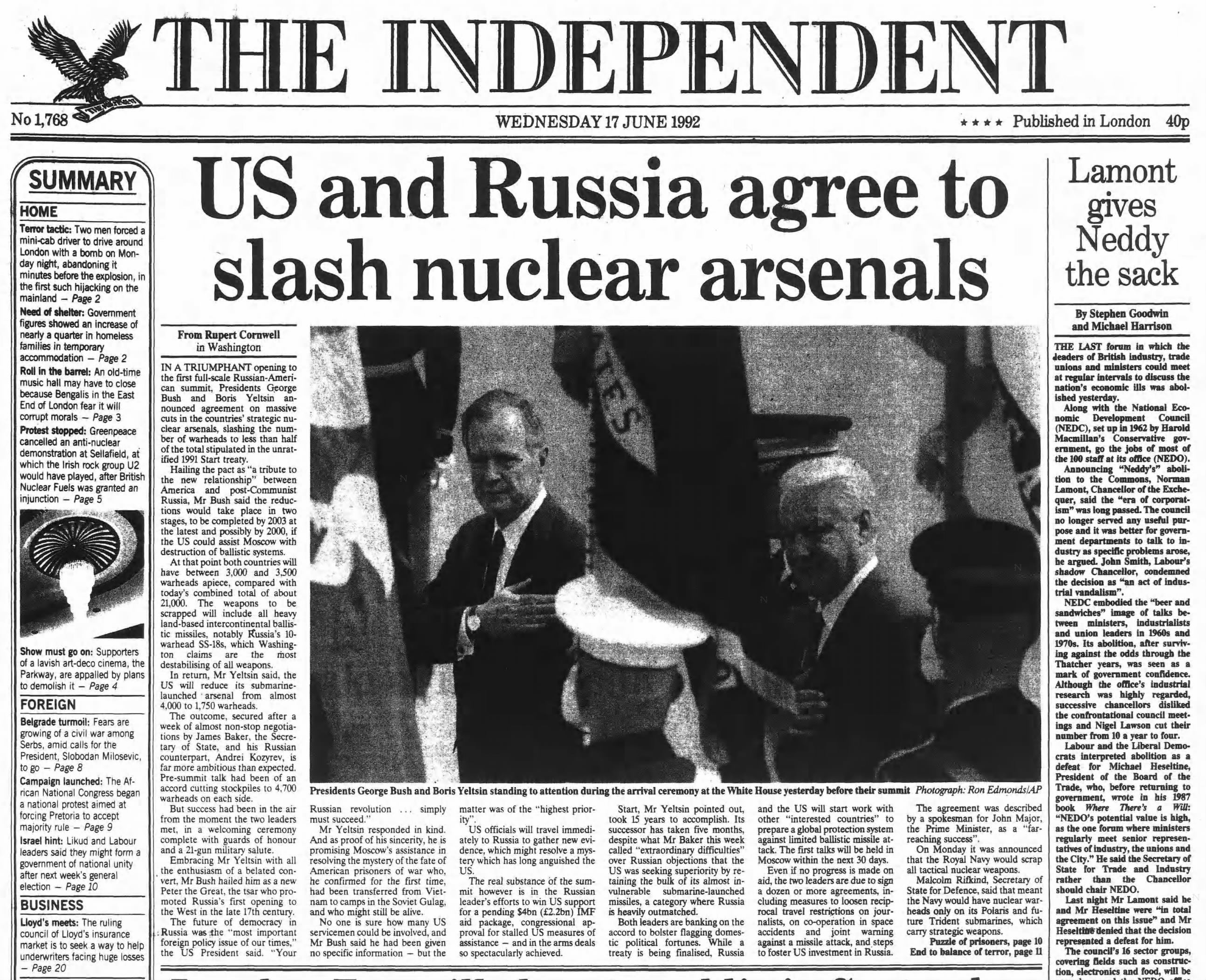
17 June 1992 – US and Russia agree to slash nuclear arsenals
In a defining moment for post-Cold War diplomacy, US President George H.W. Bush and Russian leader Boris Yeltsin agree to sweeping reductions in their strategic nuclear arsenals. The landmark deal pledges to slash the number of warheads to less than half the total outlined in the unratified 1991 START treaty, marking a triumphant milestone in post-Cold War relations.
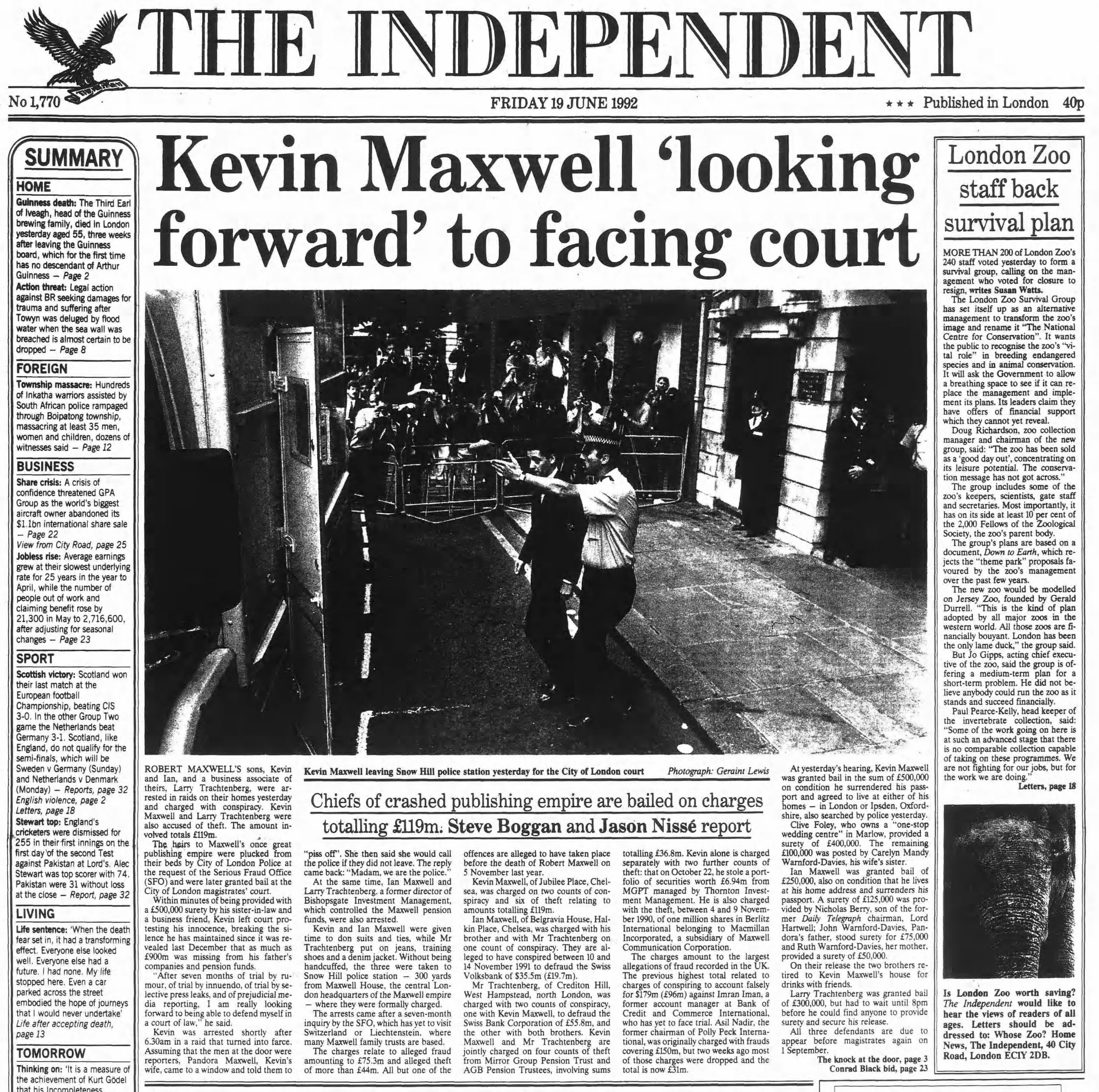
19 June 1992 – Robert Maxwell’s sons face conspiracy charges
Following the mysterious death of media tycoon Robert Maxwell and the subsequent collapse of his empire, his sons Kevin and Ian are arrested in dawn raids. Charged with conspiracy and theft relating to £119 million siphoned from company pension funds, the arrests mark a dramatic escalation in the national scandal. However, following one of the longest and most expensive fraud trials in British history, the brothers would ultimately be acquitted in 1996.
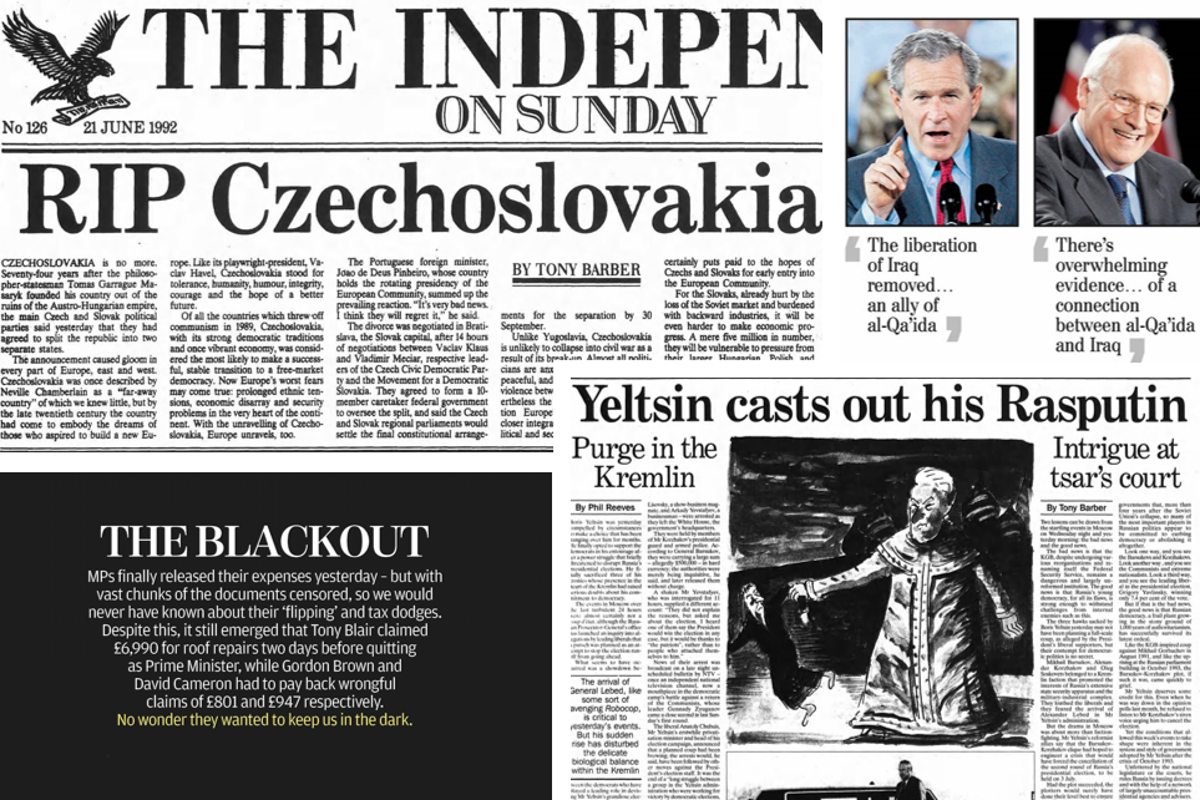
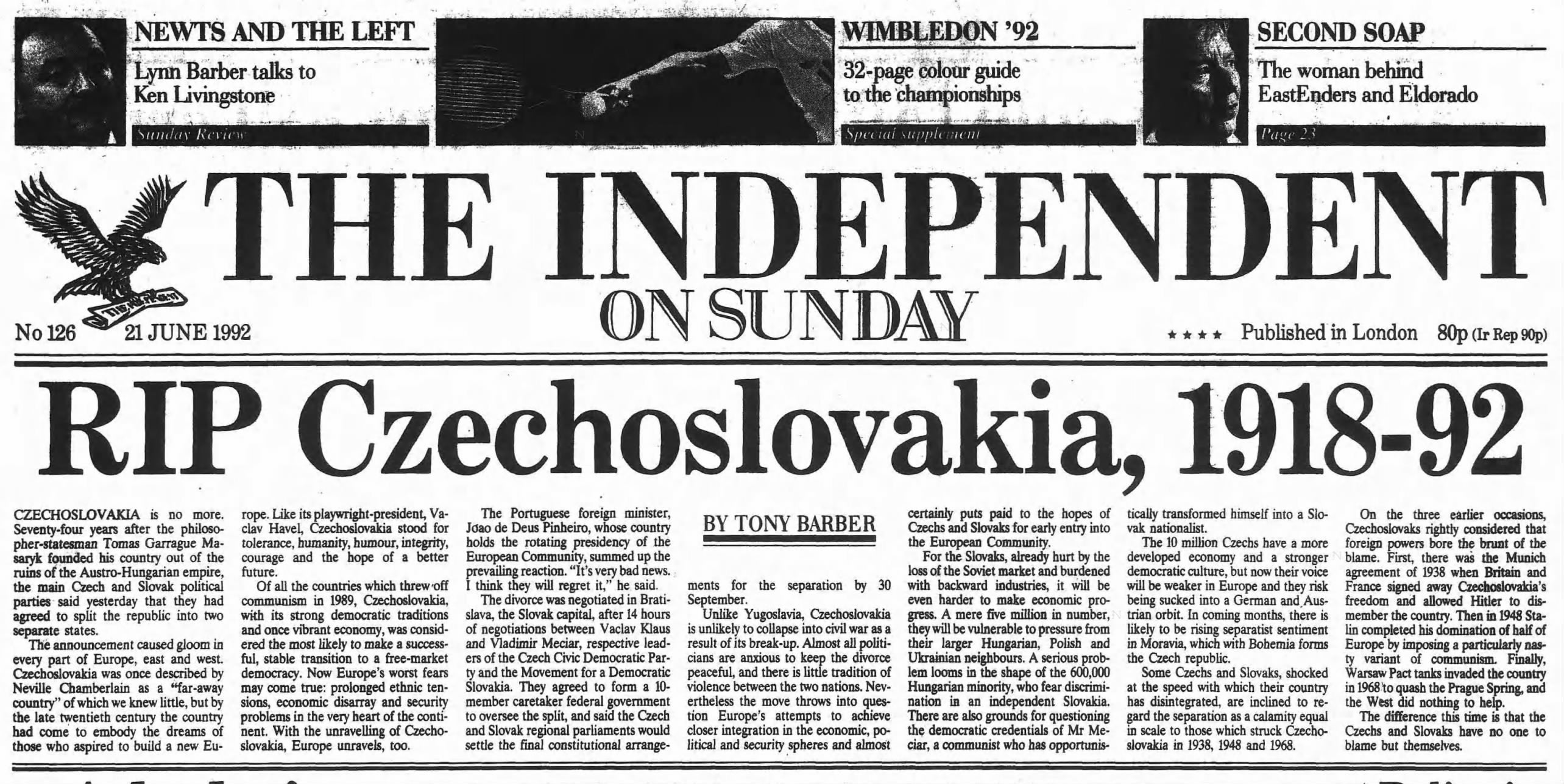
21 June 1992 – Czechoslovakia agrees to split
Czech and Slovak political parties formally agree to divide Czechoslovakia into two separate states, prompting alarm over the potential for prolonged ethnic conflict and economic collapse in the heart of Europe. Defying these forecasts, the separation on January 1, 1993, later dubbed the "Velvet Divorce", becomes a historic model of peaceful dissolution, with both the Czech Republic and Slovakia maintaining strong ties.
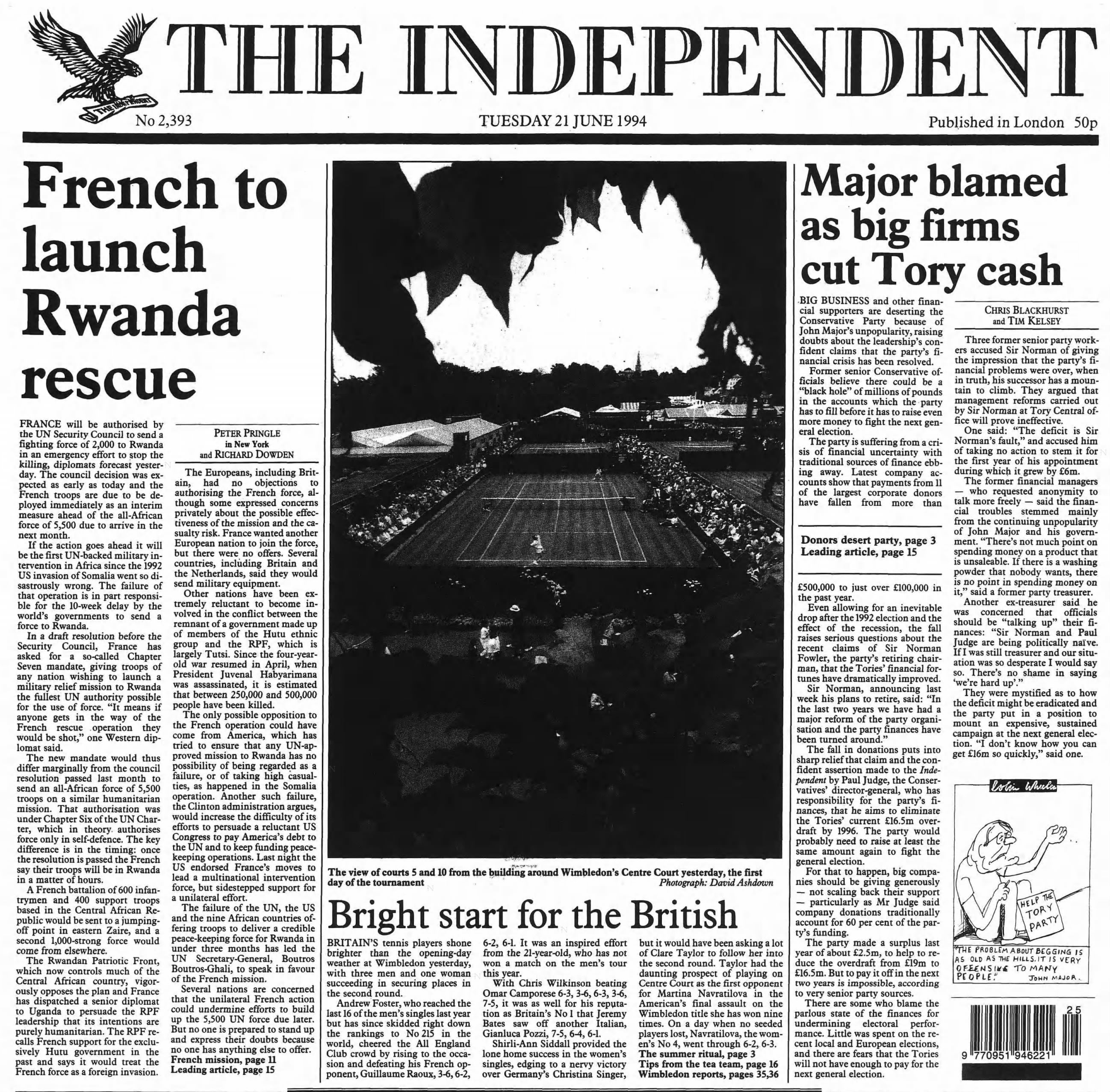
21 June 1994 – France launches military intervention in Rwanda
In a belated emergency effort to stop the spiraling slaughter in Rwanda, France prepares to deploy 2,000 troops under UN Security Council authorization. The deployment, Operation Turquoise, arrives more than two months into a genocide that would ultimately claim 800,000 lives. However, the French mission will later face intense historical scrutiny and accusations that it inadvertently allowed perpetrators to escape.
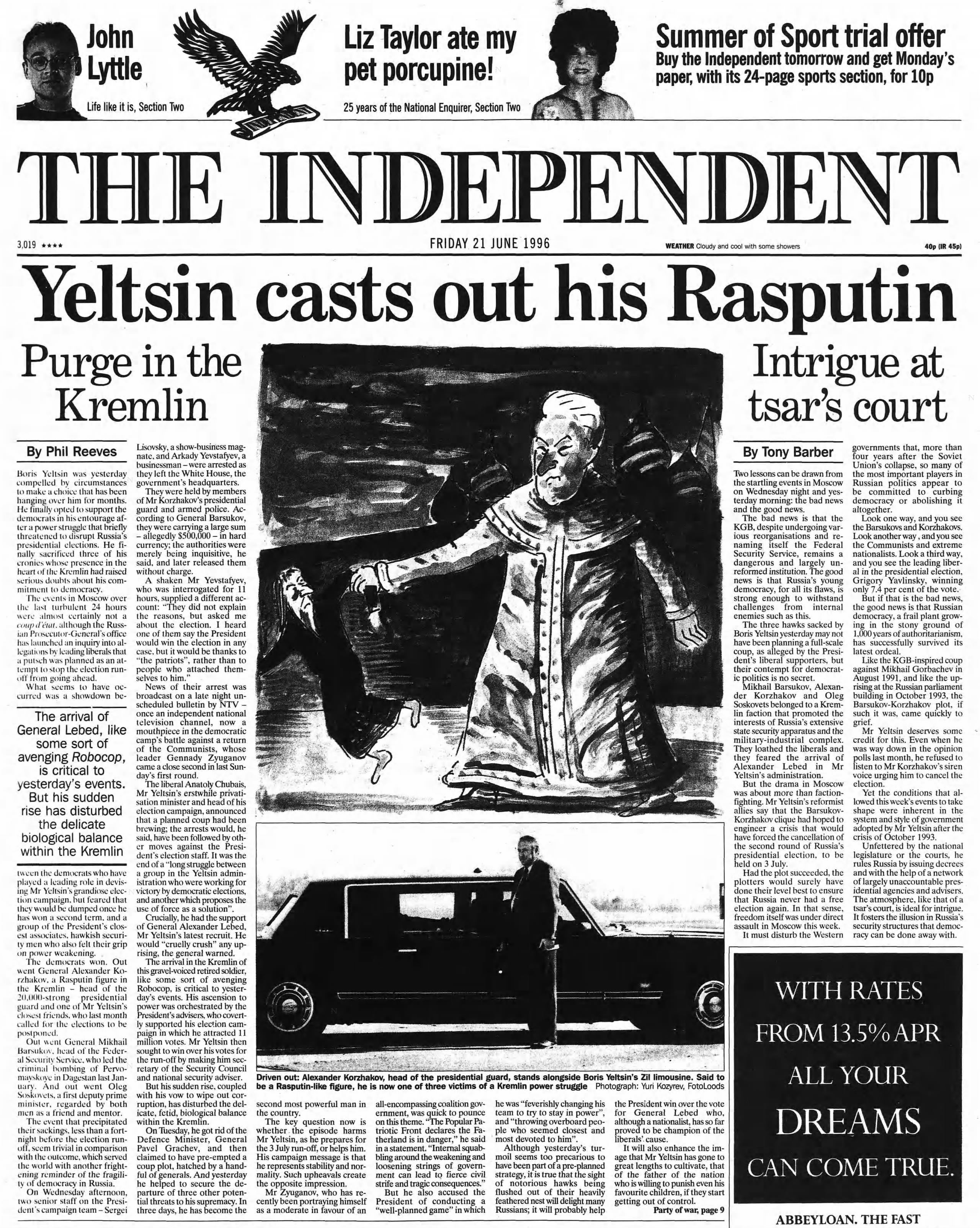
21 June 1996 – Yeltsin 'casts out his Rasputin' in Kremlin purge
In a dramatic power struggle that briefly threatens to disrupt Russia's 1996 presidential elections, Boris Yeltsin purges three powerful hardline cronies from the heart of the Kremlin. Described by The Independent as the Russian president casting out his "Rasputin," the sudden dismissals signal Yeltsin’s decisive shift toward the democratic reformists in his inner circle as he battles to secure his re-election.
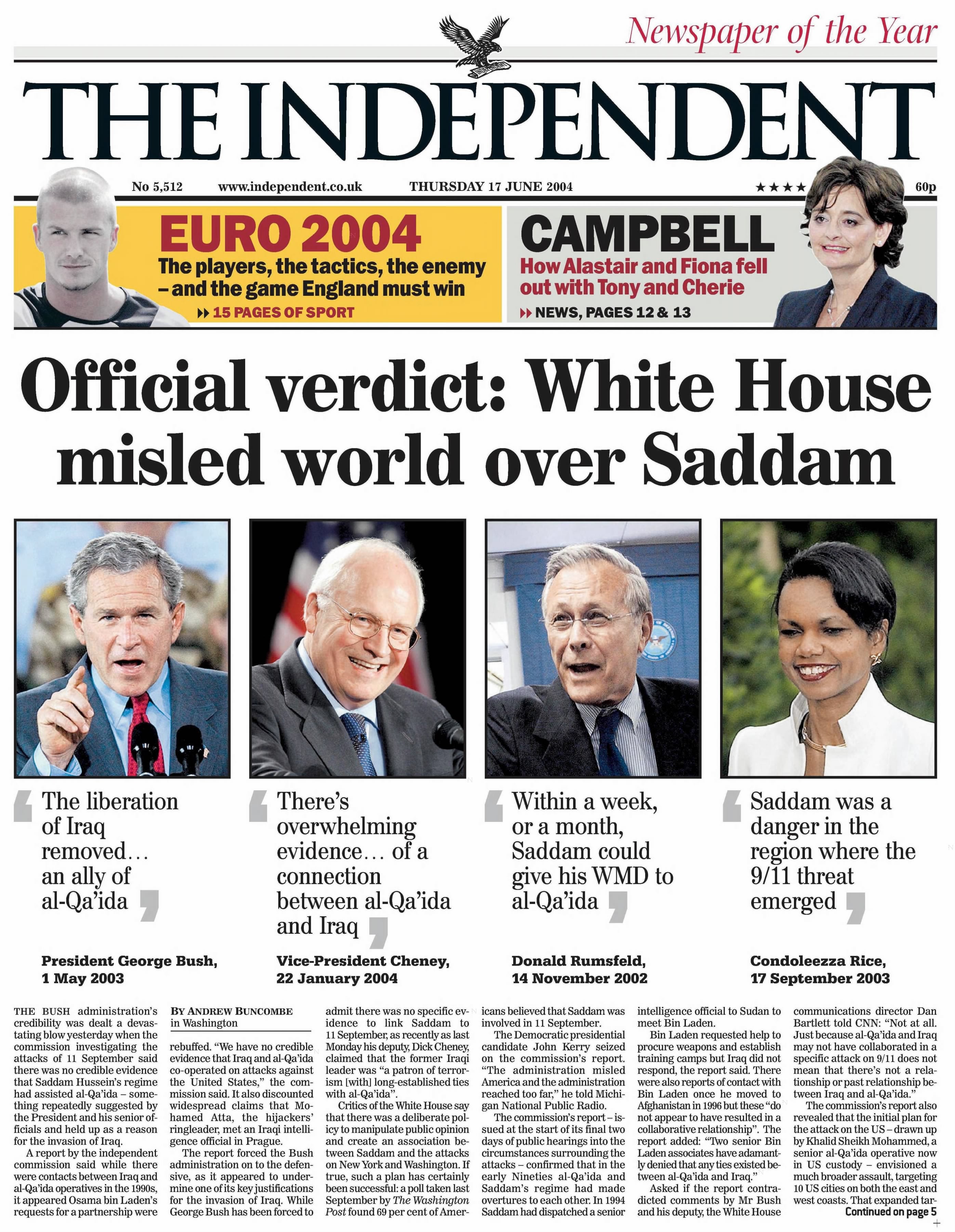
17 June 2004 – White House 'misled world' on Iraq
The Bush administration suffers a devastating blow to its credibility as the official commission investigating the September 11 attacks concludes there is "no credible evidence" of a collaborative relationship between Saddam Hussein and al-Qa'ida. The verdict directly contradicts repeated assertions made by US leadership, definitively dismantling one of the primary justifications used to launch the 2003 invasion of Iraq.
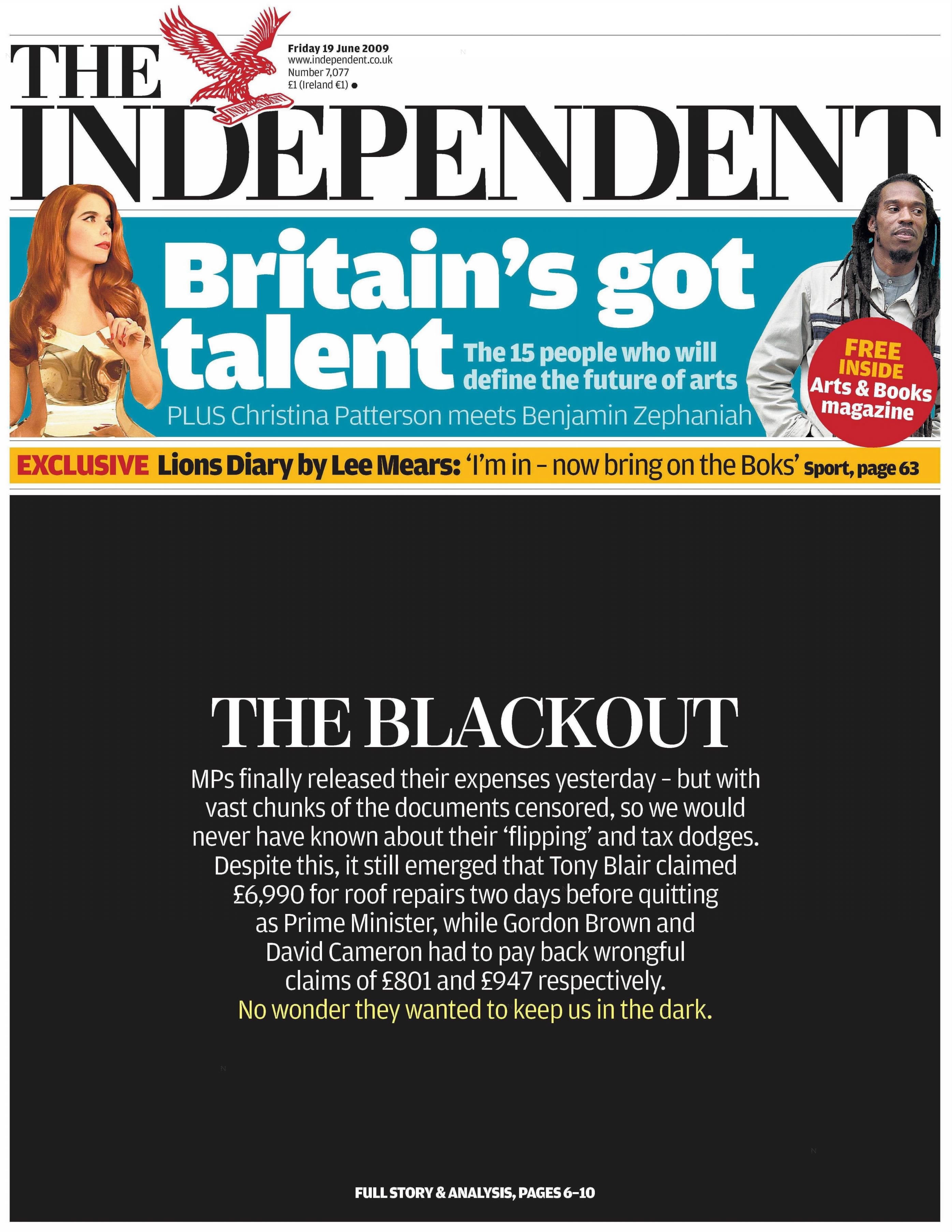
19 June 2009 – MPs release heavily censored expenses
In a widely criticized move, MPs release their official expense documents with vast sections blacked out to hide controversial claims. Despite the attempted cover-up, the files still reveal questionable spending at the very top of British politics, including former PM Tony Blair who billed the taxpayer nearly £7,000 for roof repairs.