

Stranger Things is still a hot topic amongst fans of the show – everybody in the office knows I can’t stop talking about it – but whether you liked the finale or not, you’ll love this: a flower that looks like a Demogorgon.
Unless you’re frightened of them, of course. Stapelia gigantea looks strikingly similar to the petal-faced monsters in the hit Netflix series. It’s also known as the carrion flower (more on that shortly) or, more affectionately, the starfish plant. For fans of horti-futurism, it’s one for the list.
Stapelias are tender plants, which is why it can be difficult to grow them here in the UK. Under the right conditions, though, it’s possible – but there are a few caveats. If you’re up for a challenge (and so is your nose), here’s what you need to know.
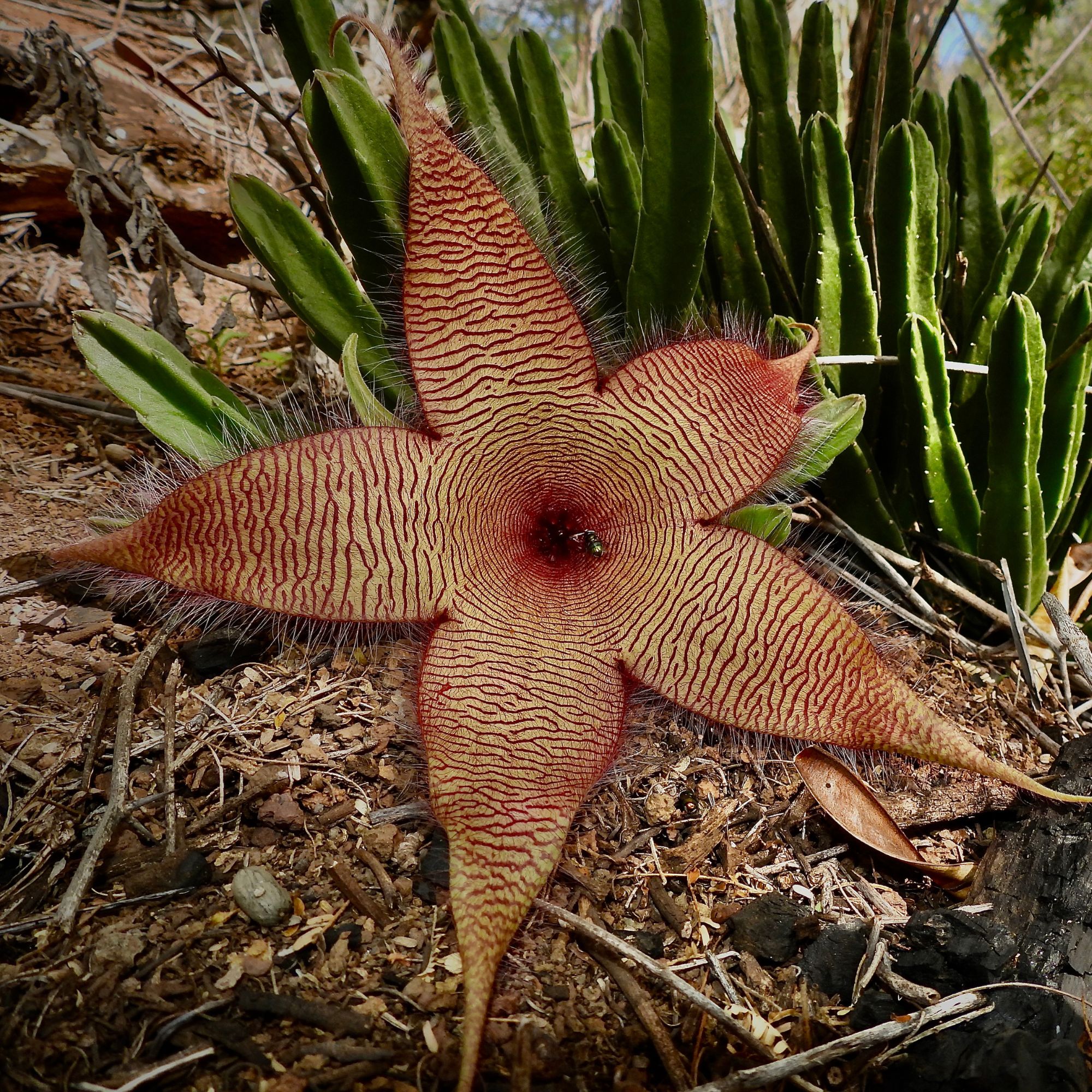
Stapelias don’t just vaguely resemble Demogorgons – when I first saw one, I thought I was staring at the face of the Upside Down monster itself.
We’re not in Hawkins, though – and in reality, stapelias are a type of succulent plant that produces huge, starfish-shaped flowers.
The plant is so rare in the UK, it’s hard to find the seeds – but you can grab Stapelia gigantea seeds from this Etsy seller, who has stellar reviews.
Now, I mentioned earlier that Stapelia gigantea is often referred to as the ‘carrion flower’, and unfortunately, the plant lives up to its nickname: the blooms are renowned for their rotten smell, which attracts flies for pollination.
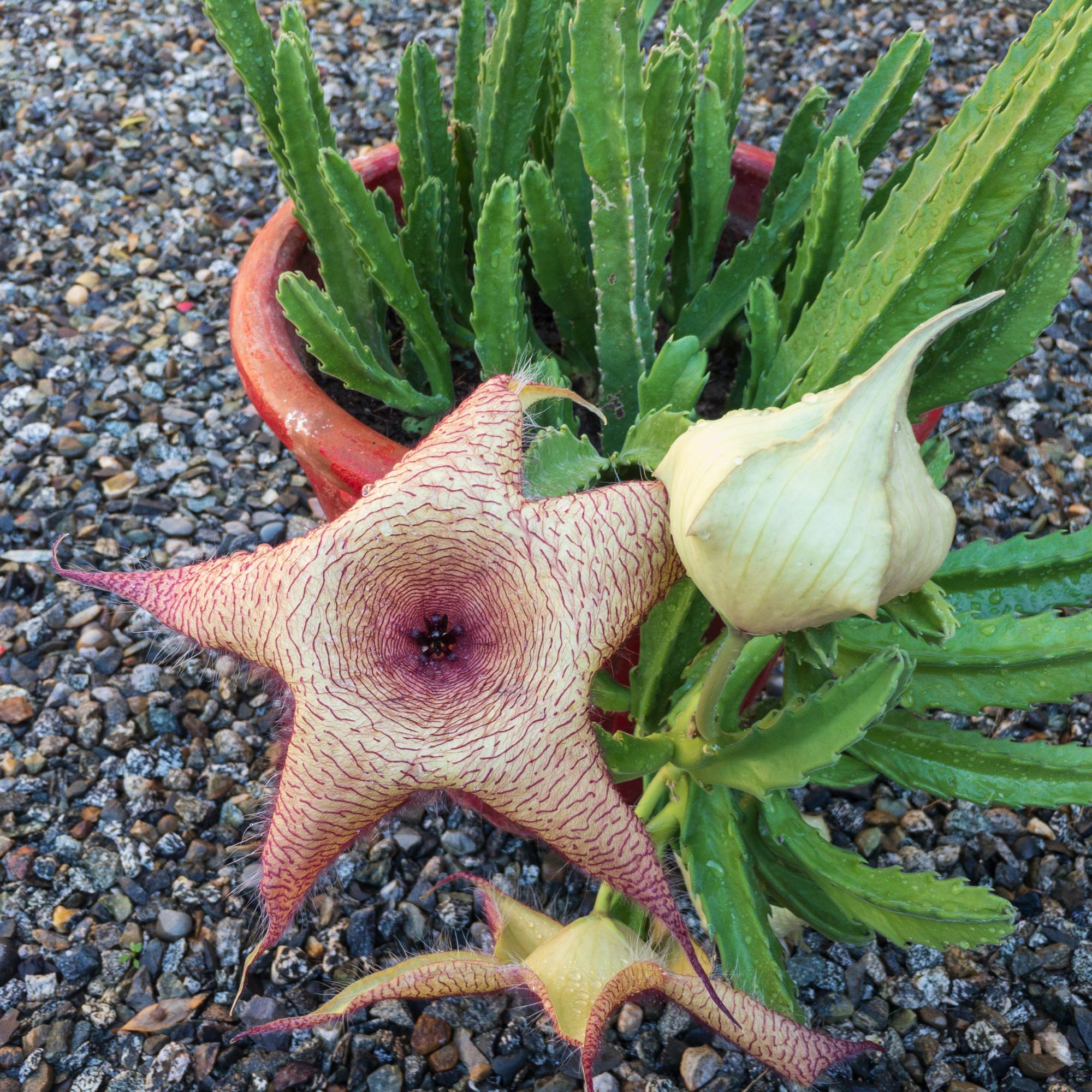
That sounds like a bad thing – and if you’ve got a sensitive nose, it probably is – but many gardeners say it’s a great way to feed the local birds. Plus, the smell is more noticeable up close, and it's nothing compared to the scent of a corpse lily or titan arum (now those are plants you wouldn’t want in your garden).
If that’s enough to put you off, there are a few other succulents that produce similar blooms with a slightly weaker smell.
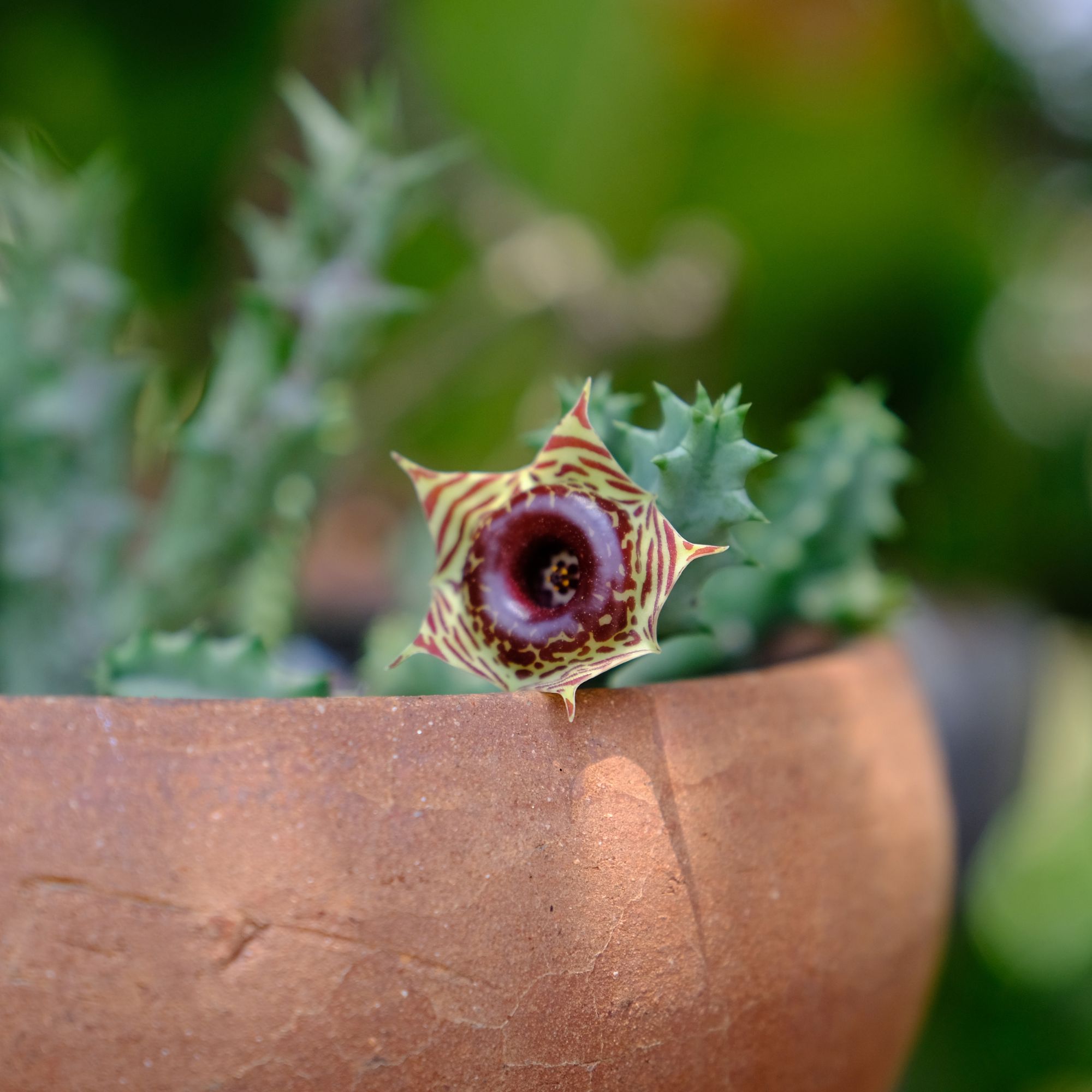
Huernia hystrix, for example, produces smaller flowers shaped like Demogorgon heads. ‘Porcupine Huernia’, also sold by PlantsAndSucculents on Etsy, is just as unusual-looking, with brilliant germination rates. People often grow huernias as houseplants, and say they can’t smell the flowers unless they’re really close to them – but if you’d rather not have to figure out how to keep flies off houseplants, it might not be worth the risk.
How to grow Stapelia gigantea in the UK
Well, I’ve warned you about the smell – but for those of you who are still keen to give stapelias a try, I asked the experts for a few growing tips.
As I said before, stapelias are tender plants, so they aren’t suited to growing outside like other outdoor succulents in the UK.
‘Due to our climate of mild, wet winters and warm, wet summers, for this succulent to thrive, you need to grow it indoors, in either a well-ventilated, heated greenhouse or conservatory,’ advises Lucie Bradley, gardening and greenhouse expert at Easy Garden Irrigation.
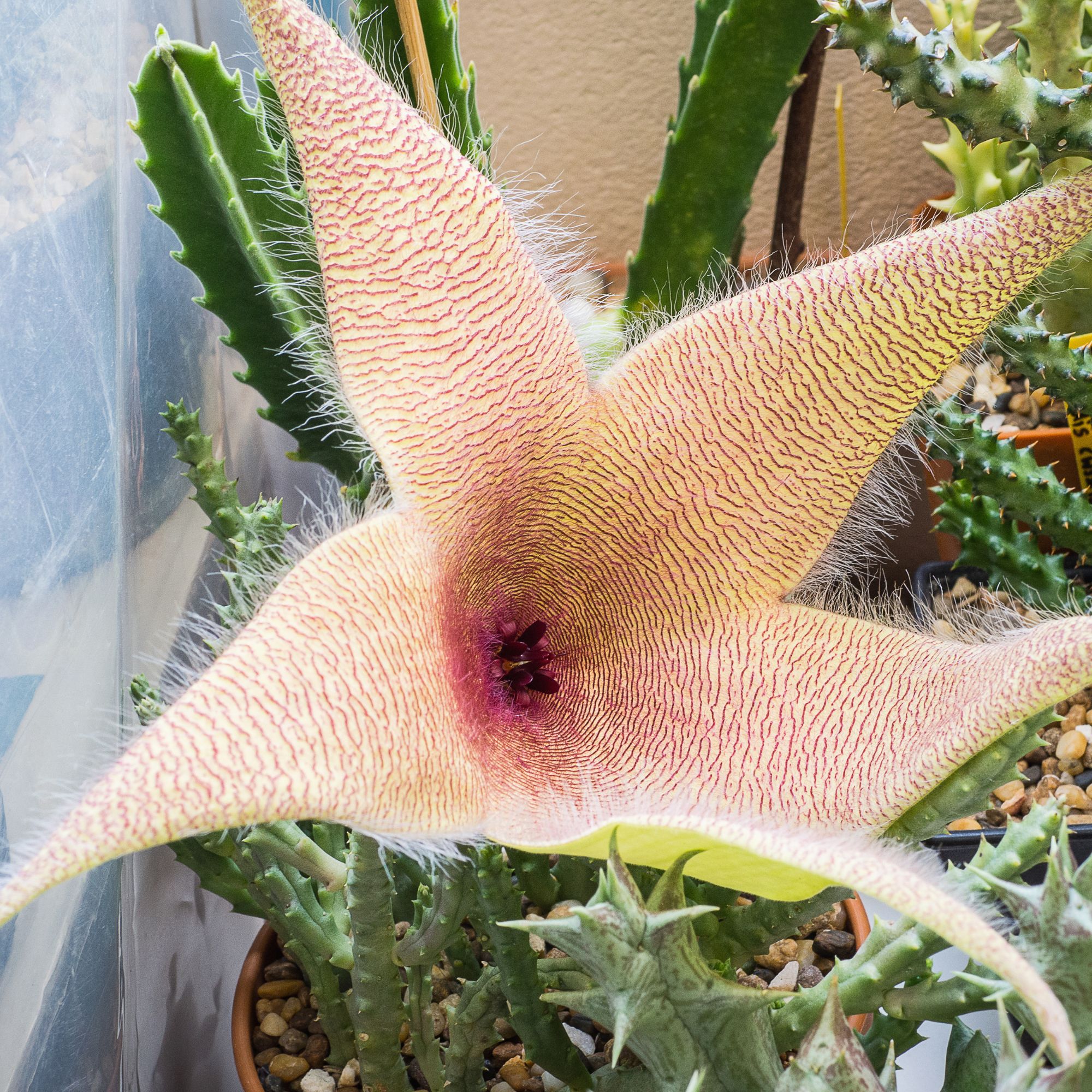
Lucie warned me about the smell, too, citing the enormous flowers that can reach up to 40cm in diameter. It might not be the best choice for a houseplant, anyway.
A greenhouse, then, is your next best option. You’ll need to use specialised cactus and succulent compost (try Miracle-Gro Peat Free Cactus, Succulent and Bonsai Compost from Amazon), Lucie says, and add grit or perlite for extra drainage.
Stapelias are prone to rot (overwatering is one of the most common succulent care mistakes), so Thompson & Morgan’s horticultural writer, Annelise Brilli, recommends the ‘drought and drench approach’.
‘Water thoroughly but infrequently, always allowing the compost to dry out completely between waterings,’ she advises.
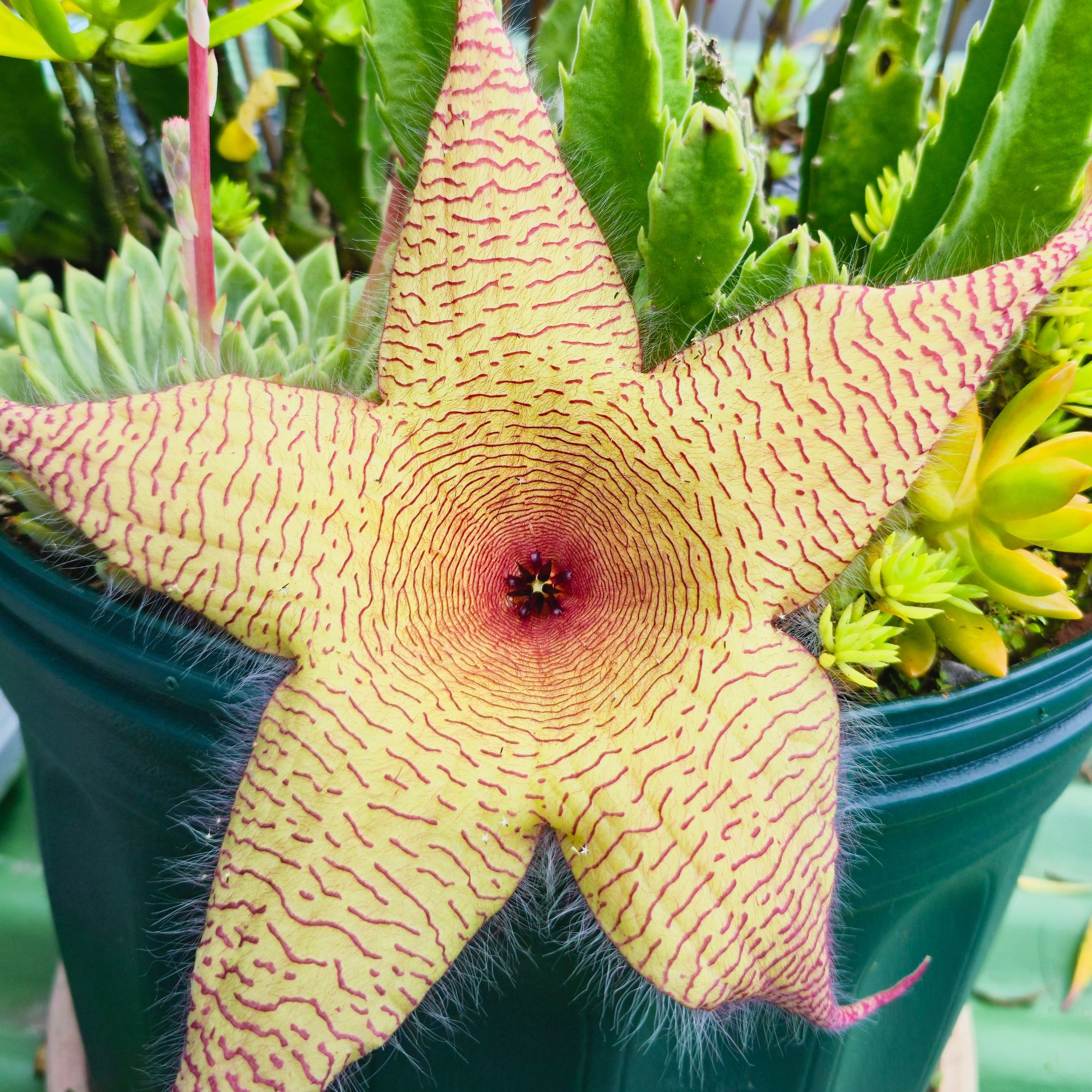
If you do decide to try growing Stapelia gigantea outdoors, you’ll need to bring the plant inside over winter and scale the watering right back to none.
‘Stapelias hate the combination of cold and wet, so as soon as temperatures cool, stop watering and keep your plant completely dry over winter, maintaining a minimum temperature of 10°C,’ says Annelise.
Tender plant essentials
Heated propagators can boost germination rates, especially for tender plant seeds.
Or, place a seed tray on top of a seedling heat mat (just don't leave it unattended).
It might be one that you grow for fun, enjoy the novelty, and then give away to a plant enthusiast who can handle the smell – but regardless, I think Stapelia gigantea is a really interesting plant. I mean, what Demogorgon-esque flower wouldn’t be?