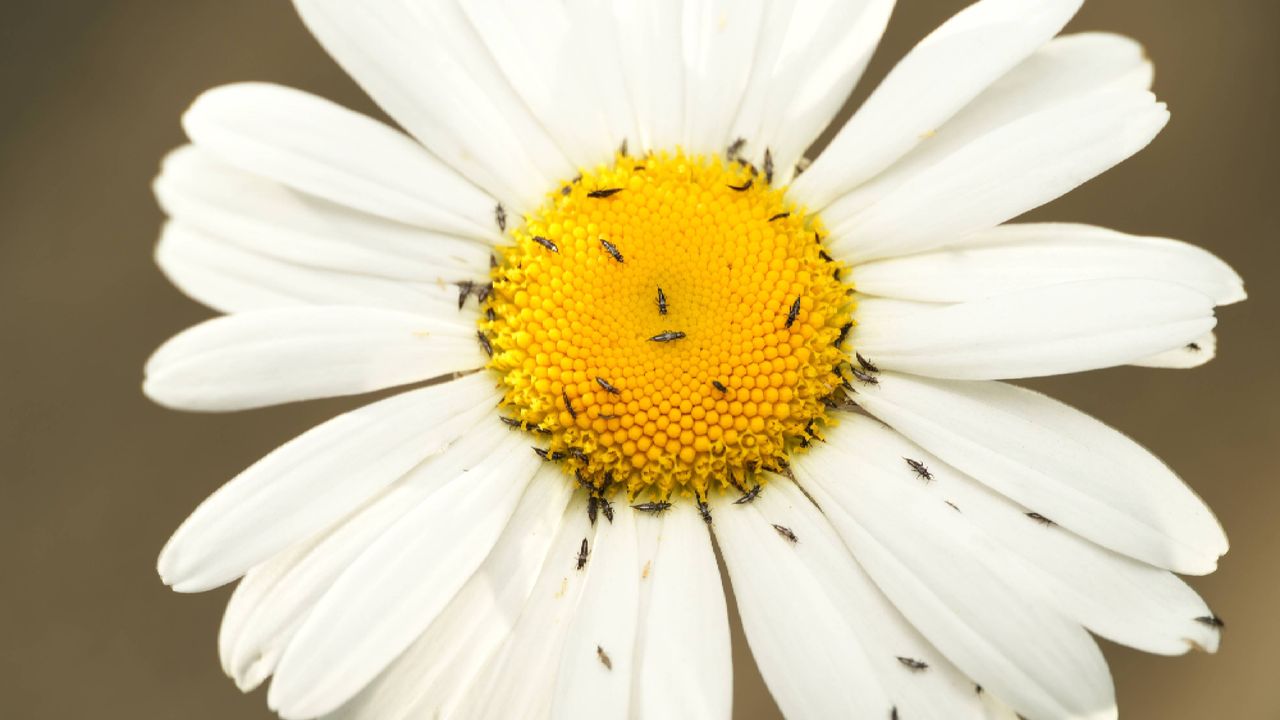
Thrips are so small you can barely see them without magnification. At less than 1mm long, they're barely visible to the naked eye. Yet they cause damage so obvious you can't miss it.
The frustrating part is identifying what's causing the damage because thrips hide between petals and under leaves where you can't easily spot them. By the time you realize something's wrong with your plants, thrips have already established themselves. They feed continuously, suck out plant tissue, and reproduce quickly.
Catching thrips early makes them manageable. The challenge is knowing what you're looking for and acting fast before populations explode. Here's how to identify thrips and eliminate them before they wreck your garden.
What thrips are and how to spot them
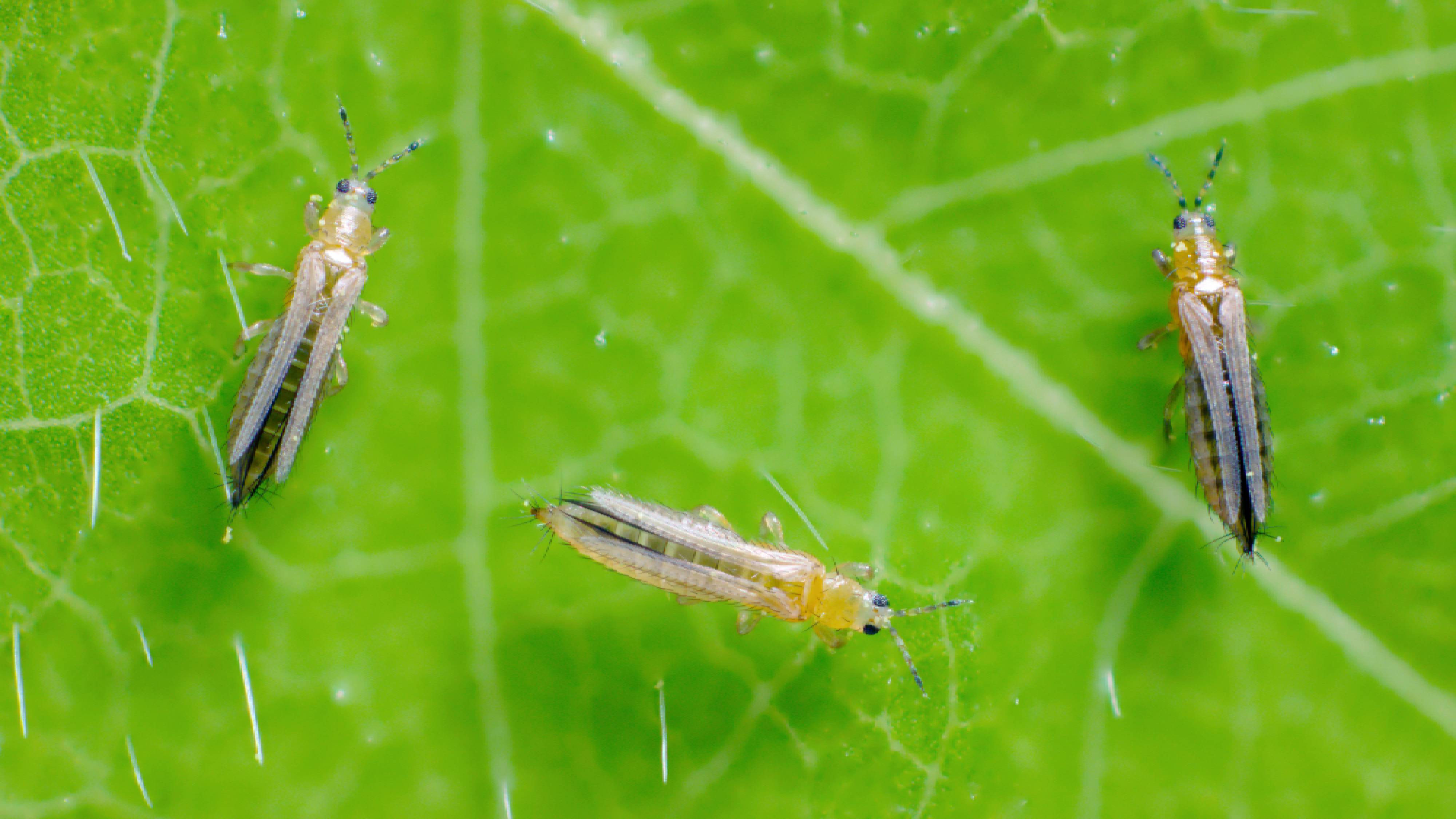
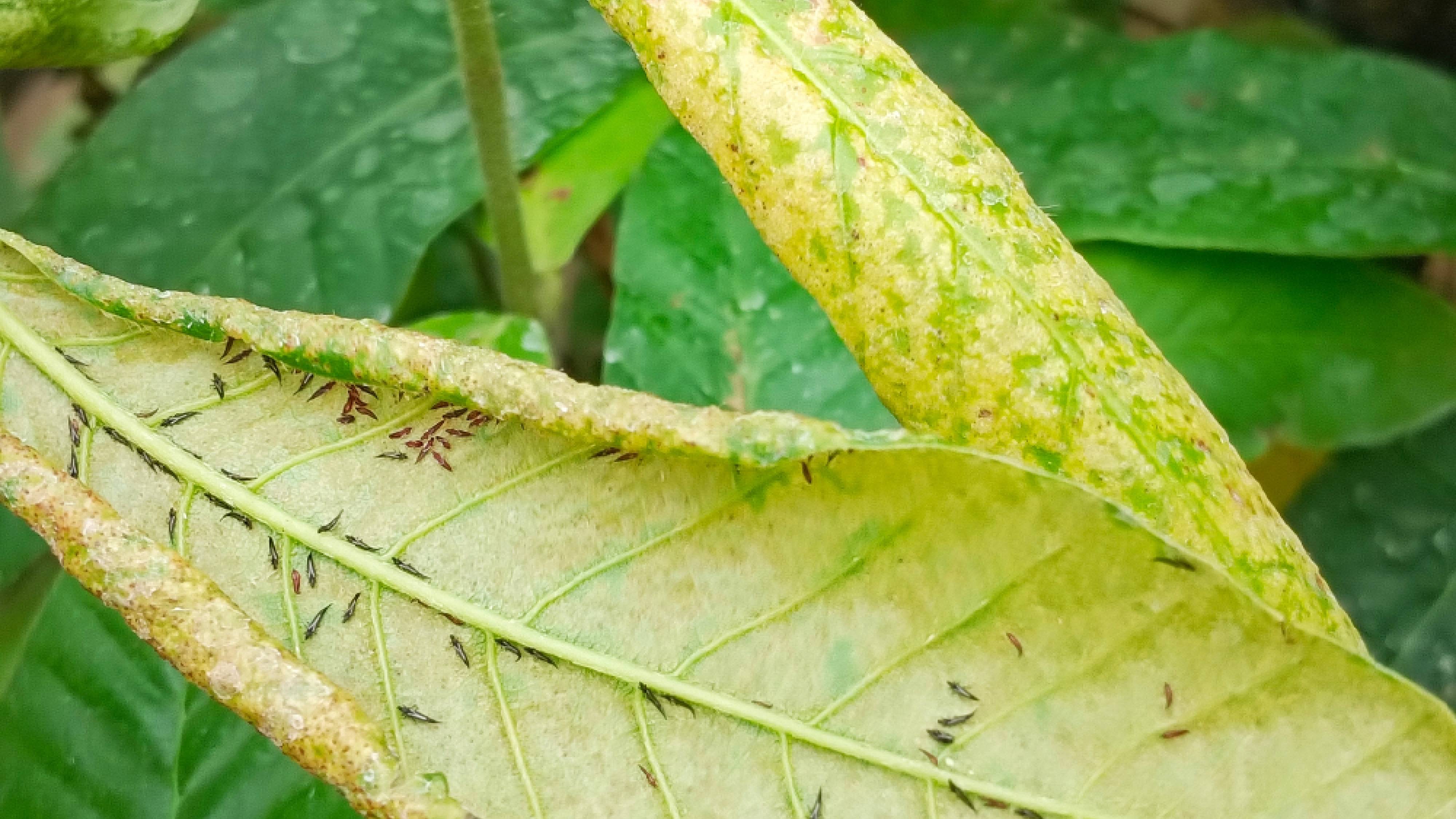
Thrips are slender insects barely visible at 1–2mm long that hide between flower petals, under leaves, and in new growth. To check for them, hold a sheet of white paper under a flower or leaf and tap the plant — any thrips will fall onto the paper where they're easy to see.
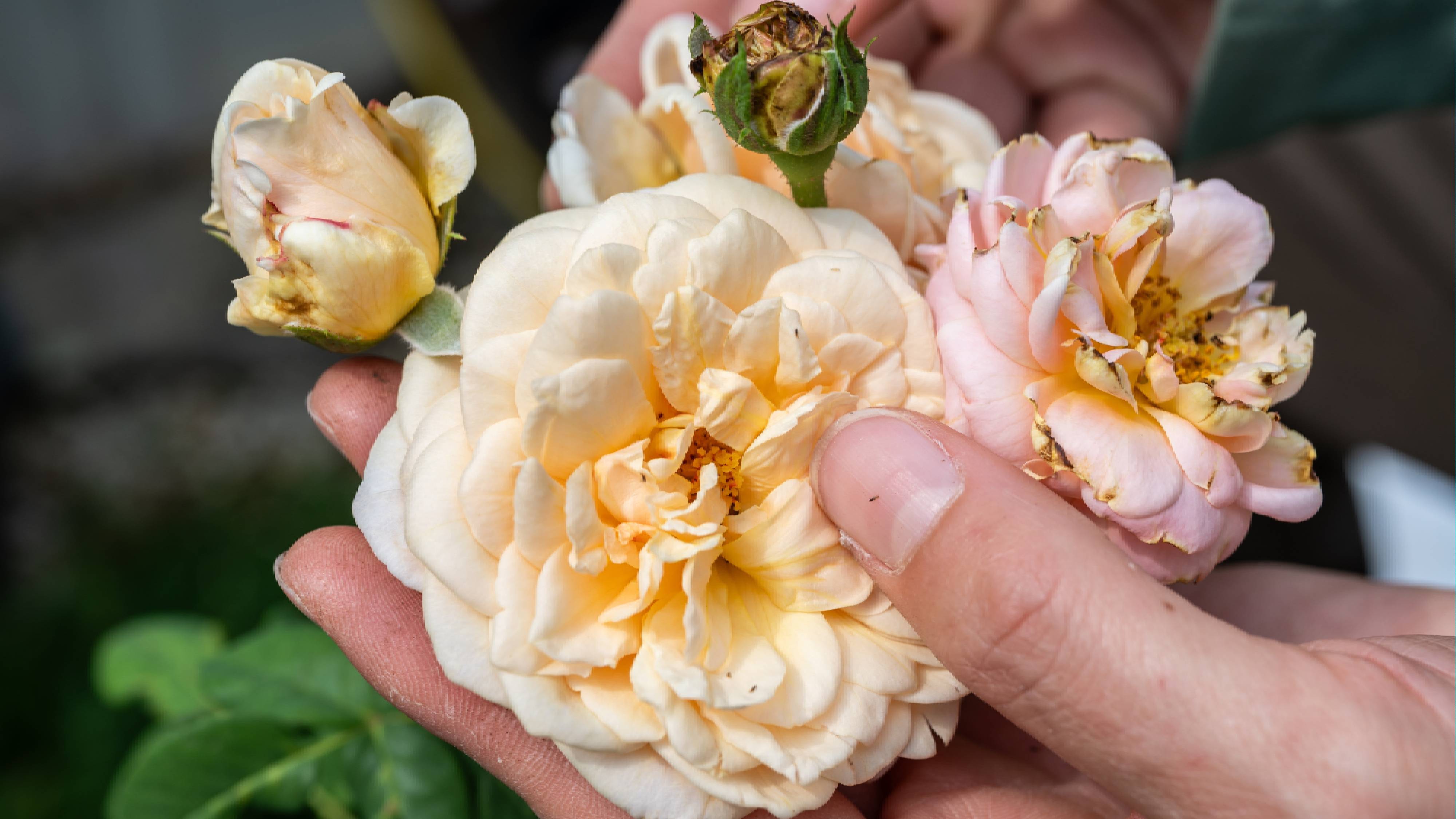
Their rasping mouthparts pierce plant tissue and remove pigmentation, creating silvery patches on leaves and stippling on flowers, along with brown petal edges and distorted growth. A telltale sign is the tiny dark fecal specks they leave scattered across damaged areas. If you see those alongside discoloration, thrips are almost certainly the culprit.
Some species also transmit tomato spotted wilt virus, which has no cure and requires immediate removal of infected plants. Yellow sticky cards placed near plants can alert you to an infestation before damage becomes obvious, as catching them early on is critical.
How to identify thrips before they cause major damage
1. Inspect plants regularly
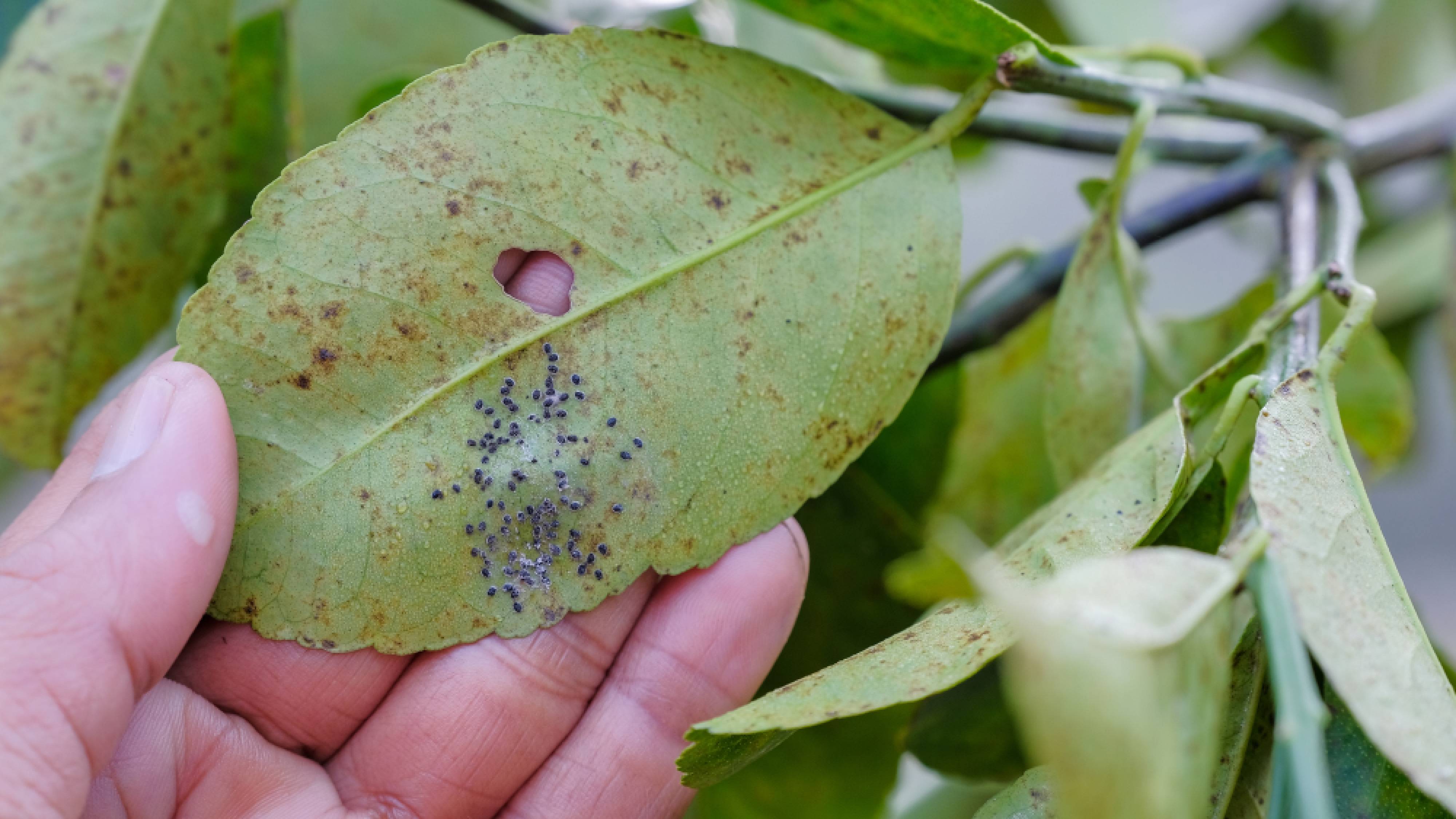
Start by checking plants every few days, especially new growth and flowers. Early detection means smaller populations and easier control. The sooner you catch an infestation, the more options you have.
2. Remove thrips manually
Spray upper and lower leaf surfaces with a strong stream of water multiple times daily, or wipe them off with a wet paper towel. This approach works well for light infestations and avoids any chemical intervention.
3. Encourage beneficial insects
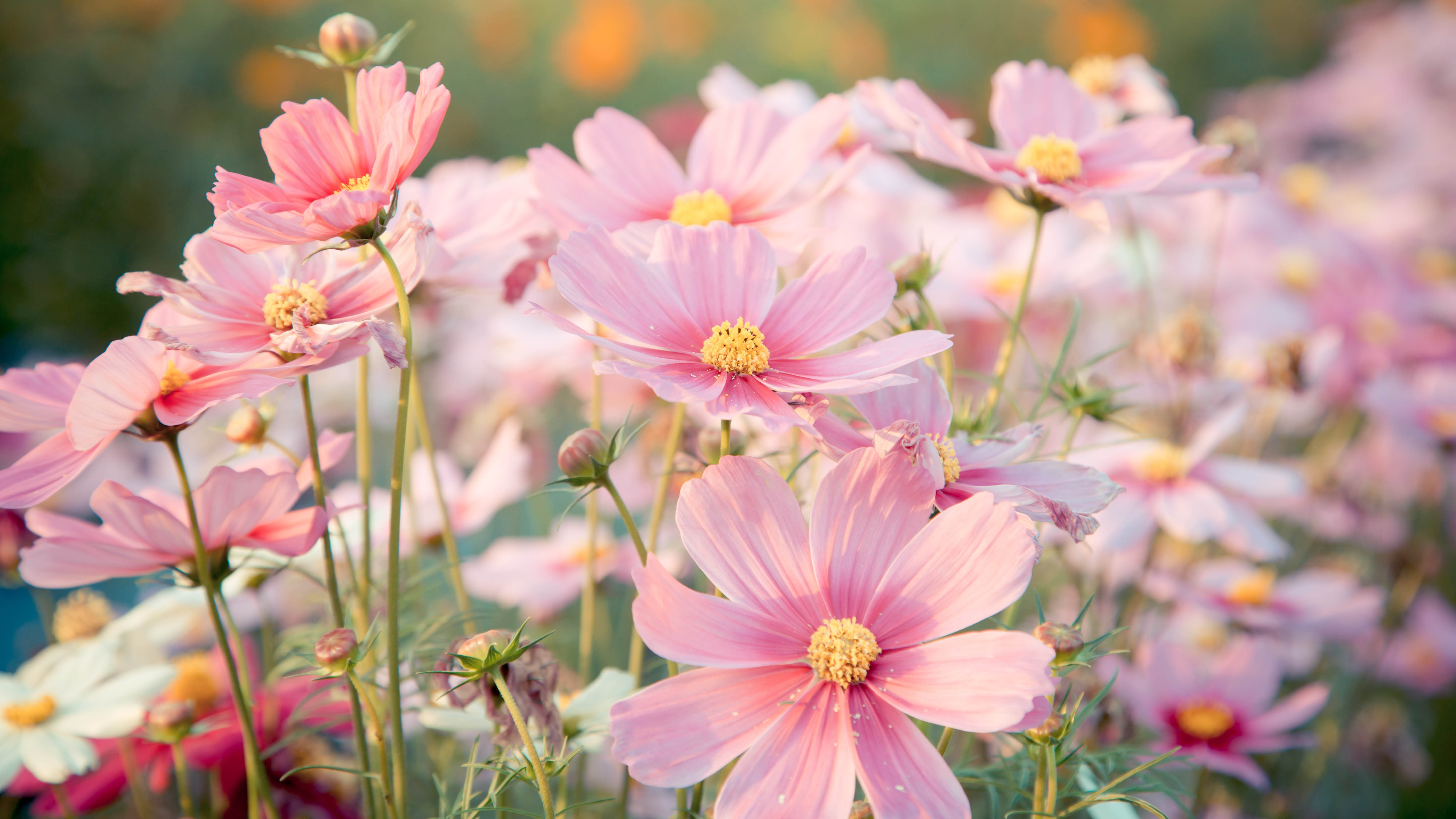
Plant flowers that attract lacewings and pirate bugs, which prey on thrips naturally. A healthy garden ecosystem is one of your best long-term defenses against pest populations building up.
4. Use insecticidal soap or neem oil
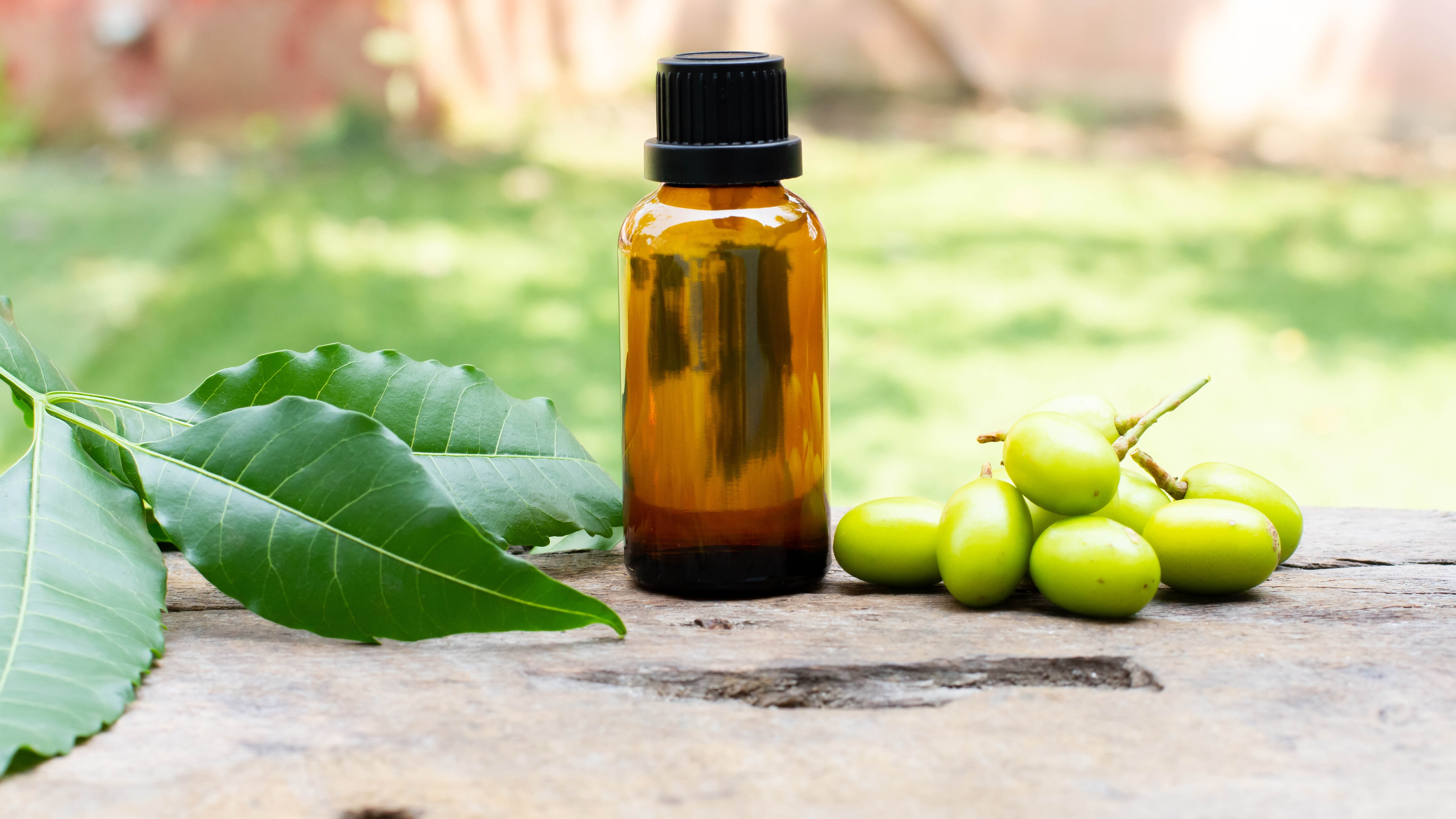
For more persistent infestations, apply every few days as new thrips emerge, treating both upper and lower leaf surfaces thoroughly. These contact insecticides won't touch eggs or pupae, so consistent reapplication is key.
5. Consider spinosad for severe infestations
Spinosad is more powerful than soaps or neem oil, but because it also kills beneficial insects, treat it as a last resort. Follow label instructions precisely and avoid applying it near flowering plants where pollinators are active.
6. Isolate infested houseplants
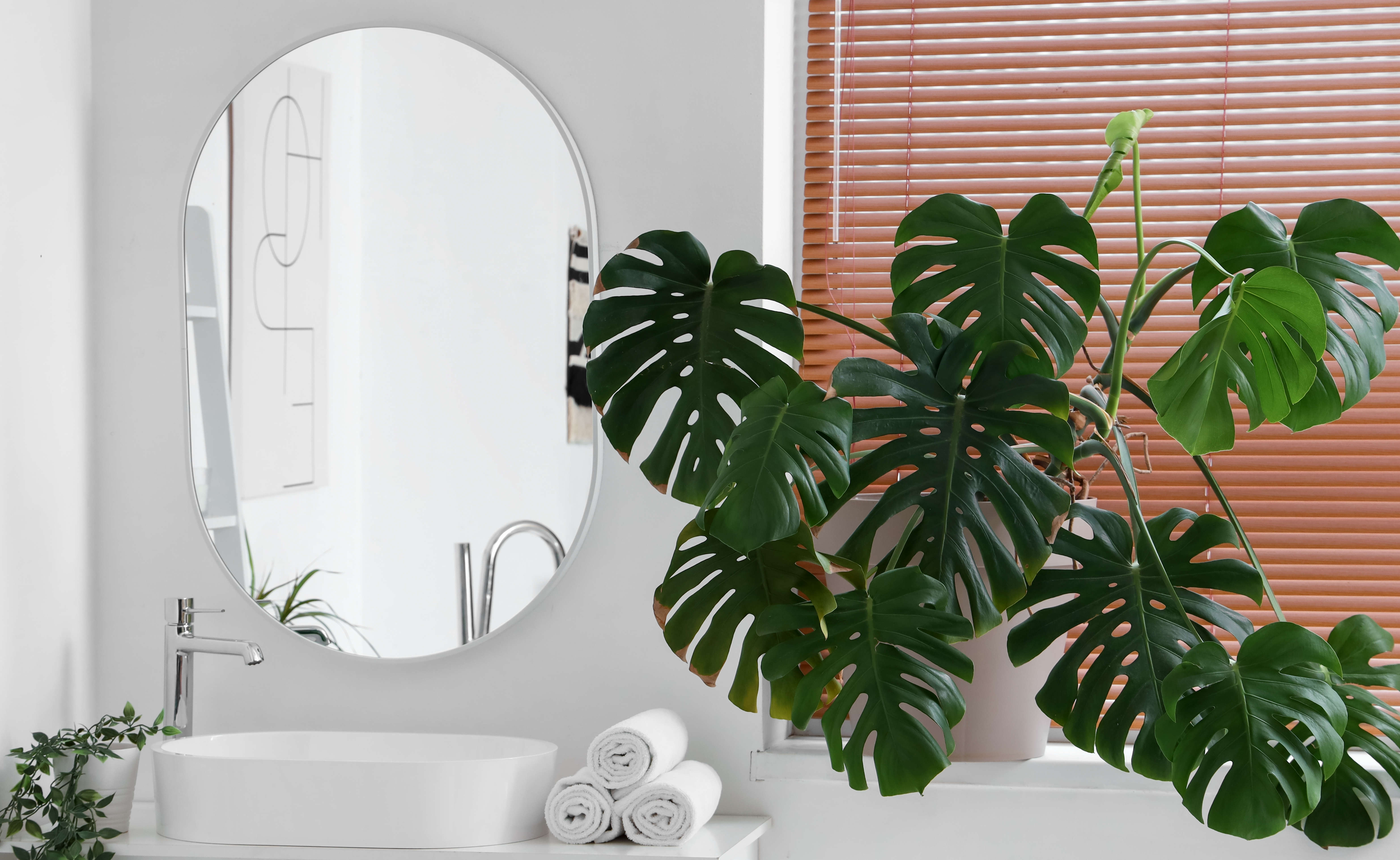
Move any infested indoor plant away from others immediately, then treat with insecticidal soap or horticultural oil. Indoors, thrips can spread quickly between plants before you notice the damage.
7. Remove virus-infected plants
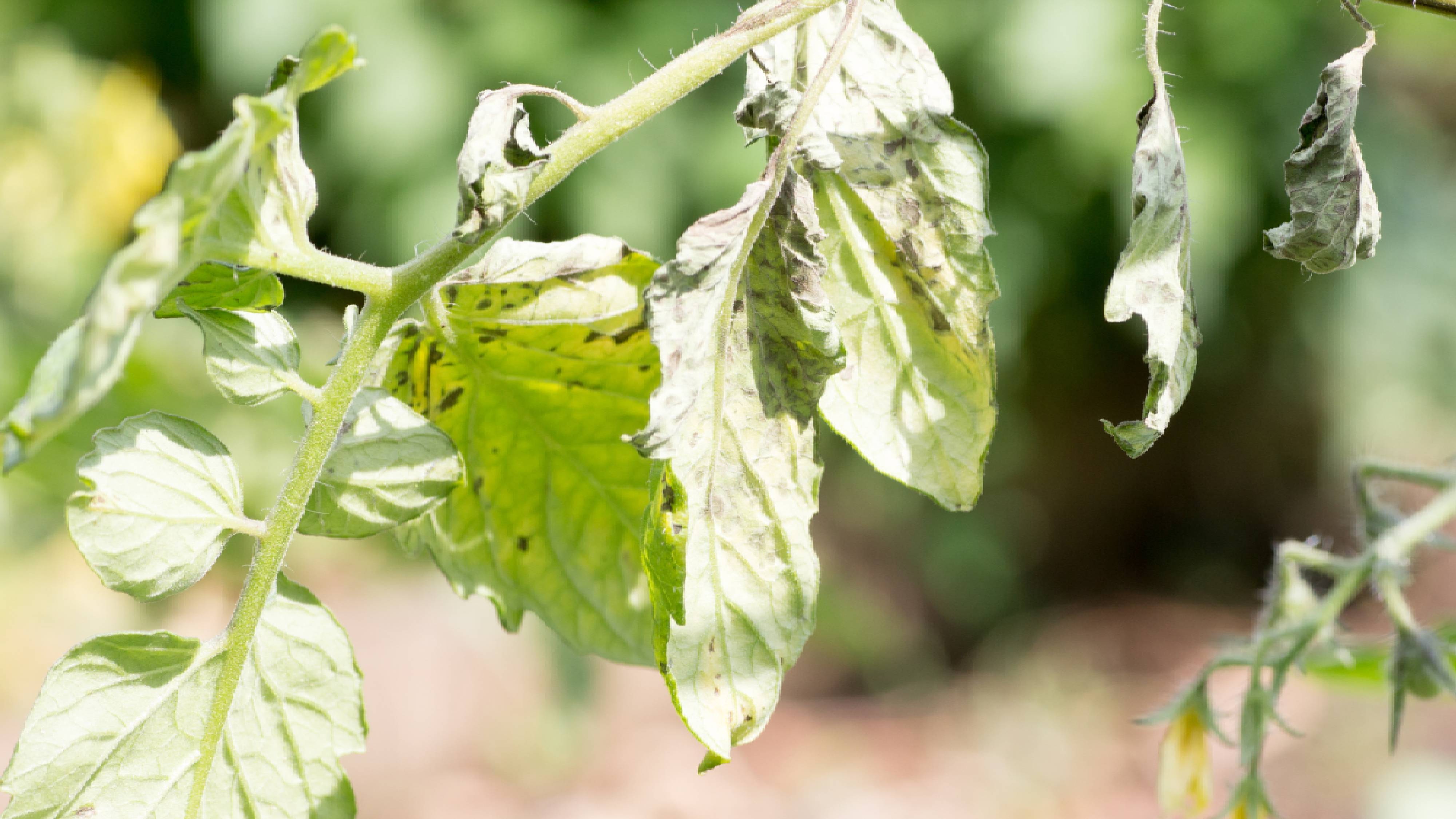
If a plant shows signs of tomato spotted wilt virus — severe distortion, stunted growth, or discoloration beyond typical thrips damage, remove and discard it entirely. Don't compost infected material, as the virus can survive in debris and spread throughout your yard.