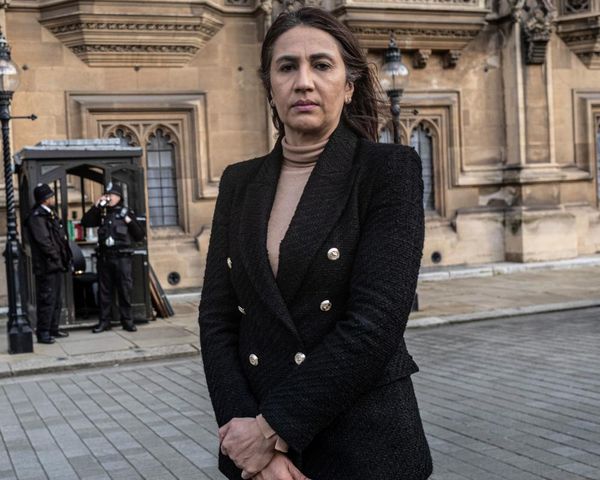
Pete Doherty outside Ealing
Magistrates Court this afternoon.
Photograph: PAWhat do the late George Best and Pete Doherty have in common? Principally that they're both inevitably referred to in the press as "troubled". This rather tenuous connection gained in solidity, though, when the "troubled singer" confessed last month to his aspiration to do a "George Best in reverse" and progress from being famous for his dissolute ways towards being famous for the exercise of his talents, writes Guy Dammann.
Doherty, who was late for his hearing at Ealing magistrates court today, has pleaded guilty to charges of cocaine and heroin possession. No one need be surprised, of course. It's hardly Doherty's first tangle with the law, and is unlikely to be his last. But whereas the mixture of compassion and prudery in the press coverage given to the football star's final fadeout really did merit its "troubled", personal-interest angle, that accorded to Doherty surely does not. For while Best's protracted but single-minded chase to the pearly gates was effected to the financial credit of some (admittedly already very wealthy) brewery companies and at the expense of one life, Doherty's funds a much less savoury bunch and has a much greater human cost.
In other words, it's not just Pete that gets in trouble when his hard-earned pounds make their way to one of the multibillion-dollar cartels in Colombia responsible for the production and distribution of some 80% of the powder applied in washrooms around the world. For every Brit who opts for a snorter over a snifter, some dispensable cog in the shadowy cocaine mechanism will pay with their life.
And while cocaine use in the US is falling gently - whether under the influence or not of coordinated military and social policy initiatives is unclear - the market in Britain is buoyant. Cocaine is now the second most popular drug - after cannabis - in this country, with some 6% of 25-to-34-year-olds estimated to have taken it in the last 12 months. The UK "has the highest cocaine use in Europe" according to a recent survey, unaffected by government backing for a high-profile "cocaine boycott" last year.
Last February, foreign office minister Bill Rammell suggested we give the Latin American export the same principled cold shoulder we gave to the produce of apartheid South Africa. Only a week before, the newly installed Metropolitan Police commissioner, Sir Ian Blair, had weighed in with a more sarcastic tone: "People who wouldn't dream of having non-organic vegetables don't notice the blood on their fingers."
Following these high profile outbursts, however, the "campaign" quietly went down the pan and the public's ignorance continued. That was certainly David Aaronovitch's initial reaction, as he recorded in the Observer last year, until he watched Joshua Marston's film about a young Colombian drug mule, Maria Full of Grace, and changed his mind.
It will take more than a column and an independent film - however successful - to transform current opinion about the real costs of the £40-a-wrap powder. But perhaps we could bear in mind, the next time that Doherty's boyish grin spreads across our newspaper columns, that the drug's anti-social effects are far greater than those on its users.