
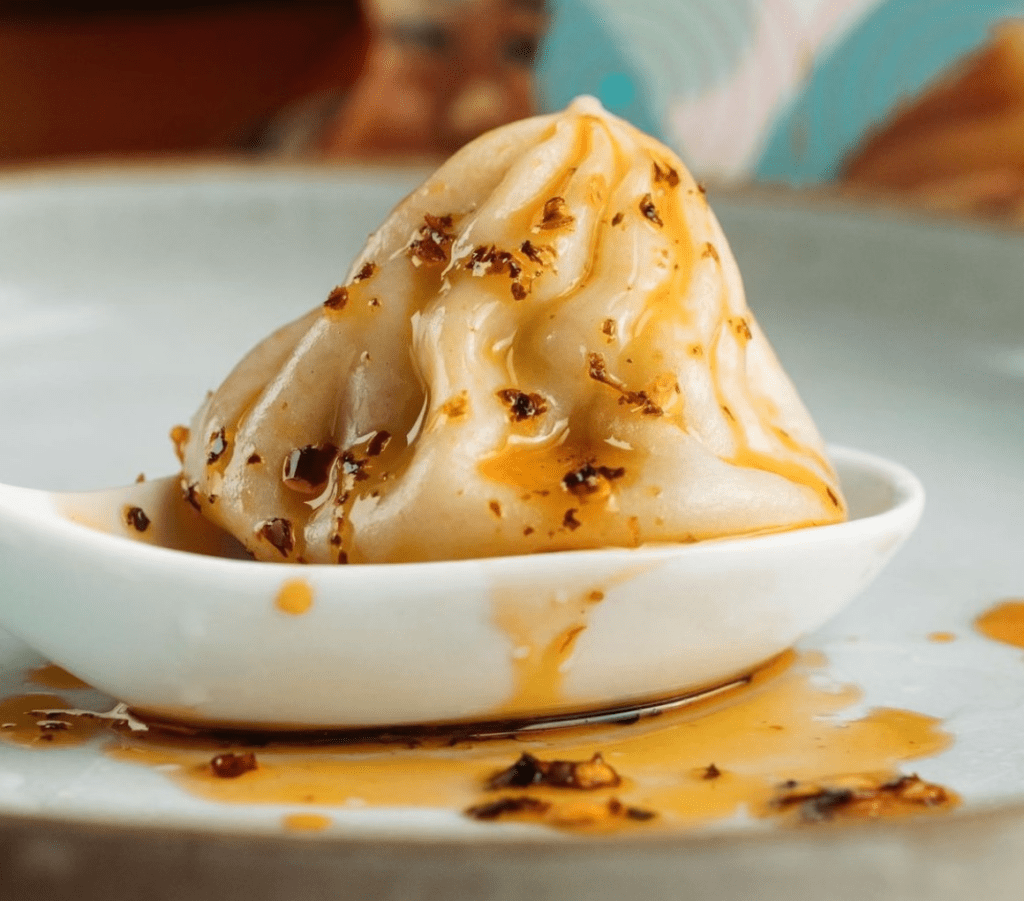
There’s a reason why it’s hard to find sheng jian bao in the U.S. The classic Shanghai street food—the steamed buns filled with soup reminiscent of a soup dumpling, but less juicy, with thicker dough, and fried—must be cooked, several dozen all at once, in a large cast iron, where they are pan-fried, then steamed in the same pan immediately. They’re meant to be eaten within 30 minutes.
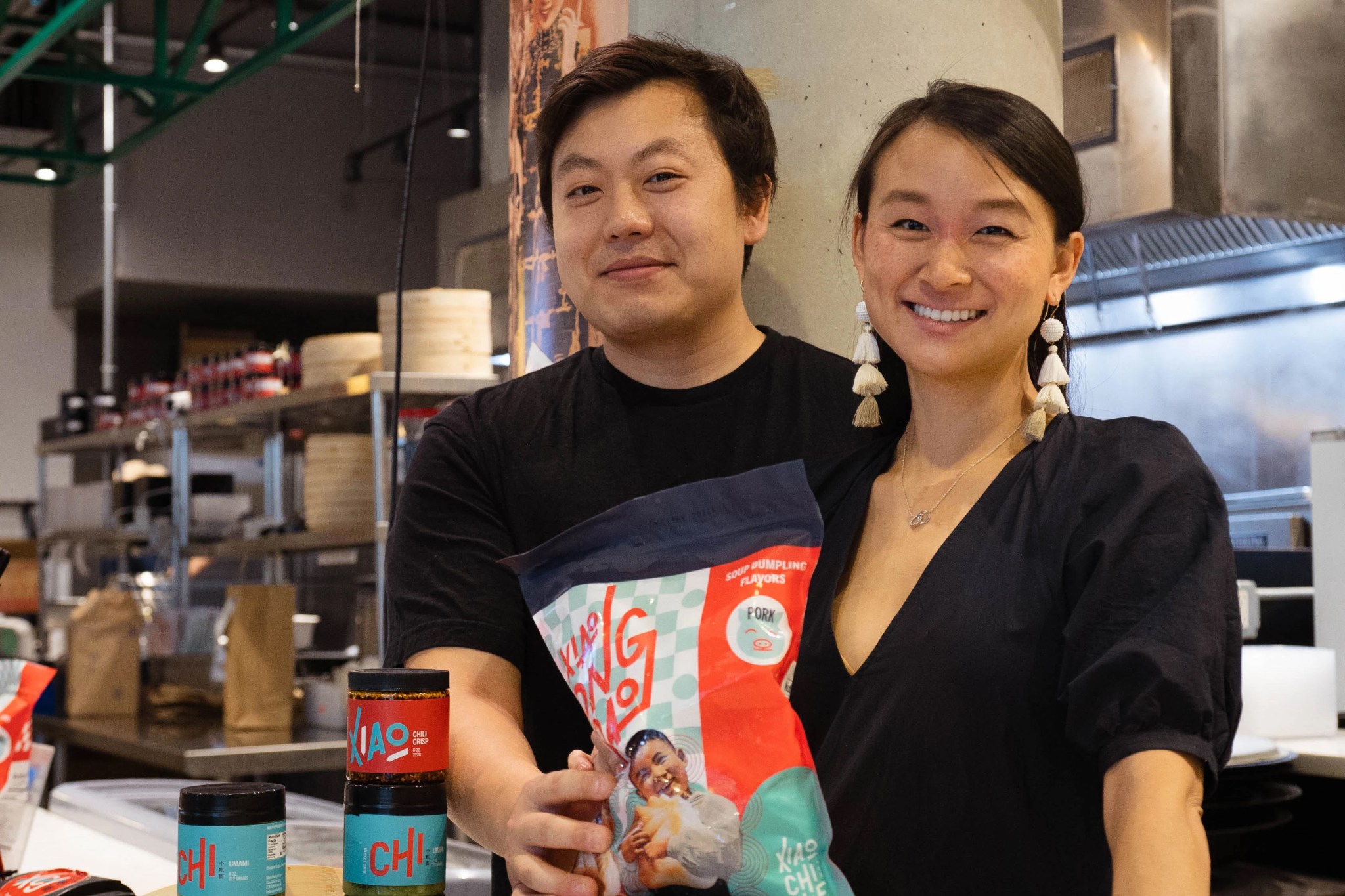
“I had grown up eating this…And I've always wanted it here,” Caleb Wang tells me over video chat. Wang and Jen Liao, the two married cofounders behind the frozen Chinese food startup Xiao Chi Jie (or XCJ), were telling me how it all got started, and how they’ve managed to raise $31 million in venture funding to get their other major product, xiao long bao—known by most Americans as soup dumplings—into more freezers around the U.S. (The founders say they don't ship sheng jian bao, because it is too hard for most people to make at home.)
The numbers are straight-forward: Xiao Chi Jie—which translates to “little street eats” in English—has seen a ton of demand since Wang and Liao started shipping food from their restaurant in Bellevue, Wash., frozen, at the beginning of the pandemic. Since 2020, XCJ has sold 20 million soup dumplings around the country, and they sold out of all their inventory in the last two months of 2022.
But the story behind their venture is deeply personal, and it’s laced with nostalgia and their own journey toward what it means to be Chinese American in the U.S.
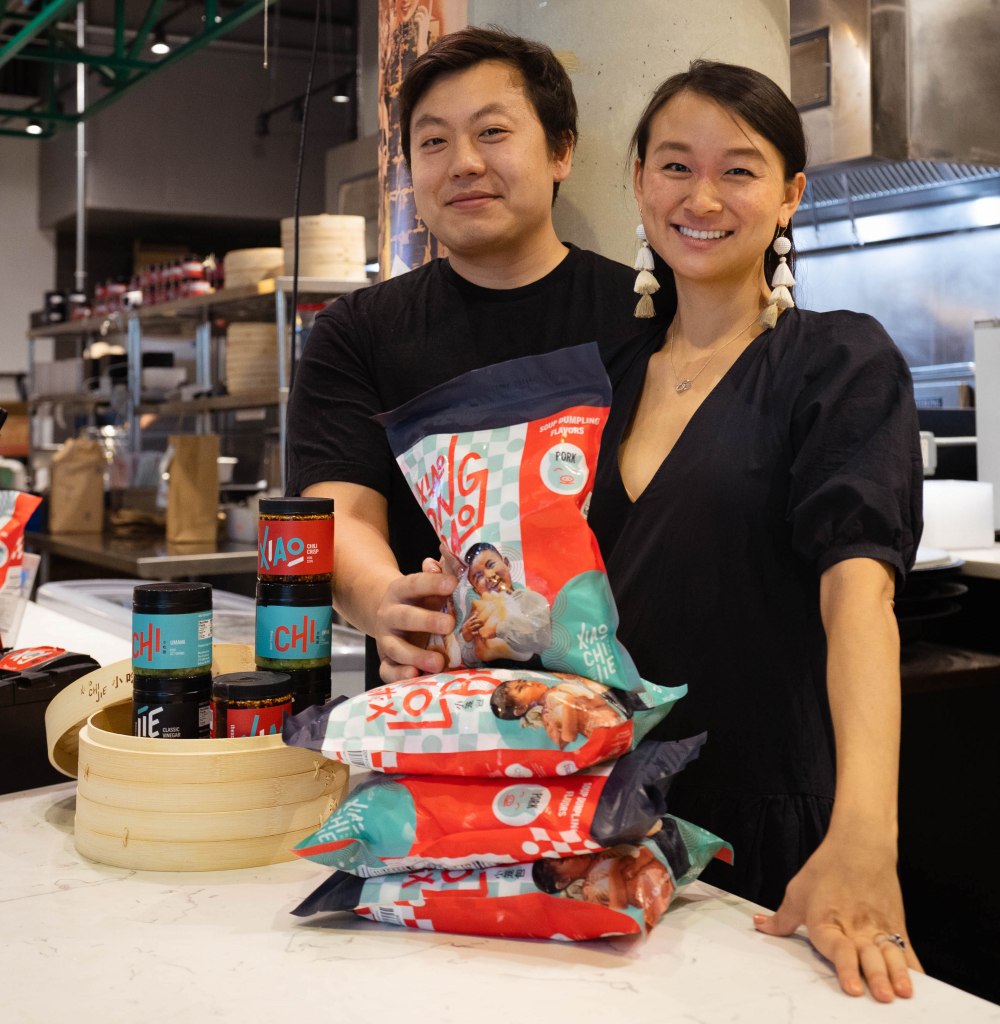
Wang and Liao posted their story on the website for the first time in June 2021—revealing how, as second-generation Chinese Americans, the two of them didn’t find it natural to talk about themselves, and had always been taught to lead with their actions. By the time I sat down with them in January, both Liao and Wang were very open in discussing their heritage and their own backgrounds, and how influential that has been in building a food company.
Wang is from Ohio but was raised by his grandparents in Shanghai until he was four, and would go back every summer. Liao grew up in Dallas before eventually ending up in Seattle. Wang was working in finance and Liao in health tech when they decided to open a restaurant with their co-founder Norman Wu, for what they now say is a selfish reason: They couldn’t find Wang’s favorite food, sheng jian bao.
“We [couldn’t] find it anywhere that was really good,” Liao says, pointing out how they pitched Brian Yong, XCJ’s now-culinary director, on becoming the chef of a restaurant they wanted to form that would serve sheng jian bao. Liao says they booked Yong, who had just quit his job as a Microsoft project manager, a one-way ticket to Shanghai to perfect the street food.
“We just kind of said…learn it and then we'll book your ticket after you feel like you've got it and you can come back then,” Liao says, pointing out how Yong, who is Korean American, completely immersed himself into the world of the Chinese cuisine, learning about the history and studying the ingredients and which provinces they come from.
It was important to the whole team to develop a product that was both high quality and authentic. As Liao puts it: Would it pass the bar for her mom and her grandparents?
“Whenever people ask the question of what would be your favorite meal or your last meal—I always say my mom's food. It's not really a single product or a cuisine, but I just really liked my mom's food. I would really like to capture that somehow and be able to share it with other people,” Liao says.
Wang and Liao officially opened the restaurant in October 2018, focusing solely on sheng jian bao at first, then adding other dishes like soup dumplings, jian bing, or Sichuan cabbage. The restaurant was doing well until the first few weeks of COVID, Wang says: That was when they had to shut down the store for a while, and sales dropped 95%.
“We were just trying to figure out a way to keep folks employed,” Wang says. “We very quickly set up a Shopify site and started posting in Facebook groups and WeChat groups. As it turns out, it was a perfect time for frozen soup dumplings because no one else was doing it.” Wang says they were using Google Forms and Paypal early on to place orders, then driving around with brown paper bags, using MapQuest to plan routes, and dropping them off on people's doorsteps.
Wang and Liao initially were selling their soup dumplings locally but began expanding to cities like Chicago and New York when they started getting inbound requests—eventually realizing there was a huge opportunity to scale the business. Now they are shipping to all 50 states and selling soup dumplings, noodles, and ice cream online—though not their famous sheng jian bao, which is harder to make at home for the uninitiated. Liao left her job in ed tech in March 2022 to join XCJ full-time, shortly after the two of them raised their first round of funding from investors including Imaginary Ventures, actor Simu Liu, Goldhouse Ventures, and Hyphen Capital.
Now the e-commerce operation has scaled to 90 people and has raised a total of $31 million in funding. A few weeks ago, XCJ closed a $21 million round from Imaginary and Stripes, the aim being to get authentic cuisine into more people’s freezers.
“Especially in grocery stores, and in areas where you can just purchase things off the shelf, it's still very Americanized Chinese food. It's General Tso's chicken, lo mein—things that are not actually available in China,” Wang says. Their co-founder Wu continues to lead the brick-and-mortar side of the business, particularly as they consider opening up restaurants in other cities, so they can grow those markets, as well as serve things that XCJ can't freeze as well, like sheng jian bao.
It’s amazing to me the emotions and nostalgia food can hold. Months before meeting Wang and Liao, I had fallen prey to one of their Instagram ads for exactly that reason. I ended up ordering 100 of XCJ’s soup dumplings to my home in Bentonville, Ark.—craving a food I no longer have immediate access to that had become synonymous with my six years in New York.
The evening the dumplings arrived, and I opened the bamboo steamer by my stove, I was transported back to a late-night dinner after work at Joe’s Shanghai in Chinatown where I was seated around a round table with five of my best friends. The dumplings arrived, all of our chopsticks went up, and the laughing stopped as we ate together in a moment of pure ecstasy. Life doesn’t get much better than that. And it’s rather beautiful when food can take us back to those moments.
See you tomorrow,
Jessica Mathews
Twitter: @jessicakmathews
Email: jessica.mathews@fortune.com
Submit a deal for the Term Sheet newsletter here.
Jackson Fordyce curated the deals section of today’s newsletter.









.png?w=600)



