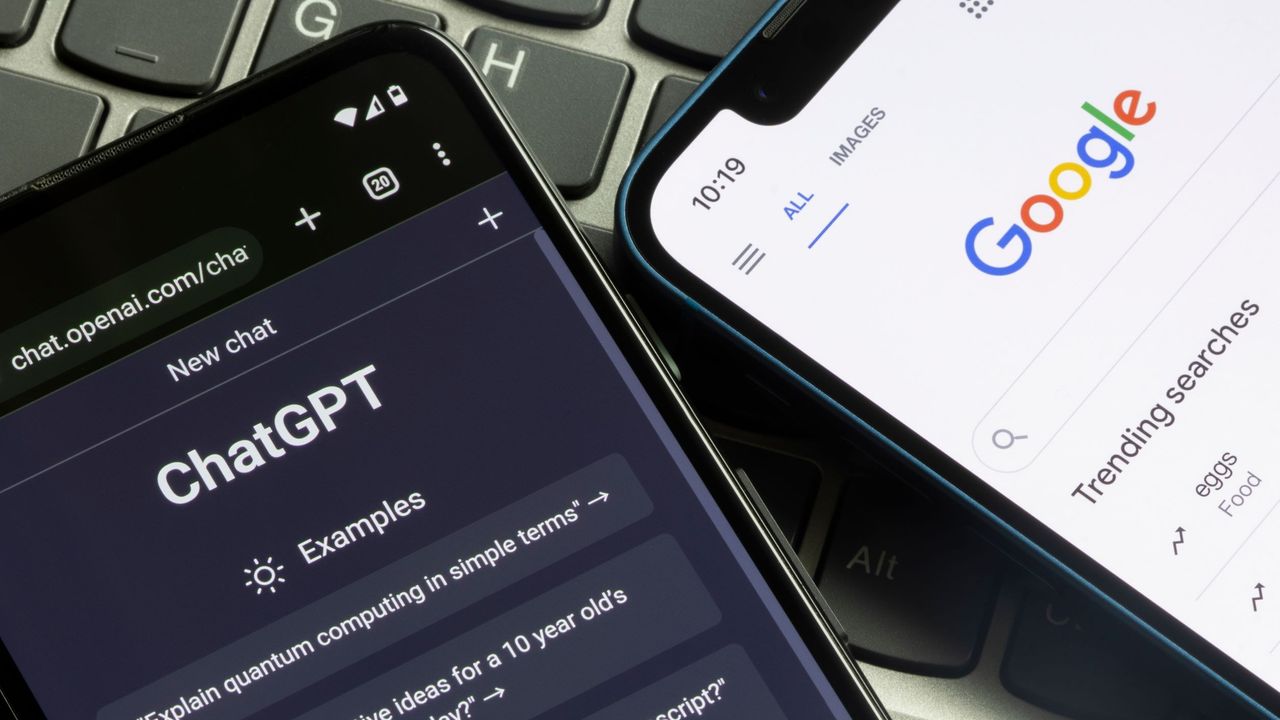
As someone who tests AI for a living, I’ve written thousands of prompts — and rewritten just as many after getting a flat or vague response. For a long time, I assumed better results meant crafting a better prompt from scratch. But during a briefing with OpenAI, one researcher casually mentioned that he often re-prompts using the same exact input. That changed everything.
It's not surprising that most people miss this. If you don't get the answer you wanted the first time, why try it again? To gain clarity and avoid AI from going down a rabbit hole with a wrong response, I use one follow-up prompt that consistently makes just about any chatbot stay on track and deliver a deeper, more useful response. And, it doesn't require starting over — even if the first response was wildly off base. The best part? It works across every major chatbot I’ve tested.
The AI follow-up prompt I use every day
After the AI gives its first response, I simply reply with the following prompt:
“That’s helpful, but what assumptions are you making here — and what would change if one of them is wrong?”
That’s it. Once you ask that after the first AI response, you'll get genuinely better thinking from AI. This prompt causes the AI to surface the buried logic while adding the context it skipped. In that moment, the conversation shifts from a chatbot given an answer to it thinking along with you.
Why this works (when most prompts don’t)

Most people try to improve results by adding more detail to their original prompt. While more information can certainly help, this prompt does something smarter by simply asking the AI to think better.
This prompt forces the model to clarify vague points, add missing context, surface alternate ideas and flag logic gaps or caveats. It’s the difference between a search engine and a true collaborator.
Real examples: Before and after using hte prompt
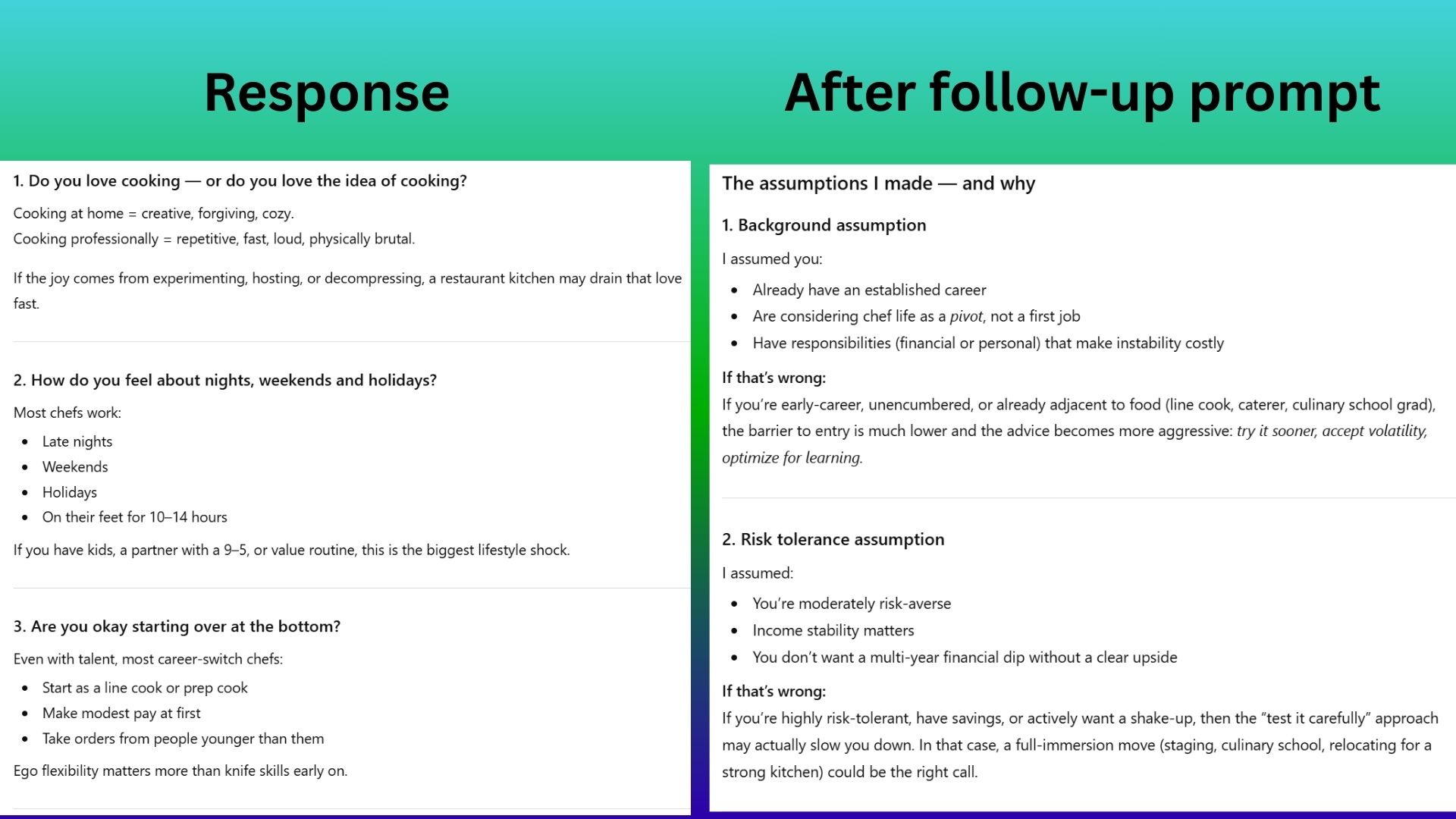
Prompt: “Should I switch careers and become a chef?”
AI’s response: A basic pros-and-cons list.
Follow-up: After using the follow-up prompt, the AI asked clarifying questions, adjusted expectations and offered a question for me to consider about my goals.
Prompt: “Help me save $500 a month.”
AI’s response: A very generic response suggesting I Cut subscriptions, eat out less, make a budget.
Follow-up: It suggested negotiating bills, changing due dates and developing a budget that seemed a lot more realistic.
This follow-up prompt works in just about any scenario from career advice to meal planning to writing improvement. Best of all, it beats rewriting your original prompt because rather than rephrase blindspots, it surfaces hidden logic, turns the conversation into a thoughtful exchange and works instantly.
By asking for better reasoning, you get a tweak that goes deeper. If you wanted to go even deeper, you could even use the prompt:
“What assumptions are you making — and how confident are you in each one?”
This immeidately forces the model to rank its reasoning, reveal uncertainty and offer caveats that it might have otherwise skipped. That prompt is especially useful for money, health, career and planning decisions.
The bottom line
The best AI conversations are the ones that leave you with more insight, new ideas and clarity. If you're left confused or feel the AI wasn't helpful, it doesn't always require a longer prompt. Sometimes you just need a smarter follow-up.
By adding the follow-up prompt, I've completely changed how I use ChatGPT, Gemini, Claude and even smaller models. It’s faster, simple and turns AI into a thinking partner.
Try it once and you'll probably never prompt the same way again.

Follow Tom's Guide on Google News and add us as a preferred source to get our up-to-date news, analysis, and reviews in your feeds.