According to Joseph Pilates, the founder of the famous movement, one Pilates roll-up is worth six regular sit-ups. This is because it has an intense focus on spinal articulation, as the move requires you to roll up off your exercise mat one vertebrae at a time.
You’ll also be working your deep core in this move, and your posterior chain. Read on to find out how to do the Pilates roll-up with perfect form, the benefits and the progressions to try once you’ve mastered the move.
As a reminder, if you’re a complete beginner, you’re pregnant or postpartum, or you’re dealing with a specific injury, this might not be the right move for you and your body. Always seek advice from a qualified professional before trying something new.
What is the exercise?
The Pilates roll up uses just your bodyweight, but you might want to use a yoga mat for added comfort. As with all Pilates exercises, the key is to move slowly and with complete control.
Think about really engaging your core — sucking your belly button into your spine, zipping your abs up and in. All of the movement in this exercise should be coming from your core.
Here’s how to do it with good form:
- Lie on your back, legs extended out away from you and squeezed together.
- Extend your arms to the ceiling and engage your core.
- Take a deep breath in and lift your head and shoulders off the mat.
- Exhale as you peel your spine from the floor one vertebrae at a time. Keep your abs zipped up and in, even as your upper body reaches forward.
- Reach past your toes in a C-curve shape. Don’t let your chest collapse onto your legs.
- Inhale, then slowly start to roll back, exhaling as you place each vertebra back down on the mat with total control.
What are the benefits?
Improving spinal mobility
Unlike crunches and sit-ups, you’re really working your spine during this exercise, lifting and lowering one vertebra at a time. This can help improve your spinal mobility. If you spend a lot of time sitting behind a desk or you suffer from a stiff lower back, this is a great exercise to try.
Deep core control
Your core is working hard throughout this exercise. As you peel your back off the mat, your deep transverse abdominis and internal obliques work hard to scoop the abs and protect your lower back as you lift. Unlike sit-ups, you’re not flopping back to your exercise mat during this move, and the eccentric contraction that happens as you lower yourself back to the mat helps build strength and control in your midsection.
Posterior chain flexibility
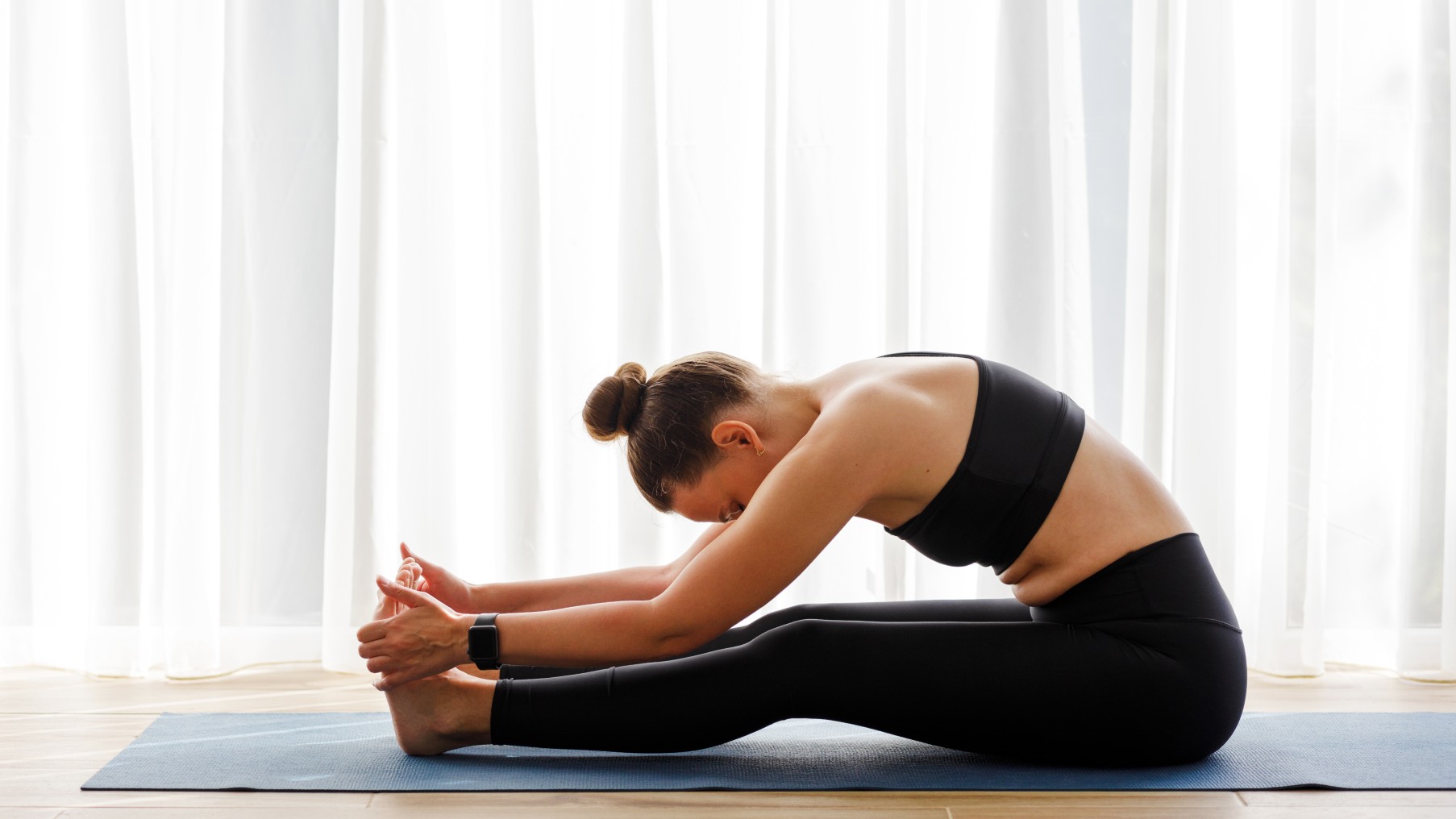
As mentioned above, you’re working all of the muscles down the back of your body in this move. As you reach forward, your hamstrings, calves and lower back muscles will all get a lovely stretch — another nice one to try after a few hours sat behind your desk.
What are the progressions to try?
Once you’ve mastered the Pilates roll-up, these are the progressions to try to add intensity:
- Add weight: Adding a light dumbbell to this exercise can make the "down" phase of the roll-up harder. Hold a light dumbbell with both hands. As you sit up, the exercise will probably feel easier, but the weight will increase the load on your core as you roll back down, forcing your abs to work even harder.
- Add a Pilates ball: Your legs are likely to turn off during this exercise, so adding a Pilates ball and squeezing it between your thighs can help you to keep them fired up. This can also help you engage your deep pelvic floor and lower abdominal muscles.
- Place your hands behind your head: This reduces momentum from your arms as you lift. Interlace your hands behind your head and keep your elbows wide.
Follow Tom's Guide fitness on Instagram for more workouts, routines, tips, and tricks.
Pilates essentials we love
More from Tom's Guide
- Not sit-ups, planks, or crunches: I do this simple Pilates exercise every single day to build a strong and stable core and work on my hip flexor mobility
- Not sit-ups or lunges — I use this simple Pilates exercise to sculpt strong obliques, inner thighs and hip stabilizers
- 'I’m a Pilates instructor, and I recommend these 5 core exercises to help older clients build strength and improve posture'