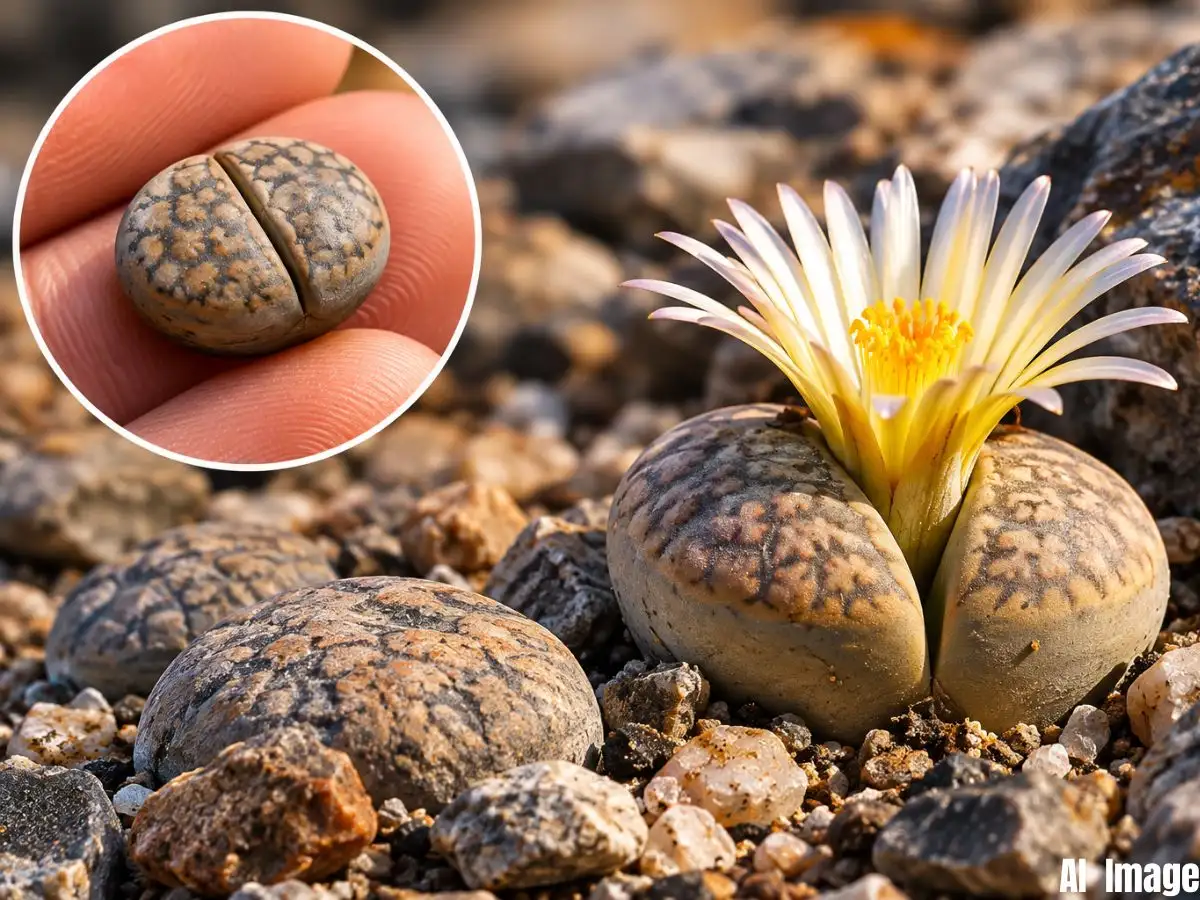
A rock-sized rare plant that spends its whole life disguised as a stone has just earned a grim new title: critically endangered. According to the International Union for Conservation of Nature (IUCN), the global wildlife conservation authority, Lithops werneri now survives in only one spot on the planet, a patch of Namibia's Erongo Mountains no bigger than 4 square kilometers (1.5 square miles), and fewer than 200 plants are left there.
The species has dropped more than 80 per cent since 1981, and it lives nowhere else on Earth. That single fact is why a tiny, easy-to-miss succulent is suddenly getting attention from conservationists, and why its story is really a preview of what climate change and poaching are doing to some of the world's strangest, most overlooked plants.
Meet the Plant That Plays Dead
LithopsL. werneri takes that disguise to an extreme. It grows in a gravel layer roughly 2 centimeters (0.8 inches) thick, sitting directly on top of a sheet of granite. There's nowhere else for the roots to go.
Found, Nearly Lost, Found Again
L. werneriSince then it was searched for numerous times by several succulent enthusiasts, but additional populations were never discovered.
At one point, people assumed the plant had died out entirely. But, researchers rediscovered it at its original location in 2012, a small piece of good news that came with a warning label, because the numbers that followed were not encouraging.
The Count Keeps Falling
Surviving on Two Centimeters of Gravel
L. werneriThat's a fragile setup even in a stable climate. Namibia's climate is not stable. Droughts hit the region hard, and when they do, the consequences ripple outward in ways that have nothing to do with rainfall directly.
When the Rain Stops, the Animals Get Curious
L. werneriFlooding poses the opposite problem but the same outcome, the unstable gravel habitat can wash away just as easily as it can dry out.
Here's the part that keeps conservationists up at night: there is no backup population. No second hillside, no seed bank in the wild, no fallback location. One flood, one drought, one poaching spree, and the species could be finished.
Illegal collection has haunted Lithops species for decades, and L. werneri is no exception, poaching remains a live threat, even as people work to stop it.
For now, the world's loneliest pebble is still out there, blending into a Namibian hillside, one drought and one rainstorm away from disappearing for good.