This cosy, uplifting home is a far cry from the Dutch barn and ramshackle byre, roofed with rusty corrugated iron, that textile designer Vanessa Arbuthnott first set eyes on in 1993.
She was viewing it with her architect husband, Nicholas, who was the one to recognise the potential of several dilapidated farm buildings, dating from 1890, on the outskirts of a quaint village in Gloucestershire.
Nicholas was positive he could create a wonderful family home. Vanessa, however, was less convinced. ‘At that time, we had four children under the age of six, and the thought of tackling a major project on a shoestring budget wasn’t overly appealing,’ she confides.
Transforming the barn
With the layout rejigged over the years to suit the family’s needs, these days the Arbuthnotts’ welcoming home comprises a large hallway, spacious kitchen-dining-sitting room, another living room that looks out over the mature garden, seven bedrooms, four bathrooms, a cloakroom, boot room and a laundry room.
‘It’s actually hard to believe that when we first moved here, there were no internal walls, doors or carpets, and our children had to sleep on mattresses on the floor. It was tough going for a long time, but we got there in the end,’ says Vanessa
The house has seen many decorative iterations through the years, with schemes inspired by Vanessa’s striking fabrics and wallpapers. ‘Apart from being a lovely home, it has actually turned out to be the perfect backdrop for photoshoots for my catalogues and website,’ she says.
Kitchen
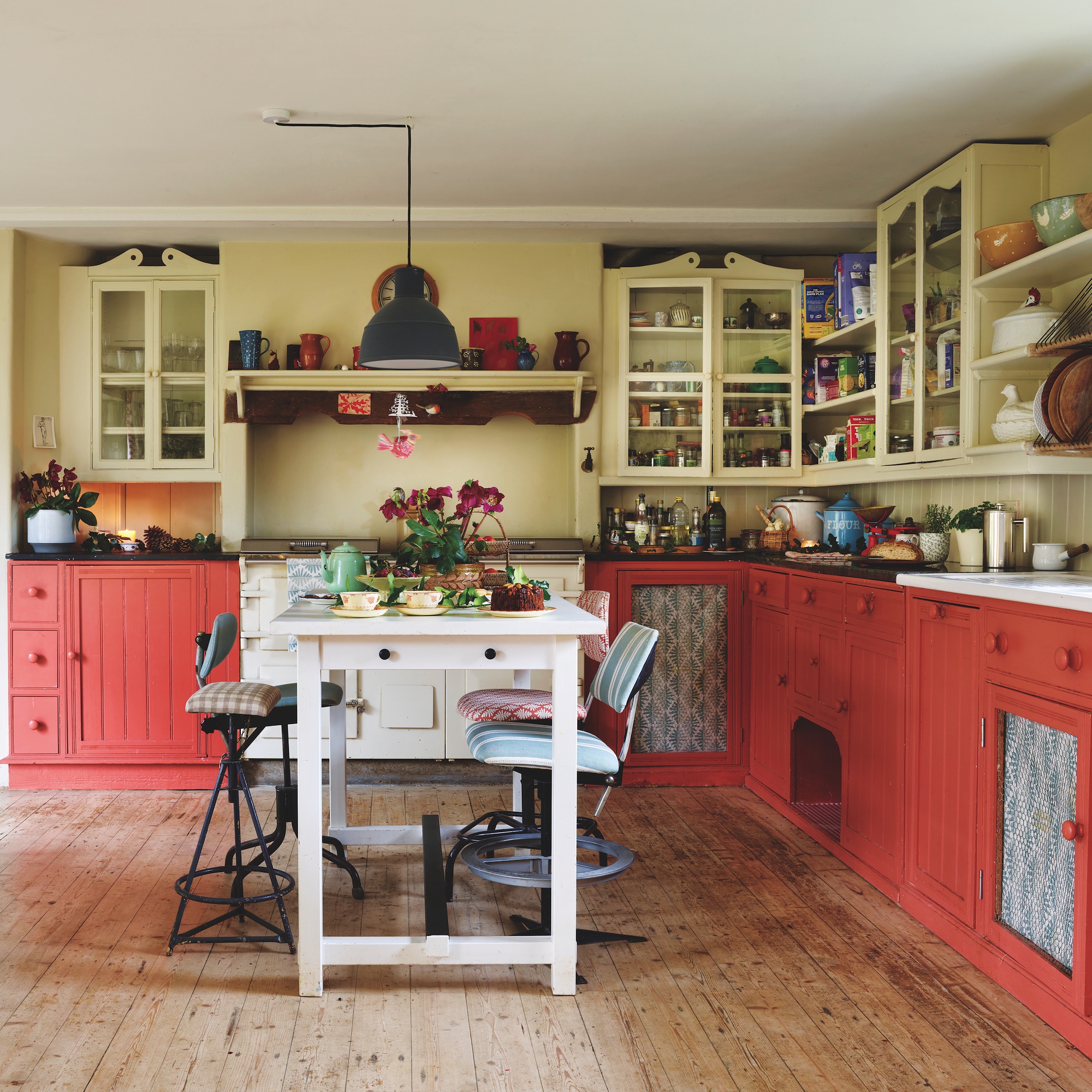
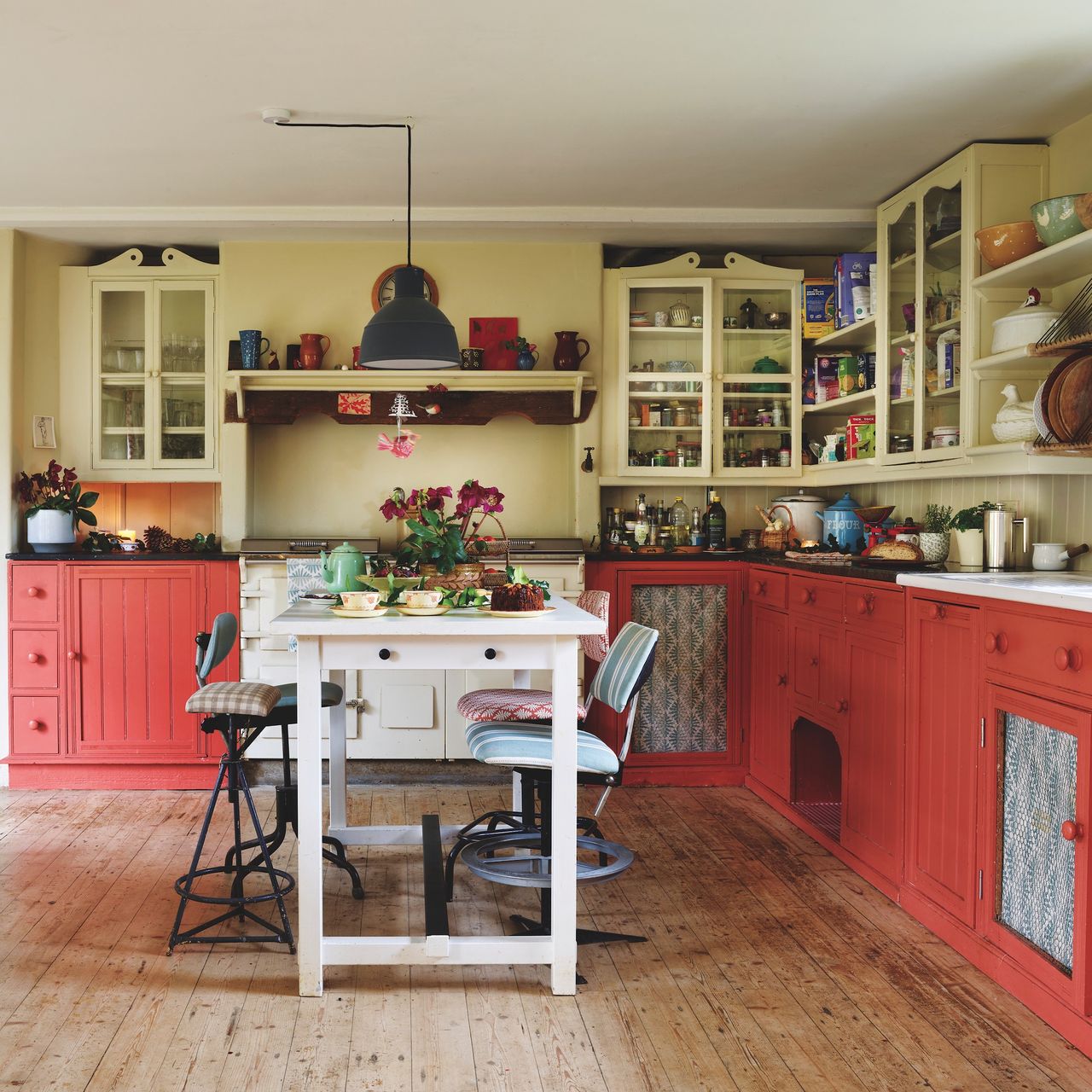
Having originally started her textile design business at the kitchen table, it’s fitting that Vanessa should recently have turned her attention to this space. ‘The kitchen is the heart of our home and, particularly during the festive season,’ she says.
By sanding the floor, painting the units in Farrow & Ball’s Red Earth and choosing a selection of her own fabrics in shades of terracotta, smoky blues and grey tones, the Arbuthnotts’ kitchen has been transformed. The slate worktops are salvaged from an old billiard table.
‘It now has much more of a Scandinavian feel with an earthy palette harking back to the days when I first launched the business,’ she adds. ‘There is a sense of coming full circle, and that’s even more apparent when the grandchildren are here.’
Dining area

Mismatched chairs upholstered in a mix of Vanessa's fabrics brings a cosy, casual look to the dining table in the kitchen.
A tablecloth in Vanessa’s Berries and Leaves fabric pulls this jaunty scheme together. The floor has been sanded and given a coat of Osmo oil. The walls are painted in Lime White, Farrow & Ball.
Sitting area
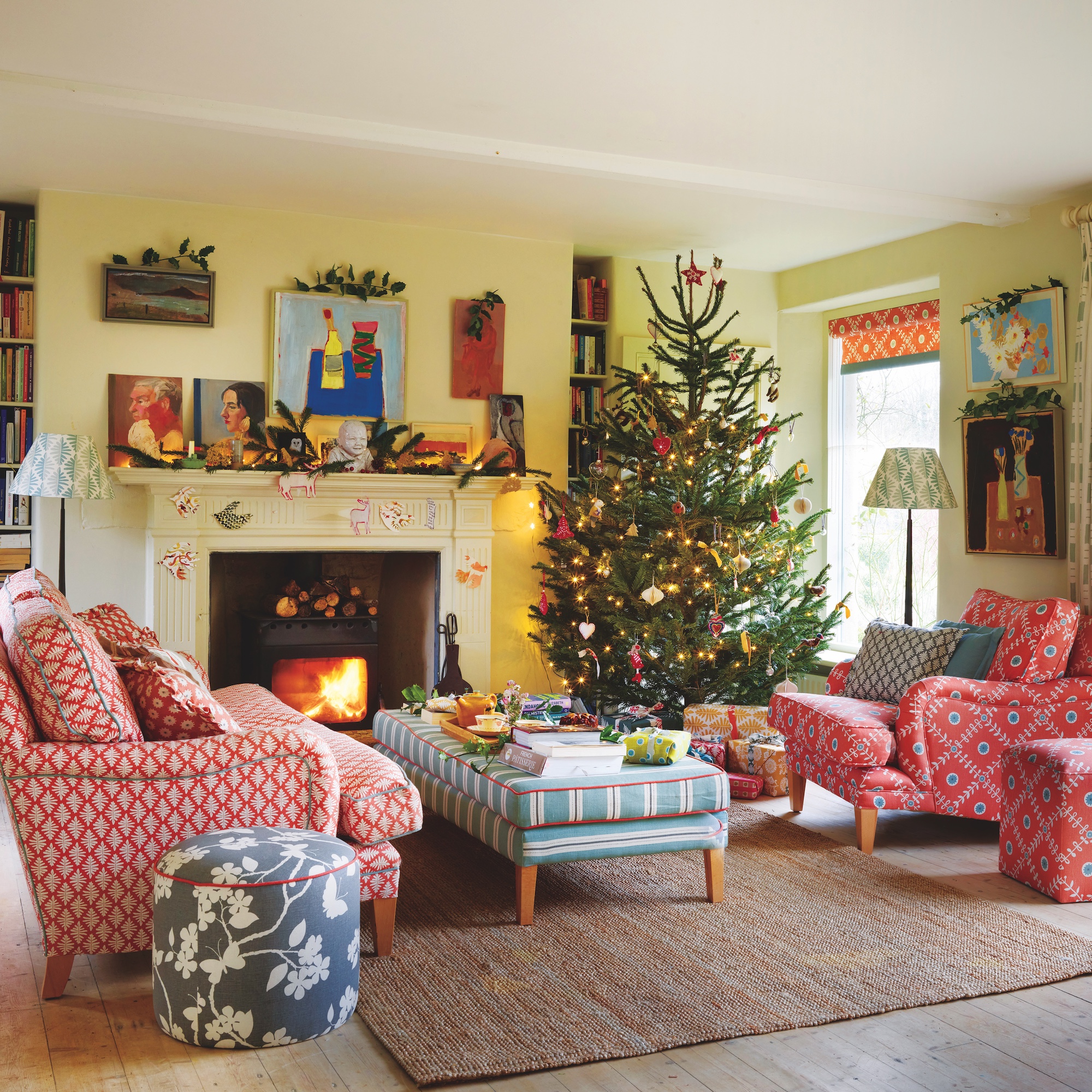
An armchair, footstool and roller blind in Vanessa’s Fruit Garden in Peach, Smoke & Charcoal, co-ordinate with the fabric chosen for the sofa in this cosy corner.
Hallway
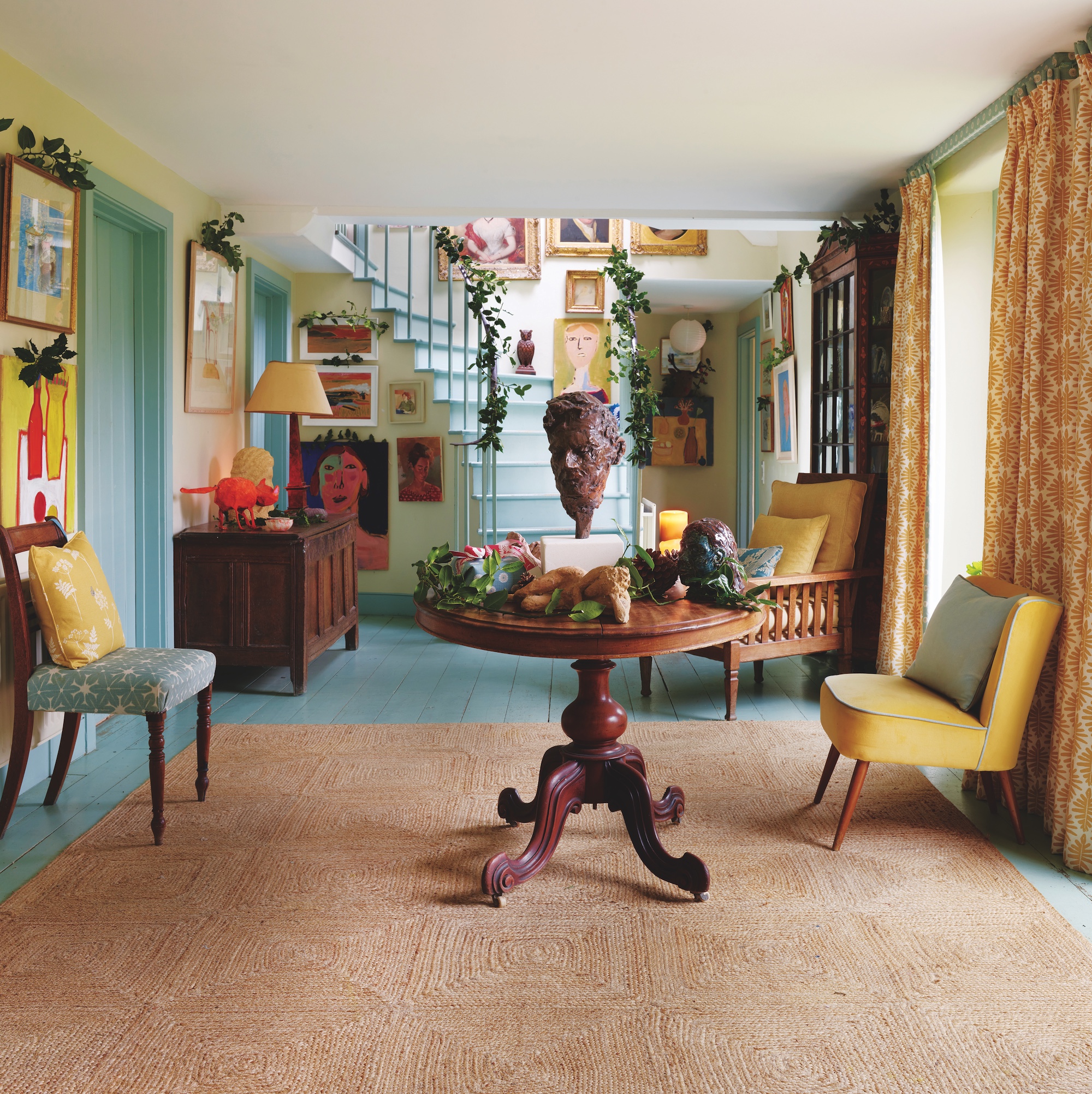
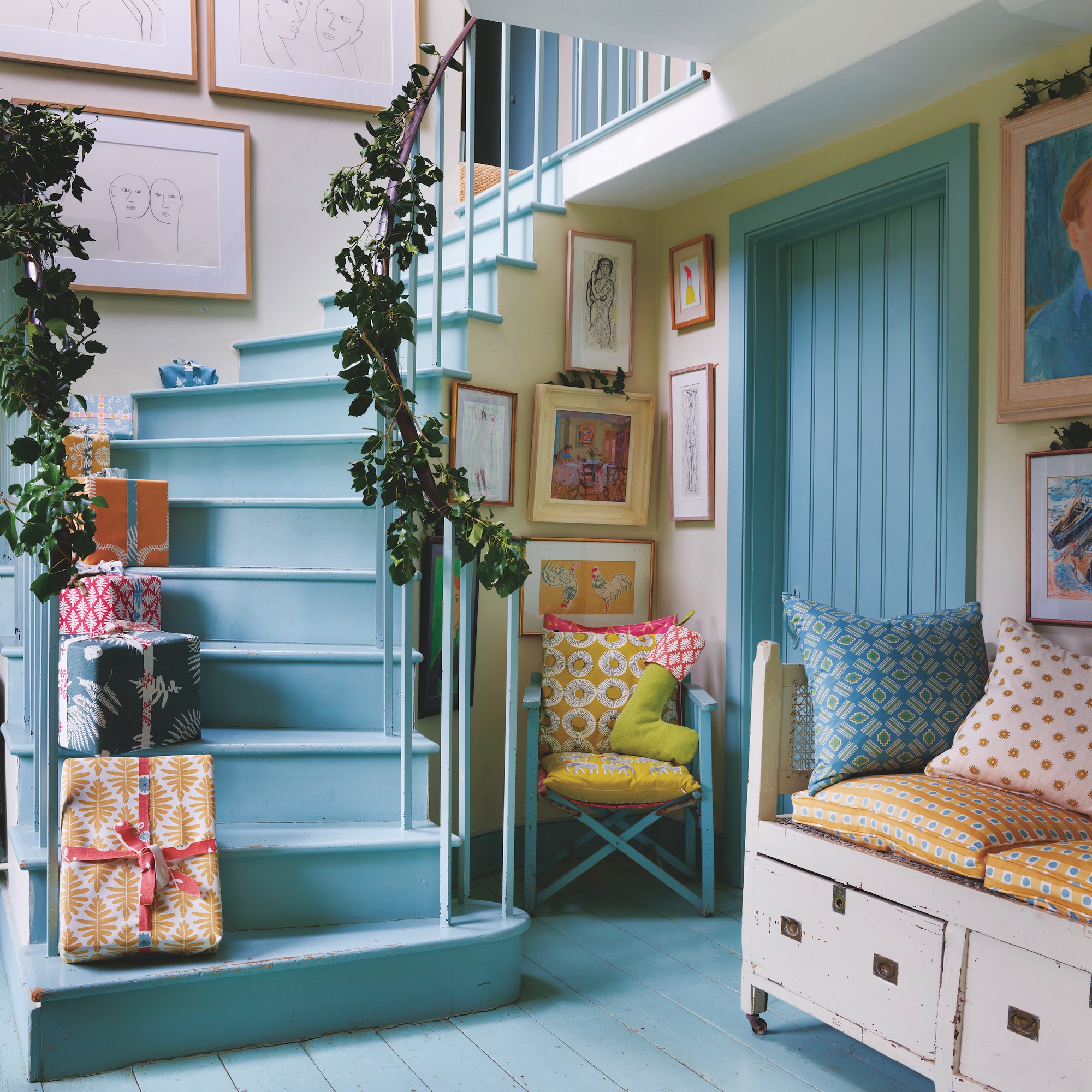
The inspiration for the striking pale blue and off-white hallway was an article that Vanessa read in a magazine about a rambling French farmhouse. The staircase and all the woodwork is painted in Farrow & Ball’s Powder Blue. On the floor, Vanessa used an Osmo oil mixed with her own artist oils to create the powder blue colour.
The Arbuthnotts sourced the circular mahogany table from a reclamation store while on holiday in Pembrokeshire. The bronze of Nicholas’s father was made by the couple’s daughter, Rose.
Bedroom
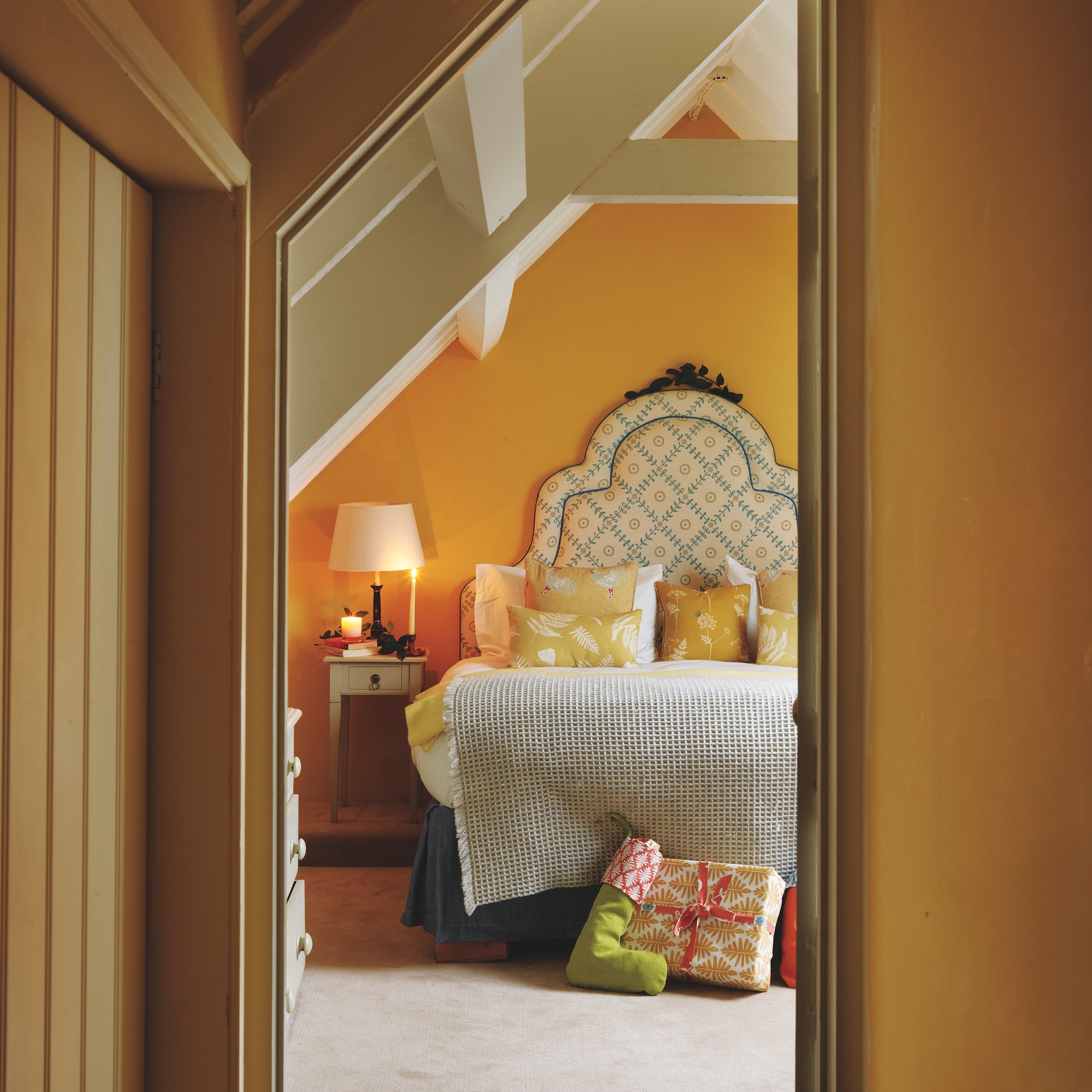
To add a vibrant splash of colour, Vanessa painted the wall of this pretty eaves bedroom in a bright yellow.
The tall upholstered headboard makes the most of the room's height, while white-painted rafters keep the room looking bright and light.
Blue bedroom
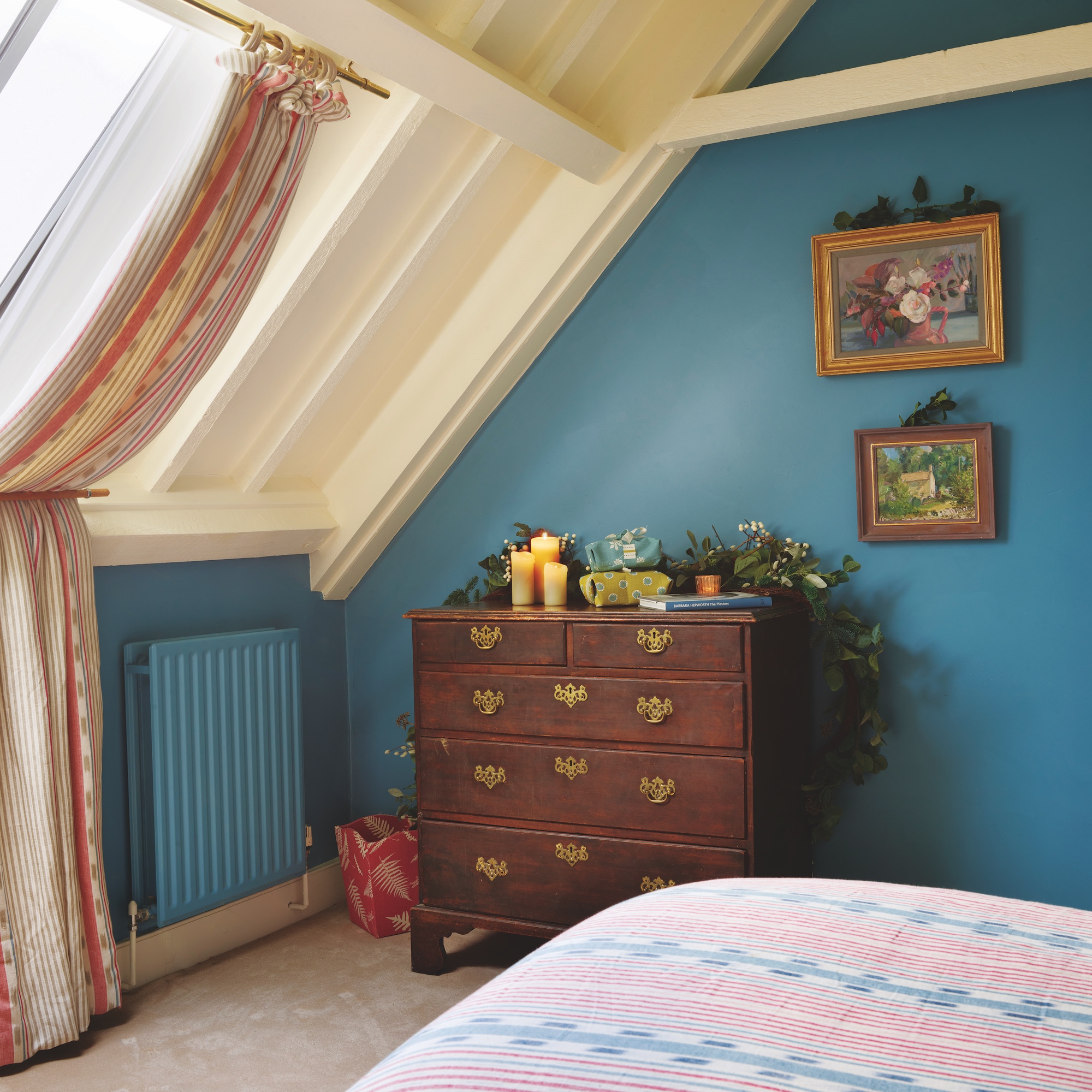
Vanessa redecorated this attic bedroom in blue and pink tones to create a cosy room in her mother’s favourite colours for her stays with the family. An antique chest of drawers provides handy storage for guests visiting during the festive season.
Bathroom
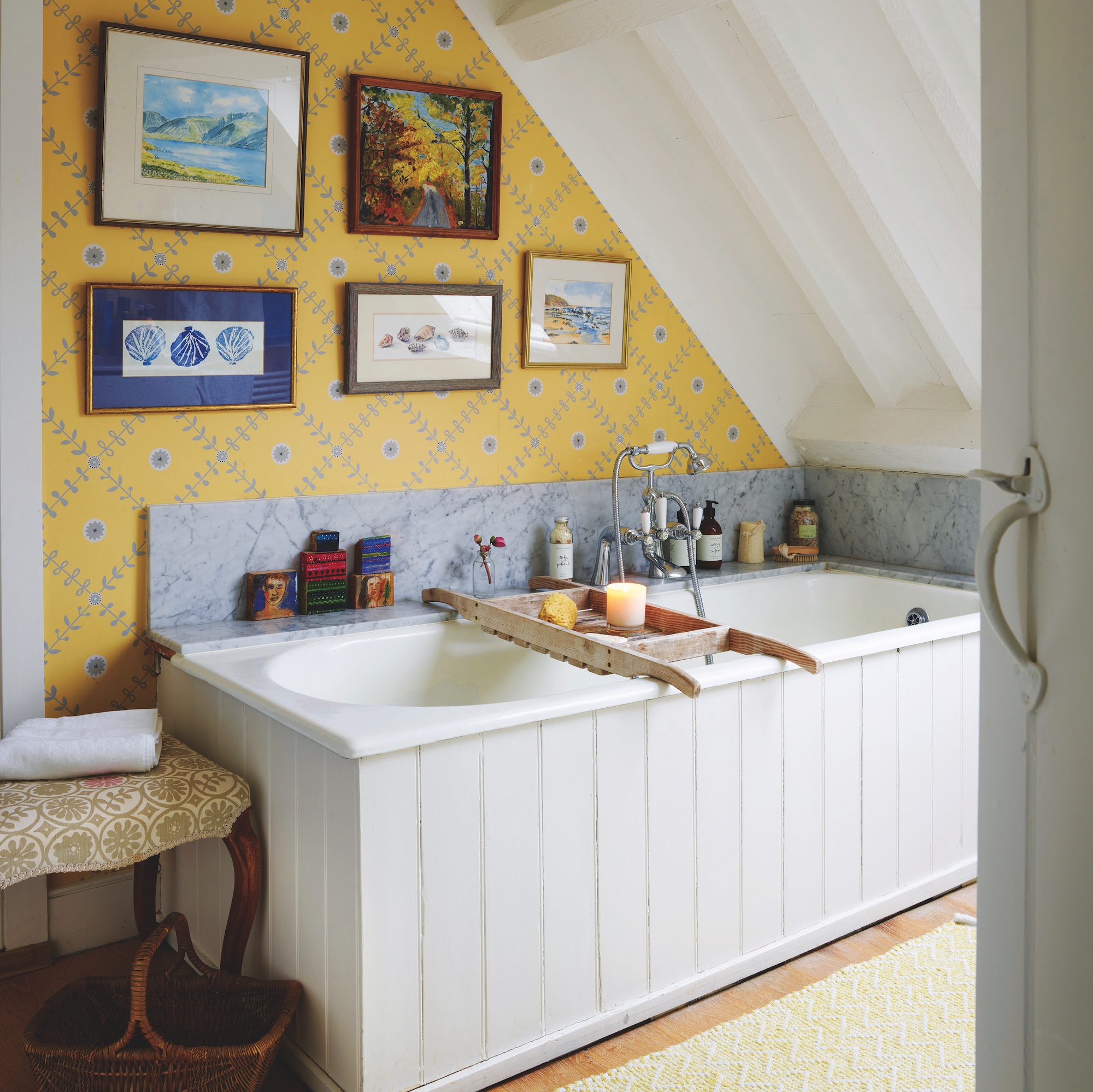
Vanessa’s Fruit Garden wallpaper in Buttercup, Clay and Winter, is a colourful backdrop for her father’s paintings.
Exterior
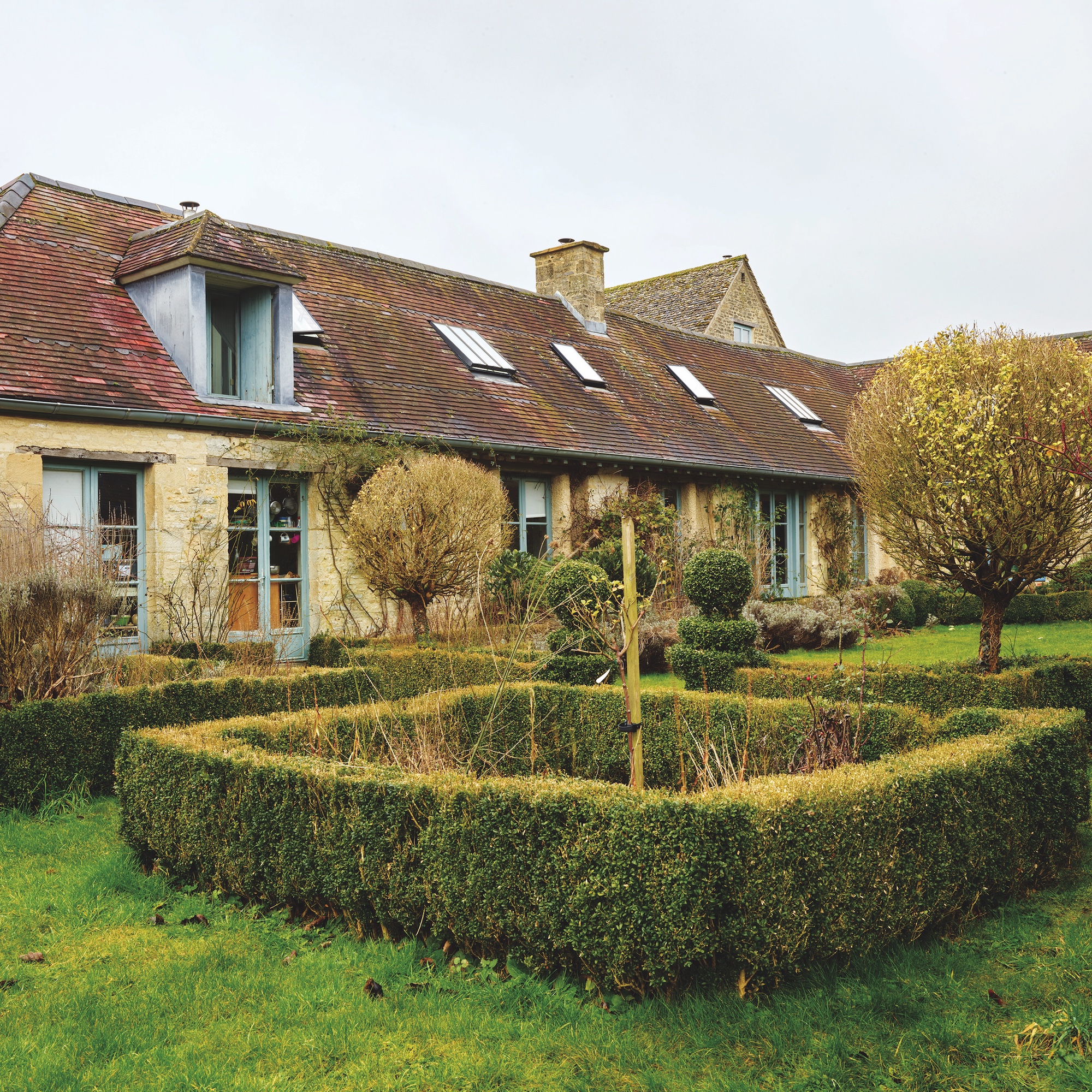
The property is a detached seven-bedroom barn conversion, which the couple bought in 1993. The original properties, built in the 1890s, have been converted and extended. Today, doors from the ground floor rooms open out to the couple’s garden, complete with box hedges and mature shrubs.
.png?w=600)