The average person spends around $142.26 a month on electricity, according to the Energy Information Administration (EIA). Costs vary by factors like location, square footage, construction type and household size.
Be Aware: New Law Could Make Electricity Bills Skyrocket in These 4 States
Try This: 4 Clever Ways To Pocket an Extra $1K This Month
For many people, that’s a hefty chunk of cash. Even if your household funds aren’t that tight, you might still be looking for ways to lower the bill. GOBankingRates list three of the best ways to slash your electric bill now.
Shave Off One-Quarter of Your Bill With Energy Star Upgrades
Switching over to Energy Star upgrades could save you money on electricity. These are home improvements that meet the Environmental Protection Agency (EPA)’s energy-efficiency standards.
Here are some Energy Star-certified home improvement products and the estimated cost savings of each, as per Energy.gov:
- High-efficiency air conditioner (non-heat pump) — up to 50% A/C cost reduction
- Heat pump clothes dryer — uses 20% to 60% less energy than traditional dryers
- Heat pump for heating and cooling — up to 65% reduction in electricity usage
- Induction cooktop — up to 10% more efficient than conventional electric ranges
The IRS also has tax credits for some of these upgrades. So, while you’ll have to spend money upfront, you’ll get a small rebate when you file. For some upgrades — like energy-efficient windows — the tax credit is low (around $600 annually). For others, like solar panels, you can get a credit valued at 30% (max) of the total cost.
According to Energy Star, the typical U.S. household can save around $450 on energy bills each year by switching to these energy-efficient upgrades. Breaking this down further gets you a $37.50 cost reduction per month. That’s 26% off a typical $142.26 power bill.
Learn More: Suze Orman Reveals the No. 1 Bill You Should Pay First Each Month
Upgrade Your Home Insulation
Joe Marchionni, home improvement expert and owner at Amity Home Maintenance Solutions, suggested upgrading your home insulation if you want to save at least 10% on your utility bills. But don’t ignore the attic space if you’ve got it. You’ll want to seal it, too.
“Most homeowners think about the insulation itself, but the sealing is an important first step,” he said. “Without sealing, the gaps around plumbing vents/stacks, recessed lights, and top plates, your new insulation won’t be quite as effective.”
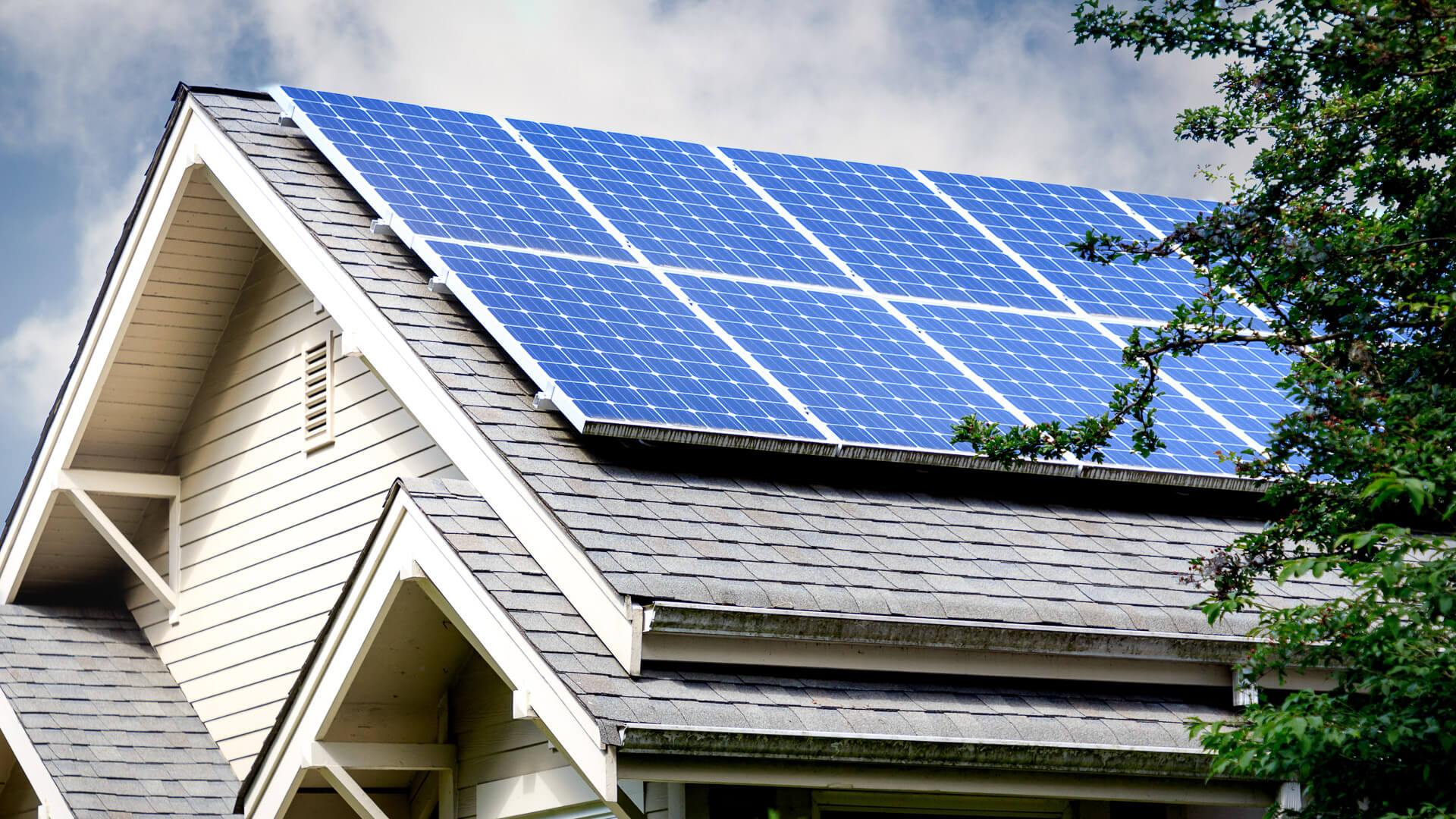
Switch To Solar Energy
Switching to solar power could save you money on electricity (depending on where you live). It can even increase the value of your home.
There are upfront costs, of course. But if you’re thinking long term, there’s definitely value to be had.
“This is a kind of project that has a high upfront cost and a break-even point years down the line, but in the long run, it makes a significant difference,” said Andre Kazimierski, co-owner and president at HomeHero Roofing. “The average person saves at least $1,000 per year, which is well over 10% savings.”
In fact, $1,000 broken down into 12 months is $83 in savings. On a typical $142.26 electric bill, that’s closer to 59% in savings.
More From GOBankingRates
- 15 Member Deals Happening Only at Costco Now
- 5 Reliable Cars That Will Have Massive Price Drops Ahead of Spring 2026
- 5 Clever Ways Retirees Are Earning Up to $1K Per Month From Home
- 9 Low-Effort Ways to Make Passive Income (You Can Start This Week)
This article originally appeared on GOBankingRates.com: This One Home Upgrade Could Cut Utility Bills by 10% to 20% in 2026