
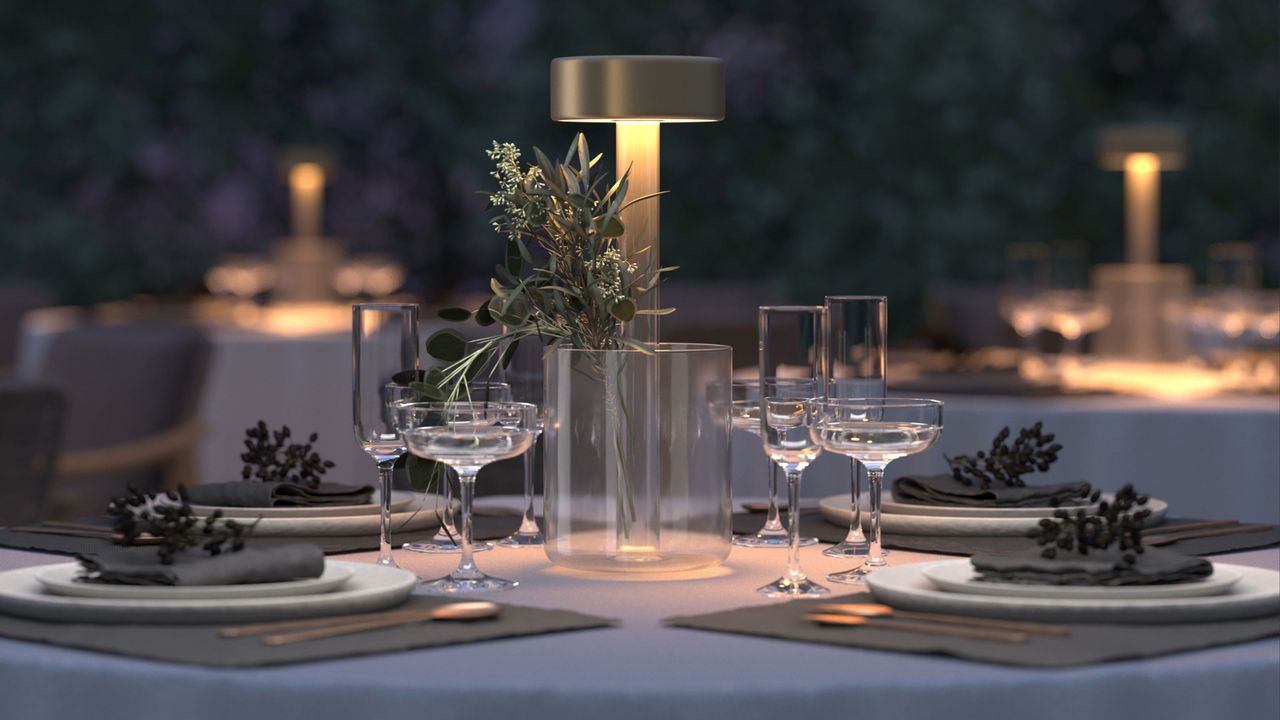
Most of us are divided when it comes to AI. Friend or foe? Help or hindrance? A combination of everything? Too early to tell? Too late to stop? In the world of design (and beyond), it's become harder to tell what's real and what's not. But this Small Dimmable LED Vase-Table Lamp by Maytoni (available at Westwing) is very real — and, yes, was made "in collaboration with AI".
So, what does that actually mean? “Observing the rapid changes in product design driven by AI, I decided to contribute to this evolution,” shares Alexey Danilin, the designer from Maytoni, a German lamp company that Westwing teamed up with on this innovative creation. “In 2022, when successful case studies of AI implementation in design were still rare, I set about developing an unusual lamp. My aim was to rethink conventional approaches."
As for the result? It "exceeded expectations," Alexey tells me. And in 2023, the designer presented "one of the world's first mass-produced luminaires designed with the involvement of AI," he shares. "This project is more than just a product: it symbolizes the dawn of a new era, in which technology becomes a co-creator."
As for the vision behind this design, Alexey explains that he wanted to combine the functions of a table lamp with the aesthetics of decorating with flowers. "My initial attempts with image generators were unsuccessful as they didn't meet the requirements for functionality and cost-effectiveness," he explains. "So, I applied the 'error principle' — I started asking AI for absurd ideas."
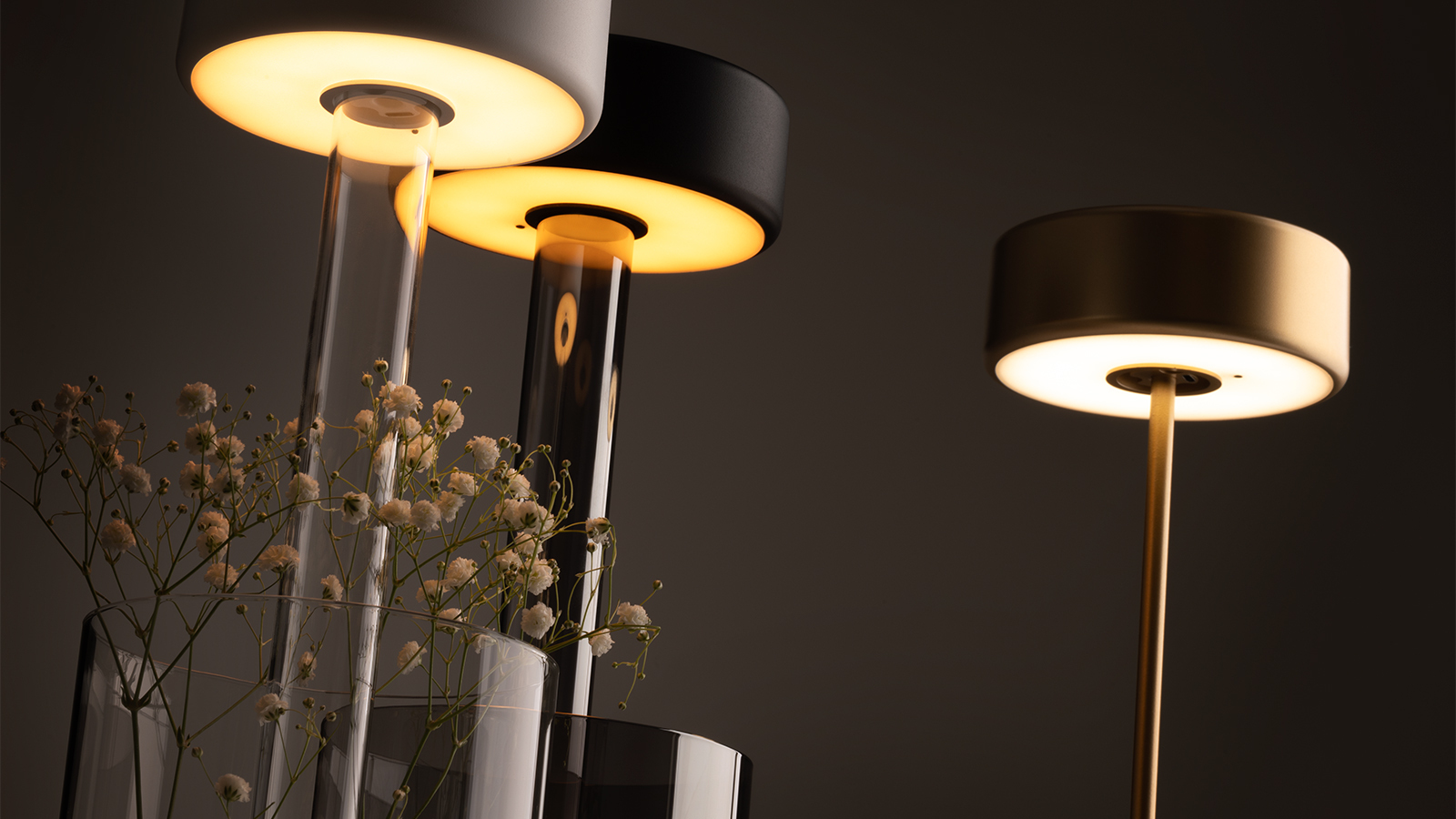
Among them, he says, "came the concept of a 'vase within a vase,' which I turned into a real lamp." The result is a sleek and modern portable table lamp-cum-vase hybrid featuring a base beautifully crafted from glass that extends seamlessly into a column neck topped with a metal shade. The diffuser emits a soft, ambient glow, while the touch dimmer lets you dial up and down the light as required. It's available in three colorways: gray and black, clear and gold, and transparent — and is rechargeable via USB.
Part vase, part lamp, there's no denying that this design is innovative. The light is emitted from the top and crafted from black aluminium, while the column neck leads into the hand-blown glass base for an artisanal feel. Rather conveniently, a USB port is hidden at the bottom.
The glass base of this lamp-vase hybrid is hand-blown for an artisanal feel characterized by a flowing form and distinctive texture. A column neck leads to the aluminium top, from where light is emitted, beautifully finished in a gold colorway. A dimmer switch means the ambience can be dialled up and down.
For minimalists, this take on the lamp-vase design is perfect, featuring a transparent colorway that doesn't add to visual clutter. It comes with the same hand-blown base and aluminium top as the other styles, albeit clear, meaning the focus is very much on its organic form, unique texture, and ambient glow.
So, how does 'collaborating with AI' really work when designing a product? Alexey says it's still wholly creative. "First, I conducted an experiment to generate an entire lamp using AI," he explains. "I created hundreds of images, but this method didn't produce the desired result. So, I changed my strategy and focused on generating more fantastical decorative forms from glass, which yielded a number of interesting visual solutions."
"Finalizing one of the selected forms into a fully-fledged design project for a mass-produced lamp took around two weeks, excluding prototyping, refining, and production," he adds.
And it's just the beginning. Maytoni already plans to launch a limited-edition version of the design in the near future. "The main conclusion of this project is techno-optimism," he explains. "AI simplifies the design process and, crucially, improves and accelerates the visualization of ideas. Thanks to this, we can concentrate instead on exploring and developing. I'm convinced that AI will enrich the world of design with new ideas. In this new environment, the key competencies will not be skills in effective presentation, but fundamental qualities: imagination, spatial thinking, and design."
So, how do we feel about this? Many might see this as the beginning of the end, but Alexey doesn't feel that way. "Many think that artificial intelligence will soon replace designers, but as things stand today, that's impossible," he tells me. "When I tested various AI tools for design, I noticed a pattern: the algorithm handles the visuals perfectly, but often ignores the real-world constraints."
"It can draw a beautiful chair that can't be manufactured or propose a lamp design that defies the laws of physics," he adds. It can be an effective tool for visualizing a concept, "but as a designer, I choose the best, refine it, add context, and turn raw concepts into real products." The designer chooses instead to see AI as an ally. "It expands my capabilities, but the final decision always remains with me," he says.
Livingetc's editor, Hugh Metcalf, recently spent a day at Google HQ, learning how to use generative AI to visualize his home renovation. Starting the day as a true skeptic, he left admitting, while glitchy, it's hard to ignore how helpful the tool can be when used well.
For more design inspiration, subscribe to Livingetc's newsletter.