
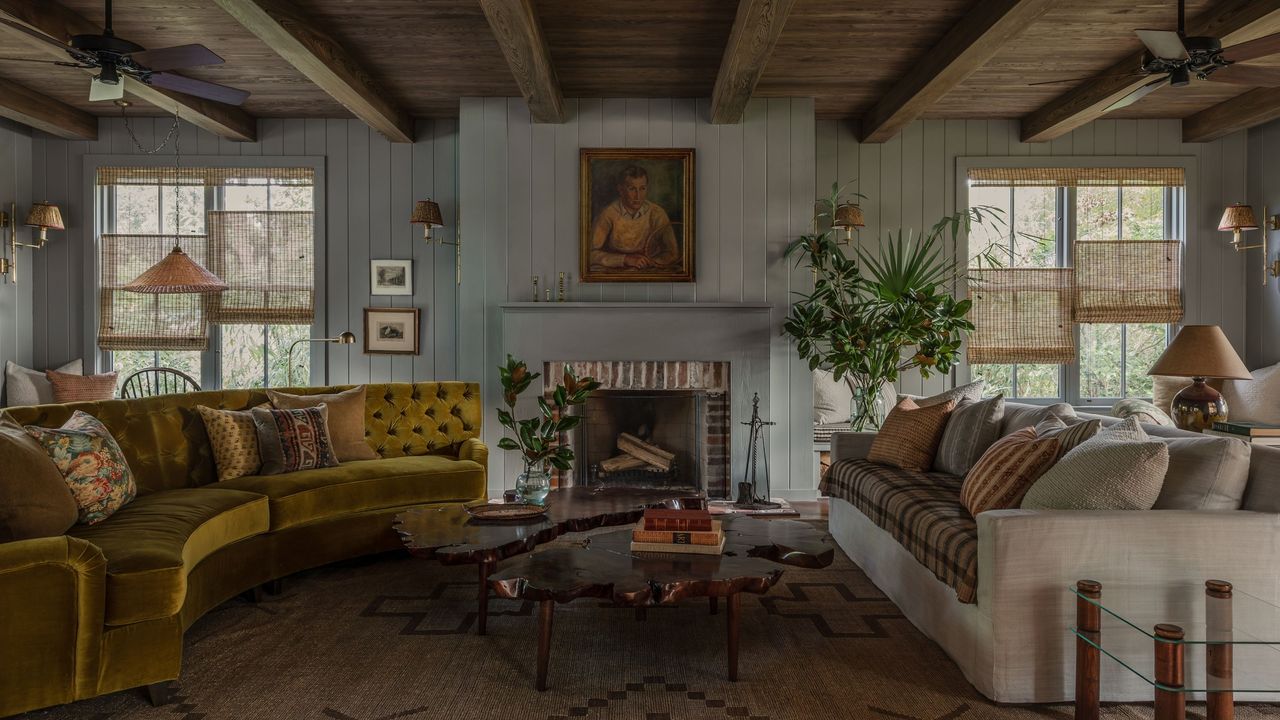
I live in a street-level apartment with large windows. The sunlight this time of year is a fabulous perk, but it also means that blinds are a very important part of my design scheme. As such, I've spent a lot of time searching for blinds that blend style and practicality, and full disclosure, it hasn't been easy. But then I came across this project by New Orleans-based Logan Killen Interiors, and fell head over heels for the top-down, bottom-up blinds in the living room. Safe to say, I've called off my search.
By definition, top-down, bottom-up shades aren't particularly exciting when it comes to different types of blinds. Typically, they're more functional than they are aesthetic — you can roll either end of the blind to adapt how much light you want to let into your space. But interior designer Jensen Killen has managed to use them to add privacy without blocking too much light, and turned them into a style statement in the process.
Choosing the right material and color is crucial to capitalizing on the design of the top-down, bottom-up blind. Plus, knowing where to put them and how to style them. And how's that? Well, I went straight to the source, asking Jensen for her specific method, as well as finding a few options you can shop below.
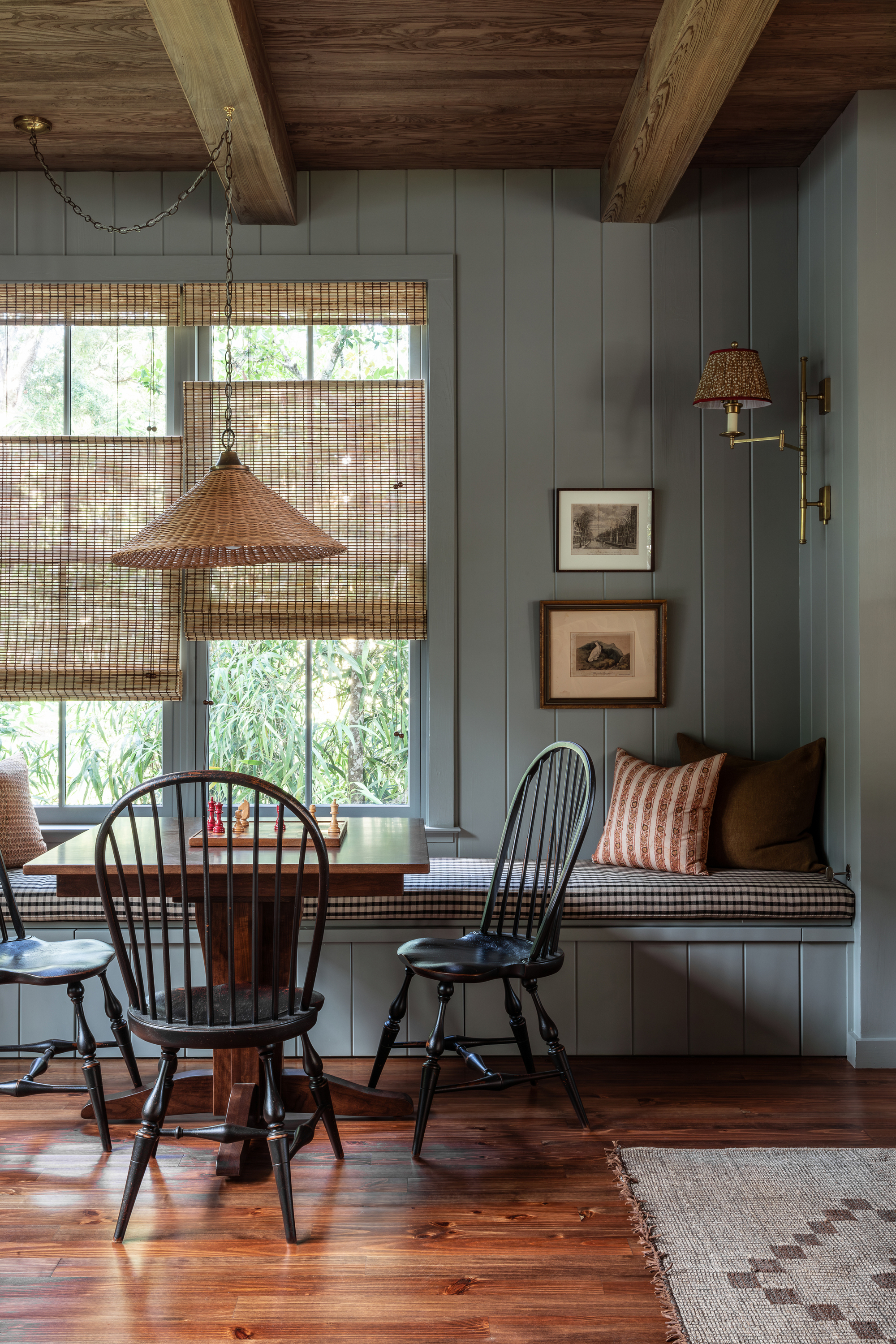
Choosing top-down, bottom-up blinds typically means you're looking for a modern window treatment that marries form and function. In the seating area pictured above, Jensen Killen says, "We wanted simple window treatments that provided versatile light and privacy control, so bamboo top-down, bottom-up shades became our answer."
Curtains can sometimes feel too heavy, while shutter shades and cafe curtains aren't quite as versatile as they sometimes seem. In street-facing rooms or rooms with large window panes, the top-down function is ideal, as it allows privacy while maintaining visibility and light.
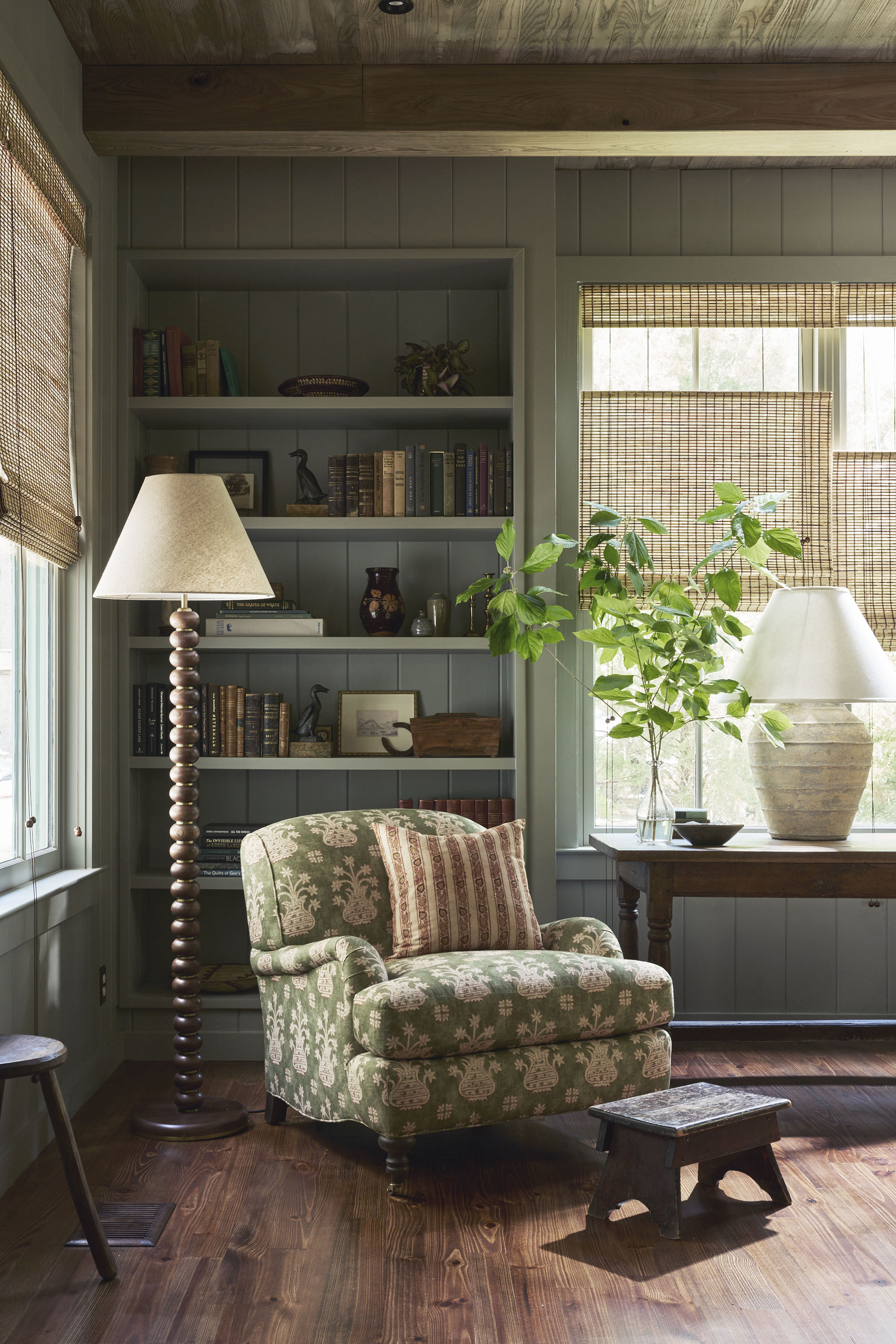
However, the bamboo is what really makes this window treatment stand out in this space. As Jensen explains, "The natural material blended beautifully with our earth-toned color palette, bringing the outdoors in." Rather than feeling like a strip of material across the window, the texture of bamboo curtains makes it a focal point, adding to the design rather than being solely functional.
There are a few other tricks to elevating the top-down, bottom-up blind. "When installing in a multi-bay setup, allow each window to have its own shade to provide flexibility in positioning," Jensen says. That way, you can arrange each panel depending on how much light it gets, and make it seem almost like part of the decor. "The separating detail of top-down, bottom-up blinds instantly gives a space personality when positioned imperfectly," adds Jensen.
You can also layer window treatments and curtains with your top-down, bottom-up blinds for additional light control. "This can be especially useful in bedrooms when you want to maintain visibility and privacy, but blackout is required," Jensen explains.
Versatile, stylish, and practical — can you see why top-down, bottom-up blinds have become an instant spring window treatment favorite of mine? Below are six places you can shop this style, based on Jensen's design and beyond.
A new season and longer days of new spring light mean your windows deserve a seasonal refresh. Ditch the outdated window treatments and opt for blinds that will elevate and ease.
Subscribe to the Livingetc newsletter to get more ideas delivered straight to your inbox.