When Pierre Bonnard first came to the French Riviera in 1904, he was just one of the countless artists who travelled southward seeking the unique light of France’s famous coast.
“Take your painting to Paris,” he said, “and the blues become grey. In the light of the French south, everything is illuminated, and painting reaches the peak of its vibration.”
I was in search of this light in Saint-Paul-de-Vence, a charming medieval town that’s been inspiring artists for over 100 years. André Derain painted here, Marc Chagall lived here; plenty more drank here.
Since the end of the 19th century, the Cote d’Azur has attracted everyone with money to spend, from royalty to movie stars. But whereas celebrities come to the coast wishing to be seen, artists flocked to the region wishing to see.
Before the French Riviera was synonymous with wealth and glamour, it was a hub for artists, who travelled here to paint the azure of the sky, the green of the olive leaves, and the collage of colours found even in shadow.
As a result, there’s no shortage of places for the art-lover to visit here. There’s the Musée Matisse in Nice, the Musée Picasso in Antibes and the Musée Renoir in Cagnes-sur-Mer, to name just a few.
But for those wishing to see more beyond the more popular spots, Saint-Paul-de-Vence is well worth a visit. For all its old-world charm, this is a forward-looking town: its artistic history is appreciated, but it’s a place to see new and exciting work.
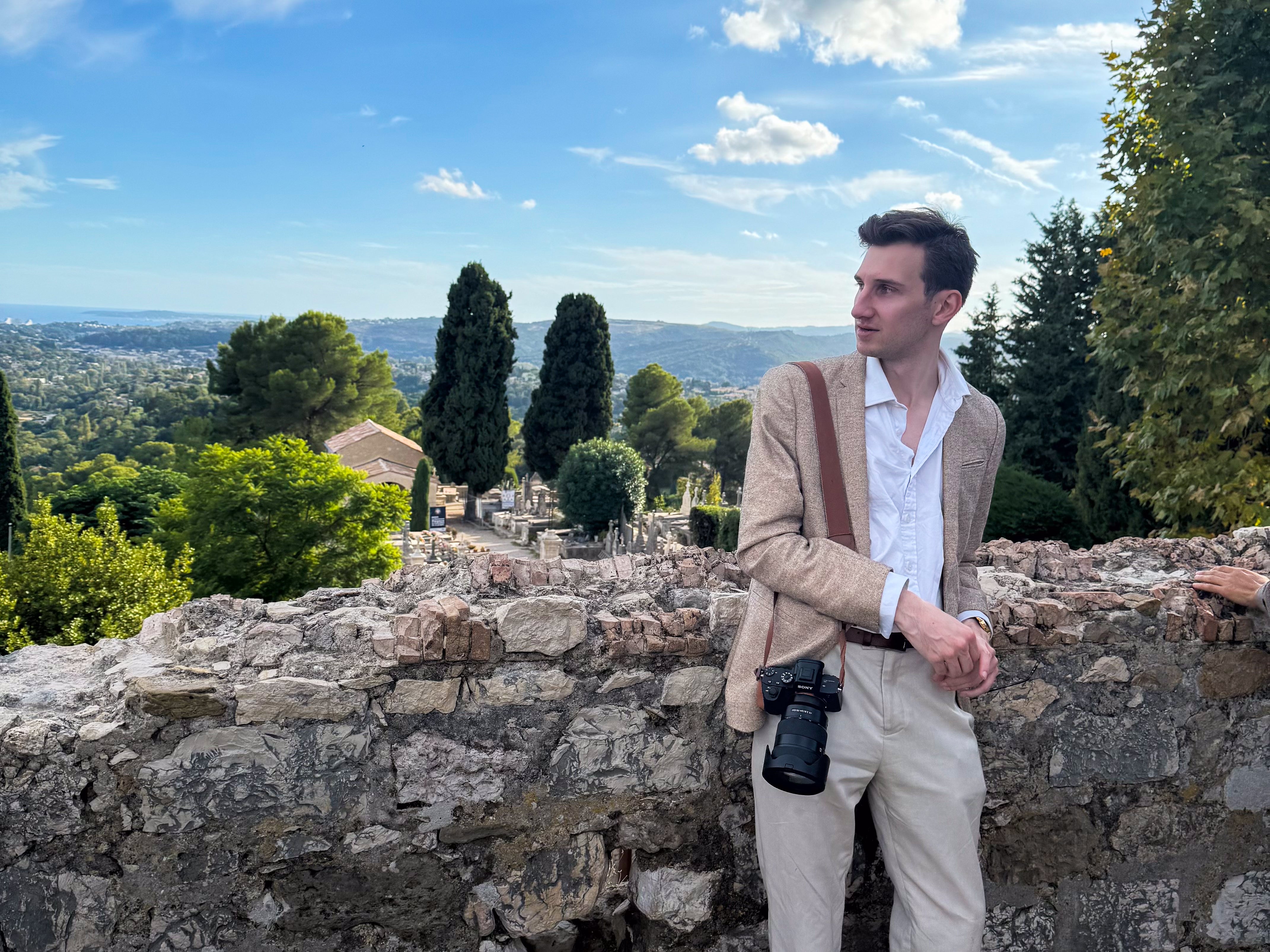
Walking through the cobbled streets, it’s clear that art is the town’s main business. There are restaurants and bars, but it seemed that every other window I passed was a gallery. In fact, there are more than 20 in the small town, and many more in the surrounding region, showcasing painting, sculpture and photography by contemporary artists.
Among them is Galerie Podgorny, which earlier this year hosted an exhibition of Noel Fielding’s paintings (there’s an opening night party I wish I’d been invited to.) La Foundation CAB was another favourite – it celebrates international minimalist and conceptual art, and features several works from the short-lived Supports/Surfaces movement.
We also took in Galerie Catherine Issert, and Galerie 46 St Paul, and the list goes on.
It’s easy to get “museum fatigue” when walking around a single large gallery like the Louvre, but hopping from one small space to the next, I couldn’t help feeling a buzz. It was a little like being a theatre-lover in Edinburgh during the Fringe, running from one show to the next. The abundance of art on offer energises rather than tires.
Of course, befitting a town with such a rich history, there are famous names a visitor cannot ignore. La Fondation Maeght, created by Marguerite and Aimé Maeght, is worth the price of admission just to look at the Modernist building, designed by Catalan architect Josep Lluís Sert.
The foundation houses over 13,000 works, including pieces by Miró, Chagall and Braque. Under the shade of pine trees, we walked through Miró’s Labyrinth, a gorgeous sculpture trail in the gardens of the gallery. A temporary exhibition of Barbara Hepworth happened to be on during my visit, which was equally brilliant, although I didn’t have any desire to think about England during my French sojourn.
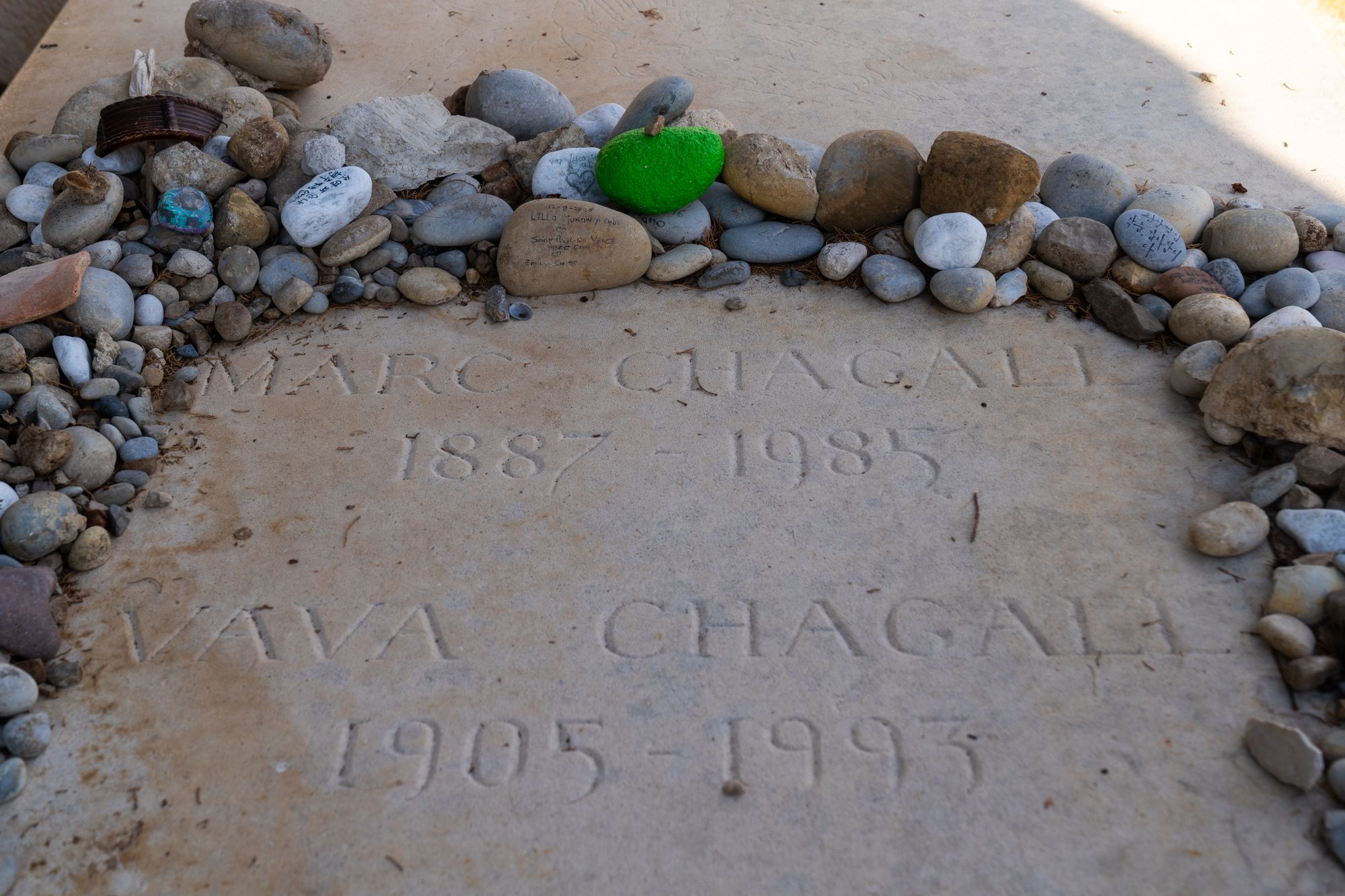
Walk to Saint-Paul’s cemetery and you’ll find Marc Chagall’s grave. Many historical artists visited the town and lived nearby, but Chagall made St-Paul his home in 1966, residing here until his death in 1985. Chagall was Jewish, but after his death, his wife Vava insisted he be buried in the Catholic cemetery. Many visitors leave a pebble on the tomb, a Jewish tradition of remembrance.
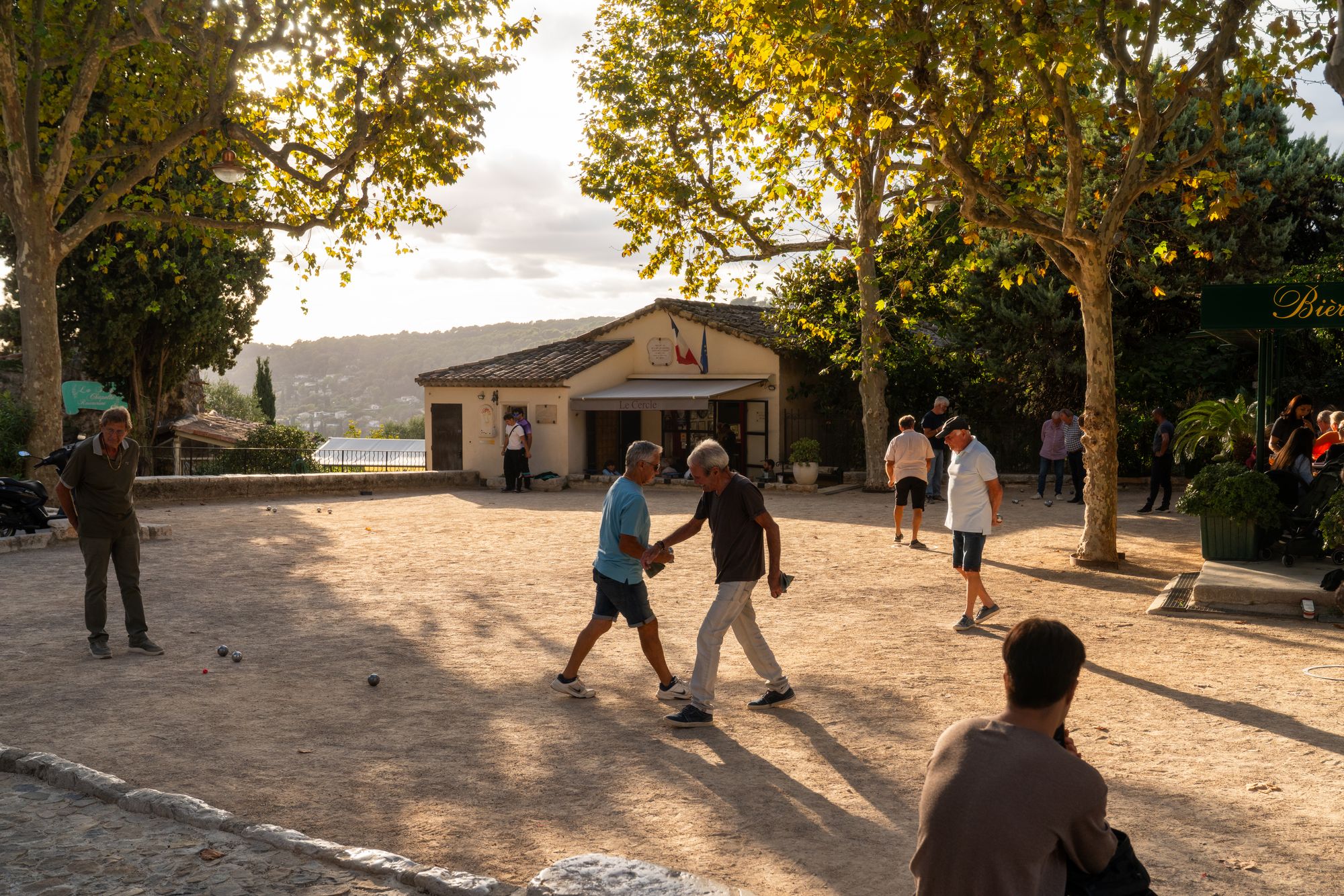
After a long day of looking at art, I sat with my guides outside a bar just next to Galerie Podgorny. As we drank our beer, the sun was setting, and we watched the locals play pétanque, their long-shadows dancing on the golden courtyard. I felt like I was in a Renoir painting; my iPhone camera just couldn’t do the light justice.
Afterwards, we crossed the road to La Colombe D’or for another aperitif. For anyone interested in history, art, or gastronomy, a visit to La Colombe D’or is essential. Open since 1920, the bar and restaurant has welcomed Picasso, Matisse, Miró, Signac, Dufy, Chagall and other legendary painters.
When short on cash, they paid for their meals with paintings and sketches, which now adorn the walls.
As my guides are keen to tell me, the art scene in Saint-Paul-de-Vence is thriving today. They should know: they are the Leroy brothers – artists themselves, and owners of Toile Blanche, a beautiful boutique hotel in the hills that’s a five minute drive from the town.
The three Belgians started the hotel in 2004 when it was just a three-bedroomed B&B. Now, it boasts 22 luxury suites and a villa, but what makes Toile Blanche special is its private collection, from paintings on the walls of the rooms to sculptures dotted all over the grounds. Many are sourced from galleries in Saint-Paul.
Guests can explore Toile Blanche Contemporary, an on-site exhibition space, so you don’t even need to leave the hotel to have an art-filled holiday if you don’t feel like it.
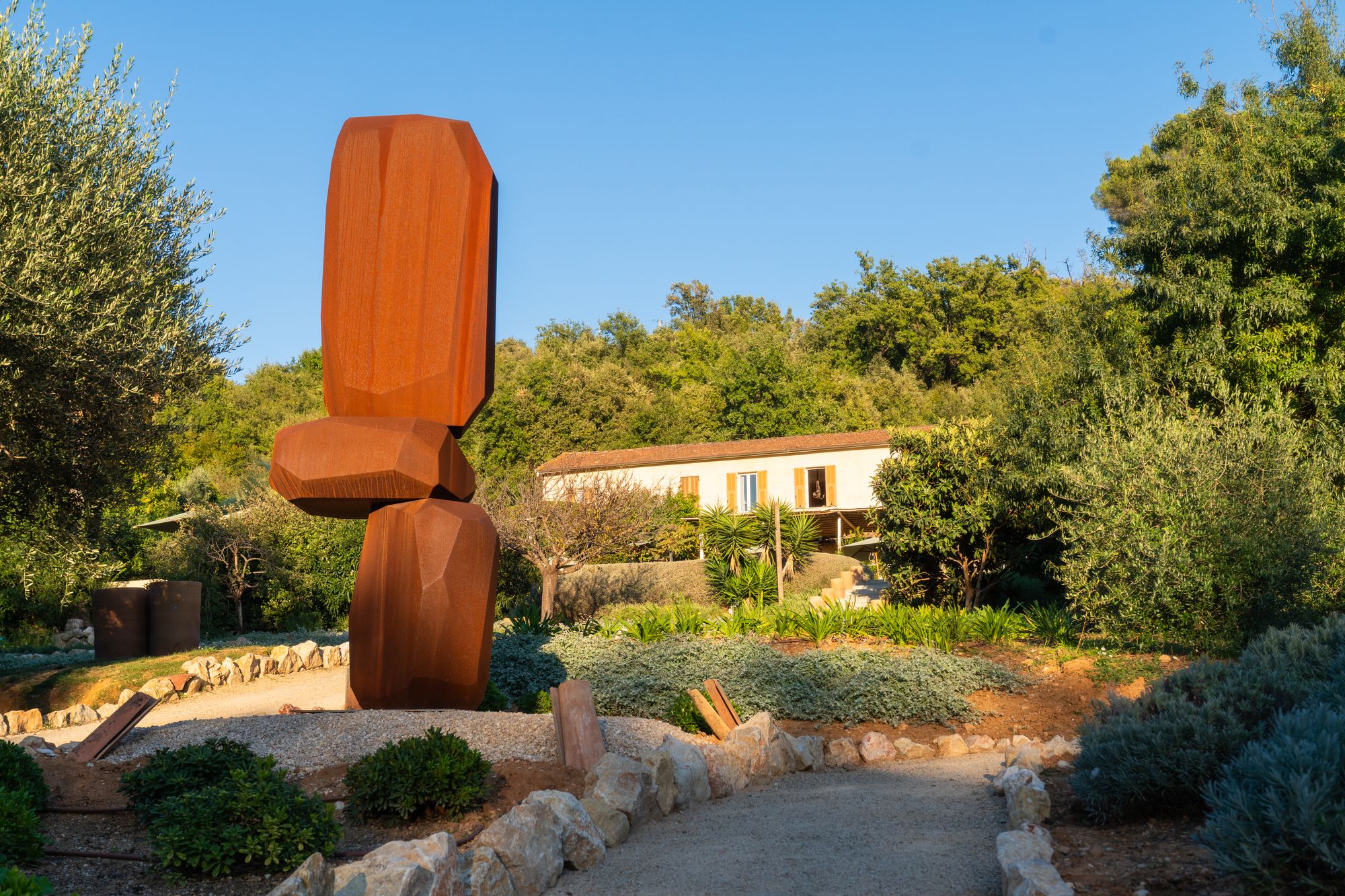
There are several works by the artist Raymond Leroy, the brothers’ grandfather, which reminds guests that, for the Leroys, creativity has long been in the family.
To experience that creativity, visiting during the cooler months is probably ideal. Back when the French coast was becoming a hotspot for rich tourists in the early 20th century, it was largely empty during the summer.
British travellers were advised to leave in April, so as to not miss the “season” back home. Nowadays, travellers would do well to avoid the crowds and the heat of the height of summer.
So if you’re happy simply wandering from gallery to gallery, taking in the views of the sea, and enjoying an aperitif in the gentle evening heat, take a trip to Saint-Paul-de-Vence in the spring.
How to do it
British Airways and easyJet fly to Nice from most major airports in the UK, taking around two hours. Prices start at £45 return. From there, it’s a 20-minute drive to Saint-Paul-de-Vence.
To travel by rail, catch the Eurostar from London St Pancras to Paris Gare du Nord, then a train from Paris Gare de Lyon to Nice-Ville.
Where to stay
Room rates at Toile Blanche start from £175 and include breakfast.
Adults only, children upon request.
Henry was a guest of Toile Blanche.
How women are reviving traditional Seto culture in Estonia
This Mexican city is the coolest, most colourful place to visit in the country
Modern Las Vegas might be fading, but its vintage side still thrills
From Suffolk to Margate: Exploring the lands of Turner’s fire and Constable’s rain
Lyon’s green revolution makes it one of Europe’s best cities to visit. I should know, I live here
Les Roches Rouges, France, hotel review
I visited Mexico’s most colourful city for a lively, culture-filled getaway
I saw the best of unspoilt France on a €1 train ticket
Koblenz is the cosy German city that welcomes visitors like locals