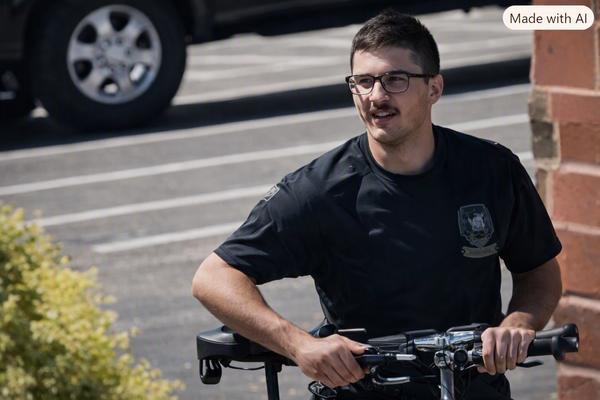
At the beginning of April, you might have seen a few news stories from various publications about the Los Angeles Fire Department (LAFD)'s new Electric Motorcycle Response Program. Social media posts and news stories alike abounded, and the comments mainly focused on two things: Whether it was an April Fool's joke, and debate about how good an idea it is to use e-bikes in the types of situations that call for firefighters in the first place.
The Internet is the Internet, and both humans and bots alike can quickly flood a comment section with a lot of things that may or may not make sense. But the thing is, neither of those responses seemed particularly out of line. April Fool's jokes, whether you think they're funny or not, abound. As for the perceived fire risks, there've been plenty of tales of woe involving e-bikes with malfunctioning batteries causing serious fire damage to structures, including an entire garage belonging to a police department in Idaho.
That's why, to get to the bottom of both of these questions, I reached out to the LAFD to get more information about the program. Here's what an official spokesperson for the Los Angeles Fire Department told me.
A short video announcing this program was posted on the official LAFD YouTube channel two days ago (April 1, 2026). Is this a real program or an April Fool's prank?
No, this is very much a real program the LAFD is exploring.
Can you give more information on what specific e-bike models are being used for this program? Also, what is Google and YouTube's involvement with these vehicles and this program?
The new e-moto bikes are ERide Pro electric bikes. Google and YouTube have graciously donated the E-moto bikes and helmets to start this new program.
Will first responders using these bikes receive additional training in their safe use at maneuvering in tricky off-road conditions?
LAFD members will be going through additional off-road training and certification.
E-bike batteries catching fire have been an ongoing concern, and one that can be difficult to manage given differing e-bike battery chemistries. Can you outline the thought process that went into specifically choosing e-bikes (as opposed to gasoline-powered trail bikes, for example) for this unit?
In the areas that the LAFD expects to utilize these tools, the noise produced by gas powered motorcycles would cause issues with the public. Having the e-moto bikes will allow us to get to remote areas, [as well as] navigate through large gatherings all while not negatively affecting the public with the noise and emissions of a gas-powered engine.
Other first responders in other places (including other countries) have been making use of special units trained to ride in off-road situations for some time. Did the LAFD consult with any experienced outside first responder agencies for advice on what worked and what didn't when building out this program?
The LAFD used to have a motor recon program, [and] we were able to resurrect much of that program and adjust for the new bikes and mission profile. We have already built out training/certification programs for the use of UTVs in the wildland. Outside of that, yes, we routinely network with outside agencies on all of our programs.