
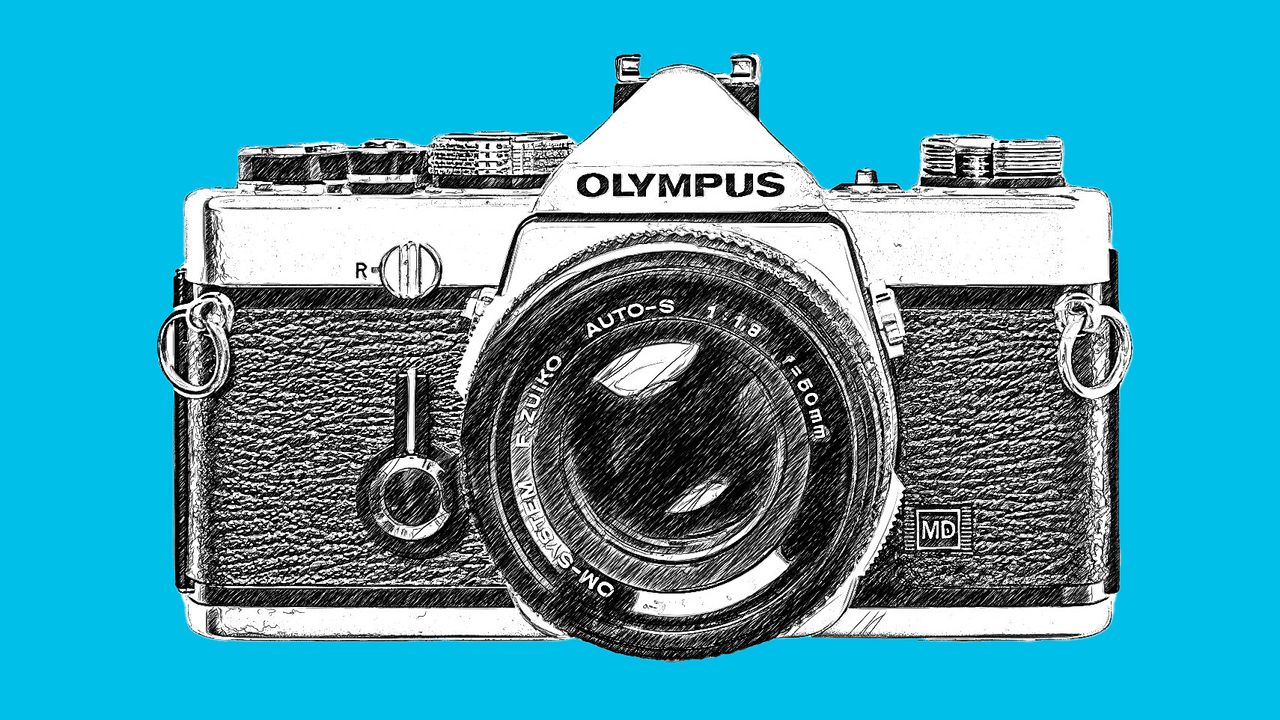
In 1972, Olympus’ chief designer Yoshihisa Maitani – by then famous for his Olympus Pen series – created the Olympus OM-1 with his team. It was the smallest 35mm SLR to reach the market since the 1958 Zunow.
Arriving up to a decade later than most of the established SLR brands, the OM-1 succeeded because of its incredibly compact size, light weight, robust engineering, superb lenses and excellent metering.
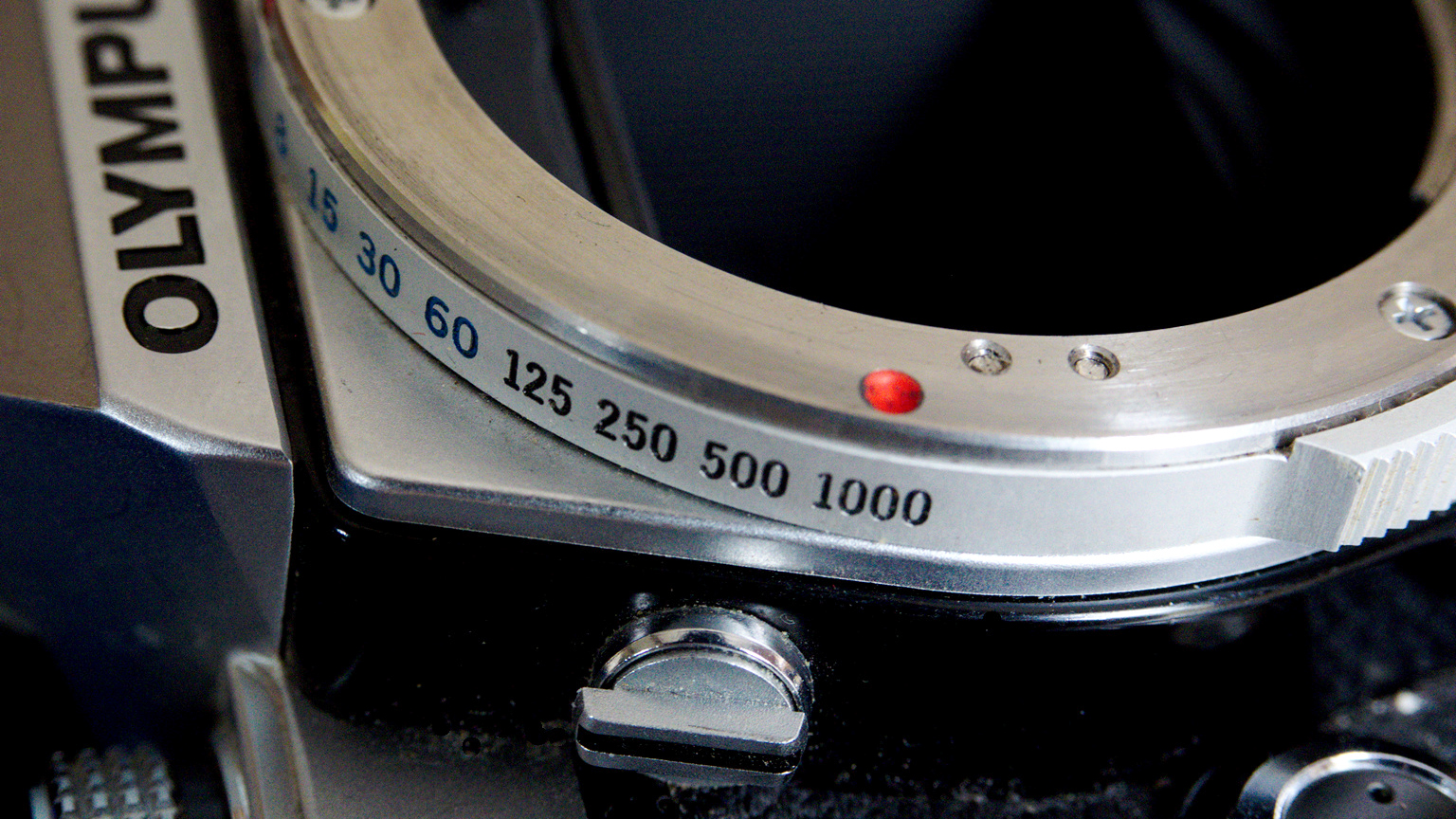
A distinctive feature is the shutter-speed dial built around the lens mount (similar to the shutter speed selector in the Nikkormat FT of 1965), which allowed for more compact construction. This may sound odd, but it was very easy and intuitive to use.
And, it boasted what is possibly the best viewfinder in any 35mm SLR camera of the era. This combination made it a runaway success.
At first, it was called the M-1 (in honor of its designer, Maitani) but the name was soon changed after Leica complained that the name was too close to its "M" series. Early examples, with the M-1 markings, are now highly prized by camera collectors.
In 1975 your scribe took an OM-1 with the Zuiko 50mm f/1.8 and Olympus’ first zoom lens, the 75-150mm f/4, to the USSR with great success. The latter had internal zooming, so when you changed focal length, the lens did not extend.
While not as sharp as modern, top-quality zooms, it was much better than average for the time – and made for an excellent, lightweight, travel kit.

Also in 1975, Olympus followed with an improved OM-2 – the first camera capable of actually measuring the exposure directly off the film, during the exposure!
To develop the TTL direct-metering system, Olympus collected film from virtually every maker worldwide and measured the reflection ratios for each roll. It discovered that, while film is made in many colors, the reflectivity varied by only 0.1EV, which meant that measuring the light off the film was indeed possible.
These results were also used to determine the density of a computer-generated pattern printed on the shutter curtain. In this way, the camera could provide an initial metering value to the user and then adjust it, as necessary, if the light changed during the exposure!
To accomplish this trick, the camera had two rearward-facing silicon photodiodes in the mirror box to meter light reflecting off the film. Its circuitry could detect when enough light was exposed and either close the shutter or even automatically quench a "dedicated" electronic flash.

In 1983, the OM-3 and OM-4 cameras appeared. Both featured shutter speeds to 1/2000sec but, while the OM3 boasted a fully mechanical shutter and mirror lockup for special lenses or uses, the OM-4 offered a battery-dependent electro-mechanical shutter and aperture priority exposure modes.
The OM series of professional-grade cameras (the OM 1, 2, 3 and 4 in various versions) and their consumer versions (all with double-digit model numbers, such as the OM-10 and OM-20) were made for 30 years. By the time the last ones were rolling off the assembly line in the early 2000s, over 1.2 million OM series cameras had been made.
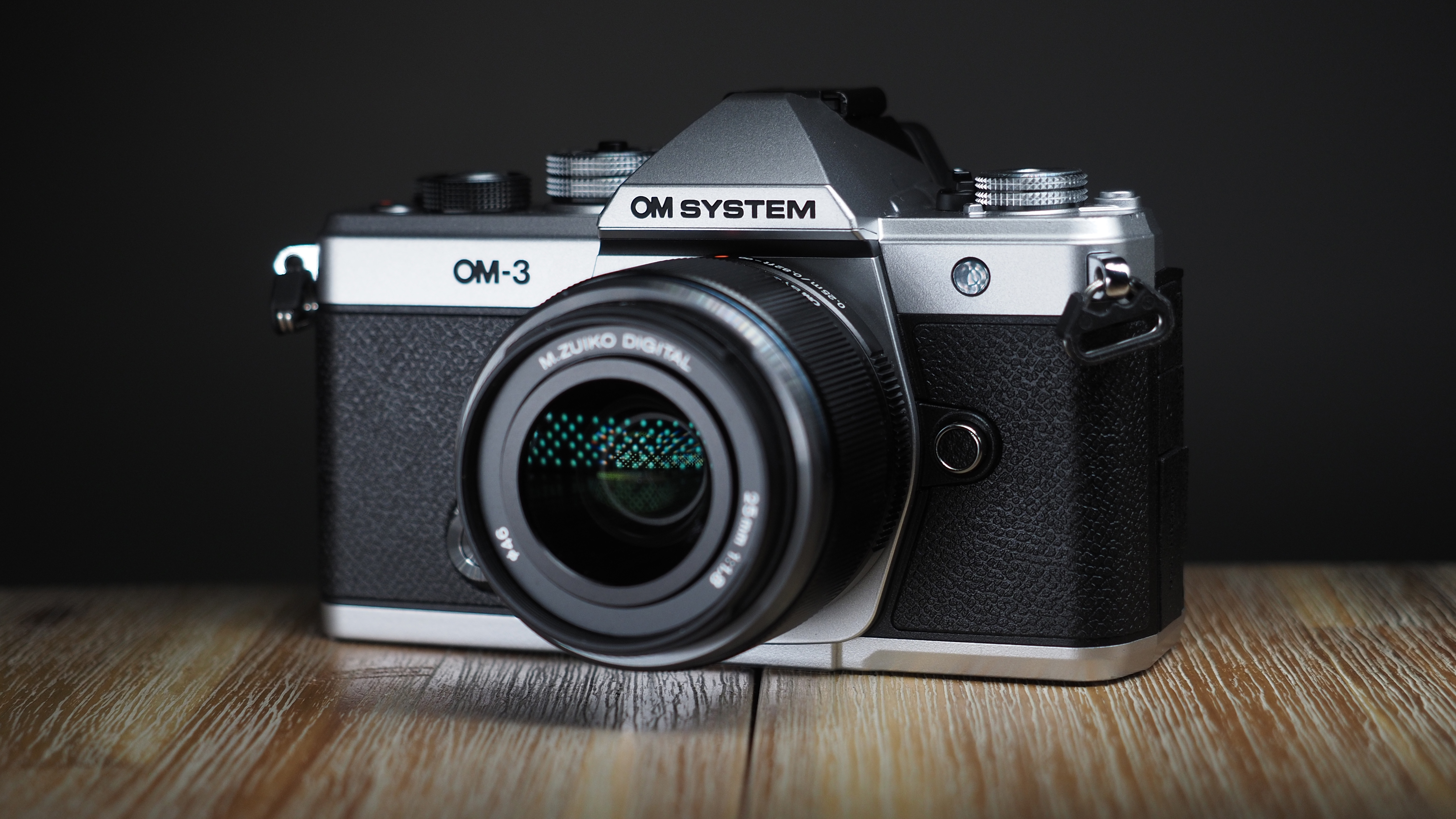
When, in 2021, Olympus sold off its camera division, the new owner (OM Digital Solutions) offered the OM System OM-1 – a mirrorless digital camera named in honor of the original OM-1. It was to be the last camera to carry the Olympus branding, with all later models bearing the OM System brand.
While the Olympus name is gone, the new firm acquired the factory, the engineers and the history. The soul of Olympus lives on.
Find out more about photography's past in David Young's book, A Brief History of Photography.
You might also like…
Take a look at the best film cameras you can buy today, along with the best Olympus and OM System cameras. You can also read other articles in David Young's Classic Cameras series.