The deal sealed on Friday morning in Brussels and first heralded by the tweet of a puff of white smoke is – as all deals are – a compromise. But not all compromises are bad.
The pressure on Theresa May over the last few days has been immense. The British media have reported her travails with the DUP and both remainer and leave colleagues of mine in the House of Commons in considerable detail. But readers and viewers in Britain are less aware that the pressure has not all been one-way.
The EU too needed an agreement, and needed it fast.
The UK’s weakness, its balance-of-payment deficit with the rest of the EU, has strengthened the prime minister’s hand. While Boris Johnson’s prosecco joke with the Italian prime minister may not have sparkled, the UK being the largest importer of French agriculture, horticulture and viniculture has focused the mind of Emmanuel Macron. He has been on the receiving end of anxious representations from French farmers, while Angela Merkel has been under still greater pressure from the Bundesverband der Deutschen Industrie, a more influential and powerful version of our own CBI. It has been demanding a successful trade deal with Britain for the sake of German jobs.
Having been an exporter of electronic equipment before I became an MP, I have always understood Britain’s global role as a trading power. Our strength lies in an incorruptible and international legal system that supports commerce, in our language and culture, in our tax system, and in our worldwide contacts. It made me a ferocious Brexiteer.
Jacob Rees-Mogg mentioned at prime minister’s questions on Wednesday that he thought Theresa May’s negotiating red lines were fast fading, but didn’t specify what those red lines might be.
Perhaps I can help. If there was one thing I believed before entering the Commons, it was that the UK would be better off out of the EU. So for me, the red lines are: the freedom to make bilateral trade agreements worldwide (membership of the customs union prevents this); control over our immigration and of our borders; and the supremacy of English and Scottish law and not that of courts in Luxembourg.
Today’s agreement meets those tests.
EU citizens
- EU citizens in the UK and UK citizens in the rest of the EU have the right to stay. Rights of their children and those of partners in existing “durable relationships” are also guaranteed.
- UK courts will preside over enforcing rights over EU citizens in Britain but can refer unclear cases to the European court of justice for eight years after withdrawal.
Irish border
- The agreement promises to ensure there will be no hard border and to uphold the Belfast agreement.
- It makes clear the whole of the UK, including Northern Ireland, will be leaving the customs union.
- It leaves unclear how an open border will be achieved but says in the absence of a later agreement, the UK will ensure “full alignment” with the rules of the customs union and single market that uphold the Good Friday agreement.
- However, the concession secured by the DUP is that no new regulatory barriers will be allowed between Northern Ireland and the rest of the UK without the permission of Stormont in the interest of upholding the Good Friday agreement.
Money
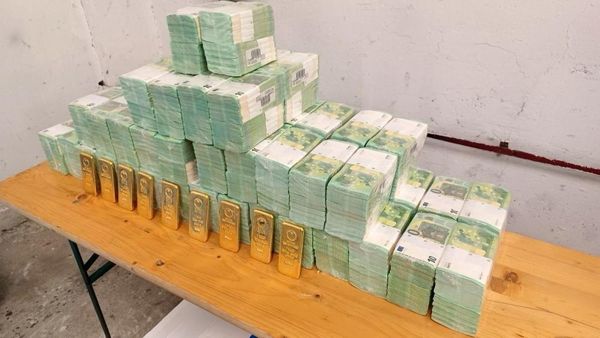
- There is no figure on how much the UK is expected to pay but the document sets out how the bill will be calculated – expected to be between £35bn and £39bn.
- The UK agrees to continue to pay into the EU budget as normal in 2019 and 2020.
- It also agrees to pay its liabilities such as pension contributions.
Other issues
- The two sides agreed there would be need for cooperation on nuclear regulation and police and security issues.
- There was an agreement to ensure continued availability of products on the market before withdrawal and to minimise disruption for businesses and consumers.
For months, the prime minister has said the United Kingdom must leave the single market and customs union. This has been confirmed and it will apply to the whole of the UK – Northern Ireland included.
If, in the months to come, the French and Germans have their way and a comprehensive free trade agreement is confirmed between the UK and the EU, the Republic of Ireland-Northern Irish issue can easily be managed.
And leaving the single market will enable the UK to enter into similar trade agreements with countries that have been unable to agree settlements with the EU.
I also welcome the agreement concerning EU and UK citizens domiciled in each other’s territories. Labour was foolish politically and irresponsible to argue for the welfare of EU citizens living in the UK while not insisting on similar protections for UK citizens living in Europe. I welcome immigration, but not to protect the rights of a million of one’s own citizens living in the EU is a huge dereliction of duty. Jeremy Corbyn should be ashamed. But at least he can now welcome protections on both sides of the English Channel.
I am content, too, with the handling of the thorny issue of the European court of justice. Our British courts can choose to ask the ECJ for a legal view on the law in relation to citizens’ rights where there is a point of law that has not arisen before, but it will be our courts that will make the final judgments on each case, not the ECJ. The compulsory jurisdiction of a foreign court will have ended, and after eight years a sunset clause will terminate this voluntary mechanism.
We have been members of the EU for about 44 years. Over that period we have paid into the system more than half a trillion pounds net. Between 2019 and 2022 we were due to pay in a further £32bn if we did not leave the EU. We are no longer hearing, as we did just a few months ago, that we would have to pay £100bn to the EU. Far from it. I believe that what we will pay will be cheap at the price.
So, given that the agreement announced on Friday is subject to our achieving a comprehensive free trade agreement with the EU in both the UK’s and the EU’s interests, we have made a good start. As Churchill might have put it: we have reached the end of the beginning of negotiations. Let the church bells ring!
• Michael Fabricant is the Conservative MP for Lichfield