
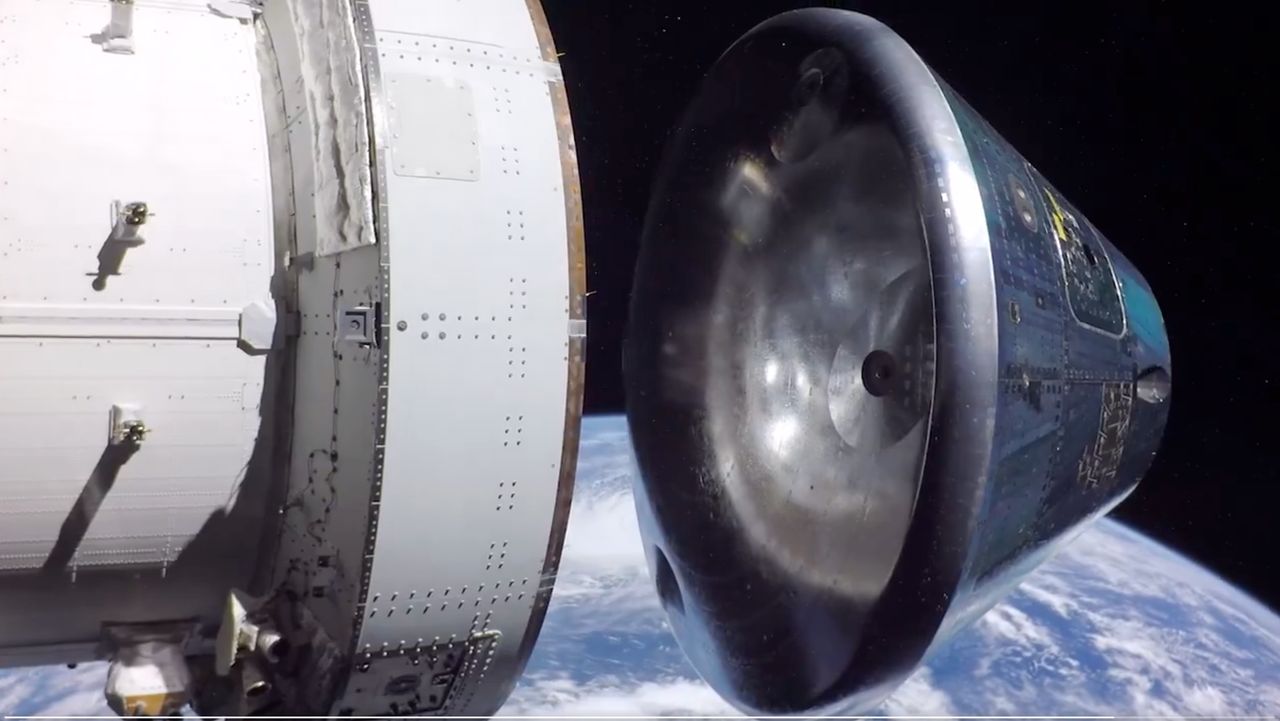
The Orion capsule's heat shield was a big topic of discussion during the Artemis 2 moon mission, and for good reason: It was the key component of the spacecraft that kept the crew safe when they reentered Earth's atmosphere.
The trajectory the Artemis 2 astronauts flew when Orion returned was different from the path taken by the uncrewed Artemis 1 mission's Orion spacecraft in late 2022. Unexpectedly high degrees of charring on Orion's heat shield during that mission led engineers to alter the spacecraft's course to prevent a recurrence on Artemis 2, but, as is anything untested in space, there is always risk involved.
So, when the Artemis 2 livestream transmitted a pixelated view of Orion's separation from its European service module on April 10 and put the spacecraft's heat shield on full display, people marveled at the surprisingly reflective surface mated to the capsule's broad side.
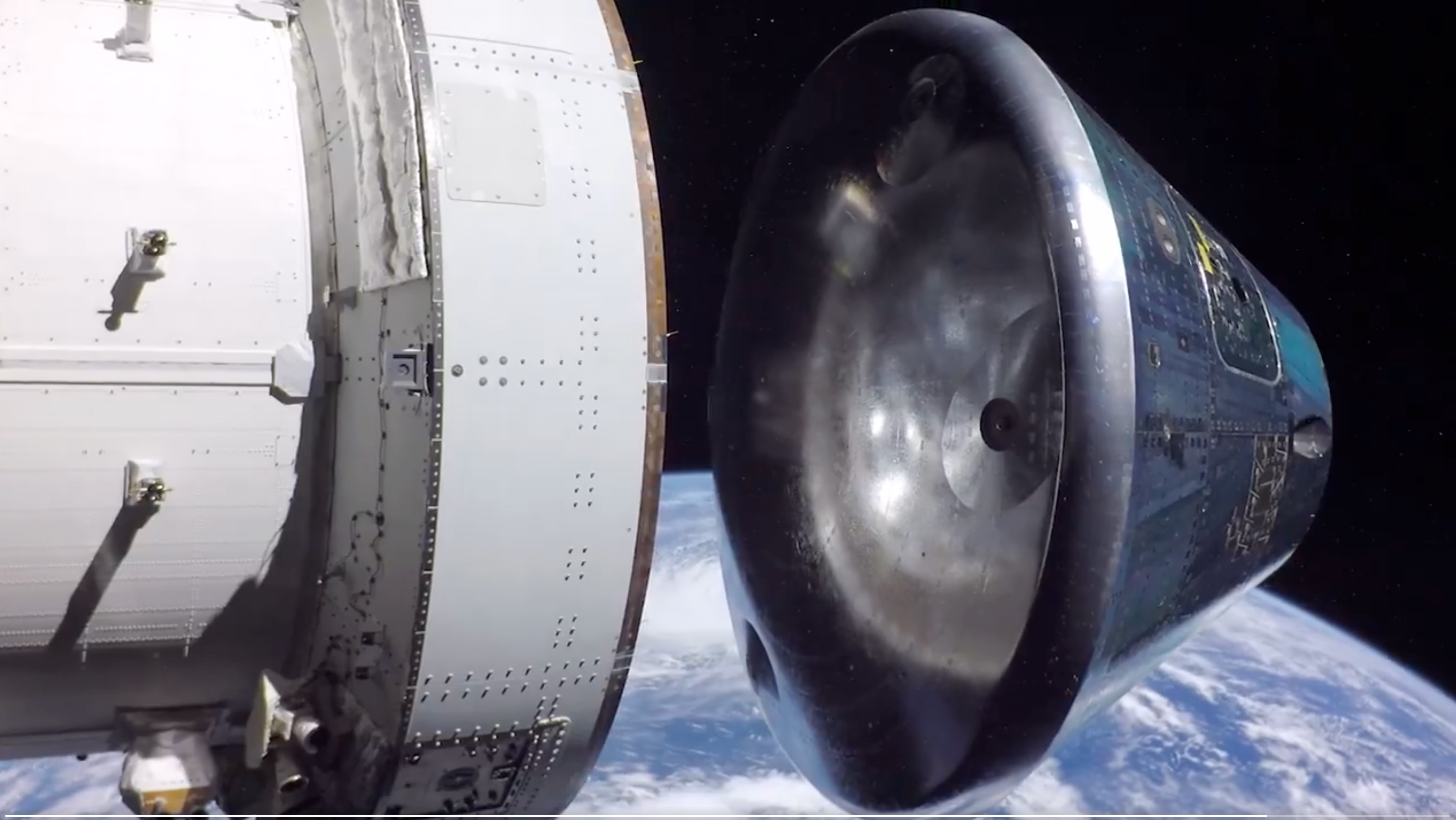
And everything worked out just fine: The Artemis 2 Orion and crew safely splashed down in the Pacific Ocean just over a half hour later, and now NASA has released the high definition footage from their stage separation.
"POV: You're coming home after a journey around the moon," NASA officials said via the Artemis program's X account in a May 15 post. The post included a video that shows two angles of the Artemis 2 Orion stage separation with its service module, highlighting the mission milestone in vivid detail.
As Orion drifts away, the service module can be seen reflected in the capsule's mirror-like heat shield. Intricate details of both spacecraft stages, down to some individual rivets, can be seen along the spacecraft hulls, while Earth hangs humbly in the background on the bottom half of the frame.
Artemis 2 launched on April 1, sending four astronauts on a 10-flight around the moon. Their mission captured the attention of people across the world, and NASA has been releasing media from the mission since the crew's return, including a gallery of more than 12,000 images the astronauts took during their journey.
NASA's Artemis program aims to establish a consistent and sustainable human presence on and around the moon. Artemis 2 was the program's first crewed mission, and the first Orion flight with astronauts aboard.
The next mission in the lineup, Artemis 3, will fly Orion to low Earth orbit, where the spacecraft is set to rendezvous with one or both of the program's privately contracted lunar lander vehicles. That mission is currently targeted for late 2027 and will set the stage for a crewed lunar landing on Artemis 4 in 2028.