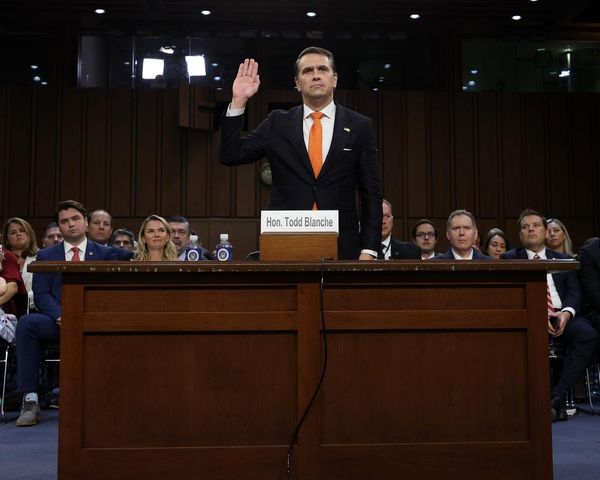
Donald Trump has reignited a major Iran policy row after reportedly saying Tehran 'has to have some' ballistic missile capability as part of an emerging peace framework, a remark that immediately drew fire from defence hawks and revived comparisons to Barack Obama's 2015 nuclear deal. Critics say the comment could mark a sharp shift in long‑standing US red lines on Iran's weapons programme.
Speaking at the G7 summit in France, the US President argued that a total ban on missiles was unrealistic, drawing immediate criticism from security hardliners who warned the stance risked signalling a significant softening of Washington's position.
Obama's Iran Deal Back In The Spotlight
Trump's recent remarks have also reopened political fault lines dating back to Barack Obama's 2015 nuclear agreement with Iran, which explicitly avoided directly dismantling Tehran's ballistic missile programme, focusing instead on limiting nuclear enrichment.
At the time, critics, including Trump himself, accused Obama of failing to take a hard enough line on Iran's wider military capabilities, particularly its missile development and regional influence. Obama defended the agreement as a necessary compromise to prevent nuclear escalation, while opponents argued it left a dangerous gap in addressing Iran's long‑range weapons systems.
The 2015 JCPOA deal with a group of world powers known as P5+1 included the US, the UK, Germany, France, China and Russia. The main goal was to prevent Iran from developing a nuclear weapon, while allowing it to maintain a limited civilian nuclear energy programme under strict monitoring. In exchange, Iran received sanctions relief, which unlocked billions of dollars in frozen assets and reopened parts of its economy.
Trump's New Justification Sparks Backlash
Trump says that Iran "has to have" ballistic missiles, adding "what am I going to do? Am I going to let Saudi Arabia have missiles but they can't have them?" pic.twitter.com/32nPskhLpb
— Aaron Rupar (@atrupar) June 17, 2026
In defending the emerging framework, Trump reportedly suggested it would be unfair to deny Iran missile capabilities while other regional powers maintain similar arsenals. 'Missiles aren't the problem. They don't blow up the planet,' he is said to have told reporters, adding that Iran already holds fewer systems than other nations in the region.
The comments have been seized on by critics who say they represent a sharp departure from the 'maximum pressure' approach Trump championed during his first term.
A Reversal Of Trump's Own Past Stance
The apparent shift is particularly striking given Trump's previous withdrawal from the Obama-era Iran deal in 2018, when he cited concerns that it failed to fully address Iran's missile programme and regional aggression.
At the time, Trump described the agreement as fundamentally flawed for not imposing tougher restrictions on ballistic missiles, a position that now appears to be evolving under the new draft peace discussions.
Growing Political And Security Concerns
Foreign policy analysts warn that even a preliminary suggestion of allowing Iran to retain missile capabilities could reshape regional power dynamics in the Middle East and undermine years of bipartisan US policy.
Supporters of negotiations argue, however, that limited concessions may be necessary to secure a broader ceasefire and prevent further escalation following months of regional conflict.
With the proposed US–Iran memorandum still under negotiation and no final agreement signed, officials stress that the framework remains fluid. But Trump's remarks have already ensured that ballistic missiles are now at the centre of a widening international debate over the future of Middle East security.