The threats followed her home.
Police had become involved. A man was arrested for allegedly making menacing posts online. Graffiti appeared near her house threatening to kill politicians.
Now there were cameras watching the house and an app on her phone she could use to call for help.
Not because she works in a dangerous profession. Not because she spends her days in conflict zones or investigates organised crime.
She is a politician.
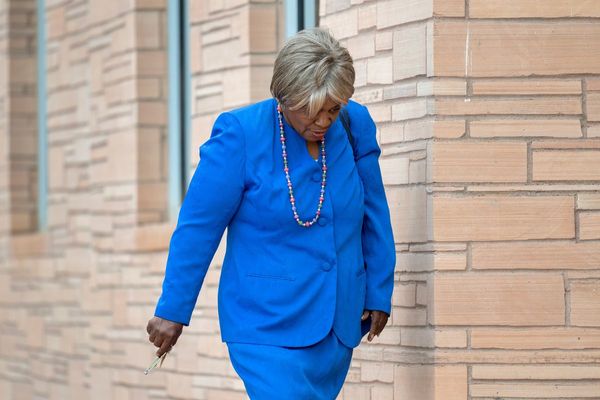
For Gosford MP Liesl Tesch, and many other women in public life, this is the price.
"It's just frightening. It's just not how I would like to live my life," Ms Tesch said.

The danger isn't simply that women in politics are being abused online. It is that other women are seeing it and deciding they want no part in it.
New research shows almost nine in 10 Australian women in public office or standing for election have experienced online abuse linked to their role.
The Women for Election survey of 110 women found 89 per cent had experienced online abuse.
Ms Tesch has a thick skin and has seen "some pretty horrible things" in her life.
Still, she worries less about herself than the women who come after her.
"It is harmful and it grinds you down," Ms Tesch said.
"I think we as women in parliament know how important it is to encourage other women to follow in our footsteps, so we need to hold on to women's hands to give them the strength to continue to be there."
She has a 'hate mail' folder, has learned to block people and reduced her time on Facebook.
For Newcastle deputy lord mayor Charlotte McCabe, the abuse has become so routine she has developed systems to live with it.

It's not just the insults that wear her down, but the time spent cleaning up after them, policing her own pages and trying to preserve a space where people can still ask questions.
"I've kind of gotten used to this as part of the space," Cr McCabe said.
"The online culture has become much more toxic, and behaviours there have been allowed to flourish."
ArtificiaI intelligence (AI) is accelerating the threat.
Manipulated content and deepfakes are cheaper to create, easier to distribute and capable of reaching far larger audiences than ever before.
Of the women surveyed, 65 per cent had personally experienced or seen AI-generated abuse, deepfakes or manipulated content targeting women in public life, while nearly all were concerned AI would make the problem worse over the next five years.
"I'm really worried about that," Cr McCabe said.
"It hasn't happened to me, but the idea that there can be videos made of me looking like I'm saying something that I have never said is mortifying and very scary."
The most troubling finding may not be how many women are being abused. It's how many are reconsidering whether public life is worth the cost.
"That is detrimental to all of us, because we miss out on amazing female leaders," Cr McCabe said.
More than 80 per cent of women surveyed had changed their behaviour because of the abuse, while half questioned whether they would run again or should have sought elected office at all.
The danger, University of Newcastle gender and law researcher associate professor Kcasey McLoughlin said, is to our democratic institutions.
There's no law keeping women from standing for public office. The barrier to a seat at the table is far more insidious: seeing what happens to women who do.
"It feels like these practices operate as an informal way of controlling who continues to belong in public life," Dr McLoughlin said.
"We've done a lot of hard work trying to say that women have an equal right to participate in politics, but if women are carrying a disproportionate burden of abuse, intimidation, and harassment, that means that equality is incomplete."

While men are not immune, the abuse women face is different, Dr McLoughlin said, more likely to be threatening, graphic, sexualised and centred on gender.
"On one hand, technology is a shield and a sword in that it kind of creates these problems, but there may well be technological solutions that can help pull this information down before it causes harm," she said.
For Port Stephens mayor Leah Anderson, her "Teflon" coating became hard to maintain when the abuse started affecting her children.
Her kids began seeing nasty comments about their mother online, including attacks about her sexuality.

"I had to sit them both down and say, 'I need you to stop looking at that stuff', it was really affecting them as to what that was doing to me," Cr Anderson said.
"Some of these are women, which gets me the most. Women attacking women."
Tired of the online abuse, Cr Anderson drew a line in the sand, launching the 'Let's Be Better Online' initiative to combat abusive, hurtful and aggressive comments directed at councillors staff and residents.
"I don't know whether I've seen a campaign at a state or federal level to be honest," Cr Anderson said.
"The Albanese and Minns governments are doing a great job at getting more women into these important roles, but what are they doing to protect them?"
Local Government NSW and Women for Election are calling for stronger protections against harassment and intimidation of elected representatives and council staff.
They want governments and social media companies to strengthen safeguards, improve reporting mechanisms and ensure public office holders can access appropriate support, as well as stronger penalties for social media and AI platforms.
Women for Election chief executive Licia Heath said the findings should serve as a wake-up call.
"If capable women are choosing not to run, not to speak, or to leave public office because of relentless online abuse, Australian democracy is at risk," she said.
Some women refuse to let abuse determine whether they remain in public life.
Former Newcastle lord mayor Nuatali Nelmes knows what it costs.
"I experienced persistent abuse and intimidation throughout my time in public office, both online and offline," Ms Nelmes said.
"Much of it was deeply personal, gendered and misogynistic, extending well beyond legitimate scrutiny of my decisions or policies."

At times she questioned whether the personal toll was worth it, but she stayed, serving as lord mayor for more than a decade.
She spoke publicly about the bullying and abuse, determined to shine a light on the experiences of women in office.
When she left, women held the majority of seats on what she described as the youngest and most diverse council in Newcastle's history.
"You cannot be what you cannot see, and the answer to intimidation must be to support more women, not fewer, into public life," she said.
The challenge now is making sure the women looking on don't decide the safest place in politics is on the sidelines.